

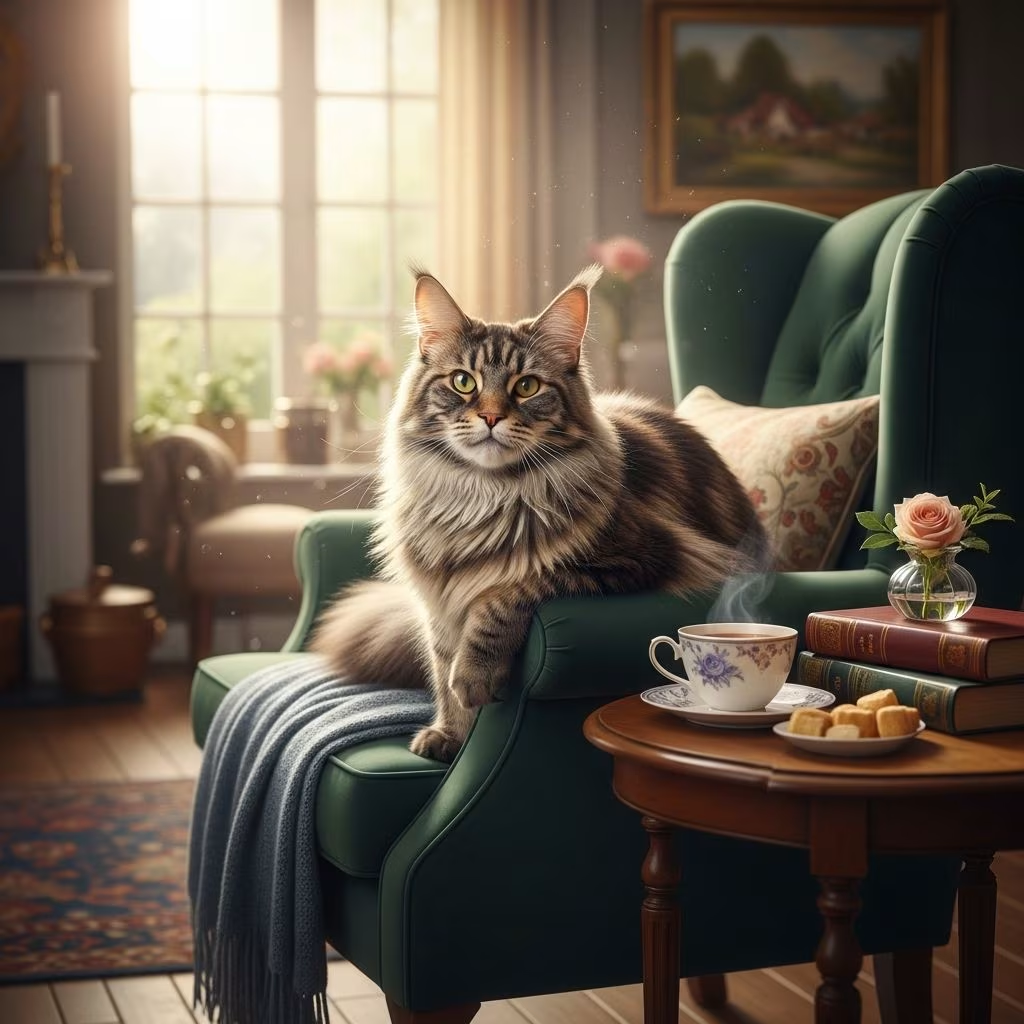
National Respect Your Cat Day invites cat lovers everywhere to pause and truly appreciate the unique personalities of their feline friends. This special observance highlights the importance of recognizing cats as sentient beings with distinct needs, preferences, and ways of communicating. By tuning into their subtle signals and adjusting our interactions accordingly, we can foster deeper trust and mutual understanding in our relationships with these independent creatures.
The Origins and Purpose of Cat Respect Day
Observed annually, National Respect Your Cat Day serves as a reminder that cats are not mere accessories but complex animals deserving of consideration. Emerging from pet advocacy efforts, this day encourages owners to move beyond stereotypes of aloofness and instead observe the nuanced behaviors that reveal a cat’s inner world. Respect begins with awareness: acknowledging that cats communicate primarily through body language rather than words allows us to respond appropriately to their comfort levels.
Understanding this day involves committing to actions that prioritize feline autonomy. For instance, providing safe spaces for retreat, offering species-appropriate enrichment, and refraining from unwanted handling all contribute to a cat’s sense of security. Such practices not only enhance welfare but also reduce stress-related issues like inappropriate elimination or aggression.
Decoding Feline Posture: Openness vs. Defensiveness
A cat’s posture offers immediate insight into its emotional state. When relaxed, cats adopt an expansive stance, stretching out with limbs extended and belly occasionally exposed, signaling complete trust in their environment. This position, often seen during lounging, features slow blinking eyes and neutrally positioned ears, indicating contentment.
Conversely, defensive postures reveal discomfort. A cat may hunch low to the ground, tucking limbs close to minimize its profile, especially if feeling threatened. This “ball-like” form protects vital areas and warns others to keep distance. Recognizing these cues prevents escalation; approaching a crouched cat can provoke defensive reactions like swatting or fleeing.
- Relaxed Posture Indicators: Loose body, stretched limbs, slow breathing, neutral or forward ears.
- Defensive Posture Indicators: Crouched stance, tucked tail, rigid muscles, flattened body.
Tail Talk: The Versatile Signal of Cat Emotions
The tail acts as a dynamic barometer of a cat’s mood. A vertically raised tail, often with a slight curl at the tip, denotes confidence and friendliness, akin to a greeting flag. Cats display this upon reuniting with owners or exploring familiar territories, inviting interaction.
Agitation manifests through rapid flicking or lashing. A twitching tail tip during petting sessions signals building irritation, advising pet parents to pause. In hunting play, similar movements prepare for pounce, blending excitement with focus. Tails held low or tucked signal fear, while puffed-up tails accompany piloerection during high alert.
| Tail Position | Meaning | Appropriate Response |
|---|---|---|
| High and straight | Confident, happy | Engage gently |
| Flicking or lashing | Irritated or excited | Observe and back off if needed |
| Tucked under body | Fearful | Provide space |
Ears and Whiskers: Subtle Mood Detectors
Ears forward and swiveling capture curiosity or attentiveness, as seen when a cat tracks sounds or prepares to play. Relaxed ears lie slightly to the sides, complementing a calm demeanor. Defensive flattening against the head screams distress, often paired with wide eyes and hissing.
Whiskers mirror these shifts: fanned forward for interest, pulled back tightly during fear to appear smaller. In confident states, whiskers extend neutrally, aiding environmental scanning. Monitoring these facial features enhances responsiveness to a cat’s needs.
Vocalizations: From Purrs to Hisses
Beyond visuals, sounds convey intent. Purring typically signifies pleasure but can also self-soothe during stress. Meows vary: short trills greet familiars, while drawn-out yowls demand attention.
Growls and hisses escalate warnings. A low growl precedes aggression, urging retreat, followed by the sharper hiss revealing fangs. Spitting adds intensity, mimicking defensive displays in wild felines.
Recognizing Stress and Fear Signals
Stress cues include dilated pupils, rapid blinking, and ear twitching. Cats under duress may freeze, lean away, or groom excessively as displacement behavior. Chronic stress risks health issues like urinary problems, underscoring prevention through environmental control.
Fear amplifies these: arched backs, piloerection, and low crouching prepare fight-or-flight. Respecting space during such episodes rebuilds security.
Playful vs. Aggressive Behaviors
Play mimics predation: dilated pupils, crouching stalks, and pouncing. Ears upright and tails twitchy distinguish fun from frustration. Avoid hands as toys to prevent bite inhibition issues.
Aggression stiffens the body, with direct stares and stiff tails. Differentiating prevents injury; redirect play appropriately.
Signs of Affection and Contentment
Affectionate cats rub, head-butt, or slow-blink, depositing scents to claim bonds. High tails with curls and exposed bellies further affirm trust. Reciprocate with gentle pets on preferred areas like cheeks.
Practical Ways to Show Respect Daily
Beyond reading signals, respect involves:
- Providing vertical spaces for territory claiming.
- Offering puzzle feeders for mental stimulation.
- Avoiding forced cuddles; let cats initiate.
- Maintaining litter hygiene and fresh water.
- Scheduling vet check-ups for early issue detection.
Enrichment toys and scratching posts satisfy instincts, reducing boredom.
Health Indicators in Body Language
Subtle shifts signal illness: lethargy, hiding, or altered grooming. Pain prompts tense postures or vocal changes. Early vigilance ensures timely intervention.
FAQs: Common Cat Behavior Questions
What does it mean if my cat’s tail is puffed up?
This indicates fear or aggression, often with arched back; give space.
How can I tell if my cat wants to play?
Look for dilated pupils, upright ears, and stalking posture.
Why does my cat hiss at me?
Hissing warns of discomfort; reflect on recent interactions.
Is purring always a good sign?
No, it can indicate pain self-soothing; check context.
How do I build trust with a fearful cat?
Use slow blinks, offer treats from distance, respect boundaries.
Building a Respectful Cat-Home Environment
Transform your space with perches, hiding spots, and rotation of toys. Multi-cat homes require resources per cat to minimize tension. Consistent routines foster security.
Celebrating National Respect Your Cat Day means integrating these insights year-round, elevating companionship through empathy.
References
- The Definitive Guide to Cat Behavior and Body Language — Tuft & Paw. 2023. https://www.tuftandpaw.com/blogs/cat-guides/the-definitive-guide-to-cat-behavior-and-body-language
- Understanding your cat’s body language and behavior — Purina. 2024. https://purina.com.jm/purina/cat/understanding-your-cat-body-language-and-behavior
- How to Read Cat Body Language and Emotions — Best Friends Animal Society. 2023. https://bestfriends.org/pet-care-resources/how-read-cat-body-language-and-emotions
- Cat Body Language 101 — Fear Free Happy Homes. 2022. https://www.fearfreehappyhomes.com/video/cat-body-language-101/
- Understanding Cat Body Language | The Battersea way — Battersea Dogs & Cats Home (YouTube). 2023. https://www.youtube.com/watch?v=GtjrbGUQhEI
- Cat Body Language — Cats Protection. 2024. https://www.cats.org.uk/help-and-advice/cat-behaviour/cat-body-language
- Understanding Your Cat’s Behaviour — RSPCA. 2024. https://www.rspca.org.uk/adviceandwelfare/pets/cats/behaviour



