

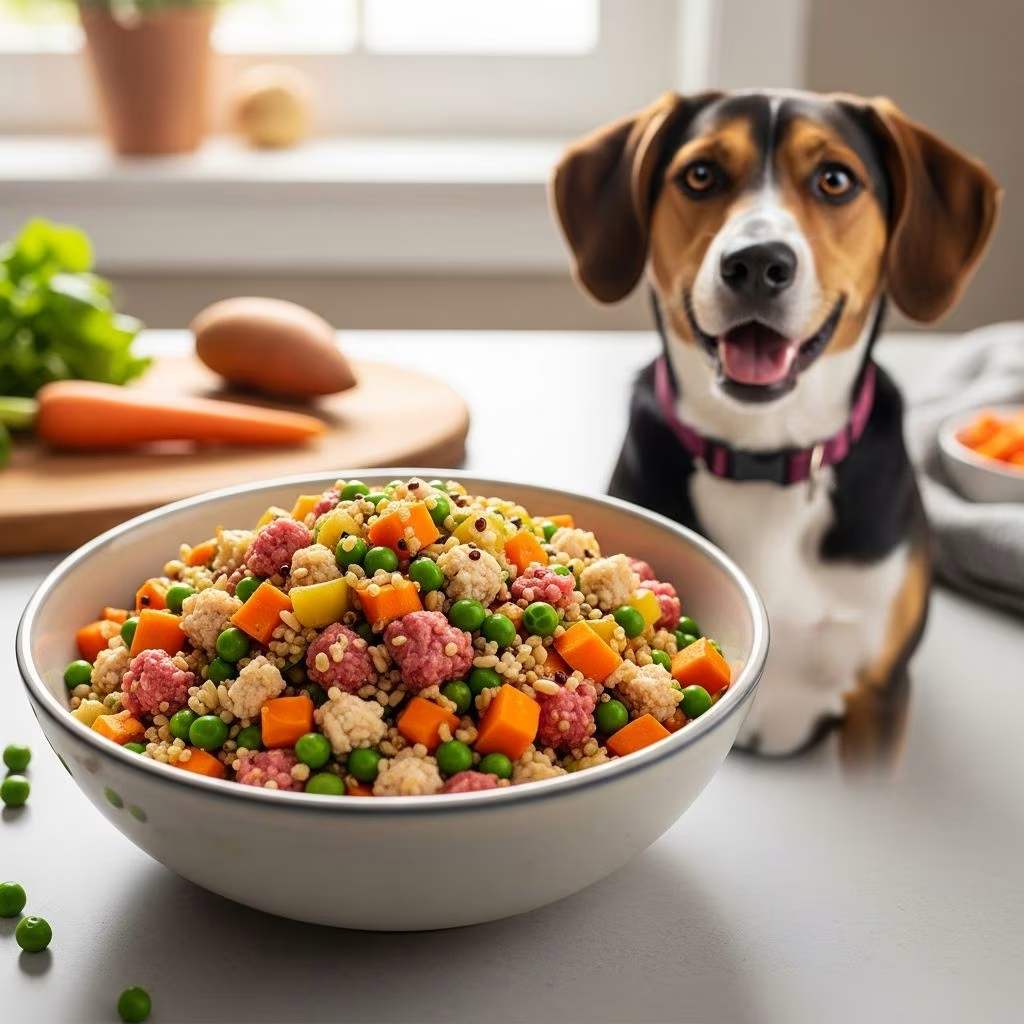
Homemade Dog Food: A Comprehensive Guide to Benefits and Risks
Many dog owners consider preparing homemade meals for their pets as a way to have greater control over ingredients and provide what they perceive as a more natural diet. While homemade dog food can offer certain advantages, it comes with significant nutritional challenges that require careful consideration. This comprehensive guide explores the benefits and risks of homemade dog food, helping you make informed decisions about your dog’s nutrition.
Understanding the Appeal of Homemade Dog Food
Pet owners are drawn to homemade dog food for various reasons. Some want to avoid commercial pet food companies and have more control over ingredient sourcing. Others believe that preparing meals at home ensures superior quality and freshness compared to commercial options. The desire to provide a more natural diet and avoid artificial additives and preservatives is another common motivation. These concerns are understandable, but they must be balanced against the nutritional complexities of formulating a complete and balanced canine diet.
Key Benefits of Homemade Dog Food
Despite the nutritional challenges, homemade dog food does offer several tangible benefits when prepared thoughtfully:
Quality Control and Ingredient Selection
When you prepare your dog’s food at home, you have complete control over ingredient quality and sourcing. You can select whole-food ingredients that you would eat yourself and understand exactly where those ingredients come from. This level of control can reduce concerns about food recalls and manufacturing processes. You know precisely what goes into each meal, eliminating mystery ingredients found in some commercial products.
Tailored Dietary Preferences
Homemade dog food can be customized to address your dog’s specific dietary needs and preferences. If your dog has allergies or a sensitive stomach, you can eliminate problematic ingredients while still providing balanced nutrition. This personalization extends to accommodating your dog’s age, size, activity level, and any specific health conditions requiring dietary modifications.
Avoiding Additives and Preservatives
Commercial dog foods often contain additives, fillers, preservatives, and artificial ingredients that some owners prefer to avoid. By preparing food at home, you eliminate these additions entirely, providing only wholesome, recognizable ingredients in your dog’s bowl.
Increased Dietary Variety
Homemade diets allow you to rotate ingredients and introduce variety into your dog’s meals. This variety can make feeding more interesting for your pet and provides exposure to different nutrient sources throughout the week.
Enhanced Freshness
Homemade dog food is typically prepared in smaller batches, ensuring fresher meals compared to commercial options that may have been packaged and stored for extended periods.
Critical Risks and Challenges
While the benefits are appealing, the risks associated with homemade dog food are substantial and require serious attention. Research from the University of California, Davis, School of Veterinary Medicine provides alarming insights into these challenges.
Nutritional Imbalance: The Primary Concern
The most critical challenge with homemade dog food is achieving and maintaining proper nutritional balance. A landmark study analyzing 200 homemade dog food recipes found that 95% were deficient in at least one essential nutrient. More concerning, over 83% of recipes had multiple nutrient deficiencies. Even recipes published by veterinarians frequently lacked adequate nutrient levels, with only recipes formulated by board-certified veterinary nutritionists showing acceptable nutrient profiles for adult dogs.
Common Nutritional Deficiencies
Specific nutrient deficiencies appear consistently in homemade dog food recipes:
- Calcium and Phosphorus Imbalance: An improper balance of these minerals can lead to skeletal issues, particularly in growing puppies. This imbalance is one of the most common problems in homemade diets.
- Vitamin Deficiencies: Vitamins A, D, and B-complex vitamins are frequently inadequate in homemade diets and are easy to overlook. Deficiencies in vitamin D and E can result in immune dysfunction and musculoskeletal abnormalities.
- Choline Deficiency: This deficiency can lead to fat accumulation in the liver, a serious health concern.
- Zinc Deficiency: Inadequate zinc levels can compromise immune function and overall health.
- Incomplete Proteins: Dogs require essential amino acids from various protein sources. Diets relying on a single protein source may not provide all necessary amino acids.
Microbial Contamination Risks
Handling and preparing raw ingredients, particularly raw meat commonly used in homemade diets, poses significant contamination risks. The Centers for Disease Control and Prevention warns about harmful pathogens found in raw meat that can threaten both pets and household members. Even cooked homemade diets are susceptible to microbial contamination through cross-contamination during preparation.
Portion Control Challenges
Determining correct portion sizes is crucial for maintaining optimal weight and ensuring proper nutrient balance. Many pet owners struggle with portion control, leading to overfeeding or underfeeding. Overfeeding can cause obesity and related health issues, while underfeeding results in nutritional deficiencies and malnutrition.
Preparation Errors and Inconsistency
Common errors in home food preparation include variations in ingredient measurement, substitutions, and inconsistencies in cooking methods. These deviations can lead to deficiencies or excesses of essential nutrients. Additionally, differences in ingredient quality, nutrient bioavailability, and nutrient loss during cooking can exacerbate nutritional imbalances.
Health Conditions Associated with Homemade Diets
Specific health issues have been reported in dogs consuming certain types of homemade diets. Dilated cardiomyopathy, a type of heart disease, has been documented in dogs eating homemade diets that are grain-free, legume-based, and high in fiber.
Important Considerations for Different Life Stages
Young, elderly, and sick dogs face heightened vulnerability to nutritional deficiencies when fed homemade diets. Puppies require specific nutrient ratios for proper growth and development, making nutritional precision even more critical during this life stage. Senior dogs and those with health conditions have specialized nutritional requirements that are difficult to meet without professional guidance.
The “Balance Over Time” Concept: A Myth
Some pet owners attempt to address nutritional deficiencies by rotating different homemade recipes, assuming this approach will provide “balance over time.” Research indicates this strategy is ineffective. Since many homemade recipes share identical deficiencies, rotating between different recipes will not correct these shared nutritional gaps.
Comparison: Homemade vs. Commercial Dog Food
| Aspect | Homemade Dog Food | Commercial Dog Food |
|---|---|---|
| Nutritional Balance | 95% of recipes deficient in at least one nutrient | Formulated to meet established standards |
| Ingredient Control | Complete control over sourcing and selection | Limited transparency in sourcing |
| Safety and Quality Control | Limited quality control measures | Rigorous quality control and safety testing |
| Freshness | Fresher in smaller batches | Longer shelf life |
| Cost | Variable, often higher | Generally lower per serving |
| Preparation Time | Significant time investment | Minimal preparation required |
| Customization | Highly customizable | Limited customization options |
Safe Approaches to Homemade Dog Food
If you remain committed to preparing homemade meals for your dog, certain precautions and professional guidance are essential:
Consult a Board-Certified Veterinary Nutritionist
The most critical recommendation is consulting with a board-certified veterinary nutritionist rather than relying on recipes from books or the internet. These specialists have advanced training in nutrition and can formulate customized, nutritionally appropriate recipes specifically tailored to your dog’s needs. Research shows that recipes formulated by board-certified veterinary nutritionists consistently provide acceptable nutrient profiles.
Avoid General Recipes
General recipes from the internet or books, even those published by veterinarians, frequently have significant nutritional deficiencies. Veterinarians, while knowledgeable, may not have specialized training in canine nutrition and often lack the expertise to formulate balanced recipes.
Monitor Your Dog’s Health
Switching from a commercial diet to a homemade diet can cause gastrointestinal issues in some dogs. Monitor your pet carefully for any signs of digestive upset, changes in coat quality, weight fluctuations, or other health changes.
Implement Proper Food Safety
Handle raw ingredients carefully to prevent microbial contamination. Use separate cutting boards for raw meat, maintain proper refrigeration, and practice thorough hygiene during food preparation to protect both your dog and your household.
Frequently Asked Questions About Homemade Dog Food
Q: Is homemade dog food actually healthier than commercial options?
A: There is no hard scientific evidence supporting the claim that homemade dog food is healthier than properly formulated commercial dog foods. While homemade diets offer benefits like ingredient control, most lack proper nutritional balance. Commercial foods formulated by veterinary nutritionists typically provide more consistent nutritional adequacy.
Q: Why are so many homemade dog food recipes nutritionally inadequate?
A: Formulating a complete and balanced canine diet requires specialized knowledge of nutrient requirements, ingredient bioavailability, and proper ratios. Most recipe creators lack this expertise. Even veterinarians without specialized nutrition training may create deficient recipes.
Q: Can I improve nutrition by rotating different homemade recipes?
A: No. Since most homemade recipes share the same nutrient deficiencies, rotating between different recipes will not correct these problems. A more consistent approach with professional guidance is necessary.
Q: What health problems can result from nutritionally inadequate homemade dog food?
A: Deficiencies in calcium, phosphorus, vitamin D, choline, and zinc can lead to skeletal issues, immune dysfunction, fat accumulation in the liver, and musculoskeletal abnormalities. Some studies link certain homemade diets to dilated cardiomyopathy.
Q: Are puppies at greater risk from homemade diets?
A: Yes. Puppies require precise nutrient ratios for proper growth and development, making them particularly vulnerable to deficiencies in homemade diets. Senior dogs and those with health conditions also face heightened risks.
Q: How can I safely prepare homemade dog food?
A: Work with a board-certified veterinary nutritionist to develop a customized recipe specific to your dog’s needs. Avoid general internet recipes, practice proper food safety, and monitor your dog’s health closely for any signs of nutritional problems.
Conclusion
While the desire to prepare homemade meals for your dog stems from good intentions and genuine care, the nutritional complexities involved make this a challenging endeavor without professional guidance. The research is clear: the vast majority of homemade dog food recipes are nutritionally inadequate and pose real risks to your pet’s long-term health. If you choose to provide homemade meals, consulting a board-certified veterinary nutritionist is not optional—it is essential. These specialists can help ensure your dog receives complete, balanced nutrition tailored to their individual needs. For most pet owners, commercial foods formulated by veterinary nutritionists offer a safer, more reliable option for maintaining your dog’s health and well-being.
References
- Homemade Dog Food Benefits & Risks For Your Pup — We Are The Cure. 2024. https://wearethecure.org/homemade-dog-food-benefits-and-risks/
- Homemade dog food recipes can be risky business, study finds — University of California, Davis School of Veterinary Medicine. June 2013. https://www.ucdavis.edu/news/homemade-dog-food-recipes-can-be-risky-business-study-finds
- Home-prepared dog food: benefits and downsides — Frontiers in Animal Science. 2025. https://www.frontiersin.org/journals/animal-science/articles/10.3389/fanim.2025.1506003/full
- Pros and Cons Of Cooking Homemade Dog Food — American Kennel Club. 2024. https://www.akc.org/expert-advice/nutrition/cooking-for-your-dog-dos-and-donts/
- Homemade Dog Food: Is It Healthy to Cook for Your Dog? — PetMD. 2024. https://www.petmd.com/dog/nutrition/how-make-sure-your-homemade-dog-food-delivers-right-nutrients
- Analysis of recipes of home-prepared diets for dogs and cats — National Center for Biotechnology Information. 2017. https://pmc.ncbi.nlm.nih.gov/articles/PMC5672303/



