

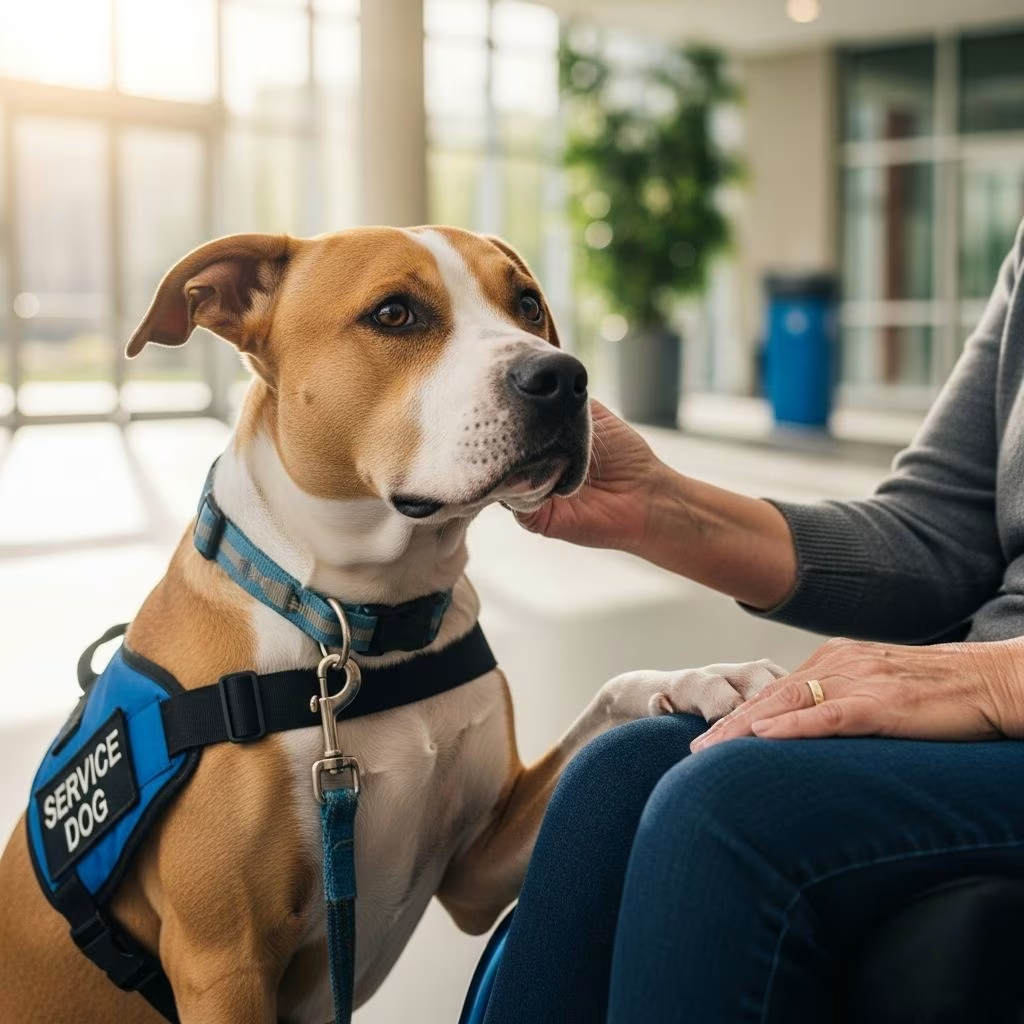
Homeless Pit Bull Becomes the Perfect Service Dog
When a young pit bull found himself abandoned on the streets with nowhere to turn, few could have predicted the remarkable journey that lay ahead. This is the story of transformation, resilience, and the profound impact that one dog’s second chance can have on human lives. What begins as a tale of heartbreak evolves into an inspiring narrative about redemption, showing how compassion and dedication can change not just one life, but many.
A Dog Left Behind: The Beginning of Bruno’s Story
The story of Bruno, a pit bull who would eventually become a service dog, began under circumstances that many rescue advocates know all too well. Dumped at a local park in Colorado Springs by his owners, Bruno spent an entire evening waiting for people who would never return. The confusion and fear in his eyes that first night reflected the uncertainty of his future. Left with nothing but hope and the kindness of strangers, Bruno’s early days showcased both the cruelty animals can face and the compassion that exists within communities willing to help.
On that fateful evening, Air Force veteran Carl Anderson witnessed the abandonment firsthand. Seeing a car pull up to the park and watching as Bruno was pushed out and left behind stirred Anderson’s sense of justice. The veteran, who understood struggle and loss in his own way, knew he had to act. After contacting animal law enforcement and providing detailed descriptions of the vehicle, authorities were able to track down Bruno’s previous owners and charge them with animal cruelty. This criminal case, while ensuring Bruno’s abusers faced consequences, also set in motion the administrative processes that would ultimately lead to his rescue and rehabilitation.
The Shelter Stay: A Critical Turning Point
Following the animal cruelty charges, Bruno was placed in the Humane Society of the Pikes Peak Region. While shelter staff members did their best to care for the frightened puppy, the kennel environment proved challenging for his sensitive temperament. Confined spaces, unfamiliar sounds, and the stress of institutional life took their toll on the young dog. Recognizing that Bruno’s personality and needs required a different environment, shelter workers coordinated with local rescue organizations to find him a more suitable placement.
This transfer proved to be a critical intervention. Bruno’s mental and emotional state began to improve once he was moved to a foster situation where he could receive individualized attention and care. The transition from a shelter kennel to a foster home provided him with the stability and nurturing he desperately needed to begin healing from his traumatic abandonment.
Finding Foster Care: Carl Anderson Steps In
When a local rescue organization agreed to take Bruno, they reached out to Carl Anderson with an opportunity to foster the young pit bull. The Air Force veteran, who had already shown compassion by reporting Bruno’s abandonment, agreed to bring Bruno into his home temporarily. Anderson’s family, initially uncertain about adding another member to their household, quickly fell in love with the playful puppy.
During his time in Anderson’s home, Bruno underwent a remarkable transformation. He learned to trust again, to play, and to experience the simple joys of family life. The gentle care and consistent routine provided by Anderson’s household helped erase the trauma of abandonment. Bruno’s personality blossomed as he discovered what it meant to be loved unconditionally. The veteran and his family witnessed daily improvements in Bruno’s confidence and social skills, watching as a scared, confused dog gradually became the “clown of the house” – playful, affectionate, and full of life.
The Path to Purpose: Training for Service Work
While Bruno thrived in his foster home, Anderson and the rescue organization recognized that this exceptional dog had the potential to do more than simply be a beloved pet. Bruno possessed the right temperament, intelligence, and drive to become a service dog. His ability to form strong bonds with humans, combined with his calm demeanor and eagerness to please, made him an ideal candidate for specialized training.
Bruno was referred to Victory Service Dogs, a non-profit organization dedicated to training pit bulls and other dogs to become service animals for veterans and individuals in need. This partnership between local rescue efforts and the specialized training organization opened up entirely new possibilities for Bruno’s future. What had started as a story of abandonment now became a narrative about purpose and service.
Victory Service Dogs: Training for a Mission
Victory Service Dogs represents a innovative approach to animal rescue and service animal training. The organization works specifically with dogs like Bruno – often rescue animals and pit bulls that might otherwise be overlooked – to provide them with comprehensive training programs. These dogs learn to perform specific tasks designed to assist veterans and others facing physical or emotional challenges.
The training program is rigorous and comprehensive. Service dog candidates undergo behavioral assessments, obedience training, task-specific instruction, and extensive socialization. Dogs learn to respond to voice commands, hand signals, and environmental cues. They’re trained to perform tasks such as alerting handlers to medical events, providing mobility assistance, retrieving items, creating personal space in crowded environments, and offering deep pressure therapy during anxiety or panic episodes.
For Bruno specifically, his training would prepare him to support a veteran – likely someone facing challenges similar to those that Carl Anderson himself had navigated. The pit bull’s journey from abandoned park dog to trained service animal represented not just a personal transformation, but a commitment to helping others heal.
Pit Bulls as Service Animals: Breaking Stereotypes
Bruno’s story contributes to an important conversation about pit bulls and their role in service work. Pit bulls are often unfairly stigmatized and stereotyped as inherently aggressive or dangerous. However, many rescue organizations and service dog training programs recognize that pit bulls possess qualities that make them excellent service animals. Their intelligence, athleticism, loyalty, and eagerness to please make them well-suited for demanding roles.
When properly trained, socialized, and placed in appropriate homes, pit bulls excel as service dogs. They can provide the same level of support and comfort as any other breed. Organizations like Victory Service Dogs intentionally work with pit bulls and pit bull mixes specifically to counter negative stereotypes and demonstrate the breed’s true potential. By training dogs like Bruno to help veterans and others in need, these organizations transform both the dogs’ lives and public perception of the breed.
The Broader Impact: Helping Veterans in Need
Service dogs trained by Victory Service Dogs are paired with veterans who benefit from their assistance and companionship. Many veterans struggle with physical disabilities, PTSD, traumatic brain injuries, and other service-related challenges. A well-trained service dog can make an extraordinary difference in their quality of life, providing practical assistance with daily tasks while also offering emotional support and companionship.
For a veteran like the one who would eventually partner with Bruno, having a service dog creates structure, purpose, and unconditional companionship. The dog becomes more than a pet – it becomes a partner in recovery and healing. The bond formed between a veteran and their service dog is often profound, grounded in mutual trust and shared purpose.
From Park Sidewalk to Purpose: Bruno’s Complete Transformation
Looking at Bruno’s journey from beginning to end reveals a complete transformation. The confused, frightened puppy abandoned on a park sidewalk became a confident, well-trained service dog ready to support someone in need. This transformation wasn’t instantaneous – it required time, proper care, professional training, and most importantly, human compassion at every stage.
Carl Anderson’s decision to report Bruno’s abandonment set everything in motion. The Humane Society staff’s recognition that Bruno needed foster care rather than shelter kennels provided the next crucial step. Anderson’s family’s willingness to open their home created the foundation for emotional healing. Victory Service Dogs’ specialized training equipped Bruno with the skills to serve others. Each person and organization that touched Bruno’s life contributed to his remarkable trajectory.
Why These Stories Matter: The Ripple Effect of Rescue
Bruno’s story demonstrates an important truth about animal rescue: one dog’s rescue can create positive change far beyond that individual animal. When Bruno was saved from abandonment and trained as a service dog, the positive impact extended to:
The dog itself: Bruno transformed from a traumatized, abandoned puppy into a purposeful service animal with a meaningful role in life.
The foster family: Carl Anderson and his family experienced the joy of rehabilitation and watched as a scared dog blossomed into a confident companion.
The veteran: The individual paired with Bruno as his service dog gains a companion who provides practical assistance, emotional support, and unconditional loyalty.
The community: Stories like Bruno’s inspire others to support rescue organizations, foster animals, and report animal cruelty. Public perception of pit bulls improves through education and positive examples.
The cause: Success stories demonstrate the effectiveness of rescue, rehabilitation, and specialized training programs, potentially increasing support and funding for these vital organizations.
How You Can Support Dogs Like Bruno
If Bruno’s story inspires you to help, there are numerous ways to support rescue dogs and service dog training programs:
Adopt from rescue organizations: Giving a home to a rescue dog saves one life and creates shelter space for another animal in need.
Foster animals: Temporary foster care provides crucial rehabilitation and assessment of dogs’ personalities and needs. Foster families often play pivotal roles in animals’ transformations.
Volunteer with rescue organizations: Rescue groups need volunteers for tasks ranging from dog walking and socialization to administrative support and fundraising.
Support service dog training programs: Organizations like Victory Service Dogs rely on donations to fund their training programs and care for dogs in their programs.
Report animal cruelty: If you witness animal abuse or abandonment, report it to local animal control or law enforcement. Your report can save an animal’s life.
Advocate for pit bulls: Help counter stereotypes by sharing positive stories of pit bulls and promoting breed-neutral legislation and education.
Frequently Asked Questions (FAQs)
Q: Can pit bulls become effective service dogs?
A: Yes, pit bulls are excellent candidates for service dog training. They possess intelligence, loyalty, and eagerness to please that make them well-suited for demanding service roles. Organizations like Victory Service Dogs specifically train pit bulls for service work.
Q: What should I do if I witness animal abandonment?
A: Contact local animal control or law enforcement immediately. Provide as detailed a description as possible of the animal, location, time, and any vehicles involved. Your report can enable authorities to help the animal and potentially charge the person responsible with animal cruelty.
Q: How can I help rescue dogs in my community?
A: You can adopt, foster, volunteer, donate to rescue organizations, or advocate for animal welfare. Each form of support makes a meaningful difference in rescue animals’ lives.
Q: What training do service dogs receive?
A: Service dog training typically includes obedience, task-specific instruction, behavioral assessment, and extensive socialization. Training teaches dogs to respond to commands, perform specific assistance tasks, and behave appropriately in public settings.
Q: What qualities make a dog suitable for service work?
A: Good service dog candidates possess intelligence, calmness under pressure, strong bonding ability, physical capability to perform tasks, and appropriate size and temperament. Individual personality assessment is crucial.
Q: How long does service dog training typically take?
A: Service dog training programs typically range from several months to over a year, depending on the dog’s background, the specific tasks to be trained, and the training organization’s methods.
References
- Dumped to Future Service Dog: The Story of Bruno — KOAA 5 News. 2022-06-18. https://www.youtube.com/watch?v=qO4Y47v9smQ
- Pit Bull’s Rescue Just Seconds Before Euthanasia Inspires Journey of Hope and Healing — Rocky Kanaka. https://rockykanaka.com/pit-bulls-rescue-just-seconds-before-euthanasia-inspires-journey-of-hope-and-healing/
- Once Homeless Veteran Gives Hope and a Home to Dog in Need — Pets for Patriots. https://www.petsforpatriots.org/once-homeless-veteran-gives-hope-and-a-home-to-dog-in-need/



