

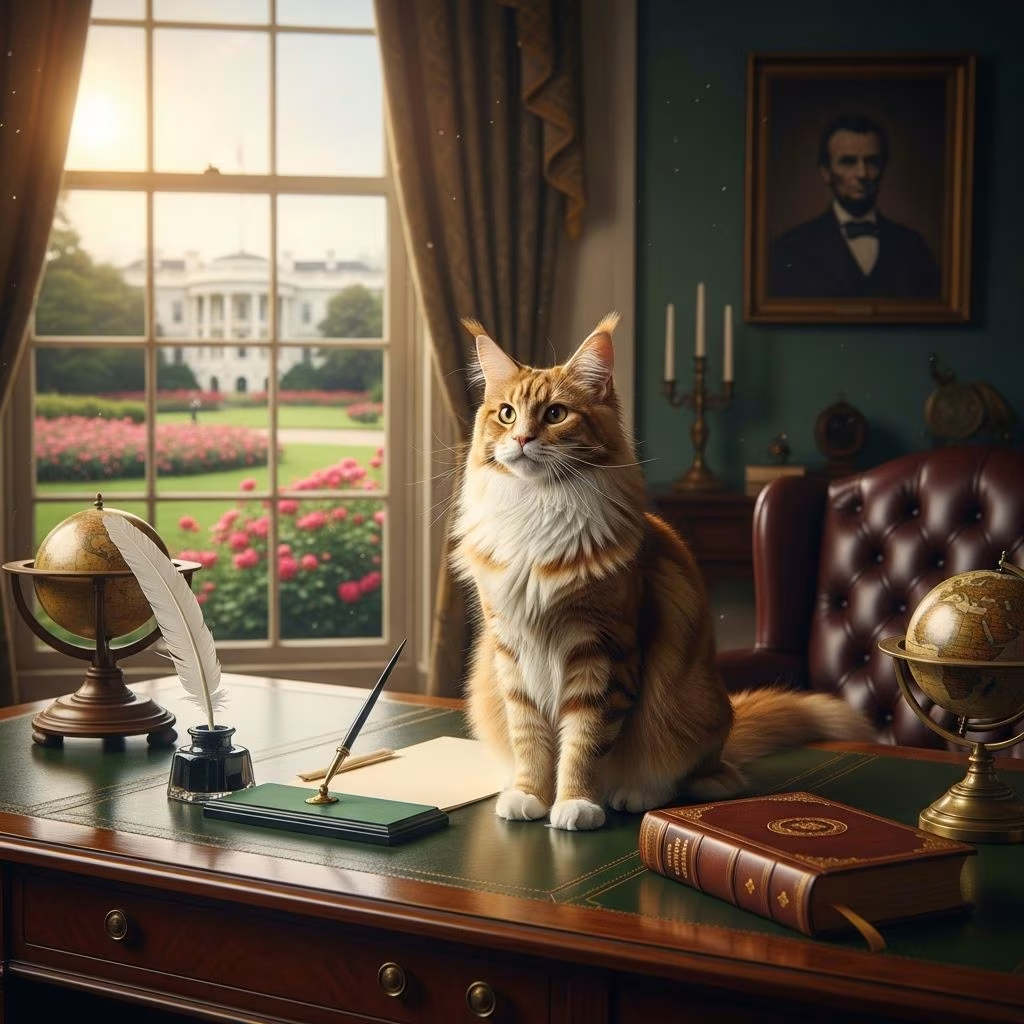
Cats have long been cherished companions in the White House, offering comfort and whimsy to presidents amid national duties. From Abraham Lincoln’s pioneering felines to the Biden family’s Willow, these presidential cats have left paw prints on American history, often capturing public affection through their antics and unique stories.
A Brief History of Cats in the White House
The tradition of cats in the White House dates back to the 19th century, with occasional feline residents providing solace during turbulent times. Abraham Lincoln set the precedent by welcoming the first documented cats, Tabby and Dixie, gifted by Secretary of State William Seward. These kittens joined Lincoln during the Civil War, symbolizing a softer side of the presidency. Lincoln was notably fond of them, once defending feeding Tabby at the dinner table with the quip, “If the gold fork was good enough for James Buchanan, I think it is good enough for Tabby.”
Over the decades, cats appeared sporadically, often tied to first families’ personal lives. Rutherford B. Hayes introduced the first Siamese cat, while Theodore Roosevelt’s menagerie included a distinctive six-toed kitty. Mid-20th-century presidents like Kennedy and Ford added more, though allergies and preferences sometimes relegated cats to staff care. The late 20th and 21st centuries saw stars like Clinton’s Socks and Bush’s Willie gain fame via media and websites. Today, Joe Biden’s Willow continues this legacy, adopted after a campaign promise.
These cats not only entertained but humanized leaders, appearing in photos, stories, and even obituaries, underscoring their cultural impact.
1861–1865: Tabby and Dixie, the Very-First POTUS Cats
Abraham Lincoln, the 16th president, navigated the Civil War and emancipation with two steadfast companions: Tabby and Dixie. Gifted by Secretary of State William Seward, these cats were the inaugural White House felines, residing during Lincoln’s 1861-1865 term. Lincoln’s affection was legendary; he prioritized their care, even amid national crises.
Tabby, in particular, dined with the president, prompting a famous anecdote where Lincoln justified using a gold fork for his cat. Dixie, named perhaps evoking Southern ties, roamed freely. Their presence offered emotional relief in the war-torn era, setting a precedent for presidential pets. Post-Lincoln, cats became occasional residents, but Tabby and Dixie’s story endures as the origin of White House cat history.
1877–1881: The First Siamese Cat in the White House
Rutherford B. Hayes, the 19th president, brought exotic flair with Siam, the first Siamese cat in the White House. Gifted in 1878 by American consul David Sickels from Bangkok, Siam arrived as a rare breed, turning heads with her sleek blue eyes and vocal nature.[10]
Siam wasn’t alone; the Hayes family hosted two other cats, Miss Pussy and Dot, creating a feline trio. Lucy Hayes, the First Lady, embraced the pets, aligning with the era’s growing pet culture. Siam’s presence highlighted international diplomacy through gifts, predating modern breed popularity in America. This Republican president’s cats echoed Lincoln’s fondness, bridging post-Civil War recovery with domestic warmth.
1901–1909: Roosevelt’s Six-Toed Kitty
Theodore Roosevelt’s administration transformed the White House into a zoological haven, including cats Tom Quartz and Slippers. Named after a Mark Twain character, Tom Quartz was adventurous, while Slippers gained fame for his polydactyl paws—six toes on each foot—and legendary naps. In 1906, Roosevelt famously tiptoed around sleeping Slippers during a diplomatic dinner, escorting Baroness Hengenmuller without disturbing him.
Roosevelt’s family embraced pets amid his progressive reforms and trust-busting. Slippers’ laziness endeared him to the press, with Jacob Riis reporting the incident. These cats complemented guinea pigs, dogs, and more, embodying Roosevelt’s robust, nature-loving ethos during 1901-1909.
1923–1929: Five Cats at the Executive Mansion
Calvin Coolidge’s 1923-1929 tenure featured an impressive five felines: Timmie, Tiger, Blacky, Bounder, and a bobcat/lynx. This eclectic group navigated post-scandal recovery from the Harding era. The domestic cats provided standard companionship, while the wild bobcat reflected Coolidge’s Vermont roots and tolerance for unusual pets.
“Silent Cal” rarely spoke publicly, but his pets spoke volumes. Tiger once escaped, prompting a White House search, adding levity to his austere image. These cats underscored the 1920s’ prosperity and pet enthusiasm.
1961–1963: Tom Kitten, the Kennedy Cat
John F. Kennedy’s brief presidency included Tom Kitten, gifted to daughter Caroline by her grandparents. Due to JFK’s severe cat allergies, Tom resided mostly with staffer Mary Gallagher, limiting media exposure. Caroline visited often, maintaining the bond.
Despite the Camelot glamour and focus on dogs/ponies, Tom symbolized family life amid Cold War tensions. Gallagher occasionally brought him back when JFK traveled, blending White House duties with personal joy before the 1963 tragedy.
1981–1989: The Humblest Presidential Cats
Ronald Reagan’s Tortoiseshell cats, Sara and Cleo, were raised on the family’s Santa Barbara ranch and did not relocate to Washington. Tended by staff, they technically bypassed White House residency but represented Reagan’s rancher roots during his 1981-1989 conservative revolution.
This humble setup contrasted flashy politics, with the cats enjoying California freedom over D.C. protocol, highlighting varied presidential pet arrangements.
1993–2001: Socks, a Big Crowd-Pleaser
Bill Clinton’s black-and-white cat Socks became a 1990s icon. Adopted pre-presidency, Socks frolicked on the South Lawn, starred in photos, inspired a song, book, and website. His charm humanized the Clintons amid scandals.
Socks’ media savvy peaked with playground antics and poses, earning obituaries upon his 2009 passing. He bridged eras, delighting a nation via early internet fame.
2001–2009: George Bush & Willie
George W. Bush’s black American Shorthair, Willie (aka India), joined in 2001. Low-key compared to dogs Barney and Miss Beazley, she lounged in the library, appeared in BarneyCam videos, and sported a wizard costume for Halloween 2007. Her website echoed Socks’ legacy.
Amid post-9/11 challenges, Willie’s calm presence offered respite, coexisting amiably with dogs and symbolizing family continuity.
2021–Present Time: Willow, the Biden Family Cat
Since 2021, Joe Biden’s gray tabby Willow has resided in the White House, adopted after leaping onstage during a 2020 Jill Biden campaign speech in Pennsylvania. Named for Jill’s hometown Willow Grove, she fulfilled Biden’s cat promise, arriving in 2022—the first in over a decade.
Willow enjoys farm-cat roots turned executive perks, continuing the tradition into modern times.
Other Notable Mentions
- Gerald Ford (1974-1977): Susan Ford’s Siamese Shan spent days with Betty Ford, drawing media buzz despite dog Liberty tensions.[10]
- Jimmy Carter (1977-1981): Siamese Misty Malarky Ying Yang lived with staffer Janet Steiger, rarely seen publicly.[10]
- Van Buren (1837-1841): Technically, tigers were early ‘cats,’ though not domesticated.
Table of Presidential Cats
| President | Years | Cat(s) | Notable Facts |
|---|---|---|---|
| Abraham Lincoln | 1861-1865 | Tabby, Dixie | First White House cats; dinner table diners. |
| Rutherford Hayes | 1877-1881 | Siam, others | First Siamese. |
| Theodore Roosevelt | 1901-1909 | Slippers, Tom Quartz | Six-toed Slippers napped famously. |
| Calvin Coolidge | 1923-1929 | Timmie et al. | Included bobcat. |
| John F. Kennedy | 1961-1963 | Tom Kitten | Allergy relegated to staff. |
| Ronald Reagan | 1981-1989 | Sara, Cleo | Ranch residents. |
| Bill Clinton | 1993-2001 | Socks | Media superstar. |
| George W. Bush | 2001-2009 | Willie/India | BarneyCam star. |
| Joe Biden | 2021-Present | Willow | Campaign stage jumper. |
Frequently Asked Questions (FAQs)
What was the first cat in the White House?
Tabby and Dixie under Abraham Lincoln in 1861, gifted by Secretary of State Seward.
Which president had the first Siamese cat?
Rutherford B. Hayes with Siam in 1878.
Who had a six-toed cat?
Theodore Roosevelt’s Slippers.
Was Socks the most famous White House cat?
Yes, Clinton’s Socks had a website, book, and song.
Does the White House have a cat now?
Yes, Biden’s Willow since 2022.
References
- History of Cats in the White House (1861-2026) — Hepper. 2026. https://articles.hepper.com/history-of-cats-in-the-white-house/
- Here Kitty Kitty — White House Historical Association. N/A. https://www.whitehousehistory.org/here-kitty-kitty
- The Office of the First Cat — National Archives (Pieces of History). 2023-08-07. https://prologue.blogs.archives.gov/2023/08/07/the-office-of-the-first-cat/



