

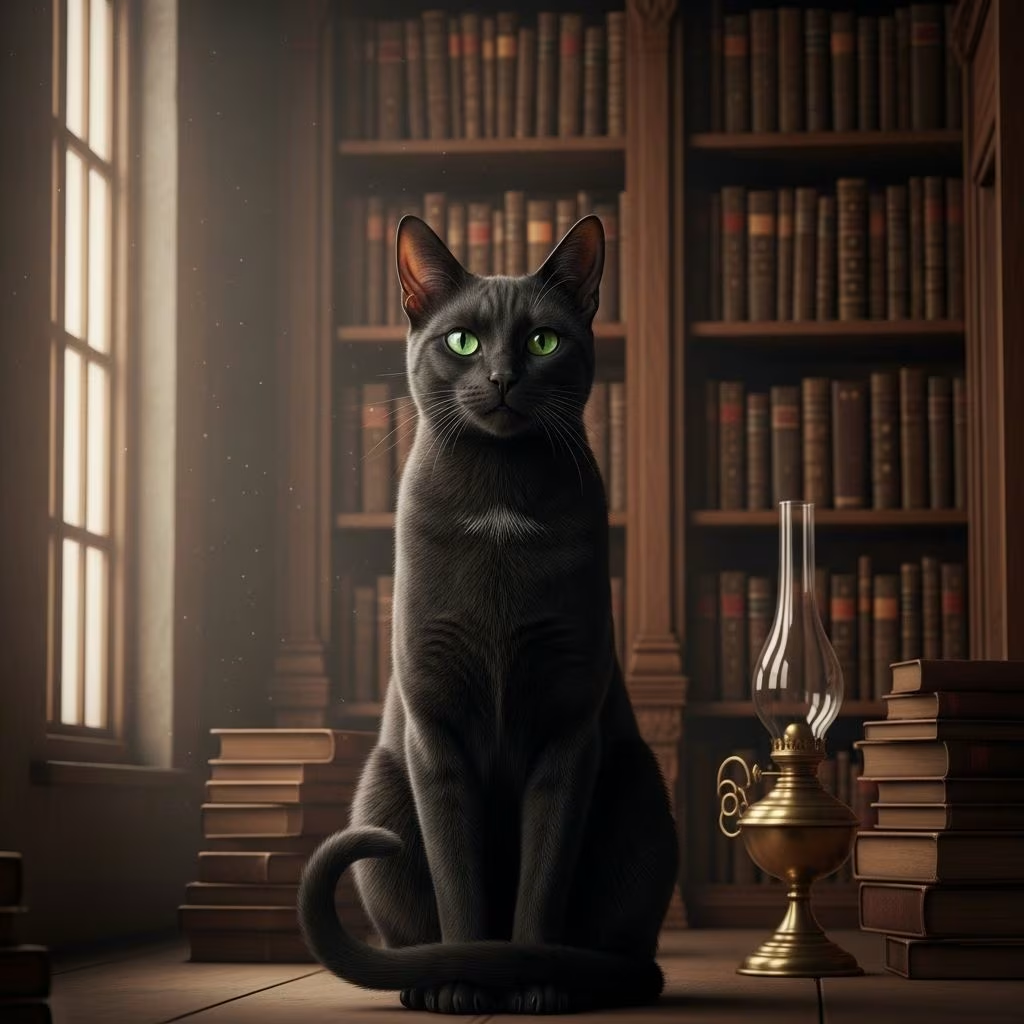
Black cats have captivated human imagination for millennia, embodying both reverence and fear across cultures. Their sleek, dark fur has symbolized everything from divine protection to ominous witchcraft, influencing folklore, religion, and even modern holidays like Halloween. This article traces their journey through history, highlighting shifts in perception and persistent superstitions.
Ancient Egyptians and the Worship of Black Cats
In ancient Egypt around 2800 BC, cats of all colors, including black ones, were held in the highest esteem. They were associated with **Bastet**, the goddess of home, fertility, protection, and cats, often depicted with a cat or lioness head. Black cats, in particular, were seen as sacred guardians against evil spirits and disease, bringing good luck and divine blessings to households.
Egyptians treated their cats like royalty: adorned with jewels, fed lavishly, and mummified upon death. Temples dedicated to Bastet housed thousands of cat mummies, underscoring their spiritual significance. Killing a cat, even accidentally, was punishable by death, as noted in historical records—cats were so revered that such acts were equated with sacrilege. This era marked the golden age for black cats, where their presence was believed to invoke Bastet’s favor and ward off misfortune.
Early Middle Ages: Black Cats as Good Luck Symbols
During the early Middle Ages, particularly from the 8th century onward, black cats maintained their positive reputation in various cultures. Sailors and fishermen adopted them as ship companions, valuing their rat-catching prowess and superstitious luck-bringing abilities. A black cat aboard was thought to ensure safe voyages and predict weather—cat sneezes signaled rain, snoring foretold storms, and self-grooming promised clear skies, as recorded in weather proverbs.
In maritime folklore, these felines were indispensable. Institutions like the Massachusetts Maritime Academy highlight how black cats brought prosperity to vessels and crews. This period contrasted sharply with later developments, positioning black cats as harbingers of fortune rather than doom.
The Witch Hunts: Black Cats Demonized
The tide turned dramatically in the late Middle Ages, around the 12th-13th centuries, as the Catholic Church linked black cats to paganism, witchcraft, and Satan. A pivotal 1233 papal bull, “Vox in Rama,” described black cats as vessels of the devil during alleged satanic rituals, fueling mass hysteria. Pope Innocent VIII later declared cats the “devil’s favorite animal and idol of witches,” amplifying fears.
Black cats were accused of shape-shifting, soul-stealing, and serving as witches’ familiars—spies for dark magic. Their nocturnal, independent nature terrified people, as historian Irina Metzer noted: cats stood “on the threshold between the familiar and the wild”. Superstitions proliferated: a black cat crossing one’s path under moonlight predicted epidemics; in Italy, one on a sickbed foretold death.
This era saw brutal persecutions. In Denmark, black cats were beaten during Lent to purge evil for spring’s arrival. France burned them alive, Belgium hurled them from church towers during the “Kattenstoet” festival (now using effigies), and Europe’s cat population plummeted by the 1300s, exacerbating plagues due to unchecked rats.
Colonial America and the Salem Witch Trials
Puritan settlers brought European fears to the New World. During the 1692 Salem witch trials, black cats were persecuted alongside accused witches, viewed as familiars aiding sorcery. Owners of black cats faced suspicion, and the felines were burned on Shrove Tuesday to avert fires.
This association solidified black cats as Halloween icons—depicted on broomsticks with witches. The blend of Celtic Samhain, Christian All Saints’ Day, and witch lore cemented their spooky image in American culture by the 19th century.
Black Cats in Different Cultures: Good vs. Bad Luck
Perceptions varied widely. In **Britain and Ireland**, black cats crossing paths brought good luck; Scottish lore saw their arrival at homes as prosperity omens, Welsh as health bringers. The RSPCA notes this positive UK folklore. Japan viewed them as love luck charms, while Charles I of England mourned his black cat’s death as the end of his fortune.
Conversely, much of Western/Southern Europe saw them as misfortune omens. Ancient Greeks linked them to Hecate, goddess of magic. These contrasts highlight cultural relativity in superstitions.
| Region/Culture | Symbolism | Example Belief |
|---|---|---|
| Ancient Egypt | Good Luck/Protection | Sacred to Bastet; death penalty for harm |
| Early Medieval Sailors | Good Luck/Weather Predictors | Ship mascots for safe voyages |
| Medieval Europe | Bad Luck/Witchcraft | Devil’s familiar; burned in rituals |
| Scotland/Wales | Prosperity/Health | Home arrival brings fortune |
| Colonial America | Evil Omen | Persecuted in witch trials |
Modern Superstitions and Black Cats Today
Today, black cats endure mixed legacies. In the US, they’re often seen as unlucky, leading to lower adoption rates in shelters—Friday the 13th sees heightened fears. Yet, positive views persist: UK folklore favors them, and globally, they’re Halloween staples, symbolizing mystery without malice.
Efforts by rescues combat myths, emphasizing black cats’ loving natures. Their history reminds us how fear distorts perception, but reverence endures in art, media, and culture.
Frequently Asked Questions (FAQs)
Are black cats really bad luck?
No, superstitions vary by culture. They’re good luck in the UK, Japan, and ancient Egypt, but bad in parts of Europe and the US.
Why were black cats associated with witches?
Medieval Church propaganda linked their stealthy, nocturnal traits to Satan and familiars, fueling witch hunts.
Do black cats have special powers?
Folklore attributes weather prediction and protection, but scientifically, they’re just cats with melanin-rich fur.
Are black cats less adoptable?
Yes, due to superstitions, but they’re wonderful pets deserving homes.
What is the Kattenstoet festival?
A Belgian event historically throwing cats from towers (now effigies) to banish evil.
References
- Black Cats: History and Superstition — Chewy. Accessed 2026. https://www.chewy.com/education/cat/general/black-cat-breeds-and-history
- The Magic and Mystery of Black Cats — Google Arts & Culture (Neues Museum). Accessed 2026. https://artsandculture.google.com/story/the-magic-and-mystery-of-black-cats/HgXxdTS7p9XjRA?hl=en
- The Power of Black Cats: Legends That Haunt Them — Mount St. Joseph University. 2024-02. https://www.msj.edu/news/2024/02/the-power-of-black-cats.html
- Whiskers and Witches: How Cats Became Halloween Icons — PURRR. Accessed 2026. https://www.purrr.org/blog/articles/whiskers-and-witches-how-cats-became-halloween-icons/
- Black cat — Wikipedia (informed by RSPCA folklore). Accessed 2026. https://en.wikipedia.org/wiki/Black_cat



