

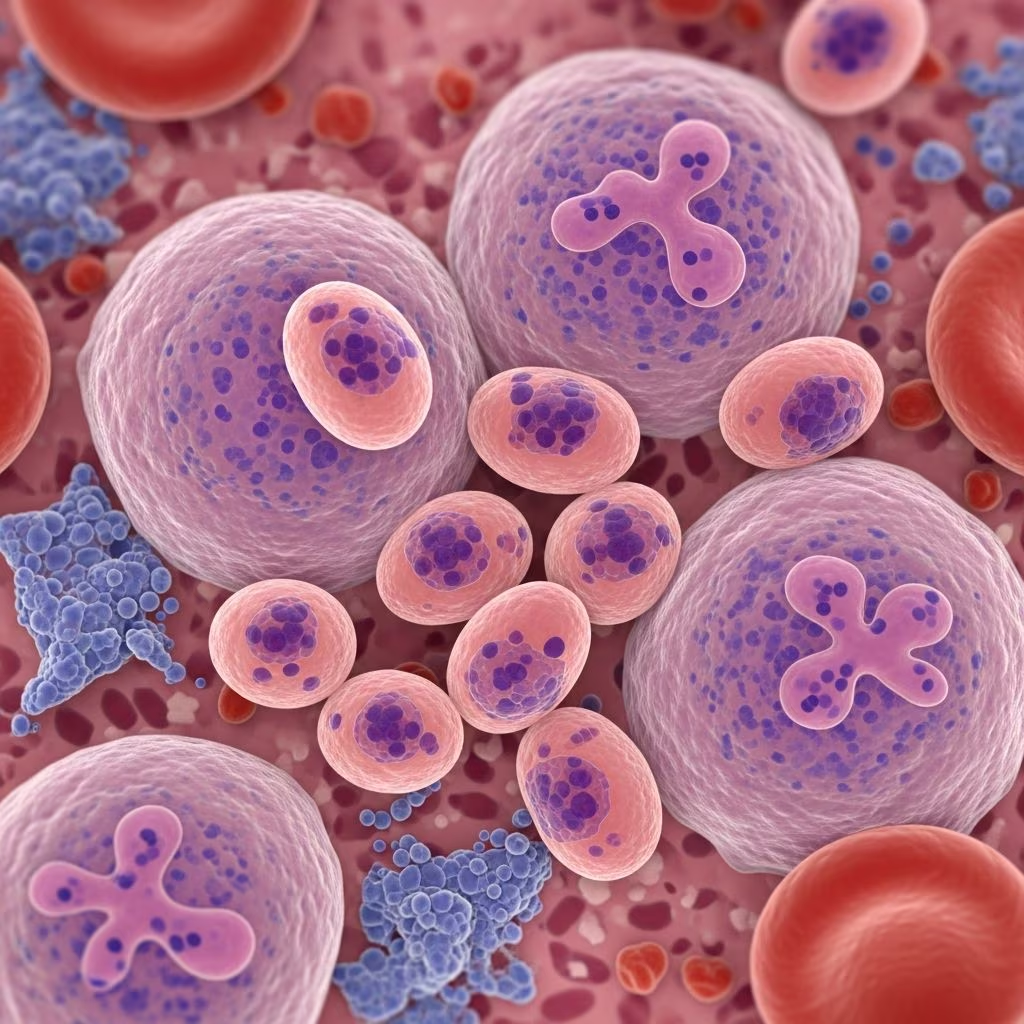
Histoplasmosis represents a significant fungal infection impacting various animals, particularly dogs and cats in regions where the causative agent thrives. Caused by the dimorphic fungus Histoplasma capsulatum, this disease primarily spreads through inhalation of spores from contaminated environments, leading to a range of clinical manifestations depending on the host’s immune response and infection extent.
The Nature of the Pathogen and Transmission Pathways
The fungus Histoplasma capsulatum exists in mycelial form in soil enriched with bird or bat droppings, producing infectious microconidia that become airborne when disturbed. Animals inhale these spores, which then convert to yeast forms within the lungs at body temperature, initiating infection in pulmonary tissues and nearby lymph nodes. Endemic areas include the central United States, parts of Central and South America, and other regions with suitable climates.
Transmission does not occur directly between animals or from animals to humans; rather, it stems from environmental exposure. Factors like construction activities, excavation, or exploring roosts heighten risk. Immunocompromised animals, those on immunosuppressive drugs, or individuals inhaling heavy spore loads face higher susceptibility.
Clinical Manifestations Across Species
Symptoms in affected animals vary widely, often mimicking other illnesses, which complicates initial recognition. In dogs, gastrointestinal involvement predominates, with signs emerging 2-3 weeks post-infection.
- General signs: Weight loss, lethargy, fever, loss of appetite.
- Respiratory issues: Coughing, tachypnea, difficulty breathing, potentially requiring oxygen.
- Gastrointestinal problems: Diarrhea (often bloody or mucoid), straining to defecate, black tarry stools.
- Other organ effects: Swollen lymph nodes, hepatomegaly, jaundice, ascites, limping from bone involvement, skin lesions, eye problems like uveitis or blindness.
Cats typically exhibit respiratory and cutaneous signs more prominently, including tachypnea, skin nodules or ulcers, and lymphadenopathy. Fever, anorexia, and weight loss remain common. Severity correlates with spore burden, immune status, and dissemination extent; subclinical infections occur in robust animals.
Diagnostic Approaches for Accurate Identification
Diagnosis relies on combining clinical history, endemic exposure, and targeted tests. Noninvasive methods prove valuable initially.
| Method | Description | Advantages |
|---|---|---|
| Cytology | Examination of impression smears, rectal scrapings, blood films, or fluids for yeast forms. | High yield (e.g., 24/79 dogs via rectal scrapes); rapid, inexpensive. |
| Antigen Detection | Urine or serum antigen assays for Histoplasma. | Monitors treatment response; sensitive for disseminated disease. |
| Culture | Growth from tissues or fluids on fungal media. | Confirmatory but slow (weeks). |
| Imaging | Radiographs or ultrasound for lung patterns, node enlargement, organomegaly. | Supports disseminated involvement. |
| Serology/PCR | Antibody tests or molecular detection. | Adjunctive; false negatives possible. |
Working or herding breeds often present with disseminated forms, while toy breeds show gastrointestinal predominance. Negative prognostic indicators include dyspnea, icterus, organomegaly, anemia, and hyperbilirubinemia.
Therapeutic Strategies and Management Protocols
Treatment centers on systemic antifungals, supportive care, and prolonged therapy to achieve remission. Itraconazole at 10 mg/kg daily stands as the first-line agent for disseminated cases in dogs and cats.
- Severe cases: Initiate with lipid-encapsulated amphotericin B (1 mg/kg IV for dogs, 0.5 mg/kg for cats, 3x/week up to cumulative 24/12 mg/kg); combine with low-dose corticosteroids to mitigate side effects like fever.
- Maintenance: Transition to oral itraconazole or fluconazole (higher ocular penetration). Duration: 6-12 months or until antigen-negative and symptom-free for 1+ month.
- Alternatives: Posaconazole or voriconazole for refractory cases; ketoconazole for mild canine cases (10-15 mg/kg BID, 4-6 months), though resistance noted.
Supportive measures include oxygen for respiratory distress, fluids for dehydration, nutritional support (e.g., feeding tubes), antibiotics for secondary infections, and anti-inflammatories. Monitoring involves serial antigen testing, bloodwork, and clinical reassessment; relapses occur in 20-30% of cases, necessitating lifelong vigilance.
Prognosis and Factors Influencing Outcomes
Success rates hover around 64-71% for clinical remission with fluconazole or itraconazole. Positive factors include early detection and isolated GI signs (e.g., diarrhea); poor indicators encompass Great Pyrenees breed, severe respiratory compromise, icterus, cytopenias, and elevated liver enzymes. Cats with extensive dissemination fare worse, but aggressive therapy can avert euthanasia. Long-term antigen monitoring aids relapse detection.
Preventive Measures and Environmental Controls
Avoidance forms the cornerstone of prevention. Discourage pets from bat guano areas, bird roosts, or soil-disturbing sites in endemic zones. No vaccine exists, but minimizing exposure protects high-risk animals. Regular veterinary check-ups for at-risk populations enable early intervention.
Species-Specific Considerations
Dogs
Dogs, especially young adults in endemic areas, frequently develop GI or disseminated histoplasmosis. Breeds like Great Pyrenees show guarded prognoses. Treatment mirrors general protocols, with emphasis on GI supportive care.
Cats
Feline cases often involve lungs and skin; diagnosis via cytology of nodules. Therapy success ~66%, with fluconazole favored for ocular involvement.
Frequently Asked Questions (FAQs)
What is the most common initial symptom in dogs with histoplasmosis?
Gastrointestinal disturbances like diarrhea with blood or mucus typically appear first.
How long does treatment last?
Usually 6-12 months, extended until clinical resolution and negative antigens.
Can histoplasmosis spread from pets to humans?
No direct transmission; shared environmental exposure poses zoonotic risk to humans.
Is itraconazole safe for long-term use in cats?
Yes, as first-line, but monitor for hepatotoxicity.
What tests confirm diagnosis without biopsy?
Cytology from scrapes or fluids, plus urine antigen detection.
Research Insights and Emerging Therapies
Studies affirm itraconazole and fluconazole equivalence, with no survival differences. Newer azoles like posaconazole show promise in resistant cases. Ongoing antigen assay improvements enhance monitoring.
References
- Histoplasmosis | Veterinary Public Health | LAC DPH — Los Angeles County Department of Public Health. 2023. http://publichealth.lacounty.gov/vet/Histoplasmosis/
- Review Treatment of Histoplasmosis — MiraVista Veterinary Diagnostics. 2023. https://miravistavets.com/fungal-diseases/histoplasma/review-treatment-of-histoplasmosis/
- Histoplasmosis in Dogs: Symptoms, Causes, Treatment — PetMD. 2023. https://www.petmd.com/dog/conditions/digestive/c_multi_Histoplasmosis
- Histoplasmosis Update — New Mexico Department of Agriculture. 2023. https://nmdeptag.nmsu.edu/labs/vds/articles/histoplasmosis-update.html
- Histoplasmosis in Animals — Merck Veterinary Manual. 2023. https://www.merckvetmanual.com/infectious-diseases/fungal-infections/histoplasmosis-in-animals
- Clinical signs, treatment, and prognostic factors for dogs with histoplasmosis — PubMed (J Am Vet Med Assoc). 2018-01-15. https://pubmed.ncbi.nlm.nih.gov/29319442/
- Histoplasmosis — Cornell University College of Veterinary Medicine. 2021. https://www.vet.cornell.edu/departments-centers-and-institutes/cornell-feline-health-center/health-information/feline-health-topics/histoplasmosis
- About Histoplasmosis — Centers for Disease Control and Prevention (CDC). 2023. https://www.cdc.gov/histoplasmosis/about/index.html



