

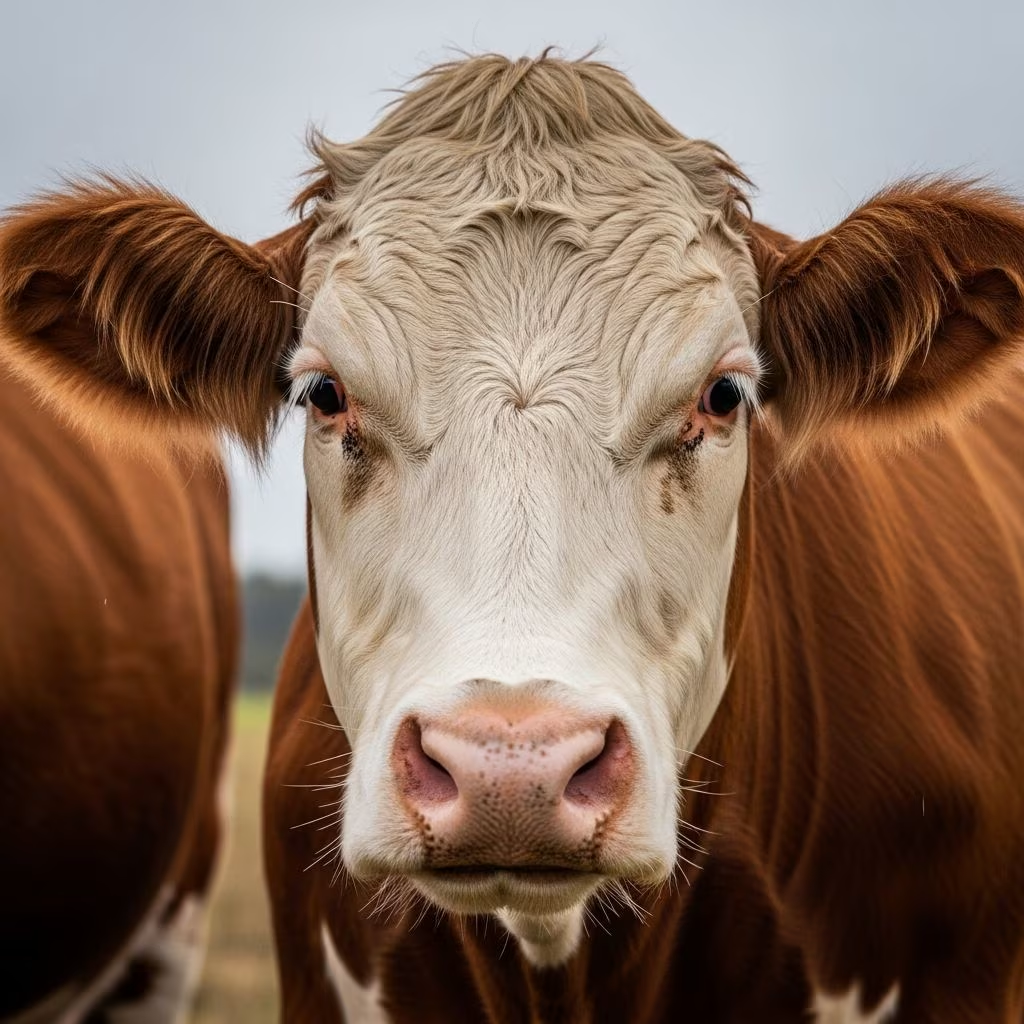
Histophilosis represents a significant health challenge for cattle populations, particularly in intensive production systems. Caused by the bacterium Histophilus somni, this condition manifests in diverse forms, ranging from acute respiratory distress to neurological disorders and sudden mortality. Understanding its biology, spread, and management is crucial for veterinarians and producers aiming to mitigate economic losses in beef and dairy operations.
The Bacterial Culprit Behind Histophilosis
Histophilus somni is a gram-negative, rod-shaped bacterium that thrives in the upper respiratory tract of cattle. It belongs to the Pasteurellaceae family and requires specific growth conditions, such as enriched media and reduced oxygen levels, making laboratory isolation challenging. This pathogen produces exotoxins that lyse red blood cells, contributing to tissue damage and hemolysis observed in infected tissues.
Strains vary in virulence due to factors like lipopolysaccharide structures, outer membrane proteins, and biofilm production capabilities. These mechanisms enable the bacterium to evade host immune responses, adhere to vascular endothelium, and trigger thrombus formation, which is central to disease progression.
Epidemiology and Risk Factors
Histophilosis is most prevalent in North American feedlot cattle but occurs sporadically worldwide in both beef and dairy herds. Outbreaks peak in late fall and early winter, coinciding with stressors like transportation, weaning, dietary shifts, and commingling of animals from different sources. Calves typically encounter the bacterium shortly after feedlot arrival, with fatal cases emerging around 60 days on feed, though peracute septicemia can strike within 21 days.
In sheep and other ruminants, the disease is less common, presenting as polyarthritis in lambs or septicemia in older animals. Concurrent viral infections, such as bovine respiratory syncytial virus (BRSV), exacerbate H. somni invasion, amplifying its role in the bovine respiratory disease (BRD) complex—the leading cause of morbidity and mortality in stocker and feedlot cattle.
- Key Triggers: Stress from transport and mixing herds.
- Seasonal Peaks: Cooler months in both hemispheres.
- Host Range: Primarily cattle, occasional sheep and wildlife.
Mechanisms of Disease Development
The infection often begins with bacteremia, allowing H. somni to disseminate systemically. It adheres to blood vessel linings, inducing endothelial contraction, collagen exposure, platelet aggregation, and clot formation. This vasculopathy leads to ischemia and necrosis in affected organs, distinguishing histophilosis from simple septicemia.
Virulence factors include quorum sensing for coordinated biofilm formation, histamine release promoting vascular permeability, and proteins that bind host antibodies, suppressing immunity. In the lungs, fibrinous pneumonia develops; in the brain, thrombotic meningoencephalitis; and in the heart, necrotizing myocarditis ensues. Reproductive tract involvement yields abortions and mastitis.
Clinical Manifestations Across Body Systems
Signs vary by targeted organs, often progressing rapidly to death. Respiratory forms feature severe dyspnea, cough, and nasal discharge, with animals frequently found dead from fibrinous pleuritis. Neurological cases show profound lethargy, ataxia, recumbency, and behavioral changes, termed thrombotic meningoencephalitis (TME).
| System Affected | Common Signs | Outcome |
|---|---|---|
| Respiratory | Tachypnea, dyspnea, pleuritis | Sudden death |
| Cardiovascular | Exercise intolerance, collapse | Acute heart failure |
| Nervous | Lethargy, ataxia, hyperesthesia | Recumbency and death |
| Musculoskeletal | Lameness, stiffness, weakness | Chronic disability |
| Reproductive | Abortion, vulvovaginitis, mastitis | Herd-level losses |
Many cases follow recent treatment for fever, with hypoxemia mimicking CNS signs. Morbidity is low (under 10%), but case fatality is high without intervention.
Diagnostic Approaches
Diagnosis relies on integrating history, gross pathology, histopathology, and microbiology. Necropsy reveals suppurative lesions with neutrophilic infiltrates, vasculitis, and thrombi in multiple organs. The bacterium may be visible in stained tissues.
Culture is tricky due to fastidious growth needs and overgrowth by contaminants; PCR assays on fresh swabs or tissues offer higher sensitivity. Immunohistochemistry confirms H. somni in formalin-fixed samples. Serology detects exposure but not active disease. Ante-mortem, blood cultures from untreated animals or CSF analysis aid confirmation.
- Gold Standard: PCR and histopathology.
- Challenges: Post-antibiotic culture negativity.
- Differentials: Other BRD pathogens, viral encephalitides.
Treatment Strategies
Early antimicrobial therapy improves outcomes, targeting susceptible strains. Common choices include macrolides, tetracyclines, and cephalosporins, administered parenterally. Supportive care addresses dehydration, fever, and pain. Animals with neurological signs respond poorly if recumbent beyond 24-48 hours.
Mass medication during outbreaks, combined with metaphylaxis on arrival, reduces incidence. Resistance remains low, but vigilance is needed due to biofilm protection.
Prevention and Control Measures
Vaccination with commercial H. somni bacterins, often in multivalent BRD shots, boosts immunity when given pre-stress. Management focuses on minimizing triggers: gradual diet adaptation, reduced stocking density, and isolation of new arrivals.
Biosecurity limits commingling; ventilation improvements curb respiratory spread. Monitoring for early fever via telemetry aids timely intervention. In dairy herds, reproductive screening prevents spread via semen or aborted fetuses.
Impacts on Livestock Production
As a BRD component, histophilosis drives substantial losses—second only to diarrhea in calves. Feedlot mortality, treatment costs, and carcass condemnations compound expenses. Under-diagnosis from subtle lesions perpetuates reservoirs.
FAQs
What is the most common sign of histophilosis?
Profound lethargy, especially in encephalitic forms, alerts producers early.
Can histophilosis affect sheep?
Yes, though rarer, causing septicemia and arthritis in lambs.
How do you confirm H. somni infection?
PCR on tissues or swabs is most reliable, alongside histopathology.
Is vaccination effective?
Yes, when timed before high-risk periods like feedlot entry.
What triggers outbreaks?
Stress, cold weather, and viral co-infections prime herds.
Emerging Research Directions
Ongoing studies explore strain genomics, novel virulence blockers, and improved diagnostics. Enhanced vaccines targeting biofilms and quorum sensing hold promise for BRD control.
References
- Histophilosis – Generalized Conditions — Merck Veterinary Manual. 2023. https://www.merckvetmanual.com/generalized-conditions/histophilosis/histophilosis
- Histophilosis as a Natural Disease — PMC. 2020-03-15. https://pmc.ncbi.nlm.nih.gov/articles/PMC7120429/
- Histophilosis as a Natural Disease — PubMed. 2016-02-03. https://pubmed.ncbi.nlm.nih.gov/26847357/
- Histophilus somni Infection in Cattle — Oklahoma Animal Disease Diagnostic Laboratory. 2019. https://oaddl.okstate.edu/site-files/documents/newsletter_spring_2019.pdf
- Histophilosis Disease Infographic — University of Calgary Veterinary Medicine. 2020. https://vet.ucalgary.ca/sites/default/files/teams/9/Histophilosis%20Disease%20Infographic%20FINAL.pdf
- Histophilosis in cattle: microbiology, epidemiology and pathology — Universidad Nacional Autónoma de México. 2022. https://www.veterinariamexico.fmvz.unam.mx/index.php/vet/article/view/1170/1045
- Technical Bulletin – ZUPREVO — Merck Animal Health. 2022. https://www.merck-animal-health-usa.com/downloads/zuprevo-histophilussomni/



