

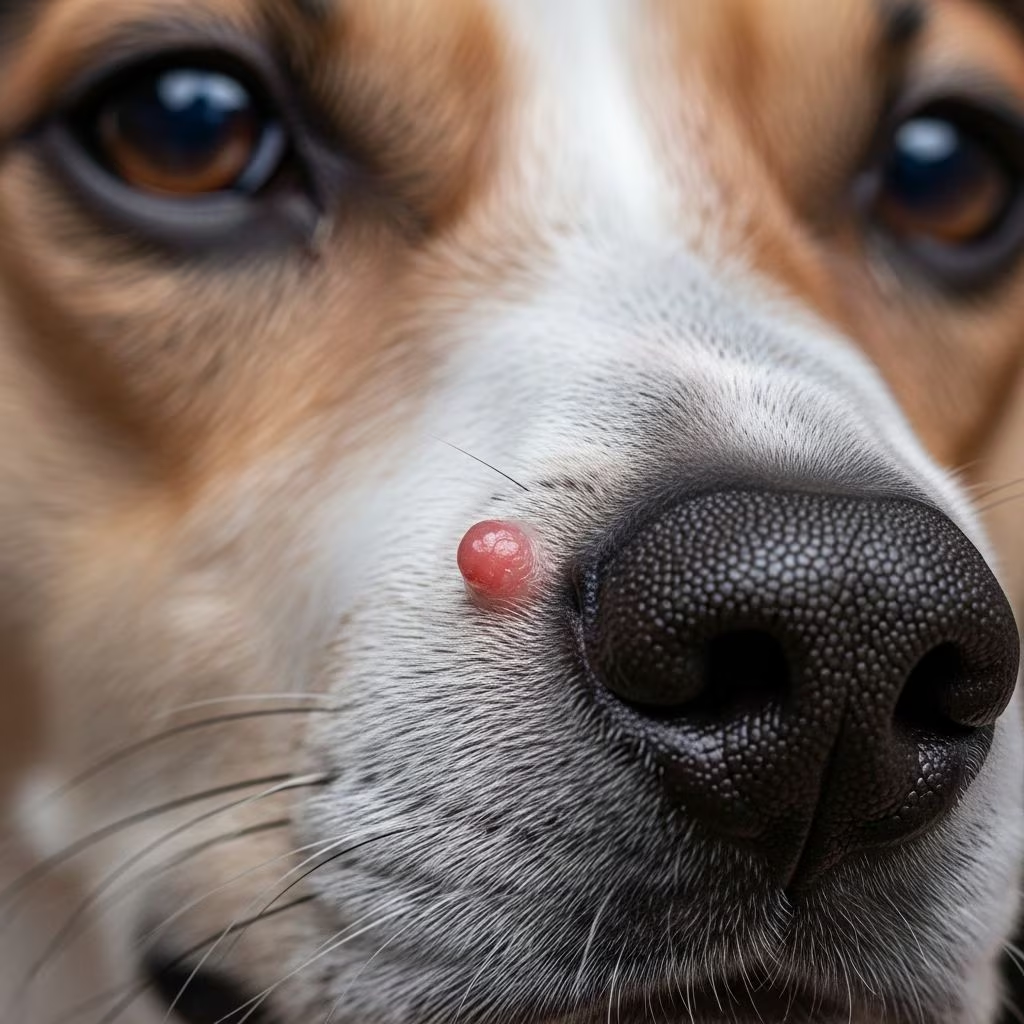
Histiocytomas represent one of the most prevalent benign skin conditions in canines, particularly affecting younger dogs. These non-cancerous growths typically emerge as small, raised nodules on the skin and frequently disappear without intervention as the dog’s immune system responds. Understanding this condition empowers pet owners to recognize potential issues early and make informed decisions about veterinary care.
Understanding the Nature of Canine Histiocytomas
Histiocytomas originate from histiocytes, which are immune cells responsible for defending against infections and foreign substances. In dogs, these cells can proliferate abnormally, forming a localized tumor that remains superficial and rarely spreads. Unlike malignant tumors, histiocytomas pose minimal health risks and are classified as self-limiting, meaning they often involute spontaneously within one to three months.
The exact trigger for histiocytoma development remains unclear, though genetic predispositions play a role in certain breeds. Environmental factors or minor skin trauma might contribute, but no definitive cause has been established. Importantly, these growths differ from more aggressive skin cancers like mast cell tumors or melanomas, which necessitate prompt differentiation through professional evaluation.
Breeds and Age Groups Most Affected
While histiocytomas can occur in dogs of any age, they predominantly affect juveniles under three years old. Breeds with higher susceptibility include Boxers, Boston Terriers, Labrador Retrievers, Dachshunds, and Bulldogs. Flat-coated Retrievers and Staffordshire Bull Terriers also show elevated incidence rates. This breed-specific pattern suggests a hereditary component, though the mechanism is not fully elucidated.
In older dogs, histiocytomas are less common and warrant extra scrutiny, as similar-looking lesions might indicate other pathologies. Owners of predisposed breeds should remain vigilant during their dog’s early years, routinely checking for new skin abnormalities during grooming sessions.
Recognizing Key Symptoms
The hallmark sign of a histiocytoma is a solitary, dome-shaped, hairless bump ranging from 0.5 to 2.5 centimeters in diameter. These lesions often appear reddish or pinkish due to their vascular nature and feel firm yet mobile under the skin. Common locations include the head, ears, limbs, and trunk, though they can emerge anywhere except mucocutaneous junctions.
- Raised, round nodule with a smooth or eroded surface
- Red or flesh-colored appearance, sometimes ulcerated
- Mild itching or bleeding if traumatized
- Swelling or pus indicating secondary infection
- No systemic signs like fever or lethargy in uncomplicated cases
Pet owners might first notice these during petting or bathing. If the bump grows rapidly or changes character, veterinary assessment is crucial to exclude malignancy.
Diagnostic Approaches for Accurate Identification
Veterinarians employ minimally invasive techniques to confirm histiocytoma diagnosis, prioritizing differentiation from serious conditions. The process begins with a thorough physical exam, history review, and visual inspection.
Fine Needle Aspirate (FNA): This outpatient procedure involves inserting a thin needle into the mass to extract cells for cytological analysis under a microscope. It identifies characteristic round histiocytic cells and is quick, requiring no anesthesia. Results are often available same-day, with high accuracy for histiocytomas.
Biopsy: For inconclusive FNA or suspicious features, a full-thickness surgical biopsy provides definitive histopathological confirmation. Performed under local anesthesia or sedation, it allows examination of tissue architecture. Additional tests like lymph node aspirates rule out dissemination in rare multiple cases.
Imaging such as ultrasound is reserved for atypical presentations to check for deeper involvement. Early diagnosis prevents unnecessary worry and guides appropriate monitoring.
Treatment Strategies: From Watchful Waiting to Intervention
Most histiocytomas require no active treatment, regressing as the dog’s immune response matures and rejects the aberrant cells. Observation suffices for small, asymptomatic lesions in accessible areas.
When intervention is needed—due to location (e.g., paws, eyelids), trauma, infection, or owner preference—options include:
- Conservative Management: Elizabethan collars (cones) prevent self-trauma; antibiotic ointments like cephalexin treat infections ($10–$15).
- Surgical Excision: Complete removal under anesthesia, costing $300–$500 depending on location and region. Ideal for persistent or bothersome growths; recurrence is rare.
- Cryotherapy: Freezing the lesion with liquid nitrogen for small, superficial tumors in hard-to-operate sites like ear flaps.
- Medical Therapy (Rare): In multiple or refractory cases, drugs like lomustine have shown efficacy but carry risks like liver toxicity.
| Treatment Type | Indications | Cost Range | Pros | Cons |
|---|---|---|---|---|
| Observation | Asymptomatic, young dogs | $0 | Non-invasive, natural resolution | Risk of trauma/infection |
| FNA/Biopsy | Diagnostic confirmation | $100–$400 | Quick, accurate | Invasive, sedation needed |
| Surgery | Infected, persistent | $300–$500 | Curative, diagnostic | Anesthesia risks, recovery |
| Antibiotics/Creams | Secondary infection | $10–$15 | Simple, affordable | Temporary, not curative |
Post-Treatment Care and Recovery Expectations
Recovery varies by approach. For spontaneous resolution, monitor for ulceration or growth beyond three months. Surgical sites require e-collars, wound cleaning, and restricted activity for 10–14 days to prevent dehiscence. Orthopedic bedding cushions pressure points on legs.
Signs of complications include excessive discharge, swelling, or lethargy—promptly revisit the vet. Most dogs resume normal life within weeks, with minimal scarring from resolved lesions. Multiple histiocytomas, though rare, may recur and demand closer follow-up.
Preventive Measures and Long-Term Monitoring
No proven prevention exists due to the idiopathic nature, but routine skin checks during grooming aid early detection. Discourage excessive licking or rubbing of suspect areas. For high-risk breeds, annual vet exams include dermatological assessments.
Pet insurance can offset diagnostic and surgical costs, providing peace of mind. Educating oneself on common lumps reduces anxiety over benign findings.
Frequently Asked Questions (FAQs)
Do histiocytomas in dogs turn cancerous?
No, histiocytomas are benign and do not metastasize. However, similar-appearing masses must be vetted to rule out malignancy.
Can I treat a histiocytoma at home?
Home care is limited to cleaning infected sites with saline or dilute chlorhexidine (0.2–0.4%). No remedies accelerate regression; vet oversight is essential.
How long do histiocytomas last in dogs?
Typically 1–3 months, with faster resolution in younger dogs.
Are histiocytomas painful for dogs?
Usually not, unless ulcerated or infected, causing itchiness or soreness.
Should I remove a histiocytoma surgically?
Only if it persists, infects, or inconveniences the dog. Many resolve naturally.
When to Seek Immediate Veterinary Attention
Consult a vet promptly if the lump enlarges rapidly, multiple growths appear, lymph nodes swell, or systemic symptoms develop. Rapid changes post-initial diagnosis may indicate alternative diagnoses requiring advanced care.
References
- Histiocytomas in Dogs: Symptoms, Treatment, and More — PetMD. 2023. https://www.petmd.com/dog/conditions/skin/c_dg_histiocytoma
- Multiple cutaneous histiocytomas treated with lomustine in a dog — PubMed (Vet Dermatol). 2014-07. https://pubmed.ncbi.nlm.nih.gov/24963782/
- Histiocytoma in dogs — Joii Pet Care. 2024. https://www.joiipetcare.com/blogs/health-conditions/histiocytoma-in-dogs
- Histiocytomas — Pet Medical Center. 2023. https://www.pet-medcenter.com/patient-resources/health-topics/histiocytomas
- Histiocytomas in Dogs: Expert Vet Review — MetLife Pet Insurance. 2024. https://www.metlifepetinsurance.com/blog/pet-health/what-are-histiocytomas-in-dogs/
- Histiocytomas in Dogs — YouTube (Veterinary Channel). 2022. https://www.youtube.com/watch?v=wYIs0cXCH_A
- Histiocytoma — Mar Vista Animal Medical Center. 2025-08-12. https://www.marvistavet.com/histiocytoma.pml



