

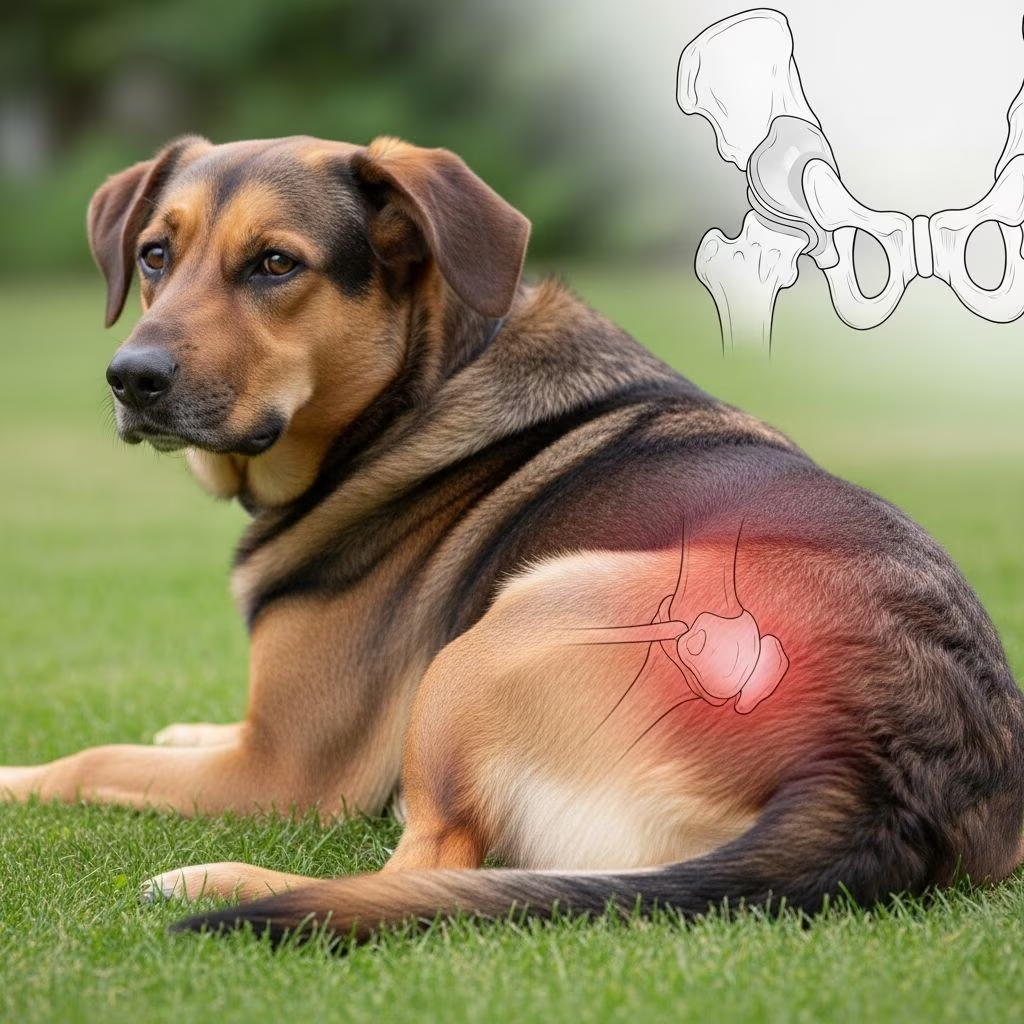
Hip dysplasia is a common skeletal disorder in dogs where the hip joint fails to develop properly, leading to instability, pain, and eventual arthritis. This condition primarily affects large and giant breeds but can occur in any dog, impacting their mobility and overall well-being.
Understanding the Hip Joint and Dysplasia Development
The hip joint functions as a ball-and-socket mechanism, allowing smooth movement for walking, running, and jumping. In dogs with hip dysplasia, the ball (femoral head) does not fit snugly into the socket (acetabulum), causing looseness or laxity. Over time, this mismatch leads to cartilage damage, bone remodeling, and osteoarthritis.
During puppy growth, the joint should mature stably. Genetic factors predispose certain dogs, but environmental influences like rapid growth exacerbate the issue. Puppies from affected parents inherit a higher risk, making early screening crucial.
Primary Causes and Risk Factors
Hip dysplasia arises from a combination of genetics and environment. Key contributors include:
- Genetic inheritance: Polygenic trait passed from parents, with breeding schemes like hip scoring reducing incidence in pedigreed dogs.
- Breed predisposition: Large breeds such as German Shepherds, Labrador Retrievers, Golden Retrievers, and Rottweilers face higher risks due to size and growth patterns.
- Nutrition and growth rate: Overfeeding large-breed puppies promotes excessive weight gain and rapid skeletal development, loosening joints. Balanced, restricted-calorie diets help mitigate this.
- Obesity: Extra body weight stresses unstable hips, accelerating degeneration.
- Exercise and environment: High-impact activities or slippery floors during growth can worsen joint instability.
Understanding these factors empowers owners to influence outcomes through responsible breeding, feeding, and lifestyle choices.
Recognizing Early Warning Signs
Symptoms often appear between 4-12 months but can emerge later in life. Watch for:
- Limping or bunny-hopping: Uneven gait, favoring rear legs, or hopping with both hind legs together.
- Difficulty rising: Struggling to stand from sitting or lying positions.
- Reduced activity: Reluctance to run, jump, or climb stairs; muscle atrophy in hindquarters.
- Pain on palpation: Sensitivity when touching hips, or pain during play.
- Stiffness after rest: Especially in mornings or after inactivity, worsening with age.
Early detection prevents progression; consult a vet if lameness persists beyond 48 hours.
Diagnostic Approaches for Confirmation
Veterinarians use a multi-step process to diagnose hip dysplasia accurately.
| Method | Description | Benefits |
|---|---|---|
| Physical Exam | Assesses gait, range of motion, and joint laxity via maneuvers like Ortolani test. | Non-invasive initial screening. |
| X-rays | Sedated radiographs reveal shallow acetabulum, joint space widening, or arthritic changes. | Gold standard for grading severity (e.g., OFA or PennHIP schemes). |
| Advanced Imaging | CT or MRI for detailed joint assessment in complex cases. | Precise evaluation of soft tissues. |
Screening programs like OFA certify hips as excellent, good, fair, borderline, mild, moderate, or severe, guiding breeding and treatment decisions.
Conservative Treatment Strategies
For mild to moderate cases, non-surgical options control pain and maintain function effectively, especially in younger dogs.
- Weight control: Ideal body condition reduces joint load; diets with controlled calories are key.
- Exercise modification: Low-impact activities like swimming or leash walks build muscle without stress. Avoid stairs and jumping.
- Medications: NSAIDs (e.g., carprofen) for inflammation; analgesics like gabapentin for pain. Joint fluid modifiers (e.g., Adequan) lubricate.
- Supplements: Glucosamine, chondroitin, omega-3s support cartilage health.
- Therapies: Physical therapy, acupuncture, laser therapy, massage, or hydrotherapy improve mobility and strength.
Many dogs stabilize with these, delaying or avoiding surgery. Regular vet monitoring adjusts plans as needed.
Surgical Interventions for Severe Cases
When conservative measures fail, surgery restores function. Options vary by age, size, and severity.
| Procedure | Ideal Candidate | Outcomes |
|---|---|---|
| Juvenile Pubic Symphysiodesis (JPS) | Puppies <5 months | Reshapes pelvis to improve fit; minimally invasive. |
| Double/Triple Pelvic Osteotomy (DPO/TPO) | Young dogs <10 months, no arthritis | Rotates pelvis for better coverage; 80-90% success. |
| Femoral Head Ostectomy (FHO) | Smaller dogs, any age | Removes femoral head, forms false joint; good pain relief. |
| Total Hip Replacement (THR) | Dogs >1 year, severe cases | Prosthetic joint; 90-95% excellent function. |
Post-surgery rehab includes restricted activity and therapy for optimal recovery.
Preventive Measures for At-Risk Breeds
Proactive steps reduce incidence:
- Responsible breeding: Use hip-scored parents via OFA/PennHIP.
- Puppy nutrition: Large-breed formulas with balanced calcium/phosphorus; avoid free-feeding.
- Controlled exercise: Gentle play, no forced rapid growth.
- Weight monitoring: Maintain lean body score throughout life.
- Early screening: X-rays at 4-6 months for high-risk pups.
These strategies can lessen severity even in genetically prone dogs.
Living with Hip Dysplasia: Long-Term Care
Chronic management focuses on quality of life. Provide orthopedic beds, ramps for furniture/cars, and non-slip flooring. Monitor for complications like luxation. Emerging therapies like stem cells or platelet-rich plasma show promise in research, enhancing joint repair alongside standard care.
Owners report improved vitality with consistent regimens, allowing active lifestyles into senior years.
Frequently Asked Questions (FAQs)
Can hip dysplasia be cured in dogs?
No cure exists, but treatments manage symptoms effectively, with surgeries providing near-normal function in many cases.
Is hip dysplasia painful for dogs?
Yes, it causes chronic pain from instability and arthritis, but medications and therapies alleviate discomfort.
How much does hip dysplasia surgery cost?
Costs vary: FHO $1,200-$3,000; THR $3,500-$7,000 per hip, including rehab (estimates; consult vets).
Can small dogs get hip dysplasia?
Rarely, but possible; large breeds predominate due to growth dynamics.
Does diet prevent hip dysplasia?
Not entirely, but controlled feeding reduces risk and severity in predisposed pups.
References
- Understanding Canine Hip Dysplasia: Causes, Symptoms, and Treatment — VCVets. 2023. https://vcvets.com/understanding-canine-hip-dysplasia-causes-symptoms-and-treatment/
- Hip Dysplasia in Dogs: Signs, Symptoms, Treatment — American Kennel Club. 2024-02-17. https://www.akc.org/expert-advice/health/hip-dysplasia-in-dogs/
- Hip Dysplasia in Dogs | Causes, Prevention and Treatment — Bliss Animal Hospital. 2023. https://blissanimalhospital.com/blog/hip-dysplasia-in-dogs/
- Canine Hip Dysplasia (CHD) — Cornell University College of Veterinary Medicine. 2024. https://www.vet.cornell.edu/departments-centers-and-institutes/riney-canine-health-center/canine-health-topics/canine-hip-dysplasia-chd
- Hip Dysplasia in Dogs — People’s Dispensary for Sick Animals (PDSA). 2024. https://www.pdsa.org.uk/pet-help-and-advice/pet-health-hub/conditions/hip-dysplasia-in-dogs
- Hip Dysplasia in Dogs – Signs, Symptoms, Diagnosis and Treatment — Morris Animal Foundation. 2023. https://www.morrisanimalfoundation.org/article/disease/hip-dysplasia-in-dogs



