

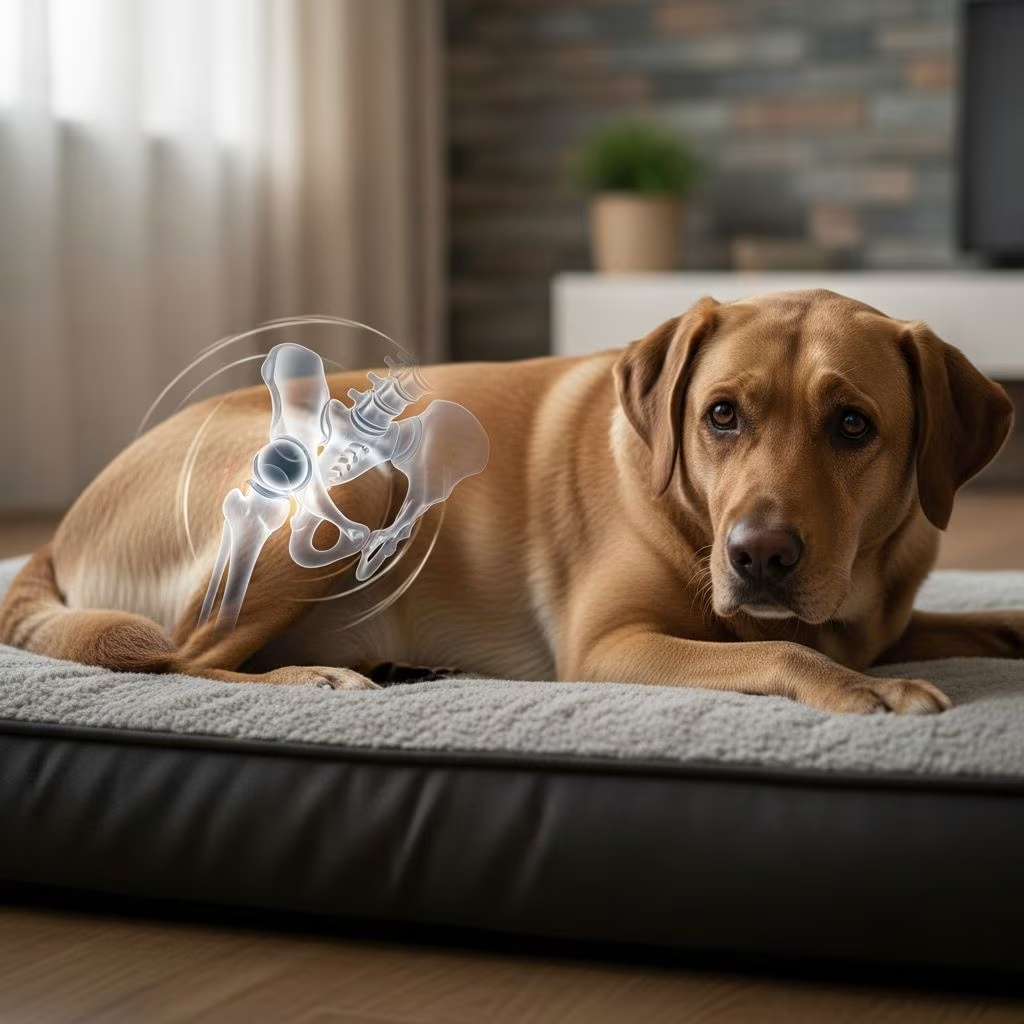
Hip Dysplasia in Dogs
Hip dysplasia is a common orthopedic condition that affects many dogs, particularly medium and large breed dogs. This condition occurs when the hip joint develops abnormally, causing the ball and socket components to not fit together properly. Instead of sliding smoothly as they should, the components rub and grind against each other, leading to pain, inflammation, and eventual arthritis. Understanding hip dysplasia, its causes, signs, and available treatment options is essential for dog owners who want to provide their pets with the best possible care and quality of life.
What Is Hip Dysplasia?
Hip dysplasia is an inherited orthopedic condition where the hip joint fails to develop correctly during a dog’s growth stage. The condition results in looseness or laxity in the hip joint, which means the ball of the femur does not fit snugly into the hip socket. This abnormal movement causes the joint cartilage to deteriorate over time, eventually leading to osteoarthritis. Hip dysplasia typically leads to osteoarthritis of the hip joints, a crippling and painful disease that can significantly impact a dog’s quality of life if left untreated.
Causes of Hip Dysplasia
Hip dysplasia is primarily a genetic condition that is inherited from a dog’s parents. However, environmental factors can significantly influence the development and severity of the condition. These environmental factors include:
- Rapid growth in puppies, which can exacerbate the condition in genetically predisposed dogs
- Overfeeding and excessive nutritional intake during the growth phase
- Lack of proper exercise during development
- Obesity, which places additional stress on developing joints
Restricted growth and controlled nutrition, on the other hand, can reduce the expression of hip dysplasia in puppies that carry the genetic predisposition. This means that even dogs genetically prone to hip dysplasia may experience less severe symptoms if they receive proper nutrition and appropriate exercise during their developmental years.
Breeds Most Affected by Hip Dysplasia
While hip dysplasia can occur in any dog breed, it most commonly affects medium and large breed pedigree dogs. Breeds with higher predisposition include German Shepherds, Golden Retrievers, Labrador Retrievers, Rottweilers, and Great Danes. However, smaller breeds and mixed breeds can also develop hip dysplasia, particularly if they have genetic predisposition.
Signs and Symptoms of Hip Dysplasia
The signs of hip dysplasia can vary depending on the severity of the condition and the dog’s age. Some dogs may show symptoms early in life, while others may not display noticeable signs until later. Common signs and symptoms include:
- Decreased activity and reluctance to engage in normal play
- Difficulty or reluctance in rising, jumping, running, or climbing stairs
- Reduced range of motion in the hind legs
- Stiffness, particularly after rest or in the morning
- Pain or discomfort in the hip area when touched or manipulated
- Limping or lameness in the hind legs
- Dragging of the hind legs
- Weakness in the hind legs
- Muscle atrophy or loss of muscle mass in the hind quarters
- Bunny-hopping gait (both hind legs moving together)
- Reluctance to engage in physical activity
It’s important to note that the severity of symptoms does not always correlate with the degree of hip dysplasia present. Some dogs with severe radiographic changes may display minimal symptoms, while others with mild dysplasia may show significant clinical signs.
Diagnosis of Hip Dysplasia
A veterinarian typically diagnoses hip dysplasia through a combination of physical examination and radiographic imaging. During the physical examination, the veterinarian will manipulate the hip joint to assess for laxity and may perform specific orthopedic tests such as the Ortolani test or the Barlow test. These tests help determine the degree of looseness in the hip joint.
Radiographs (X-rays) are the primary diagnostic tool for confirming hip dysplasia. Standard radiographs can reveal the degree of hip joint laxity and any degenerative changes associated with osteoarthritis. Several organizations, including the Orthopedic Foundation for Animals (OFA) and PennHIP, have established standardized scoring systems for evaluating and grading hip dysplasia severity based on radiographic findings. These scoring systems help veterinarians determine the extent of the condition and develop appropriate treatment plans.
Conservative Management of Hip Dysplasia
Many dogs with hip dysplasia can be successfully managed without surgery through conservative treatment approaches. Conservative management focuses on pain relief, maintaining joint health, and supporting overall mobility and quality of life. This multimodal approach typically includes several components:
Weight Management
Weight reduction is one of the most important aspects of conservative management. Extra weight places additional stress on the hip joints, exacerbating pain and accelerating degenerative changes. Maintaining a lean body weight can significantly improve a dog’s comfort and mobility. A high-quality diet with appropriate protein content and balanced mineral levels is recommended. Scheduled feeding rather than free-feeding helps prevent excessive weight gain.
Exercise Management
Appropriate exercise is beneficial for dogs with hip dysplasia, but the type and intensity must be carefully controlled. Regular, low-impact exercise such as walking and swimming promotes joint health, maintains muscle strength, and supports weight management. However, strenuous activities, running on hard surfaces, and activities that involve jumping should be restricted or avoided.
Pain Management
Nonsteroidal anti-inflammatory drugs (NSAIDs) remain the cornerstone of medical therapy for hip dysplasia. These medications reduce inflammation and alleviate pain associated with the condition. Several different types of NSAIDs are available for veterinary patients, and many studies have demonstrated their efficacy in treating pain associated with osteoarthritis. Additional analgesics such as gabapentin, tramadol, and codeine may be added to NSAID therapy to provide supplementary pain relief.
Joint Supplements and Modifiers
Chondroprotective supplements containing glucosamine and chondroitin sulfate can help support joint health and reduce pain. Many dogs with hip dysplasia benefit from regular injections of joint modifiers such as Adequan or Cartrophen, which help maintain joint fluid quality and may slow cartilage deterioration. Omega-3 fatty acid supplementation has also shown benefits in reducing inflammation and supporting joint health.
Physical Therapy and Rehabilitation
Physical therapy plays a crucial role in conservative management. Low-impact daily exercise, muscle-strengthening exercises, hydrotherapy, and acupuncture can improve joint mobility, enhance muscle strength, and reduce pain. These therapies support overall joint and muscle health and contribute to improved quality of life.
Complementary Treatments
Additional complementary therapies that may support conservative management include low-level heat therapy, massage, icing of affected joints, and acupuncture. These treatments can be used alongside medical management to enhance pain relief and improve comfort.
Surgical Treatment Options
For dogs that do not respond adequately to conservative management or those with severe hip dysplasia, surgical intervention may be necessary. Several surgical procedures are available, and the choice depends on the dog’s age, size, and specific condition:
Juvenile Pubic Symphysiodesis (JPS)
This minimally invasive procedure is suitable for puppies diagnosed with hip dysplasia. The surgery involves closing a growth plate within the pelvis, which can help slow growth and alter the pelvis’s shape to reduce looseness in the joint. This procedure is most effective when performed in very young puppies before significant joint damage occurs.
Double or Triple Pelvic Osteotomy (DPO/TPO)
This surgical procedure is typically performed in young dogs less than 8 to 10 months old. During the surgery, the pelvic bone is selectively cut and rotated to improve the function of the ball and socket joint. This surgery has a high success rate, with 80-90% of cases regaining good or better function within 3 months. DPO/TPO is most effective when performed early in the disease process before significant osteoarthritis has developed.
Femoral Head Ostectomy (FHO)
FHO surgery can be performed on both young and mature dogs and is particularly common for small to medium-sized dogs. During this procedure, the femoral head (the ball of the hip joint) is surgically removed. The body responds by creating a false joint that reduces discomfort associated with hip dysplasia. While FHO does not restore normal hip joint function, it can be a successful pain management strategy, particularly in smaller dogs.
Total Hip Replacement (THR)
Total hip replacement is typically performed on dogs over 12 months of age with fully developed skeletons. This procedure, similar to the procedure performed in humans, involves removing degenerated joint structures and replacing them with synthetic metal and plastic implants that create a more secure fit. THR is particularly suitable for large breed dogs and provides excellent long-term outcomes. Approximately 90-95% of dogs with total hip replacement have excellent post-surgery function and significant pain relief.
Success Rate and Prognosis
With appropriate treatment, most dogs with hip dysplasia can enjoy happy, comfortable lives. Approximately 75% of dogs with hip dysplasia live well with conservative management using NSAIDs, chondroprotective supplements, and lean body weight management. For dogs requiring surgery, outcomes are generally excellent, with the majority of dogs experiencing significant pain relief and improved mobility following surgical intervention.
Emerging and Novel Therapies
Researchers continue to explore innovative treatment approaches for hip dysplasia. Recent studies have shown promise for several emerging therapies:
- Platelet-rich plasma therapy in conjunction with physical therapy has improved limb function in dogs with osteoarthritis caused by hip dysplasia
- Stem cell therapy combined with hyaluronic acid has improved range of motion in dogs with hip dysplasia
- Injectable antibodies that block pain signal transmission offer new pain management options
While these therapies show promise, further research with larger sample sizes is needed to determine their long-term efficacy and safety.
Prevention and Breeding Considerations
While hip dysplasia cannot be completely prevented in genetically predisposed dogs, its severity can be minimized through responsible breeding practices and proper puppy management. Several screening schemes are in place to assess hip dysplasia in breeding dogs before mating. These schemes have significantly reduced the number of puppies born with hip dysplasia. Additionally, proper nutrition, controlled growth rates, and appropriate exercise during the developmental period can help reduce the expression of hip dysplasia in genetically susceptible puppies.
Frequently Asked Questions
Q: Can hip dysplasia be cured?
A: Hip dysplasia cannot be completely cured, but it can be effectively managed through conservative treatment or surgery to provide pain relief and maintain quality of life.
Q: At what age do signs of hip dysplasia typically appear?
A: Hip dysplasia symptoms usually begin to appear during the growth phase, often when puppies are 4-12 months old, though some dogs may not show symptoms until later in life.
Q: Is hip dysplasia painful?
A: Yes, hip dysplasia is a painful condition. The abnormal movement in the hip joint causes inflammation and eventual arthritis, resulting in pain and discomfort.
Q: Can small breed dogs develop hip dysplasia?
A: While hip dysplasia primarily affects medium and large breed dogs, smaller breeds and mixed breeds can also develop the condition if they have genetic predisposition.
Q: How much does hip dysplasia surgery cost?
A: Surgical costs vary depending on the procedure type and geographic location. FHO is generally less expensive than THR. Many dogs can be successfully managed with conservative treatment at lower cost.
Q: Can diet help with hip dysplasia?
A: Yes, a high-quality diet with appropriate protein content, balanced minerals, and maintaining lean body weight can significantly help manage hip dysplasia symptoms.
Q: What is the best exercise for a dog with hip dysplasia?
A: Low-impact exercises such as swimming, controlled walking, and leash walks are ideal. Avoid jumping, running on hard surfaces, and strenuous activities.
References
- Hip Dysplasia in Dogs — American Kennel Club (AKC). 2024. https://www.akc.org/expert-advice/health/hip-dysplasia-in-dogs/
- Hip Dysplasia in Dogs – Signs, Symptoms, Diagnosis and Treatment — Morris Animal Foundation. 2024. https://www.morrisanimalfoundation.org/article/disease/hip-dysplasia-in-dogs
- Canine Hip Dysplasia (CHD) — Cornell University College of Veterinary Medicine, Riney Canine Health Center. 2024. https://www.vet.cornell.edu/departments-centers-and-institutes/riney-canine-health-center/canine-health-topics/canine-hip-dysplasia-chd
- Hip Dysplasia in Dogs: Signs, Treatment, Surgery — PetMD. 2024. https://www.petmd.com/dog/conditions/musculoskeletal/hip-dysplasia-dogs
- Hip Dysplasia in Dogs: Early Signs, Treatment, and Prevention — GoodRx. 2024. https://www.goodrx.com/pet-health/dog/hip-dysplasia-in-dogs
- Hip Dysplasia in Dogs — PDSA (People’s Dispensary for Sick Animals). 2024. https://www.pdsa.org.uk/pet-help-and-advice/pet-health-hub/conditions/hip-dysplasia-in-dogs
- Hip Dysplasia in Dogs — VCA Animal Hospitals. 2024. https://vcahospitals.com/know-your-pet/hip-dysplasia-in-dogs



