
Hip Disorders In Horses: Diagnosis, Treatment, And Prognosis
Exploring causes, symptoms, diagnosis, and management strategies for hip joint issues in equine patients.
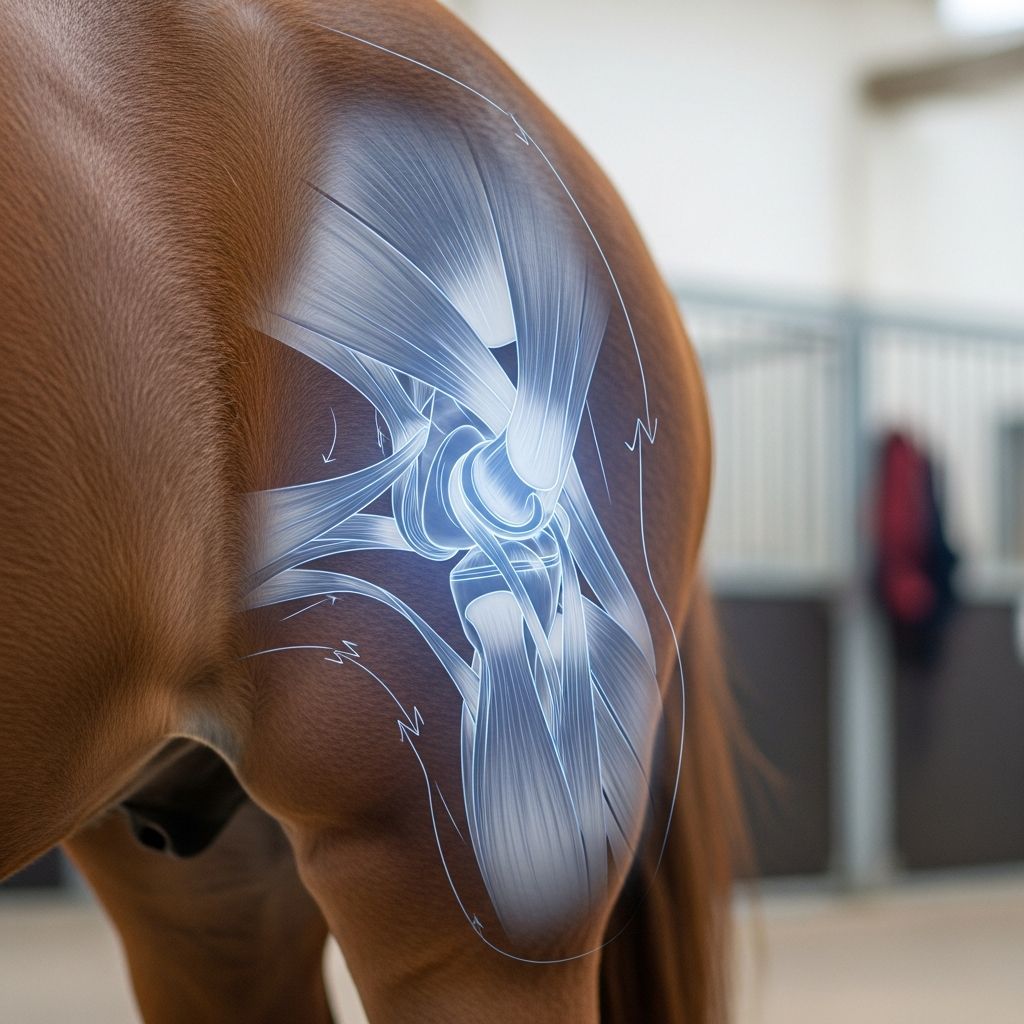
Hip disorders in horses, primarily affecting the coxofemoral joint where the femur meets the pelvis, represent uncommon yet serious causes of hindlimb lameness. These conditions often stem from traumatic events and pose significant challenges due to their location deep within the body, complicating diagnosis and treatment.
Understanding the Equine Hip Anatomy
The equine hip joint, or coxofemoral joint, is a ball-and-socket structure designed for stability and weight-bearing during locomotion. The femoral head articulates with the acetabulum of the pelvis, supported by strong ligaments and surrounded by robust musculature like the gluteals. This setup allows powerful hindlimb propulsion but makes it vulnerable to high-impact forces from falls, kicks, or being cast against stable walls. Disruptions here can severely impair a horse’s athletic potential and quality of life.
Primary Causes of Hip Problems in Equines
Trauma dominates as the leading trigger for hip disorders, with falls, collisions, or slips causing acute injuries. In young horses or foals, infections from septicemia can inflame the joint, while ponies like Shetlands face higher risks of luxations linked to patellar fixation issues. Fatigue-related pelvic fractures are prevalent in racehorses, particularly Thoroughbreds, affecting areas like the ilium or ischium. Less commonly, degenerative changes or congenital anomalies contribute, though hereditary factors akin to canine hip dysplasia are rarely confirmed in horses.
Recognizing Clinical Signs of Hip Dysfunction
- Severe, sudden-onset lameness: Often non-weight-bearing or toe-touching on the affected limb, with the hock elevated higher than the opposite side.
- Abnormal limb positioning: External rotation of the hindlimb, inward hock deviation, and stifle abduction.
- Muscle wasting and asymmetry: Atrophy of gluteal muscles in chronic cases, leading to pelvic imbalance.
- Pain responses: Resentment to palpation or manipulation of the hip region, sometimes with crepitus or instability.
- Secondary indicators: Reduced performance, reluctance to canter, or bilateral signs in advanced degeneration.
Owners might first notice these during exercise or rising, mistaking them for lower limb issues until progression reveals the true source.
Diagnostic Approaches for Accurate Identification
Pinpointing hip disorders demands advanced imaging due to the joint’s inaccessibility. Initial exams include physical palpation and flexion tests, followed by nerve blocks to localize pain. Radiography requires sedation or anesthesia for optimal positioning, though large horses often yield suboptimal images.
Nuclear scintigraphy, involving radioactive tracers, highlights ‘hot spots’ of inflammation or bone remodeling, proving invaluable for pelvic fractures. Ultrasonography assesses soft tissues and joint effusion, while CT scans offer precise detail for complex cases like Friesian foals with osteochondral issues. Synovial fluid analysis rules out sepsis.
Diagnostic Tools Comparison
| Method | Advantages | Limitations | Best Use |
|---|---|---|---|
| Radiography | Detects fractures, luxations | Poor visibility in adults | Initial screening |
| Scintigraphy | Identifies active bone changes | Costly, requires facility | Fatigue fractures |
| Ultrasonography | Real-time soft tissue view | Limited depth penetration | Ligament strains |
| CT/MRI | High-resolution 3D imaging | Expensive, anesthesia needed | Complex dysplasia |
Treatment Strategies Tailored to Condition Severity
Management varies by injury type and horse size. Conservative approaches suit incomplete fractures: strict stall rest (3-6 months), anti-inflammatories like NSAIDs, and controlled hand-walking promote healing. Intra-articular therapies, including corticosteroids or hyaluronan, alleviate coxitis and osteoarthritis.
Surgical intervention is riskier due to anesthesia hazards on fractured limbs but necessary for luxations or complete fractures. Reduction under general anesthesia attempts relocation, often supplemented by tension band wiring for acetabular rim fractures. In ponies, closed reduction succeeds more frequently. Large breaches into the joint demand arthroscopy or salvage procedures, though prognosis dims.
Rehabilitation emphasizes gradual reconditioning: swimming, underwater treadmills, and physiotherapy rebuild muscle without overload.
Prognosis and Long-Term Outcomes
Outcomes hinge on fracture completeness and joint involvement. Incomplete pelvic fractures, especially ilial wing types, boast excellent return-to-athletic rates with rest alone. Tuber coxae or ischiadicum fractures allow many horses to resume work. Conversely, coxofemoral luxations or complete pelvic disruptions carry guarded to grave forecasts, frequently culminating in euthanasia due to instability and pain.
Chronic coxitis evolving to osteoarthritis yields permanent lameness, manageable palliatively but rarely curable. Early detection via screening in at-risk breeds enhances prospects.
Preventive Measures for Horse Owners and Trainers
- Maintain stable footing to avert slips and falls.
- Monitor growing foals for rapid weight gain or nutritional excesses.
- Regular veterinary checks for performance horses, including lameness exams.
- Avoid breeding known carriers of hereditary predispositions.
- Implement core-strengthening exercises to bolster pelvic stability.
Frequently Asked Questions (FAQs)
What is the most common cause of hip lameness in horses?
Direct trauma from falls or being cast is the primary cause, leading to fractures or luxations.
Can horses recover fully from a hip fracture?
Incomplete fractures often heal with rest, allowing athletic return, but complete ones or joint-involving injuries have poor prognoses.
How do vets diagnose hard-to-see hip issues?
Combining radiography, scintigraphy, and ultrasound provides the most reliable confirmation.
Is hip dysplasia common in horses like in dogs?
Rarely; trauma predominates, though isolated congenital cases occur in breeds like Friesians.
What supportive care helps during recovery?
NSAIDs for pain, controlled exercise, and joint supplements aid healing and comfort.
Emerging Research and Future Directions
Advances in imaging and regenerative therapies, like stem cell injections for osteoarthritis, promise improved management. Studies on Friesian-specific osteochondral dysplasia highlight genetic screening potential. Enhanced diagnostics are uncovering more subtle sacroiliac issues mimicking hip pain, refining targeted treatments.
References
- Canine Hip Dysplasia (CHD) — Cornell University College of Veterinary Medicine. 2025-11-20. https://www.vet.cornell.edu/departments-centers-and-institutes/riney-canine-health-center/canine-health-topics/canine-hip-dysplasia-chd
- Coxofemoral joint: disease – overview in Horses (Equis) — Vetlexicon. Accessed 2026. https://www.vetlexicon.com/equis/musculoskeletal/articles/coxofemoral-joint-disease-overview/
- Disorders of the Hip in Horses — Merck Veterinary Manual. Accessed 2026. https://www.merckvetmanual.com/musculoskeletal-system/disorders-of-the-hip-in-horses/disorders-of-the-hip-in-horses
- Hip Dysplasia in Friesians — Fenway Foundation. Accessed 2026. https://www.fenwayfoundation.com/post/hip-dysplasia-in-friesians
- Problems in the Horse’s Hip and Pelvis — The Horse. Accessed 2026. https://thehorse.com/15539/problems-in-the-horses-hip-and-pelvis/
- Disorders of the Hip in Horses – Horse Owners — MSD Veterinary Manual. Accessed 2026. https://www.msdvetmanual.com/horse-owners/bone-joint-and-muscle-disorders-in-horses/disorders-of-the-hip-in-horses
- Hip disorders rare but often under radar for equine athletes — Producer.com. Accessed 2026. https://www.producer.com/livestock/hip-disorders-rare-but-often-under-radar-for-equine-athletes/
Similar Articles








Read full bio of Sneha Tete


