

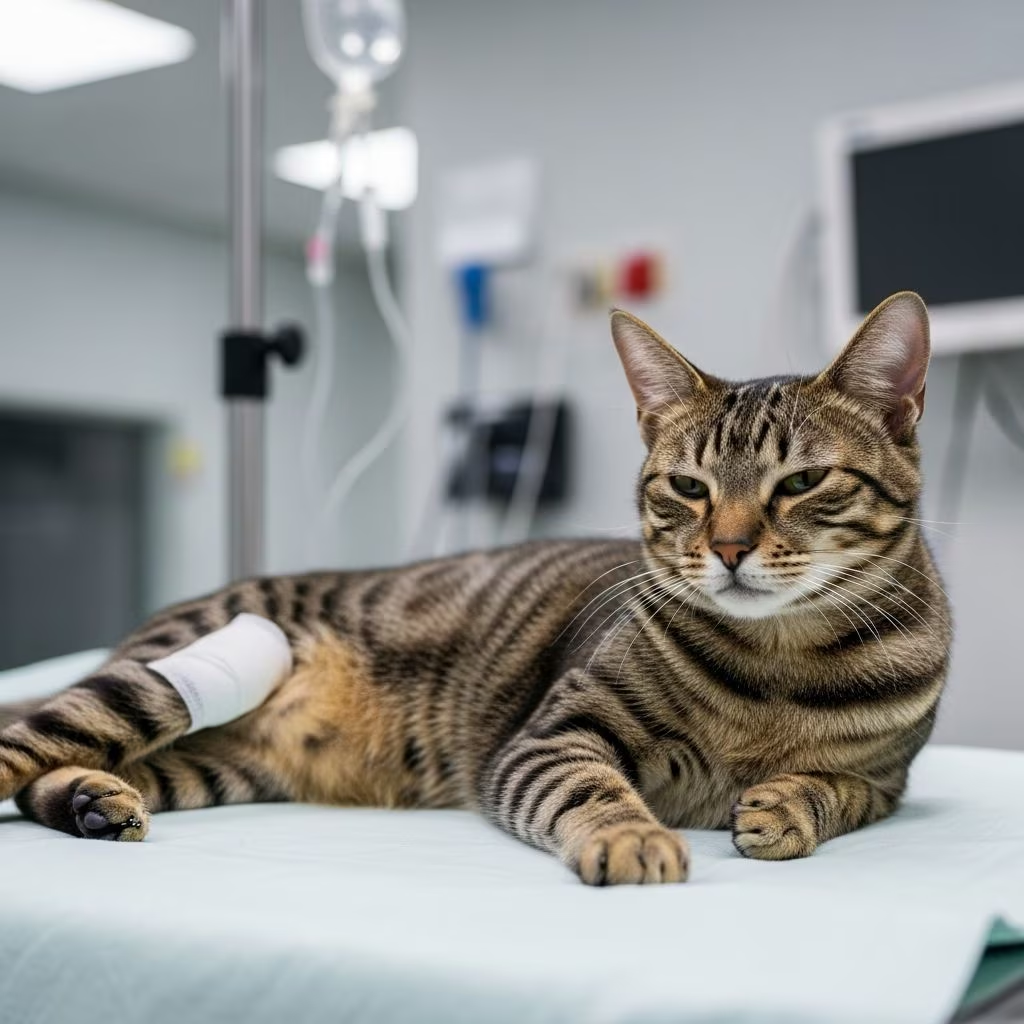
Understanding Hip Dislocation in Cats
Hip dislocation, medically known as hip luxation, occurs when the femoral head (the ball of the hip joint) becomes displaced from the acetabulum (the socket). This condition is particularly concerning in cats because it can significantly impact their quality of life and mobility. Unlike dogs, cats tend to hide pain effectively, making early detection challenging for pet owners. Hip dislocation in cats can result from traumatic injuries, underlying joint degeneration, or pre-existing conditions like hip dysplasia that compromise joint stability.
The hip joint is a ball-and-socket joint that allows cats to move with their characteristic grace and flexibility. When this joint becomes dislocated, the normal mechanics are disrupted, leading to pain, lameness, and functional impairment. Understanding the nature of this condition is essential for recognizing symptoms and seeking timely veterinary care.
Recognizing the Signs and Symptoms
Hip dislocation presents with several characteristic signs that pet owners should monitor closely. The symptoms vary in severity depending on the extent of the injury and whether the dislocation is acute or chronic.
Primary Symptoms
The most common clinical signs of hip dislocation include:
- Lameness: Limping or inability to bear weight on the affected leg is often the most noticeable sign. Cats may hold the limb up or refuse to put weight on it.
- Pain and Discomfort: Affected cats typically show signs of pain, particularly when the affected limb is touched or manipulated. They may vocalize or attempt to move away from handling.
- Abnormal Gait: The affected limb may appear shorter or rotated outward. Cats may move with an abnormal posture to compensate for the injury.
- Reluctance to Move: Cats may have difficulty rising, jumping, or engaging in normal activities. They may prefer to stay in one location.
- Behavioral Changes: Increased agitation, aggression, or grumpiness can occur due to chronic pain and physical limitations.
Diagnosis and Veterinary Examination
Accurate diagnosis is crucial for determining the appropriate treatment approach. Veterinarians employ several diagnostic methods to confirm hip dislocation and assess the extent of damage.
Physical Examination
The veterinary examination begins with a thorough physical assessment. The veterinarian will perform specific maneuvers including flexion, extension, rotation, and importantly, abduction of the hip joint. Cats with hip issues often resent hip abduction more than other movements, which can be a diagnostic indicator.
Diagnostic Imaging
X-rays are the primary diagnostic tool for confirming hip luxation and assessing joint damage. These images help the veterinarian determine whether the femoral head is displaced from the socket and evaluate the integrity of the bone and joint structures. In some cases, additional imaging may be recommended to identify any associated fractures or degenerative changes.
The imaging results guide the treatment decision-making process. Information about joint stability, bone integrity, and the presence of arthritis or other degenerative changes all influence which therapeutic approach will be most beneficial for the individual cat.
Treatment Options: Conservative Management
Not all cats with hip dislocation require immediate surgery. When the injury is recent and the joint is stable, conservative management may be attempted first.
Closed Reduction
Closed reduction involves manually manipulating the femoral head back into the hip socket under sedation or anesthesia. This procedure is typically attempted for acute traumatic hip luxations where no fractures are present and the joint appears stable enough to hold the femoral head in place.
Following successful closed reduction, the cat will require strict activity restriction and possibly external support devices such as slings or bandages to maintain proper joint positioning. Restricted movement is essential during the healing phase to prevent re-luxation.
Medical Management
For cats where surgery is not immediately indicated or as a complement to other treatments, medical management may include pain medications prescribed specifically for feline use, anti-inflammatory medications, and joint supplements. Weight management through dietary modification can also reduce stress on affected joints.
Surgical Treatment Options
When conservative management fails, when the dislocation is severe, or when the joint is chronically unstable, surgical intervention becomes necessary. Several surgical approaches are available, each with specific applications.
Toggle Pin Repair
Toggle pin repair is a joint-stabilizing procedure that uses a toggle pin and suture material to anchor the femoral head securely within the socket. This technique restores joint stability while preserving the hip’s natural function. It is most suitable for pets with recent dislocations and no severe joint degeneration. The procedure involves creating small incisions to access the hip joint, inserting the toggle mechanism, and securing it with sutures to keep the femoral head properly positioned.
Femoral Head and Neck Ostectomy (FHO)
Femoral head ostectomy, also called excision arthroplasty, is a procedure in which the head (or ball) of the femur is surgically removed. This eliminates the grinding and misalignment that occurs with a dislocated joint. The remaining femur forms a false joint with the surrounding muscles, ligaments, and tendons in the area.
While this false joint is not as anatomically perfect as a natural hip joint, it provides significant pain relief and functional improvement. Many cats return to nearly normal function following FHO surgery. This procedure is particularly beneficial for smaller pets like cats, chronic luxation cases, or situations where arthritis or joint damage is present.
Total Hip Replacement (THR)
Total hip replacement is a procedure in which artificial implants replace both the femoral head and the acetabulum to create a functional ball-and-socket joint. These implants remain fully functional for many years. While this procedure is available for cats, it is rarely performed in feline patients due to cost considerations and the excellent results typically achieved with other surgical options.
Post-Operative Care and Recovery
Successful recovery from hip dislocation surgery requires dedicated post-operative care and strict adherence to veterinary recommendations. The recovery period is gradual, but with proper management, most cats regain full mobility and comfort.
Pain Management
Appropriate pain control is fundamental to recovery. Veterinarians will prescribe pain medications tailored to the cat’s needs and the specific surgery performed. Pain management must be continued throughout the recovery period to facilitate healing and encourage appropriate movement during rehabilitation.
Activity Restriction
Controlled movement is essential for proper healing. During the immediate post-operative period, cats should be confined to a small area with minimal jumping or climbing opportunities. Most veterinarians recommend restricting normal activities for 6 to 8 weeks following surgery. This means no running, jumping, or strenuous play during the healing phase.
Some cats may require cage rest if the dislocation involved the hip joint. The specific level of restriction will depend on the surgical procedure performed and individual healing progress.
Rehabilitation and Physical Therapy
Gentle exercises and physical therapy play a crucial role in restoring strength and flexibility. As the cat progresses through recovery, gradually increasing activity levels under veterinary guidance helps rebuild muscle mass and joint function. Physical therapy may include gentle passive range-of-motion exercises, controlled walking, and eventually supervised play.
Suture and Wound Care
Post-operative incisions require proper care to prevent infection. Cats must be prevented from excessive licking or chewing at the surgical site. Elizabethan collars may be necessary during the immediate post-operative period. Follow-up appointments will include suture removal once the incision has healed adequately, typically within 10 to 14 days.
Follow-Up Appointments
Regular veterinary check-ups are essential to monitor healing progress, assess pain levels, and make adjustments to the treatment plan as needed. These appointments allow the veterinarian to examine the surgical site, evaluate joint function, and determine when activity levels can be gradually increased.
Long-Term Management and Quality of Life
Recovery from hip dislocation surgery is a gradual process, but outcomes are generally favorable in cats. Most cats experience significant pain relief and return to near-normal function within several weeks to months following surgery. Early intervention and appropriate post-operative care are key factors in achieving optimal outcomes.
Even after complete recovery, some cats may have mild exercise limitations or occasional stiffness, particularly in cold weather or with aging. Long-term management may involve periodic pain medication as needed and maintenance of appropriate weight through diet and moderate exercise to reduce stress on the affected hip joint.
Complications and When to Contact Your Veterinarian
While most cats recover well from hip dislocation surgery, complications can occasionally occur. Owners should be alert for signs such as increased swelling or redness at the surgical site, discharge from the incision, inability to bear weight after the expected recovery period, or behavioral changes suggesting pain.
In some cases, dislocations may recur, particularly if activity restrictions are not properly followed during the critical healing phase. If signs of re-luxation develop, such as sudden onset of lameness or abnormal gait changes, immediate veterinary attention is necessary.
Frequently Asked Questions
Q: How long will my cat limp after hip dislocation surgery?
A: Most cats show significant improvement within the first few days to weeks following surgery due to reduced pain. Many cats receiving FHO surgery recover in just a few days. However, complete rehabilitation typically takes 6 to 8 weeks, with gradual improvement throughout this period.
Q: Can cats live normally after hip dislocation treatment?
A: Yes, cats can lead normal, active lives following appropriate treatment for hip dislocation. With proper surgical intervention and post-operative care, most cats return to near-normal function and maintain good quality of life.
Q: Is hip dislocation surgery necessary for all cats?
A: Not always. Some acute cases may be managed with closed reduction and strict activity restriction. However, surgery is typically recommended for cases involving joint instability, chronic dislocations, or instances where conservative treatment has failed.
Q: What is the difference between FHO and total hip replacement?
A: FHO removes the femoral head and allows scar tissue to form a false joint, while total hip replacement uses artificial implants to recreate a natural ball-and-socket joint. THR is more invasive and expensive but may provide superior joint mechanics. FHO is more commonly performed in cats due to its excellent outcomes and lower cost.
Q: How can I prevent hip dislocation in my cat?
A: While traumatic injuries cannot always be prevented, maintaining a healthy weight, providing appropriate exercise, and preventing high-impact accidents can reduce risk. Cats with genetic predisposition to hip dysplasia may benefit from weight management and activity modification.
Q: Will my cat need lifelong medication after hip surgery?
A: Most cats do not require lifelong medication following successful surgery. However, some cats may benefit from occasional pain management during recovery or as they age. Your veterinarian will recommend the appropriate management plan based on your individual cat’s recovery and long-term needs.
References
- Tackling Feline Hip Dysplasia: New Knowledge and New Treatments — Michigan State University College of Veterinary Medicine. 2016. https://cvm.msu.edu/news/2016/tackling-feline-hip-dysplasia
- Hip Dysplasia in Cats: Signs, Symptoms, and Treatment — Long Beach Animal Hospital. https://lbah.com/feline/hip-dysplasia-in-cats/
- Hip Dysplasia in Cats — PetMD. https://www.petmd.com/cat/conditions/musculoskeletal/c_ct_hip_dysplasia
- Hip Luxation in Cats and Dogs — Warren House Veterinary Centre. https://warrenhousevets.com/hip-luxation-in-cats-and-dogs/
- Hip Dislocation/Luxation Treatment and Recovery — LifeCare Pet Hospital. https://www.lifecarepethospital.com/services/pets/pet-hip-dislocation-luxation
- Hip Luxation — American College of Veterinary Surgeons. https://www.acvs.org/small-animal/hip-luxation/
- Hip Dysplasia — Cornell University College of Veterinary Medicine, Feline Health Center. https://www.vet.cornell.edu/departments-centers-and-institutes/cornell-feline-health-center/health-information/feline-health-topics/hip-dysplasia



