

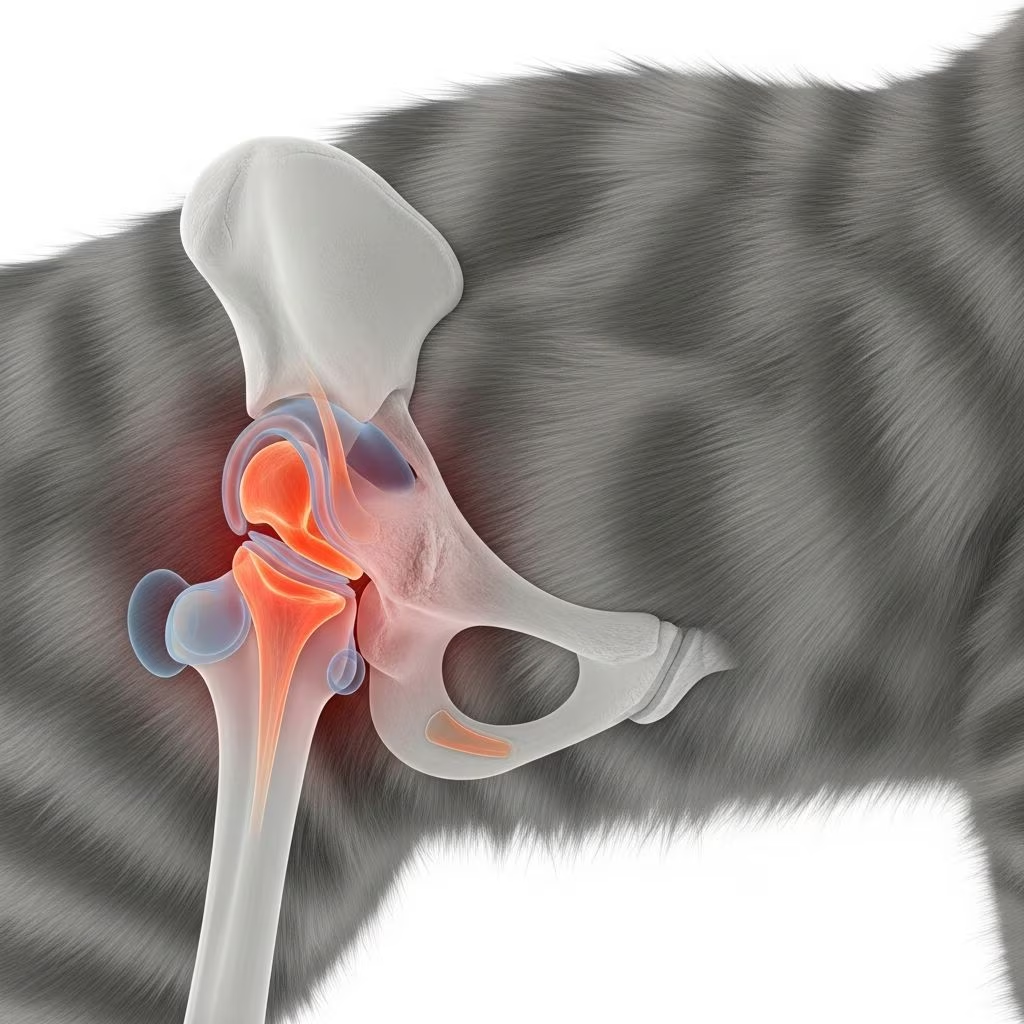
Hip Dislocation in Cats: Comprehensive Guide to Diagnosis and Post-Operative Care
Hip dislocation, medically known as coxofemoral luxation, is a serious orthopedic condition affecting the hip joint in cats. This condition occurs when the head of the femur (thighbone) displaces from the acetabulum (hip socket), causing significant pain, mobility issues, and functional impairment. While hip dislocation is less common in cats than in dogs, it remains a significant concern for feline health and requires prompt veterinary intervention. Understanding the causes, recognizing symptoms, and knowing about available treatments can help cat owners make informed decisions about their pet’s care and recovery.
Understanding Hip Dislocation in Cats
What is Hip Dislocation?
Hip dislocation in cats refers to the displacement of the femoral head from the hip socket. This traumatic condition disrupts the normal anatomy of the hip joint and can result from acute trauma or underlying joint abnormalities. The femoral head and acetabulum form a ball-and-socket joint that allows for normal hip movement and weight-bearing. When this joint becomes dislocated, the structures supporting it—including ligaments, muscles, and tendons—become stretched or torn, preventing the joint from functioning properly.
Common Causes of Hip Dislocation
Hip dislocation in cats typically results from traumatic injuries and underlying joint conditions. The primary causes include:
– Trauma from vehicle accidents or high-impact injuries- Falls from elevated surfaces- Direct blunt force to the hip region- Pre-existing hip dysplasia, which compromises joint stability- Repetitive stress on an already weakened hip joint- Ligamentous laxity or abnormal joint development
Cats with underlying hip dysplasia—a condition characterized by abnormal hip socket development—are at significantly higher risk of experiencing hip dislocation, even from relatively minor trauma. The dysplastic hip joint lacks the normal stability and support, making it more prone to displacement.
Recognizing Symptoms of Hip Dislocation
Clinical Signs and Symptoms
Cats with hip dislocation typically exhibit distinct clinical signs that indicate significant discomfort and functional impairment. Recognizing these symptoms is crucial for early diagnosis and treatment. Common symptoms include:
– Lameness or severe limping of the affected hind limb- Reluctance or inability to bear weight on the affected leg- Holding the affected limb up or in an abnormal position- Visible swelling or deformity at the hip joint- Pain when the hip joint is manipulated or touched- Abnormal gait with the affected limb appearing shorter or rotated outward- Vocalization or signs of distress- Reluctance to move, jump, or climb stairs- Difficulty rising from a resting position- “Floppy” limb appearance- Cracking or grinding sounds from the joint
Most cats with acute hip dislocation will exhibit severe lameness immediately following the injury. The severity of symptoms depends on whether the dislocation is acute (recent) or chronic (long-standing), as well as the degree of associated soft tissue damage.
Diagnostic Procedures for Hip Dislocation
Physical Examination
A thorough physical examination is the first step in diagnosing hip dislocation. The veterinarian will assess the cat’s gait, palpate the affected hip joint, and evaluate pain responses. During the examination, the veterinarian performs specific maneuvers including flexion, extension, abduction, and rotation of the hip joint. Cats with hip dislocation often exhibit pain and resistance to these movements, particularly hip abduction.
The veterinarian may also look for an “ortolani sign,” which occurs when the femoral head displaces out of the socket under pressure. Sedation is often beneficial during this examination to allow for accurate assessment without the cat’s defensive muscle guarding interfering with findings.
Radiographic Imaging
Radiographs (X-rays) are essential for confirming hip dislocation and assessing the extent of joint damage. Standard radiographic views include ventrodorsal and lateral projections of the pelvis and hip joints. These images clearly show whether the femoral head is displaced from the acetabulum and provide information about the direction of dislocation (cranial, dorsal, or ventral). Radiographs also reveal any associated fractures, particularly of the femoral head or acetabulum, and help assess the presence of degenerative joint disease or underlying hip dysplasia.
Advanced imaging such as computed tomography (CT) may be recommended in complex cases to provide three-dimensional visualization of the hip joint anatomy and help surgical planning.
Treatment Options for Hip Dislocation
Closed Reduction
Closed reduction is an attempt to manually manipulate the femoral head back into the hip socket without surgical intervention. This procedure is typically performed under heavy sedation or general anesthesia to relax the muscles surrounding the hip joint. During closed reduction, the veterinarian carefully manipulates the affected limb to guide the femoral head back into the acetabulum.
Closed reduction is most successful for acute traumatic dislocations that have occurred within a few days of injury and when there is minimal associated soft tissue damage or fractures. Success rates for closed reduction in cats are lower than in dogs, and many cases require surgical intervention. If closed reduction is unsuccessful after one or two attempts, or if the hip repeatedly dislocates after reduction, surgical intervention becomes necessary.
Surgical Treatment Options
Surgery is often required for hip dislocation in cats, particularly in cases where closed reduction fails, the dislocation is chronic, or there is substantial pain and joint damage. Two primary surgical approaches are available:
Femoral Head Ostectomy (FHO) or Excision Arthroplasty
Femoral head ostectomy is one of the most common surgical procedures for treating hip dislocation and hip dysplasia in cats. During this procedure, the veterinary surgeon removes the head (ball) of the femur. The remaining portion of the femur and the hip socket are then allowed to form a fibrous or false joint through the surrounding muscles, ligaments, and tendons. While this false joint is not as structurally perfect as the original hip joint, it provides significant pain relief and allows cats to return to nearly normal function.
The advantages of FHO include its relative simplicity, lower cost compared to other surgical options, and excellent pain relief outcomes. Cats typically recover quickly from FHO surgery, with many returning to normal activity levels within days to weeks. The main limitation is that the false joint formed after FHO is less stable than a normal hip joint, though most cats adapt well and experience minimal functional impairment.
During FHO surgery, the veterinary surgeon carefully separates the muscles around the hip joint, removes the femoral head at the femoral neck, and then meticulously sutures the muscles back in place. Proper muscle reconstruction is essential for the formation of a functional false joint and optimal long-term outcomes.
Total Hip Replacement (THR)
Total hip replacement involves replacing the damaged hip joint with prosthetic implants that recreate the normal ball-and-socket joint anatomy. In this procedure, the femoral head and neck are removed and replaced with a prosthetic femoral component, while the acetabulum is resurfaced or replaced with an acetabular cup. These implants are typically made of biocompatible materials such as stainless steel, titanium, or ceramics.
Total hip replacement provides excellent functional outcomes and allows cats to maintain nearly normal hip joint mechanics and stability. However, THR is rarely performed in cats due to its high cost, technical complexity, and the excellent results achieved with FHO in most feline cases. THR is typically reserved for young, active cats with severe bilateral hip disease or specific anatomical considerations where FHO would not be appropriate.
Post-Operative Care and Recovery
Immediate Post-Operative Period
The immediate post-operative period is critical for ensuring proper healing and preventing complications. Immediately following surgery, cats should be kept in a warm, quiet recovery area where they can be closely monitored as they wake from anesthesia. Pain management is essential during this period, and the veterinarian will provide appropriate pain medications tailored to the cat’s needs.
Most cats experience minimal pain relief immediately after surgery as anesthesia wears off, but pain typically decreases significantly within the first 24 to 48 hours as swelling decreases and the initial inflammatory response subsides. Activity should be severely restricted during the first two weeks following surgery, with cage rest recommended for cats undergoing FHO procedures.
Pain Management
Appropriate pain control is fundamental to successful recovery and rehabilitation. Veterinarians typically prescribe multimodal pain management protocols that may include:
– Opioid medications such as buprenorphine or hydromorphone for acute post-operative pain- Non-steroidal anti-inflammatory drugs (NSAIDs) such as meloxicam or robenacoxib to reduce inflammation and provide long-term pain relief- Local anesthetic blocks to provide targeted pain relief- Adjunctive medications such as gabapentin for neuropathic pain management
The veterinarian will provide specific instructions regarding medication dosing, frequency, and duration. Pet owners should administer medications exactly as prescribed and report any adverse effects or concerns to their veterinarian.
Incision Care and Wound Management
Proper incision care is essential to prevent infection and promote optimal healing. The surgical incision should be kept clean and dry, and cats should be prevented from licking or chewing at the incision site. If the veterinarian placed sutures or surgical staples, they typically need to be removed 10 to 14 days after surgery. Pet owners should follow specific instructions regarding bathing restrictions, as getting the incision wet can compromise healing.
Swelling and bruising around the surgical site are normal in the first few days after surgery and typically resolve within one to two weeks. If the incision becomes red, swollen, discharge appears, or if the edges separate, contact the veterinarian immediately as these signs may indicate infection or incision complications.
Activity Restriction and Gradual Return to Normal Function
Activity restriction is crucial during the healing phase. For the first 7 to 14 days after surgery, cats should be confined to a small area such as a single room or large cage. This prevents excessive movement that could stress the surgical site and compromise healing. Jumping, running, and climbing should be strictly limited during this period.
After the initial restriction period, cats can gradually increase their activity level over 6 to 8 weeks under close observation. This gradual progression allows the surgical site to heal fully and muscles to strengthen. Most cats following FHO surgery recover remarkably quickly, with many returning to nearly normal activity levels within 4 to 6 weeks, though complete bone remodeling and scar tissue formation can take 8 to 12 weeks or longer.
Physical Rehabilitation and Therapeutic Exercises
Physical rehabilitation plays an important role in optimizing recovery and functional outcomes following hip surgery. Gentle passive range of motion exercises help maintain joint mobility and prevent muscle stiffening. As healing progresses, active exercises such as controlled walking on level surfaces help rebuild muscle strength in the affected limb.
Rehabilitation modalities such as therapeutic laser therapy, acupuncture, and underwater treadmill therapy may be beneficial in some cases. These therapies can help reduce pain, improve circulation, and facilitate muscle development. The veterinarian or a certified rehabilitation therapist can provide specific recommendations based on the individual cat’s progress.
Nutrition and Weight Management
Proper nutrition supports healing and helps prevent complications such as obesity, which could stress the healing hip joint. If the cat is overweight, the veterinarian may recommend a therapeutic diet to support gradual weight loss. Joint supplements containing glucosamine and chondroitin may be recommended to support joint health and reduce inflammation. Cats with concurrent kidney disease should receive appropriate kidney-supportive diet as directed by the veterinarian.
Follow-Up Veterinary Care
Regular follow-up veterinary examinations are essential to monitor healing progress and assess functional recovery. The veterinarian will typically schedule recheck examinations at 2 weeks, 6 weeks, and 12 weeks post-operatively, though the specific timeline may vary. During these visits, the veterinarian will assess the incision, evaluate pain levels, observe gait and limb function, and make adjustments to the recovery plan as needed.
Radiographs may be recommended at the 12-week mark to assess bone healing and the development of the false joint in FHO cases. These follow-up visits provide opportunities to address any complications or concerns and ensure that the cat is progressing appropriately toward full recovery.
Potential Complications and When to Seek Help
While most cats recover well from hip dislocation surgery, complications can occasionally occur. Pet owners should be aware of warning signs that require immediate veterinary attention, including:
– Increased swelling, redness, or discharge from the incision- Opening of the incision or separation of sutures- Signs of infection such as fever or lethargy- Severe or worsening pain that is not controlled by prescribed medications- Inability or extreme reluctance to bear weight on the affected limb beyond the first few weeks- Signs of self-trauma such as excessive licking or chewing at the incision- Hip luxation recurrence or sudden loss of function- Lameness in other limbs, which may indicate compensation injuries
Pet owners should maintain close communication with their veterinarian throughout the recovery period and report any concerns promptly.
Long-Term Prognosis and Quality of Life
The long-term prognosis for cats following hip dislocation treatment is generally excellent. Cats treated surgically, particularly with FHO, typically achieve significant pain relief and functional recovery. Most cats return to normal or near-normal activity levels and quality of life, with many owners reporting that they cannot tell the treated cat apart from unaffected cats in their activities and behavior.
Factors that influence long-term outcomes include the age and general health of the cat, the presence of underlying hip dysplasia, associated injuries or fractures, and the quality of post-operative care and rehabilitation. Younger cats typically recover more quickly and completely than older cats, though cats of all ages can benefit from surgical intervention.
Frequently Asked Questions
Q: How long does it take a cat to recover from hip dislocation surgery?
A: Most cats recover remarkably quickly from hip dislocation surgery, with significant improvement in function within the first 2 to 4 weeks. However, complete healing and return to full normal function typically takes 8 to 12 weeks. The timeline varies depending on the individual cat, the specific procedure performed, and how well post-operative care instructions are followed.
Q: Will my cat be able to jump and climb stairs after hip surgery?
A: Yes, most cats return to normal jumping and climbing activities after recovery from hip surgery. Cats are remarkably adaptable and typically compensate well for any residual hip limitations. However, during the recovery period, jumping and stair climbing should be restricted to allow proper healing.
Q: Is closed reduction or surgery better for hip dislocation in cats?
A: Closed reduction is initially attempted for acute dislocations and is less invasive, but success rates in cats are variable. If closed reduction fails or the hip redislocates, surgery becomes necessary. Your veterinarian will recommend the best approach based on your individual cat’s condition, the chronicity of the dislocation, and other factors.
Q: What is the cost of hip surgery for cats?
A: The cost of hip surgery varies depending on the procedure performed, your geographic location, and your veterinary clinic. Femoral head ostectomy is generally less expensive than total hip replacement. Costs can range from several hundred to several thousand dollars, and may not include pre-operative diagnostics or post-operative medications and rehabilitation.
Q: Can hip dislocation recur after surgery?
A: Hip dislocation can recur, particularly if the underlying cause was traumatic and similar trauma occurs again. Cats treated with FHO rarely experience redislocation because the false joint that forms is less prone to luxation than the original joint. Cats treated with total hip replacement have excellent joint stability and very low redislocation rates.
Q: Should I restrict my cat’s activity after surgery?
A: Yes, activity restriction is essential during the early recovery period, typically the first 2 to 4 weeks after surgery. Limiting jumping, running, and climbing prevents excessive stress on the surgical site and promotes proper healing. Gradual return to normal activity under veterinary guidance follows the initial restriction period.
Q: Will my cat need pain medication long-term after hip surgery?
A: Most cats require pain medication for the first few weeks following surgery, with gradual discontinuation as healing progresses. Some cats may benefit from long-term pain management if they have concurrent osteoarthritis or other joint conditions, but many cats require no medications long-term after successful recovery.
References
- Tackling Feline Hip Dysplasia: New Knowledge and New Treatments — Michigan State University College of Veterinary Medicine. 2016. https://cvm.msu.edu/news/2016/tackling-feline-hip-dysplasia
- Hip Luxation — American College of Veterinary Surgeons. 2024. https://www.acvs.org/small-animal/hip-luxation/
- Hip Dysplasia in Cats — Cornell University College of Veterinary Medicine Feline Health Center. 2024. https://www.vet.cornell.edu/departments-centers-and-institutes/cornell-feline-health-center/health-information/feline-health-topics/hip-dysplasia
- Hip Dysplasia in Cats – Symptoms, Diagnosis, and Treatment Options — PetMD. 2024. https://www.petmd.com/cat/conditions/musculoskeletal/c_ct_hip_dysplasia
- Hip Luxation in Cats and Dogs — Warren House Veterinary Centre. 2024. https://warrenhousevets.com/hip-luxation-in-cats-and-dogs/
- Coxofemoral Hip Luxation in Cats: Symptoms, Causes, and Diagnosis — Wag Walking. 2024. https://wagwalking.com/cat/condition/coxofemoral-hip-luxation
- Joint Dislocation in Cats: Symptoms, Causes, Diagnosis, and Treatment — Wag Walking. 2024. https://wagwalking.com/cat/condition/joint-dislocation



