

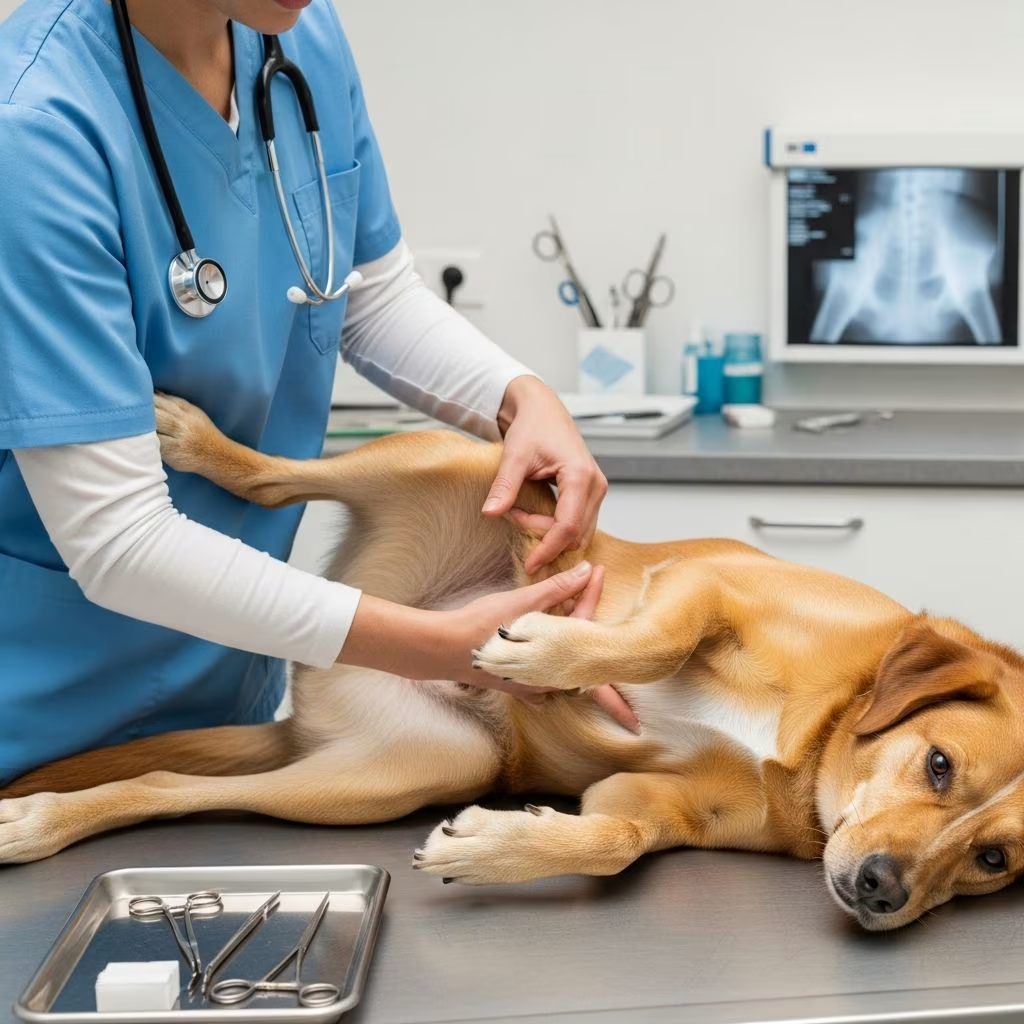
Hip Dislocation in Dogs: Understanding the Condition
Hip dislocation, also known as hip luxation, is a serious orthopedic condition affecting dogs where the femoral head becomes displaced from the acetabulum (hip socket). This painful condition can significantly impact a dog’s mobility and quality of life. Understanding the clinical signs, diagnostic procedures, and treatment options is essential for dog owners and veterinarians to ensure proper management and recovery.
Clinical Signs of a Dislocated Hip
Recognizing the symptoms of hip dislocation is crucial for early intervention. Most dogs with hip dislocation will exhibit severe hind limb lameness and may not be able to bear weight on the affected limb. The clinical presentation varies depending on the severity and duration of the dislocation.
Observable symptoms include:
- Severe lameness in the hind limb
- Inability or reluctance to bear weight on the affected leg
- The affected limb held in a flexed (folded or pulled up) position
- External rotation of the limb
- Apparent shortening of the affected limb compared to the other leg
- Abnormal gait or movement pattern
- Pain and reluctance to move or engage in physical activity
In chronic dislocations, particularly in small dogs, the lameness may be more subtle. However, the limb will still be carried abnormally and show decreased muscle mass in the affected area. The severity of clinical signs often correlates with the duration of the dislocation and the presence of any associated injuries.
How Hip Dislocation is Diagnosed
Proper diagnosis of hip dislocation involves a combination of physical examination and imaging studies. Your veterinarian will perform a thorough assessment to confirm the condition and determine the best course of treatment.
Physical Examination
During the physical examination, your veterinarian will manipulate the hip joint to assess for pain, range of motion, and joint stability. Manipulation of the affected hip joint will typically elicit a pain response. Additionally, the veterinarian may feel a grinding sensation, known as crepitus, when the femur is moved within or around the joint. Due to the painful nature of this condition, your dog may not allow full manipulation of the joint, and sedation may be required to complete a comprehensive examination and ensure accurate assessment.
Radiographic Imaging
X-rays (radiographs) are essential for confirming the diagnosis of hip dislocation. These images will clearly show the direction of dislocation and whether any part of the hip joint is fractured. If a fracture is present, the repair becomes more challenging and may require modified treatment approaches. Radiographs are typically taken before and after treatment to ensure proper joint alignment and monitor healing progress.
Best Treatment Options for Dislocated Hips
Treatment approaches for hip dislocation depend on the specific circumstances of each case, including the duration of dislocation, presence of fractures, and the overall health of the dog. In most cases, it is desirable to replace the femoral head back into the acetabulum.
Closed Reduction
Closed reduction is a non-surgical approach where the veterinarian attempts to manually reposition the femoral head back into the acetabulum under general anesthesia. The success rate of closed reduction is significantly higher when the dislocation is recent, ideally within 72 hours of the injury. This procedure avoids the need for surgical incisions and may be recommended for uncomplicated, acute dislocations.
After successful closed reduction, supportive measures are implemented to maintain hip stability during the healing period. A supportive wrap or bandage, such as an Ehmer sling, may be applied to immobilize the leg and prevent the hip from reluxating (popping back out). Radiographs are typically taken immediately after the procedure and repeated at intervals to confirm the femoral head remains properly positioned.
Surgical Reduction
Surgical reduction, also known as open reduction, involves a surgical approach to replace the hip and restore the supporting structures of the joint. There are many surgical techniques that might be employed depending on the specific circumstances and surgeon preference. Following surgical repair, a bandage or supportive device may be placed, and strict confinement is necessary as directed by your veterinarian to allow proper healing and prevent complications.
When Surgery May Not Be Recommended
In some cases, attempting reduction may not be recommended. This typically occurs when a dog has other serious or life-threatening illnesses, or when other factors make anesthesia too risky to undertake. In such situations, the risks of the procedure must be carefully weighed against potential benefits.
Post-Operative Care and Recovery
Post-operative care is critical for successful recovery following hip dislocation treatment. Proper management during the healing period significantly influences the outcome and reduces the risk of recurrence or complications.
Activity Restriction
Strict confinement and activity limitation are essential during the recovery period. Your dog should be kept in a quiet, comfortable space with minimal movement to allow the hip joint to stabilize and heal. Limiting activity helps prevent re-dislocation and reduces stress on the healing tissues. Your veterinarian will provide specific guidelines regarding activity restrictions based on the type of treatment performed.
Pain Management
Pain medication will be prescribed to minimize discomfort during the healing process. Appropriate pain control is not only humane but also encourages your dog to rest, which promotes healing. Your veterinarian will recommend specific medications and dosages tailored to your dog’s needs.
Rehabilitation and Range of Motion Exercises
Depending on your dog’s condition, your veterinarian may recommend rehabilitation exercises to maintain muscle function and joint mobility. Passive range of motion (PROM) exercises may be initiated, beginning with regular gentle movement of the toes. As healing progresses, safe passive range of motion movements can be performed on the hip joint itself. These exercises are typically begun when the supportive bandage is changed or replaced.
Working with a rehabilitation specialist or physical therapist experienced in canine rehabilitation can provide additional benefits. Your veterinarian or physiotherapist may teach you specific exercises to perform at home to support your dog’s recovery and strengthen the muscles surrounding the hip joint.
Healing Timeline and Recovery Expectations
The healing timeline varies depending on the treatment method used:
- Closed reduction with Ehmer sling: Dogs typically heal within 2-4 weeks with appropriate supportive care
- Surgical treatment: Most dogs heal within approximately one month, though individual variation exists
The prognosis is generally favorable when the femoral head has been successfully replaced, correct post-operative treatment protocols are followed, and the hip remains in place after 14 days. Statistics show that if these conditions are met, it is unlikely that the hip will dislocate again.
Long-Term Outcomes and Complications
Dogs unable to have the joint successfully replaced will often experience persistent lameness or limited use of the affected limb. However, most of these cases will eventually develop painful osteoarthritis due to the initial injury. When this occurs, additional surgical procedures may be recommended, including femoral head ostectomy (FHO) or total hip replacement (THR), which can provide significant pain relief and restore quality of life.
When Hip Dislocation Won’t Resolve on Its Own
It is important to understand that hip dislocation will not heal on its own. The hip will never spontaneously return to its proper position. Leaving a dislocated hip untreated not only causes ongoing pain but can result in severe trauma to the surrounding soft tissues, including muscles, ligaments, nerves, and blood vessels. Prolonged dislocation can cause such extensive damage that more serious consequences, including potential limb amputation, may become necessary. Prompt veterinary intervention is therefore essential.
Preventive Measures and Long-Term Management
While traumatic injuries causing hip dislocation cannot always be prevented, certain measures can reduce risk:
- Maintain appropriate weight to reduce stress on joints
- Avoid high-impact activities during the healing period
- Use appropriate protective equipment during activities
- Monitor for signs of osteoarthritis and manage pain appropriately
- Ensure proper rehabilitation and physical therapy as recommended
Important Considerations
Hip dislocation is a serious condition requiring immediate veterinary attention. Early diagnosis and appropriate treatment significantly improve outcomes and reduce the likelihood of long-term complications. If your dog shows signs of hip dislocation—such as severe lameness, inability to bear weight on a hind limb, or abnormal positioning of the leg—contact your veterinarian immediately. The longer treatment is delayed, the more tissue damage may occur and the more challenging recovery becomes.
Frequently Asked Questions (FAQs)
Q: Can a dog’s dislocated hip heal on its own?
A: No, a dislocated hip will not heal on its own. The femoral head will not spontaneously return to the socket. Leaving the dislocation untreated can cause severe trauma to surrounding tissues and potentially lead to serious complications including permanent lameness, chronic pain, or even limb amputation.
Q: How long does it take for a dog to recover from hip dislocation treatment?
A: Recovery time varies by treatment method. Dogs treated with closed reduction and an Ehmer sling typically heal within 2-4 weeks, while surgical treatment usually takes about one month. However, individual healing rates may vary based on the dog’s age, overall health, and adherence to post-operative care protocols.
Q: Will my dog have permanent lameness after hip dislocation treatment?
A: In most cases where the femoral head is successfully replaced and proper post-operative care is followed, dogs return to normal or near-normal function. However, dogs that cannot have the joint successfully replaced may develop permanent lameness. Advanced surgical options like femoral head ostectomy or total hip replacement can significantly reduce pain in these cases.
Q: What is an Ehmer sling and how does it work?
A: An Ehmer sling is a supportive bandage device that immobilizes the dog’s leg and keeps the hip joint in proper alignment during healing. It prevents the hip from dislocating again (reluxating) while the supporting tissues repair themselves, typically over 2-4 weeks.
Q: Why might my dog need sedation during the hip examination?
A: Hip dislocation is very painful, and many dogs will not allow full manipulation of the joint during examination due to pain. Sedation allows the veterinarian to perform a thorough assessment without causing additional distress to your dog.
References
- Hip Dislocation and Post-Operative Care in Dogs — VCA Animal Hospitals. 2024. https://vcahospitals.com/know-your-pet/hip-dislocation-and-post-operative-care-in-dogs
- Hip Luxation — American College of Veterinary Surgeons (ACVS). 2024. https://www.acvs.org/small-animal/hip-luxation/
- Dog Hip Dislocation – A Complete Guide — Zooma Dog. 2024. https://zoomadog.co.uk/blogs/blog/dog-hip-dislocation-a-guide
- Dislocated Hips in a Dog: From Causes to Correction — Long Beach Animal Hospital. 2024. https://lbah.com/canine/hip-dislocation/
- Hip Dysplasia in Dogs: Causes, Prevention and Treatment — Bliss Animal Hospital. 2024. https://blissanimalhospital.com/blog/hip-dysplasia-in-dogs/



