

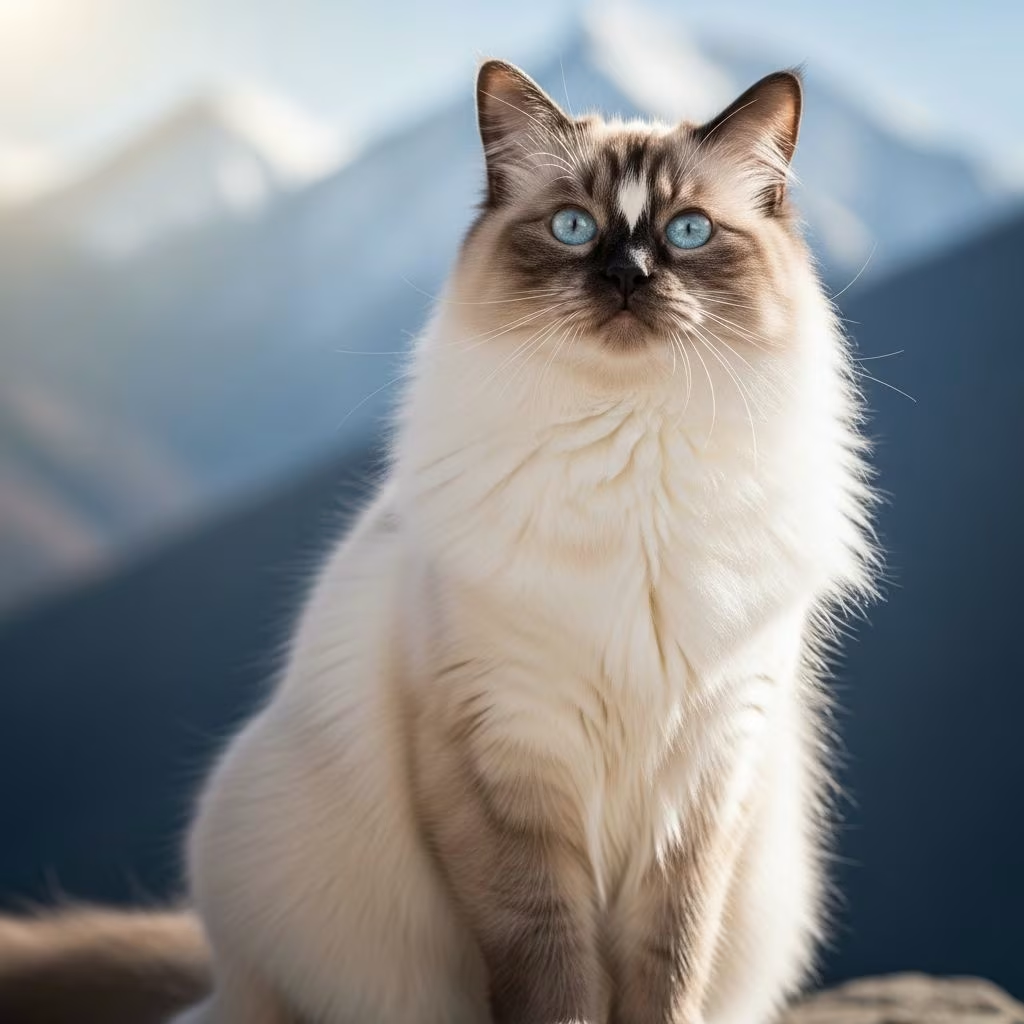
The Himalayan cat captivates with its striking blue eyes, plush long coat, and color-pointed elegance, blending Persian luxury with Siamese poise. But for those with pet allergies, a pressing question arises: are these beautiful felines hypoallergenic? No breed is completely allergy-proof, and Himalayans, with their dense double coats, produce significant allergens, making them unsuitable for most sensitive individuals.
Understanding Cat Allergies and the Hypoallergenic Myth
Cat allergies stem primarily from Fel d 1, a protein in saliva, skin, and urine that spreads via dander when cats groom themselves. Contrary to popular belief, no cat is 100% hypoallergenic; even ‘low-allergen’ breeds shed proteins. Himalayans, sharing Persian lineage, rank among higher producers due to their grooming habits and coat density.
Allergies vary by person—some tolerate long-haired breeds better if shedding is managed, but experts from veterinary associations note that coat length correlates loosely with allergen levels. Short-haired cats like Sphynx produce less dander overall, yet all cats trigger reactions in severe cases.
Breed Origins: A Cross of Persian and Siamese
Himalayans emerged in the 1930s from deliberate Persian-Siamese crosses, aiming for the Persian’s body and coat with Siamese’s color points and eye color. Breeders in the U.S. refined the type, gaining recognition from bodies like The International Cat Association (TICA).
This hybrid yields a distinct look: a sturdy, cobby frame with heavy boning, short legs, and a massive round head featuring a snub nose and small ears. Their body remains pale (white to fawn), contrasting darker points on ears, face, legs, and tail in shades like seal, chocolate, blue, lilac, flame, or tortie patterns. Lifespan averages 9-15 years with proper care.
Physical Traits and Coat Challenges for Allergies
Himalayans boast a long, flowing double coat—fine, thick, and glossy—that demands daily maintenance to prevent mats. This undercoat traps loose fur and dander, but grooming releases allergens into the air.
| Feature | Description | Allergy Impact |
|---|---|---|
| Coat Type | Long, double-layered, color-pointed | High shedding; traps and disperses Fel d 1 |
| Body Build | Cobby, heavy-boned, short legs/tail | Stocky frame aids lounging but increases grooming needs |
| Eyes | Round, vivid blue | No direct impact; aesthetic hallmark |
| Size | Males 9-14 lbs; females 7-11 lbs | Medium-large; more saliva production potential |
Unlike hairless breeds, Himalayans shed seasonally, worsening allergy symptoms. Their saliva-heavy grooming spreads proteins efficiently.
Personality: Calm Companions with Selective Affection
These cats embody serenity, preferring quiet homes over chaos. Gentle and intelligent, they bond deeply with owners, offering lap cuddles and soft purrs without demanding constant play.
- Affectionate yet reserved: Loves petting but warms slowly to strangers.
- Quiet communicators: Uses melodious meows and expressive eyes over Siamese-like chatter.
- Playful bursts: Enjoys toys sporadically amid sunbathing and napping.
- Family-friendly: Tolerates kids and pets if introduced properly.
Ideal for apartments or remote workers, they thrive on routine but adapt well, avoiding high climbs or counter antics.
Grooming Essentials to Minimize Allergens
Daily brushing with a slicker or wide-tooth comb removes loose fur, reducing airborne dander. Bathe bi-weekly with gentle, allergen-reducing shampoos to wash away saliva proteins.
Key tips:
- Focus on undercoat to prevent mats, which harbor allergens.
- Use HEPA vacuums and air purifiers in living areas.
- Trim fur around hindquarters to curb litter tracking.
- Wipe paws and coat post-outdoor exposure.
Despite efforts, grooming stirs allergens, so allergy sufferers should test exposure first.
Health Considerations Beyond Allergies
Himalayans face breed-typical issues from brachycephalic (flat-faced) structure:
- Respiratory problems: Snub noses cause breathing difficulties.
- Eye issues: Tear staining and ulcers from shallow sockets.
- Polycystic kidney disease (PKD): Genetic screening vital.
- Obesity risk: Sedentary nature demands portion control.
Annual vet checks, dental care, and high-quality diets support their 9-15 year lifespan.
Are Himalayans Suitable for Allergy Sufferers?
Not recommended for moderate-to-severe allergies due to high Fel d 1 output and shedding. Mild cases might manage with rigorous hygiene:
- Test via breeder visit or fostering.
- Compare to low-shedders like Siberian (some low-Fel d 1 lines) or Devon Rex.
- Consider hypoallergenic treatments like antibody washes (vet-approved).
Ultimately, individual tolerance rules—consult allergists.
Living with a Himalayan: Daily Care Routine
Morning: Brush coat, clean eyes. Feed measured portions. Evening: Play session, second brush, litter refresh. Weekly: Bath, nail trim. Monthly: Vet dental check.
Environment: Low-dust litter, frequent bedding washes, no carpets if allergies present.
Choosing Your Himalayan: Breeder and Adoption Tips
Seek TICA-registered breeders with health-tested stock (PKD negative, HCM screens). Rescues offer adults—many purebreds need homes. Avoid mills; prioritize kitten socialization.
Questions for breeders:
- Health clearances?
- Parents’ allergy profiles?
- Grooming demo?
Alternatives: Truly Low-Allergen Cat Breeds
| Breed | Key Traits | Allergy Advantage |
|---|---|---|
| Siberian | Long-haired, dog-like | Naturally low Fel d 1 in some lines |
| Sphynx | Hairless, wrinkly | Minimal shedding/dander |
| Balinese | Long-haired Siamese type | Less dense coat |
| Devon Rex | Curly, short | Low shedding |
These offer similar affection with fewer allergens.
Frequently Asked Questions (FAQs)
Do Himalayan cats shed a lot?
Yes, their double coat sheds heavily, especially seasonally, contributing to allergens.
Can I reduce allergens from a Himalayan?
Daily grooming, baths, and air filters help, but won’t eliminate them.
Are Himalayan kittens less allergenic?
No, Fel d 1 production starts early; test exposure regardless of age.
How often should I groom a Himalayan?
Daily brushing; bathe every 1-2 weeks.
Do Himalayans get along with dogs?
Often yes, with proper intros; they’re adaptable and non-aggressive.
Final Thoughts on Himalayan Allure
Despite not being hypoallergenic, Himalayans enchant with their docile charm and regal presence. For non-allergic homes, they provide unwavering companionship. Allergy sufferers, explore alternatives or mitigation strategies for the best match.
References
- Himalayan Cat Breed Information — Purina US. 2023. https://www.purina.com/cats/cat-breeds/himalayan
- Himalayan — The International Cat Association (TICA). 2024. https://tica.org/breed/himalayan/
- Himalayan Cat Breed — Hill’s Pet Nutrition. 2023. https://www.hillspet.com/cat-care/cat-breeds/himalayan
- Himalayan — VCA Animal Hospitals. 2024. https://vcahospitals.com/know-your-pet/cat-breeds/himalayan
- Himalayan Cat Facts — ASPCA Pet Health Insurance. 2023. https://www.aspcapetinsurance.com/resources/himalayan-cat-facts/
- Himalayan Cat Personality — Litter-Robot. 2024. https://www.litter-robot.com/blog/himalayan-cat-personality/



