

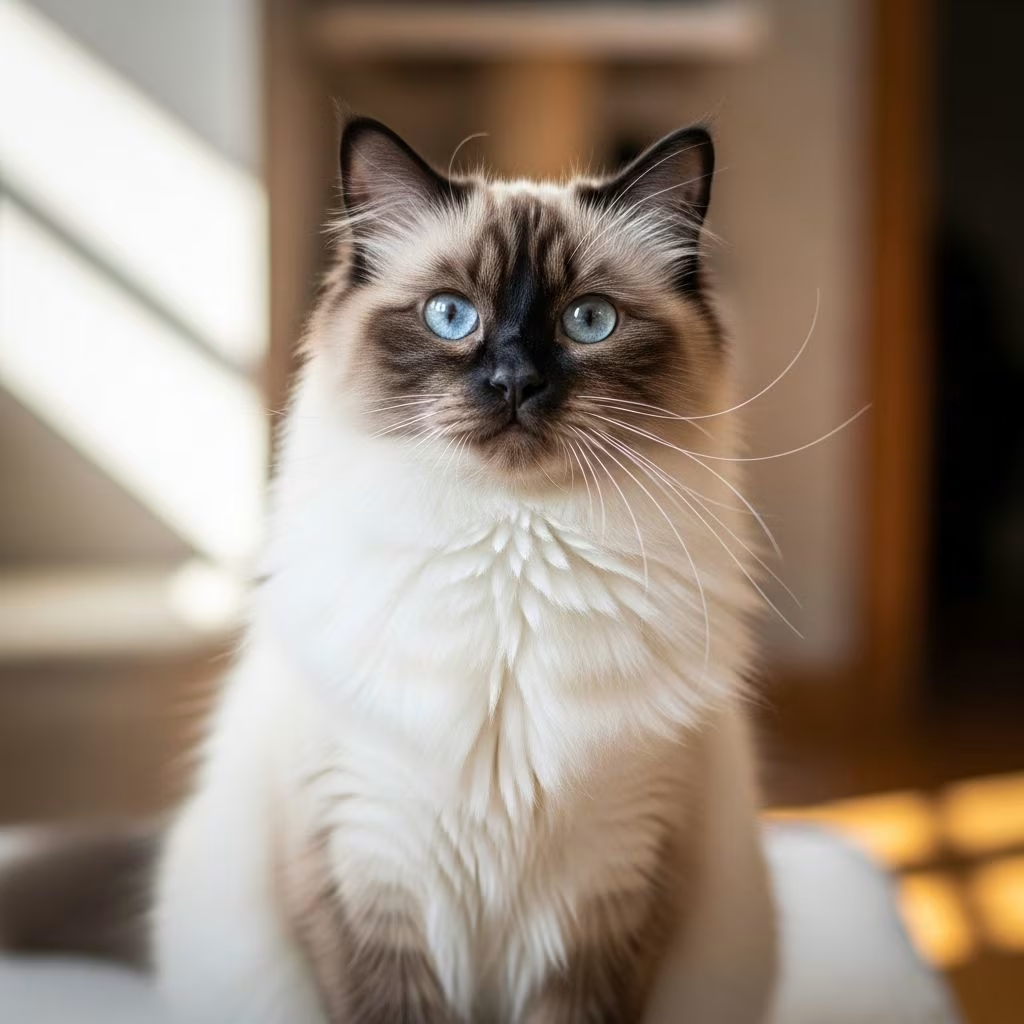
The Himalayan cat stands out as a captivating blend of elegance and charm, combining the plush coat of the Persian with the striking color points and vivid blue eyes of the Siamese. This breed has captured hearts worldwide for its serene demeanor and luxurious appearance, making it a top choice for those seeking a devoted companion.
Origins and Development of the Himalayan Breed
Himalayan cats emerged in the United States during the mid-20th century through deliberate breeding efforts to merge desirable traits from two iconic breeds. Breeders crossed long-haired Persians with sleek Siamese cats, aiming to produce offspring with the Persian’s dense fur and the Siamese’s distinctive point coloration—darker shades on cooler body areas like the ears, face, paws, and tail. This color-point pattern, influenced by temperature-sensitive genetics, results in lighter bodies with contrasting dark extremities.
The first recognized litters appeared in the 1930s, but official breed standards took time to solidify. By the 1950s, cat fancier organizations began accepting Himalayans as a distinct category, though some registries initially classified them under Persian or Siamese groups. Today, bodies like the Cat Fanciers’ Association recognize Himalayans separately, celebrating their unique hybrid heritage. This American origin distinguishes them from purely European or Asian lineages, reflecting innovative selective breeding.
Distinctive Physical Features
Himalayans boast a robust, compact build often described as “cobby,” featuring a broad chest, short thick legs, and a sturdy frame that belies their plush exterior. Males typically weigh 9-14 pounds, while females range from 7-11 pounds, giving them a medium-to-large presence without excessive bulk.
Their head is large and round, with full cheeks, a short snub nose, and small, rounded ears set wide apart. Most striking are their large, round blue eyes, inherited from Siamese ancestry, which convey an expression of gentle intelligence. The body supports a short, thick tail, and the overall silhouette emphasizes heaviness in bone structure for a grounded, powerful stance.
Coat Varieties and Colors
The hallmark of the Himalayan is its long, thick double coat—dense undercoat with silky guard hairs—that requires diligent maintenance. Unlike solid-colored Persians, Himalayans display point coloration: a pale body (white, cream, or fawn) with darker points. Common varieties include:
- Seal Point: Deep brown points on a creamy body.
- Chocolate Point: Milk chocolate points on ivory fur.
- Lilac Point: Soft grayish points on a white base.
- Blue Point: Slate-blue points contrasting pale fur.
- Red/Cream Point: Warm orange or soft cream accents.
- Lynx Point: Tabby-striped patterns on points in various shades like seal lynx or blue lynx.
- Tortie Point: Blended red and black points for a mottled effect.
These patterns arise from the Himalayan gene (cs), which restricts pigment to cooler regions, and eye color remains consistently blue across all types.
Temperament and Behavioral Traits
Himalayans embody tranquility, blending the Persian’s laid-back affection with subtle Siamese playfulness. They thrive as lap cats, eagerly curling up for pets and quiet companionship, yet occasionally burst into kitten-like zoomies or toy chases. Gentle and loyal, they form deep bonds with owners but may take time warming to strangers, preferring stable, low-drama homes.
Unlike vocal Siamese, Himalayans meow softly and infrequently, communicating needs with purrs or trills. They adapt well to indoor living, avoiding high climbs or mischief, and coexist harmoniously with respectful children, dogs, and other cats. Their people-oriented nature suits homebodies, though prolonged isolation can lead to mild depression—daily interaction keeps them content.
| Trait | Description |
|---|---|
| Energy Level | Low to medium; prefers lounging over hyperactivity. |
| Social Needs | High; bonds strongly with family. |
| Vocalization | Low; soft meows rather than chatter. |
| Trainability | Moderate; responds to gentle reinforcement. |
| Compatibility | Excellent with kids, pets, seniors. |
Grooming and Daily Care Essentials
The Himalayan’s opulent coat demands commitment: daily brushing prevents mats, especially around the ruff, belly, and britches. Use a wide-toothed comb and slicker brush, focusing on gentle strokes to distribute oils without pulling. Bathing every 4-6 weeks with cat-specific shampoo maintains gloss, followed by thorough drying to avoid chills.
- Bathe monthly or as needed for show cats.
- Trim nails bi-weekly.
- Clean ears weekly to prevent wax buildup.
- Brush teeth 2-3 times weekly with enzymatic paste.
High shedding occurs year-round, so vacuuming and lint rollers are allies. A balanced diet supports coat health—opt for high-quality kibble rich in omega fatty acids.
Health Considerations and Lifespan
Himalayans live 8-15 years on average, with some reaching 18, but brachycephalic (flat-faced) structure predisposes them to issues like:
- Polycystic Kidney Disease (PKD): Genetic cysts in kidneys; screen breeding cats via ultrasound.
- Respiratory Problems: Narrow nostrils cause snoring or breathing difficulty.
- Dental Disease: Crowded teeth lead to gingivitis; regular vet checks essential.
- Eye Conditions: Tear staining and progressive retinal atrophy possible.
- Obesity: Sedentary lifestyle risks weight gain; portion control key.
Annual vet exams, PKD testing for breeders, and weight management promote longevity. Recent studies emphasize early dental interventions for better outcomes.
Ideal Living Environments and Lifestyle Fit
These cats flourish in quiet apartments or homes with minimal chaos, disliking loud noises or frequent moves. Provide elevated perches, soft beds, and interactive toys like feather wands for mental stimulation. They fare best with owners offering lap time and grooming routines, making them unsuitable for busy households with little interaction.
Families appreciate their patience with gentle kids, and multi-pet homes work if introductions are gradual. Avoid extremes in temperature, as coat points are heat-sensitive.
Nutrition Guidelines for Optimal Health
Feed premium wet and dry foods formulated for long-haired breeds, emphasizing proteins (30-40%), moderate fats, and fibers for digestion. Divide into 2-3 meals daily; adults need 200-300 calories based on weight. Seniors benefit from joint-support formulas with glucosamine. Always provide fresh water—fountains encourage hydration to prevent urinary issues.
Bringing a Himalayan Home: Adoption and Costs
Expect $800-$2,500 for pedigreed kittens from reputable breeders, who health-test parents. Shelters occasionally have mixes or retirees. Initial costs include carrier, litter setup, and vet exam (~$500). Monthly expenses: food $50, litter $20, grooming tools $10.
Frequently Asked Questions (FAQs)
Are Himalayan cats hypoallergenic?
No, their thick coats produce ample dander; not suitable for severe allergies.
How often should I groom a Himalayan?
Daily brushing, weekly baths if needed, to manage shedding and mats.
Do Himalayans get along with dogs?
Yes, with proper socialization; their calm nature aids compatibility.
What is the average lifespan of a Himalayan cat?
8-15 years, extendable with proactive care.
Can Himalayan cats be left alone all day?
Preferably not; they thrive on companionship to avoid loneliness.
Why Choose a Himalayan Cat?
Himalayans offer unmatched poise and devotion, transforming homes into peaceful sanctuaries. Their beauty, coupled with affectionate quirks, rewards dedicated owners with years of purrs and cuddles. Research breeders thoroughly and commit to grooming for a fulfilling bond.
References
- Himalayan Cat Breed Information — Purina US. 2023. https://www.purina.com/cats/cat-breeds/himalayan
- The Ultimate Guide to the Himalayan Cat Breed — Rover.com. 2023. https://www.rover.com/blog/himalayan-cat/
- Himalayan Cat Breed — Hill’s Pet Nutrition. 2023. https://www.hillspet.com/cat-care/cat-breeds/himalayan
- 10 Surprising Facts About Himalayan Cats — Healthy Pet. 2023. https://www.healthy-pet.com/blogs/blog/10-surprising-facts-about-himalayan-cats
- Himalayan Cat Facts — ASPCA Pet Health Insurance. 2023. https://www.aspcapetinsurance.com/resources/himalayan-cat-facts/
- Himalayan Cat Personality: How Do Himalayans Act? — Litter-Robot. 2023. https://www.litter-robot.com/blog/himalayan-cat-personality/
- Himalayan cat — Wikipedia. 2026-01-28. https://en.wikipedia.org/wiki/Himalayan_cat



