

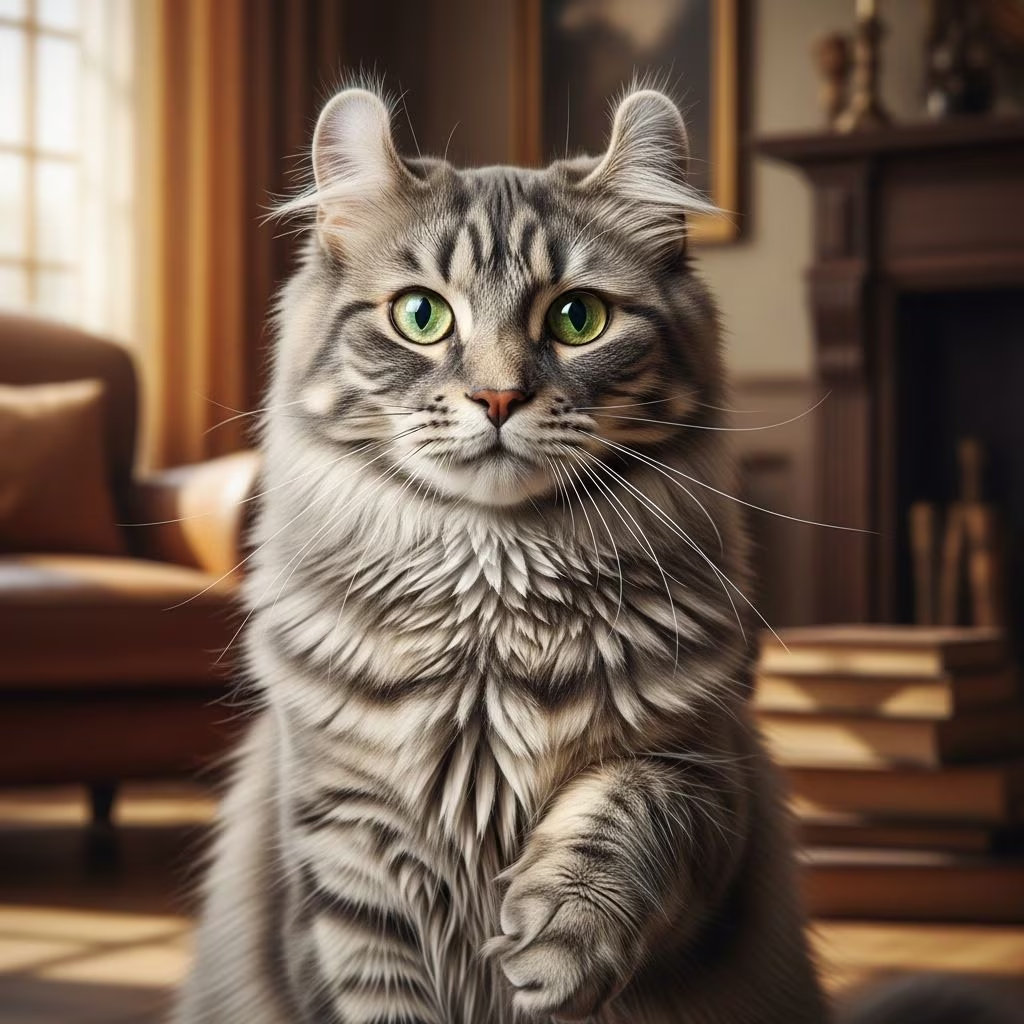
The Highlander cat stands out as a captivating domestic breed that combines a rugged, wild-inspired appearance with an endearing, sociable nature. Developed in the United States during the early 2000s, this breed features signature traits like backward-curled ears and a naturally short, expressive tail, evoking images of ancient lynxes while remaining fully domesticated and gentle.
Origins and Development of the Highlander
The journey of the Highlander breed began with visionary breeders aiming to craft a cat that mirrored the majestic presence of big wild cats but possessed the easygoing temperament of a household pet. In the early 1990s, efforts started under the name Highland Lynx, spearheaded by breeder Joe Childress, who crossed the Desert Lynx and Jungle Curl breeds to achieve this distinctive look. By 2004, focused development intensified, and in 2005, the name simplified to Highlander to emphasize its purely domestic roots.
This innovative breeding drew from crossbred domestic cats rather than established pedigrees, promoting a broad gene pool for robustness and vitality. The International Cat Association (TICA) first acknowledged the breed in 2008 as a Preliminary New Breed, advancing it to full championship status later, solidifying its place in competitive cat fancy. Today, Highlanders continue to evolve, prized for their unique aesthetics and lively character.
Distinctive Physical Characteristics
Highlanders boast a medium-to-large, muscular frame that conveys power and athleticism. Their bodies often appear rectangular with a straight back and hips slightly elevated above the shoulders, creating a subtle slope. The head is broad and pear-shaped, featuring a squared muzzle, prominent whisker pads, a wide nose, and a firm chin that gives a boxy yet elongated profile.
The ears are the breed’s crowning glory: medium-sized with a wide base, they curl backward in a loose arc at the top third, standing tall and open. Tails vary but are characteristically short or bobbed, ranging from 1 to 6 inches, often kinked, curled, or ending in a fat pad, wagging expressively like a dog’s. Some individuals exhibit polydactyly with extra toes, enhancing their sturdy, paw-like feet.
Coat varieties include both short and long hair, with patterns spanning solids, tabbies, minks, tortoiseshells, points, and smokes. Longhaired versions sport tufts between toes and on ears, adding to their wild allure. Eye colors vary widely, set in medium-to-large, oval shapes with an intense gaze. Males typically weigh 11-20 pounds, females 8-15 pounds, underscoring their substantial size.
| Feature | Description |
|---|---|
| Body Type | Muscular, rectangular, sloped hips |
| Ears | Curled backward, wide base |
| Tail | Short bobbed, 1-6 inches, expressive |
| Coat | Short or long, diverse patterns |
| Weight | 8-20 lbs depending on sex |
Temperament and Behavioral Traits
Belying their feral appearance, Highlanders are affectionate softies with dog-like devotion. They thrive on human interaction, greeting owners at the door, shadowing them room-to-room, and charming guests with bold confidence. Playful and clownish, they excel in chase games, climbing, and puzzle toys, channeling high energy into muscle-building antics.
- Sociable: Bonds deeply with families, children, other cats, and dogs when properly introduced.
- Intelligent and Active: High playfulness demands vertical spaces like cat trees.
- Quiet Vocalizers: Prefers physical expression over meowing.
- Curious Explorers: Involved in daily life, following owners everywhere.
This breed suits active households but may overwhelm sedentary ones due to their vigor. Early socialization ensures their outgoing nature shines.
Ideal Living Environment and Lifestyle Fit
Highlanders adapt seamlessly to indoor life, provided they have ample play opportunities and vertical territory. Their size and athleticism call for cat trees, shelves, and interactive toys to prevent boredom. They flourish in family settings with children who respect boundaries and coexist well with pets.
While robust enough for supervised outdoor access in safe areas, they excel as house cats, leveraging their curiosity without wildcat risks. Regular engagement curbs destructive tendencies, making them ideal for apartments with dedicated play zones or homes with yards.
Grooming, Care, and Maintenance Tips
Grooming remains straightforward. Shorthaired Highlanders need weekly brushing to manage shedding and distribute oils; longhaired ones benefit from twice-weekly sessions to prevent mats. Their tufted paws require occasional checks for debris.
Bathing is rare, as they self-groom effectively. Dental care, nail trims every 2-3 weeks, and ear cleaning suit their active lifestyle. Provide high-quality diet supporting their muscular build, monitoring portions to maintain ideal weight.
- Brush coat: Weekly (short), bi-weekly (long).
- Nail trim: Every 2-3 weeks.
- Dental hygiene: Brushing or dental treats.
- Ear care: Wipe as needed, check for wax buildup.
Health Considerations and Wellness
Thanks to diverse genetics from non-pedigree crosses, Highlanders enjoy hardy health with few breed-specific issues. Potential concerns mirror general cats: obesity from overfeeding, dental disease, and hypertrophic cardiomyopathy (HCM), though not pronounced in this breed.
Regular vet checkups, vaccinations, and parasite prevention are essential. Their energy aids natural fitness, but spaying/neutering supports longevity. Average lifespan spans 12-15 years with proper care.
Bringing a Highlander into Your Home
Acquire from reputable TICA-registered breeders prioritizing health testing and ethical practices. Kittens start showing curls around 4-6 weeks; expect variability in traits. Prepare with scratching posts, toys, and litter training. Initial adjustment involves gradual introductions to build trust.
Costs range $800-$2000+, reflecting rarity. Rescues occasionally list adults, offering mature companions.
Fun Facts About Highlanders
- Their tails wag like dogs during play, signaling joy.
- Polydactyl paws occur naturally in some lines.
- Bred for “big cat” looks without wild blood.
- TICA championship breed since advancement from preliminary status.
- Energy from play sculpts their rippling muscles.
Frequently Asked Questions (FAQs)
Are Highlander cats hypoallergenic?
No, they shed moderately and produce dander like most cats.
Do all Highlanders have curled ears and short tails?
Most do, but some are born with straight ears or full tails due to genetic variation.
Can Highlander cats live with dogs?
Yes, their sociable nature makes them compatible with dog-friendly intros.
How much exercise do Highlanders need?
Daily play sessions of 20-30 minutes plus access to climbing structures.
What is the Highlander cat’s lifespan?
Typically 12-15 years with good care.
References
- Highlander – GoofyTails — GoofyTails. 2023. https://goofytails.com/pages/highlander
- Highlander Cats – Breeds – Omlet — Omlet. 2024. https://www.omlet.us/breeds/cats/highlander/
- What Is a Highland Lynx Cat? | ASPCA Pet Health Insurance — ASPCA Pet Health Insurance. 2023. https://www.aspcapetinsurance.com/resources/highland-lynx/
- Highlander Facts – Cat Breeds – Wisdom Panel — Wisdom Panel. 2024. https://www.wisdompanel.com/en-us/cat-breeds/highlander/
- Highlander Cat Breed Profile | Litter-Robot — Litter-Robot. 2023. https://www.litter-robot.com/blog/highlander-cat/
- About Highlanders — Enchanted Highlanders. 2024. https://enchantedhighlanders.com/about-highlanders
- Highlander – TICA – The International Cat Association — TICA. 2025-01-15. https://tica.org/breed/highlander/



