

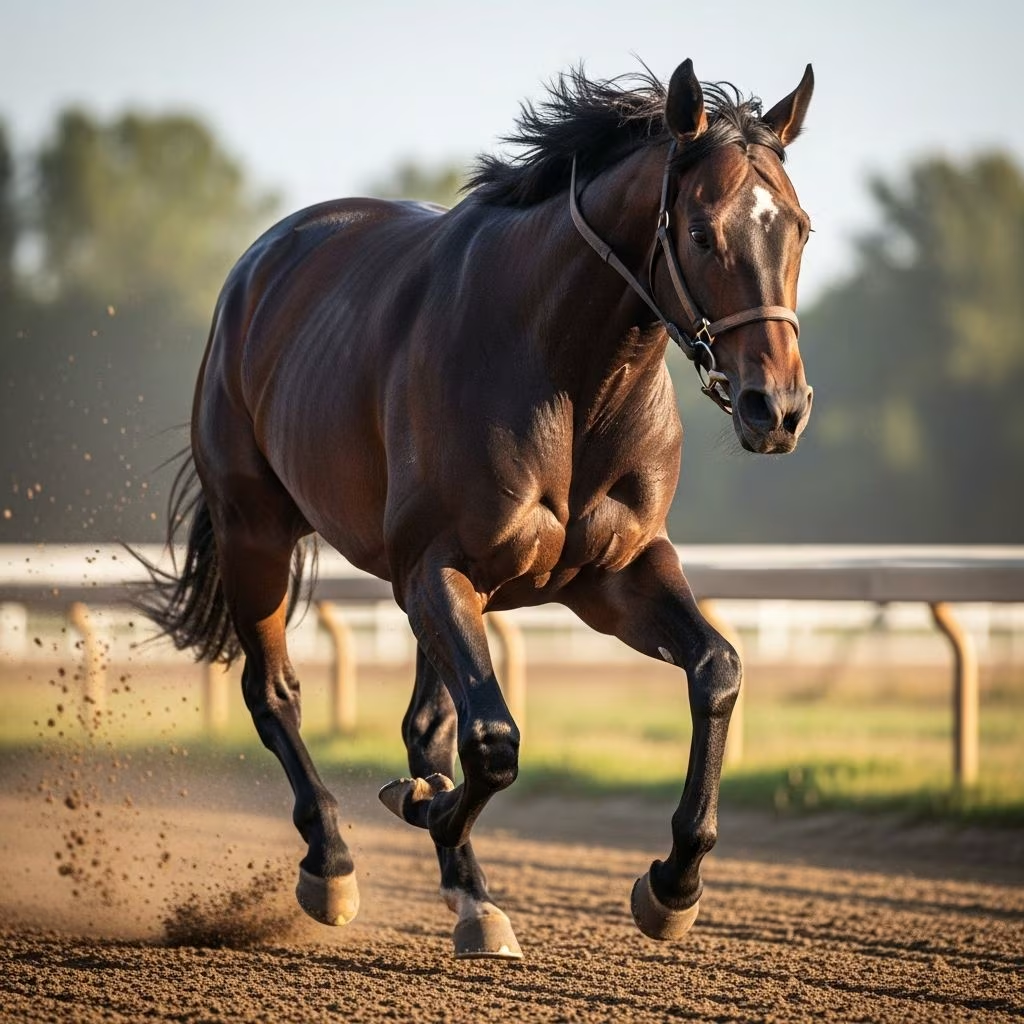
Horses engaged in high-intensity activities like racing or sprinting often reach a point of exhaustion where performance sharply declines. This fatigue stems from a complex interplay of metabolic, cardiovascular, and muscular limitations that halt sustained effort.
Understanding the Onset of Exhaustion
During maximal efforts, horses push their bodies to extremes, with heart rates soaring above 210 beats per minute and blood lactate levels exceeding 20 mmol/L in races around 1200 meters. These peaks signal the body’s struggle to meet energy demands, leading to rapid fatigue.
The transition from sustainable work to exhaustion involves shifts in energy production. Initially, aerobic pathways dominate, but as intensity rises, anaerobic processes take over, producing lactic acid that accumulates and disrupts muscle function.
Metabolic Pathways and Energy Depletion
Horses rely on glycogen stores in muscles for quick energy bursts. High-intensity exercise rapidly depletes these reserves, especially in fast-twitch fibers that make up over 80% of the middle gluteal muscle in Thoroughbreds. Glycogen breakdown fuels glycolysis, generating ATP but also lactate.
- Glycogenolysis acceleration: Intense work breaks down stored glucose faster than replenishment occurs.
- Lactate buildup: Excess lactate lowers muscle pH to around 6.2, impairing enzyme activity and contraction efficiency.
- Shift from fats to carbs: Fatty acids become insufficient for the pace, forcing reliance on limited glucose.
This metabolic overload forces horses to slow down as energy pathways falter.
Cardiovascular Challenges Under Strain
The heart and lungs face immense pressure during sprints. Peak heart rates and reduced stroke volume limit oxygen delivery, causing arterial hypoxemia. Diffusion limitations in the lungs exacerbate low blood oxygen, particularly in prolonged high efforts.
| Parameter | Moderate Intensity | High Intensity |
|---|---|---|
| Heart Rate (bpm) | ~196 | >210 |
| Oxygen Saturation | Higher | Severely reduced |
| Cardiac Output | Stable | Maximal, then plateaus |
These constraints reduce VO2max, the maximum oxygen uptake, capping aerobic capacity and hastening fatigue.
Muscular Responses to Extreme Efforts
Muscle fibers activate fully, with temperatures climbing to 44°C and pH dropping sharply. Fast-twitch type II fibers, dominant in performance horses, fatigue quickest due to their glycolytic reliance.
- All fibers engage maximally, overwhelming oxygen supply.
- Heat accumulation impairs recovery as cooling mechanisms fail.
- Acidosis disrupts calcium handling, weakening contractions.
Microscopic damage and inflammation further contribute to post-exercise soreness and reduced output.
Role of Training Intensity in Adaptation
High-intensity interval training (HIIT) outperforms moderate continuous training (MICT) when distances match. Studies on Thoroughbreds show HIIT boosts VO2max by 13%, cardiac output by 7-8%, and improves lactate clearance.
In one protocol, HIIT involved 6 sessions of 30 seconds at 100% VO2max alternated with recovery, yielding better performance gains than steady 70% efforts. Sprint intervals at 120% VO2max further amplify responses but increase injury risks.
Comparing Training Protocols
| Training Type | Duration/Structure | Key Benefits | Drawbacks |
|---|---|---|---|
| MICT | 6 min at 70% VO2max | Safe, builds base endurance | Limited peak performance gains |
| HIIT | 6x (30s at 100% + 30s recovery) | Superior VO2max, lactate kinetics | Higher hypoxemia, glycogen use |
| SIT | 6x (15s at 120% + 70s recovery) | Maximal fiber recruitment | Injury potential, extreme stress |
HIIT activates AMPK pathways, promoting mitochondrial biogenesis and oxidative capacity, especially in type II fibers.
Physiological Adaptations from Intensive Regimens
Six weeks of HIIT in untrained Thoroughbreds enhanced speed at VO2max, hematocrit, and red cell volume. Early gains (first 3 weeks) plateau less in HIIT groups, indicating sustained progress.
Skeletal muscle shows upregulated lactate transporters and glycolytic enzymes, delaying acidosis. Cardiovascular improvements include larger stroke volumes and better oxygen extraction.
Preventing Fatigue Through Smart Conditioning
Gradual intensity ramps prevent overload. Monitor heart rates targeting 150-180 bpm for conditioning bouts. Incorporate varied gaits to balance workloads.
- Build aerobic base with low-intensity sessions.
- Integrate intervals mimicking race demands.
- Ensure recovery with rest and nutrition focusing on carbs for glycogen.
Heat acclimation reduces strain in hot conditions by upregulating heat shock proteins and metabolic efficiency.
Nutritional Support for Endurance
Fuel high-intensity work with diets rich in oats, pellets, and hay providing 1-3 kg daily splits. Post-exercise electrolytes and carbs aid recovery, mitigating lactate effects.
Monitoring Tools and Signs of Overreach
Use treadmills at 6% inclines for controlled tests. Track blood gases, biopsies for glycogen, and performance metrics like run time to exhaustion.
Warning signs include persistent hypoxemia, pH drops below 7.0, or failure to maintain pace.
FAQs
What causes rapid fatigue in racing horses?
Glycogen depletion, lactate accumulation, and oxygen deficits primarily drive exhaustion during sprints.
Is HIIT safe for all horses?
HIIT excels for Thoroughbreds but requires monitoring to avoid musculoskeletal injuries; start with untrained horses cautiously.
How does muscle fiber type affect fatigue?
Type II fibers, prevalent in racers, provide power but fatigue faster due to anaerobic dependence.
Can diet delay fatigue onset?
Yes, high-carb feeds replenish glycogen, supporting repeated high efforts.
What are ideal heart rates for training?
Aim for 150-180 bpm in conditioning to build capacity without overload.
Advanced Strategies for Peak Performance
Combine HIIT with periodization: base building, intensity phases, and tapering. Research supports treadmill protocols for precise control, yielding measurable VO2max hikes.
Genetic factors influence adaptability; Thoroughbreds with high type IIx fibers respond best to sprints. Ongoing studies explore mitochondrial enhancements via targeted intervals.
In hot environments, acclimation over weeks boosts tolerance, upregulating PGC-1α for better energy production.
References
- Physiological adaptations to 6 weeks of high‐intensity interval and moderate‐intensity continuous training in Thoroughbred horses — Mukai K, et al. Physiological Reports. 2024-10-01. https://pmc.ncbi.nlm.nih.gov/articles/PMC12913712/
- Physiological and skeletal muscle responses to high-intensity interval exercise and sprint interval exercise in Thoroughbred horses — Mukai K, et al. Journal of Applied Physiology. 2023-11-01. https://pmc.ncbi.nlm.nih.gov/articles/PMC10679931/
- Physical Conditioning of Horses — Oklahoma State University Extension. 2022-09-01. https://extension.okstate.edu/fact-sheets/physical-conditioning-of-horses.html
- Characterizing the Exercise Workloads and Energy Needs of Horses — Penn State Extension. 2023-01-01. https://extension.psu.edu/characterizing-the-exercise-workloads-and-energy-needs-of-horses
- Equine Exercise Physiology 3 — ICEEP Proceedings. 2022-09-01. https://iceep.org/wp-content/uploads/2022/09/1130110003_001.pdf



