

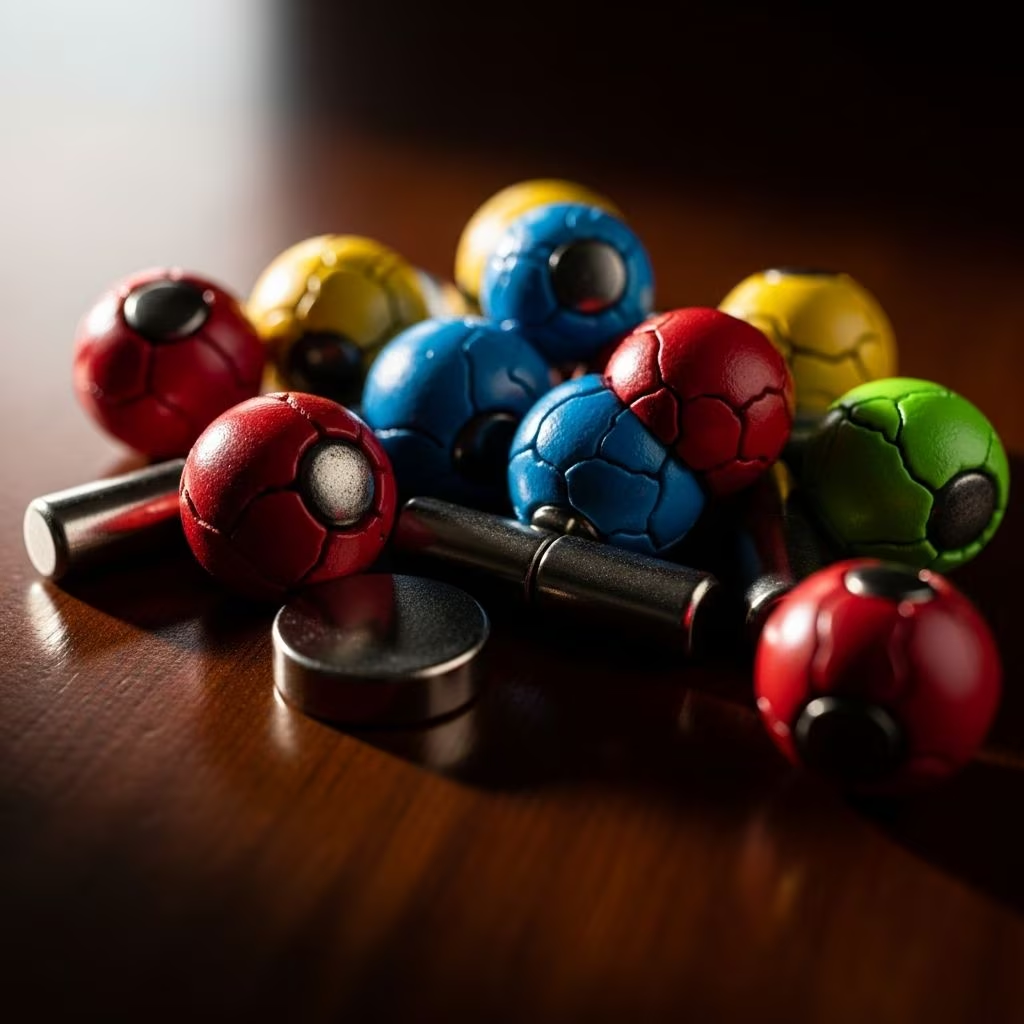
Small, high-powered magnets found in various toys and novelty items present a hidden peril to children’s health. These rare-earth magnets, known for their exceptional strength, can cause devastating internal damage when ingested, attracting across intestinal walls and leading to perforations, blockages, and infections.
The Allure and Peril of Neodymium Magnets
Neodymium magnets, often called rare-earth magnets, power everything from MRI machines to household appliances due to their intense magnetic force. In toys, they enable creative building sets, stress-relief gadgets, and even fake piercings. However, their small size—resembling BB pellets—and shiny appeal make them irresistible to young explorers who may swallow them without immediate warning signs.
Unlike ordinary fridge magnets, these pack a force up to 17 times the legal limit for children’s toys in some regions, capable of pinching tissue and cutting off blood supply. The lack of initial symptoms delays detection, allowing magnets to migrate and bind internally.
How Magnets Cause Internal Havoc
When a child swallows one or more magnets, they can attract through layers of bowel, creating pressure points that erode tissue. This leads to necrosis, bleeding, perforation, bowel obstruction, peritonitis, and sepsis—conditions often requiring emergency surgery.
- Single magnet: May pass harmlessly or attract to metal objects ingested simultaneously.
- Multiple magnets: Bind together, amplifying damage; studies show higher long-term risks like bowel resection or stomas.
- Magnet plus metal: Steel balls in building sets can pair with magnetic rods, worsening outcomes.
Severe cases result in lifelong complications or fatality. One documented child death underscores the stakes.
A Timeline of Regulatory Battles
| Year | Event | Impact |
|---|---|---|
| 2009-2011 | 1,700 U.S. hospital visits from magnet ingestions | Mostly children; some surgeries and permanent GI damage |
| 2012 | CPSC recalls and voluntary standards | Injury rates drop temporarily |
| 2014 | CPSC ban on high-powered magnet sets | Sales prohibited; protections enhanced |
| 2016 | Ban overturned by courts | Injuries surge |
| 2018-2019 | 444% injury increase | Post-ban spike in ER visits |
| 2021 | 2,500 estimated ER treatments | From non-toy products now regulated |
| 2022 | New CPSC safety standard (16 CFR 1262) | Flux limits for magnets ≥5mm; exempts toys for under-14s |
The 2022 federal rule mandates magnets must not exceed 50 kG-mm² flux index if swallowable, targeting desk toys and adult gadgets accessible to kids.
Products Posing the Greatest Threats
Magnetic dangers lurk beyond obvious toys:
- Building kits: Sets with magnetic rods and steel balls; loose parts swallowable.
- Desk fidget toys: Hundreds of tiny spheres marketed to adults but colorful for kids.
- Fake piercings: High-powered pairs for noses/mouths; 14% of cases from youth mimicking trends.
- Water balloons: Magnets seal reusables; can detach easily.
- Other gadgets: Stress balls, geometric puzzles not labeled for kids.
In the UK, 300 annual hospitalizations highlight global scope, with 10% needing surgery.
Demographics and Incident Patterns
Children under 10 face highest risks due to mouthing behaviors (16% of cases), but teens contribute via piercings (14%). About 39% are accidental swallows. Social media trends, like viral tongue piercings, drive 6% of UK incidents, mostly girls.
Canada warns of lifelong issues or death for under-10s. U.S. data shows post-ban surges, affirming regulatory needs.
Recognizing and Responding to Ingestion
Symptoms may emerge 1-5 days later: abdominal pain, vomiting, fever, diarrhea, lethargy, or breathing issues. No early distress fools parents.
Immediate actions:
- Do not induce vomiting or use laxatives.
- Rush to ER or call ambulance if suspected—mention magnets explicitly.
- X-rays detect them; surgery often needed for multiples.
Early intervention prevents perforations.
Prevention Strategies for Families
Proactive steps safeguard homes:
- Inspect toys: Check for cracks/loose parts regularly.
- Supervise play: Avoid large magnet sets where pieces go missing.
- Age-appropriate choices: Buy from reputable brands; skip cheap online sellers.
- Store securely: Keep adult gadgets out of reach.
- Educate siblings: Warn older kids/teens about piercing fads.
- Monitor recalls: Use CPSC alerts.
Canada advises no loose small magnets in homes with young kids.
Industry and Retailer Responsibilities
Toy Association upholds standards banning loose powerful magnets in kids’ toys under 14. Yet, non-toy items slip through. Experts urge clearer warnings, especially online. Flux limits (e.g., 50 in UK toys) must be enforced.
FAQs on Magnetic Toy Safety
Are all magnetic toys dangerous?
No, only those with small, high-powered rare-earth types. Standard toys comply with limits.
What if my child swallows one magnet?
Seek medical advice; it may pass, but multiples or symptoms demand ER.
Has the CPSC fully banned them?
Toys for under-14s are covered by prior rules; 2022 standard targets other products.
Can MRI scans affect swallowed magnets?
Yes, high-powered ones move violently—inform staff.
How do I check toy safety?
Review CPSC site, buy certified products.
Global Perspectives and Ongoing Vigilance
UK studies reveal 300 yearly cases, pushing for better labeling. Canada emphasizes under-10 vulnerabilities. UChicago Medicine notes packaging’s child-appeal despite adult marketing. As trends evolve, parental awareness remains key. Federal rules evolve, but vigilance prevents tragedies.
References
- How High-Powered Magnetic Toys Can Harm Children — American Academy of Pediatrics. 2023. https://www.healthychildren.org/English/safety-prevention/at-home/Pages/Dangers-of-Magnetic-Toys-and-Fake-Piercings.aspx
- What Doctors Want You to Know About Magnetic Toys — Blue Cross Blue Shield of Michigan. 2023. https://bcbsm.mibluedaily.com/stories/health-and-wellness/what-doctors-want-you-to-know-about-toys-with-magnets
- High-powered magnets: Are they toys or a risk to your child? — University of Chicago Medicine. 2021-05-01. https://www.uchicagomedicine.org/forefront/pediatrics-articles/2021/may/magnet-ingestion-kids
- \”Toy\” magnets are dangerous for children — Poison Control. 2023. https://www.poison.org/articles/toy-magnets-are-dangerous-for-children
- Doctors warn of magnetic toy dangers as study reveals hundreds of children hospitalised — University Hospital Southampton NHS. 2023. https://research.uhs.nhs.uk/news/doctors-warn-of-magnetic-toy-dangers-as-study-reveals-hundreds-of-children-hospitalised
- The Toy Association Statement on Magnets in Toys — The Toy Association. 2023. https://www.toyassociation.org/ta/PressRoom2/IndustryStatements/ToySafety/statement-on-magnets.aspx
- Safety Standard for Magnets — Federal Register (CPSC). 2022-09-21. https://www.federalregister.gov/documents/2022/09/21/2022-20200/safety-standard-for-magnets



