
Hexamitiasis In Poultry: Causes, Diagnosis, Prevention Guide
Understanding the devastating protozoal disease affecting turkeys and game birds, from symptoms to management strategies.
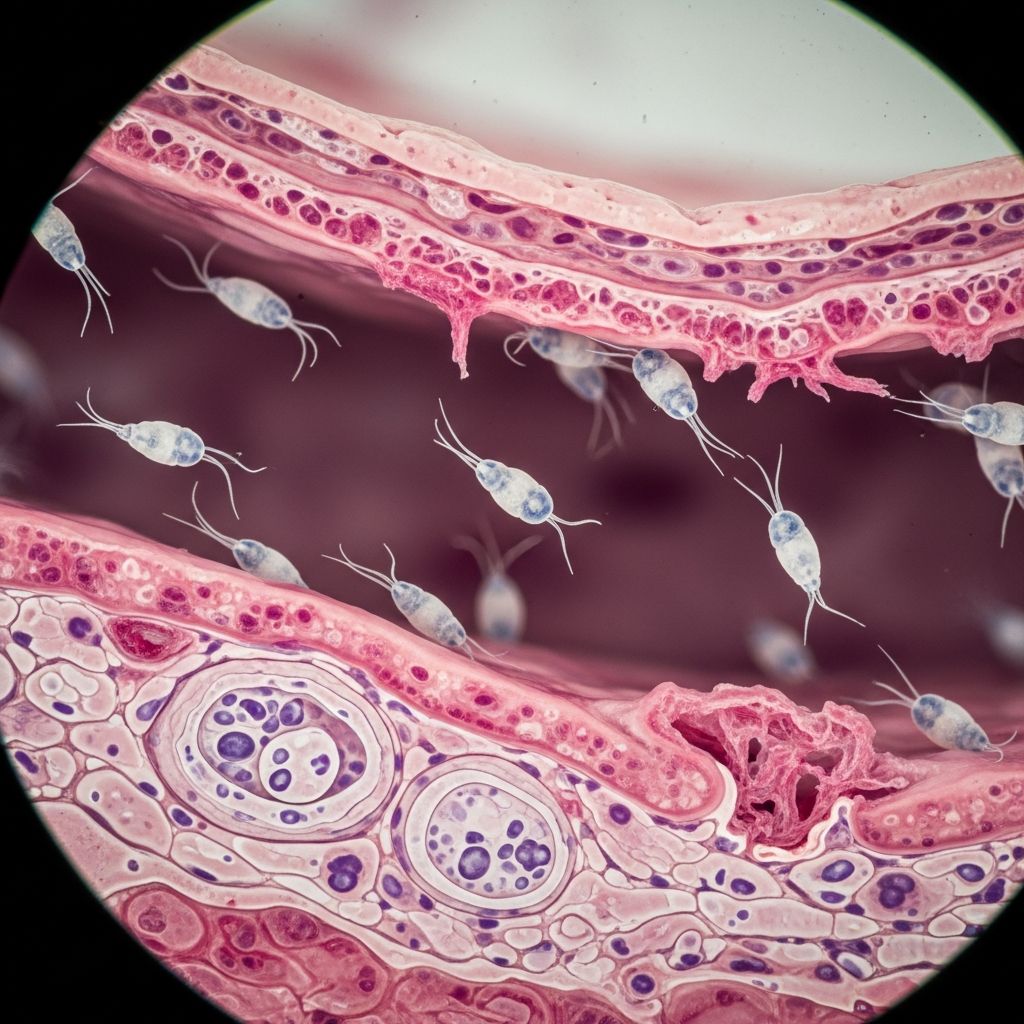
Hexamitiasis represents a significant health threat to various avian species, particularly turkeys and certain game birds. This protozoal infection disrupts normal intestinal function, leading to rapid deterioration in affected flocks. Poultry producers must recognize its impact to implement timely interventions.
The Protozoan Culprit Behind the Disease
At the heart of hexamitiasis lies Spironucleus meleagridis, a flagellated protozoan previously classified under the genus Hexamita. This spindle-shaped organism measures approximately 8 by 3 micrometers and possesses eight flagella: four anterior, two anterolateral, and two posterior. These structures enable its characteristic rapid, darting movement within the host’s gut.
Unlike some protozoa, S. meleagridis has not been successfully cultured in artificial media but thrives in the allantoic cavity of chicken and turkey embryos. It primarily targets the upper small intestine, attaching to epithelial cells via its posterior flagella. This adhesion facilitates nutrient absorption from the host while evading the intestinal flow.
The parasite forms resilient cysts capable of surviving in the environment, contributing to its persistence in litter and soil. These cysts serve as the infectious stage, ingested by susceptible birds during foraging or contaminated feeding.
Susceptible Species and Age Vulnerabilities
Turkeys stand as the primary victims of hexamitiasis, with natural infections rarely documented in chickens. Pheasants, quail, chukar partridges, and peafowl also succumb, especially young poults aged 6 to 12 weeks. In pheasants, outbreaks often coincide with transfer to release pens, exacerbating stress-related susceptibility.
Young birds exhibit heightened vulnerability due to immature immune systems. In pigeons, a related flagellate Hexamita columbae affects squabs, though adult carriers shed pathogens asymptomatically. Game birds like pheasants display similar patterns, with chronic carriers perpetuating flock infections.
Recognizing Clinical Manifestations
Symptoms emerge acutely, often within 4 to 6 days of infection. Initial signs include nervousness and chirping in turkeys, progressing to depression, inappetence, and significant weight loss despite continued eating. Affected birds develop frothy, watery diarrhea that turns yellowish, accompanied by dry, unkempt feathers and listlessness.
- Early indicators: Nervous behavior, chirping, drooping wings
- Progressive signs: Lethargy, ruffled feathers, rapid emaciation
- Severe stages: Frothy yellow diarrhea, dehydration, coma or convulsions leading to death
In game birds, birds hide in cover, cluster around drinkers, and develop the ‘razor keel’ appearance from pectoral muscle wasting. Pheasant poults show extreme emaciation confined to chest muscles, even as they consume feed and water. Mortality can reach high levels, particularly in unmedicated flocks under 3 months.
Pathological Changes in Affected Birds
Post-mortem examinations reveal striking lesions. Birds appear dehydrated with flabby intestines showing bulbous dilatations, especially in the duodenum and upper jejunum. These segments contain excessive mucus, gas, and watery contents. Inflammation predominates in the first half of the intestine, with congested cecal tonsils.
Microscopically, crypts of Lieberkühn teem with myriad S. meleagridis organisms. The mucosa exhibits catarrhal enteritis, thickening, and occasional diphtheritic deposits. In severe cases, the entire tract involvess, with bloody feces in pigeons.
| Lesion Location | Characteristic Findings |
|---|---|
| Duodenum/Jejunum | Bulbous dilation, mucus/gas accumulation, inflammation |
| Cecum | Congestion, hemorrhage in tonsils |
| General | Dehydration, emaciation, watery contents |
These changes underscore the parasite’s destructive impact on intestinal architecture and function.
Accurate Diagnosis Techniques
Definitive diagnosis hinges on microscopic identification of the parasite. Examine fresh scrapings from duodenal and jejunal mucosa at body temperature. Spironucleus exhibits rapid, straight-line darting motion, distinguishing it from trichomonads’ jerky, circular paths.
Avoid cecal sampling first to prevent contamination by other protozoa. In live birds, cloacal swabs may detect heavy infestations. Post-mortem, organisms remain motile hours after death, aiding field diagnosis. Giemsa staining confirms the eight-flagella morphology.
Challenges in Treatment Options
No reliably effective treatment or vaccine exists for hexamitiasis in poultry. Various products have been tested, but none eradicate the parasite consistently. In pigeons, some protocols target related flagellates, but poultry applications yield limited success.
Supportive care focuses on hydration and nutrition, though advanced cases progress to fatal outcomes. Producers often resort to culling affected birds to curb spread.
Prevention and Control Strategies
Management emphasizes biosecurity and environmental hygiene. Remove and replace contaminated litter, as cysts persist indefinitely. Avoid overcrowding and ensure clean water sources, preventing ingestion of infected material.
Quarantine new birds and monitor young poults closely during stressful periods like pen transfers. While not observed in chickens, mixed flocks risk indirect transmission via shared environments. All-in-all-out production minimizes carryover.
Differentiating from Similar Conditions
Hexamitiasis mimics other enteric diseases. Coccidiosis causes bloody diarrhea and epithelial destruction, unlike the watery, frothy output here. Blackhead (histomoniasis) features yellow feces, cyanosis, and earthworm transmission, affecting chickens too.
Mycoplasmosis presents respiratory signs and ocular swelling, not primary gut issues. An emaciation syndrome in pheasants lacks protozoa, sharing clinical features but differing pathologically.
Economic and Production Impacts
Outbreaks devastate flocks, causing high morbidity and mortality. Survivors suffer uneven growth, reducing market weights. In 1950s cases, rapid spread across pens led to progressive losses. Modern production demands vigilant monitoring to avert financial setbacks.
Research and Future Directions
Ongoing studies explore S. meleagridis biology, including embryo culture for potential vaccines. Improved diagnostics and novel antiprotozoals offer hope, though environmental persistence challenges control.
Frequently Asked Questions (FAQs)
What causes hexamitiasis in birds?
The protozoan Spironucleus meleagridis causes acute enteritis primarily in turkeys and game birds.
Can chickens get hexamitiasis?
Natural infections have not been observed in chickens.
How is hexamitiasis diagnosed?
Microscopic examination of intestinal scrapings reveals the motile flagellates.
Is there a treatment for hexamitiasis?
No effective treatment or vaccine is available.
How can I prevent hexamitiasis in my flock?
Remove contaminated litter, maintain hygiene, and manage stress in young birds.
References
- Hexamitiasis | The Poultry Site — The Poultry Site. Accessed 2026. https://www.thepoultrysite.com/disease-guide/hexamitiasis
- Hexamitiasis in Poultry – Merck Veterinary Manual — Merck & Co., Inc. 2024-03. https://www.merckvetmanual.com/poultry/hexamitiasis/hexamitiasis-in-poultry
- Hexamitiasis – chevita GmbH — Chevita GmbH. Accessed 2026. http://www.chevita.com/en/pigeons/treatment-plan/digestivetract-hexamitiasis.php
- Hexamitiasis and an emaciation syndrome in pheasant poults — PubMed (Veterinary Record). 1990. https://pubmed.ncbi.nlm.nih.gov/2327046/
- Poultry and Game Birds – Three Rivers and Chapelfield Farm Vets — Trandcfv.co.uk. Accessed 2026. https://www.trandcfv.co.uk/farm-animals/information-for-farmers/game-bird-information
- Spironucleus (Hexamita) and Trichomoniasis in Game Birds – NADIS — NADIS. Accessed 2026. https://www.nadis.org.uk/disease-a-z/game-birds/spironucleus-hexamita-and-trichomoniasis-in-game-birds/
Similar Articles








Read full bio of medha deb


