

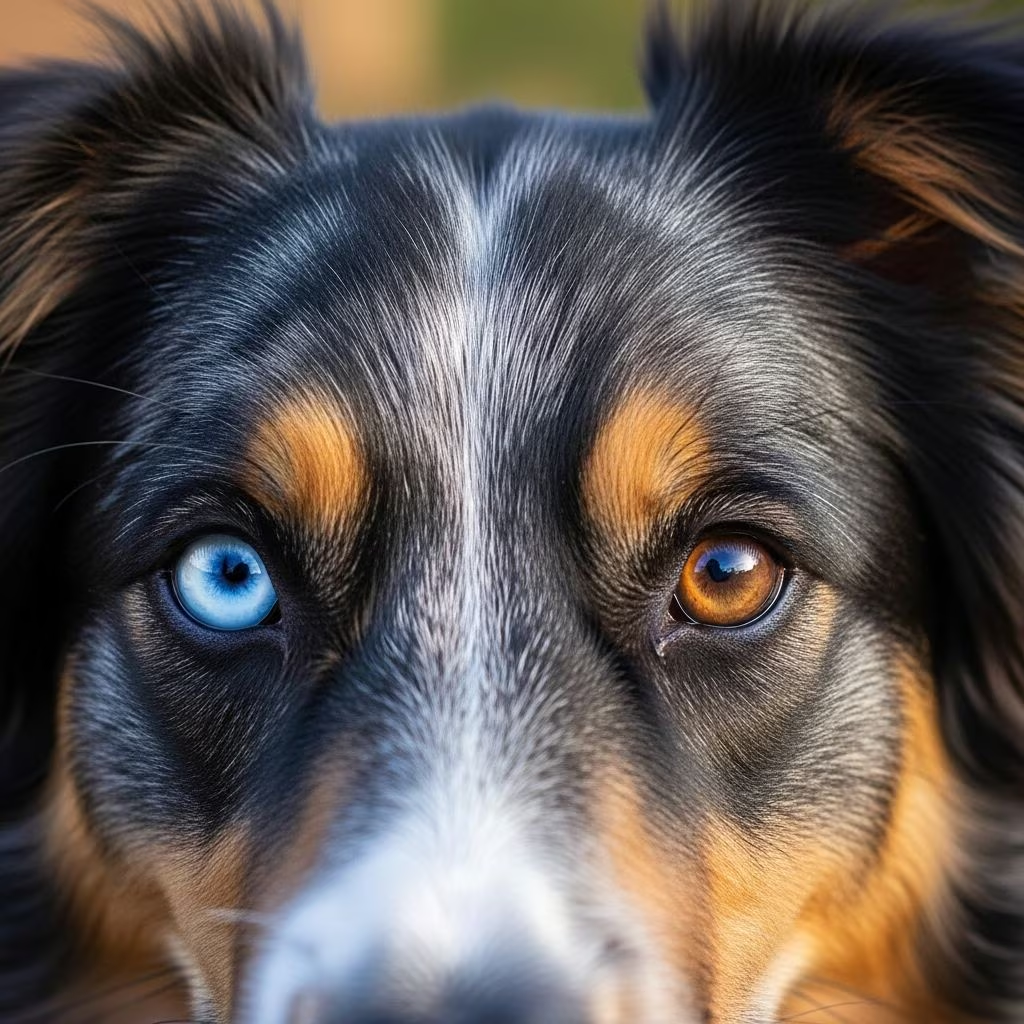
Heterochromia refers to the condition where a dog has eyes of different colors, typically one blue and one brown, resulting from uneven melanin distribution in the iris.
Defining Heterochromia and Its Visual Appeal
This striking eye variation captivates dog lovers worldwide, often lending pets a mystical allure. In canines, it stems primarily from pigmentation differences in the iris, the eye’s colored portion. While harmless in most cases, understanding its roots helps owners distinguish normal traits from potential health concerns.
All puppies start with blue-tinted eyes at birth, which mature to their adult hue around 16 weeks. Heterochromia becomes evident during this phase if genetically predetermined.
Types of Heterochromia Observed in Canines
Heterochromia manifests in distinct forms, each with unique presentations:
- Complete Heterochromia: One eye fully differs in color from the other, such as blue versus brown. This is the most noticeable type.
- Sectoral Heterochromia: Sections within a single iris show contrasting colors, like brown with blue wedges.
- Central Heterochromia: A ring or spikes of varied hue encircle the pupil, blending shades within one eye.
These variations highlight melanin inconsistencies, where less pigment yields blue tones and more produces brown or amber.
Genetic Foundations Behind Color Disparities
Hereditary factors dominate congenital heterochromia, linked to genes controlling coat and eye pigmentation. Key players include the merle and piebald genes.
The merle gene creates mottled coat patterns in blue or red shades. As a dominant trait, one copy from a parent suffices for expression. Dogs carrying it show elevated heterochromia risk, especially Siberian Huskies and Australian Shepherds. Breeding two merle carriers risks ‘double merle’ offspring, prone to deafness and blindness from melanocyte shortages.
The piebald gene, or white spotting gene, causes irregular melanin suppression, yielding white coats or patches. It correlates with heterochromia and, in extremes, deafness via auditory nerve impacts.
Research pinpoints a 98.6-kb duplication tied to blue eyes and heterochromia in select breeds. Multiple genes interact, explaining breed-specific prevalence. Selective breeding amplifies these traits in dogs compared to humans’ diverse gene pools.
| Gene | Coat Effect | Eye Impact | Health Risks |
|---|---|---|---|
| Merle | Marbled patches | Heterochromia likely | Deafness/blindness in doubles |
| Piebald | White spotting | Heterochromia possible | Deafness risk |
Breeds Prone to This Eye Condition
Certain breeds exhibit higher rates due to entrenched genetics:
- Siberian Huskies (up to 10% affected)
- Australian Shepherds
- Dalmatians (sectoral form linked to deafness)
- Great Danes
- Border Collies
- Dachshunds
- Chihuahuas
- Shih Tzus
Females may show it more in some lines, like Dalmatians.
Acquired Heterochromia: Non-Genetic Triggers
Not all cases are innate; acquired heterochromia develops post-birth from external factors. Trauma, like head blows or direct eye injuries, disrupts melanin.
Diseases play roles too: uveitis (inflammation), glaucoma, cataracts, or tumors alter iris color. Medications occasionally contribute. Accompanying signs include pain, redness, discharge, swelling, or vision loss—prompting immediate vet care.
Vets differentiate by excluding these via exams, as genetic forms lack symptoms.
Health Implications and Associated Risks
Congenital heterochromia rarely impairs vision; affected dogs see normally. However, links exist to sensory deficits in high-risk scenarios. Double merle pups face severe issues from melanocyte absence in eyes and ears.
Dalmatians with sectoral heterochromia show elevated deafness rates. Piebald extremes mirror this. Acquired forms signal underlying problems needing treatment to avert permanent damage.
Veterinary Evaluation and Management
For congenital cases, no intervention suffices if asymptomatic. Routine checks confirm vision and hearing.
Sudden changes demand vet visits. Diagnostics rule out pathology: tonometry for glaucoma, fluorescein staining for ulcers, bloodwork for systemic ills. Treatment targets causes—anti-inflammatories for uveitis, surgery for cataracts.
Responsible breeding tests for merle/piebald mutations to curb defects.
Cultural and Historical Perspectives
Legends enrich heterochromia’s lore, like Native American tales of ‘ghost eyes’—one seeing heaven, the other earth. It symbolizes uniqueness, boosting affected dogs’ desirability despite risks.
Frequently Asked Questions (FAQs)
Is heterochromia painful for dogs?
No, congenital forms cause no discomfort. Acquired may involve pain from underlying issues.
Can heterochromia lead to blindness?
Rarely alone, but double merle breeding heightens risks.
Does it affect hearing?
Possible in piebald/merle dogs or Dalmatians with sectoral type.
Is it more common in males or females?
Varies by breed; some show female bias.
Should I breed dogs with heterochromia?
Genetic testing advised to avoid health-compromised litters.
Owner Tips for Dogs with Unique Eyes
- Monitor for color shifts or symptoms.
- Schedule annual eye/hearing exams.
- Select breeders verifying genetics.
- Protect eyes from injury.
Embracing heterochromia celebrates diversity while prioritizing welfare.
References
- What to Know About Heterochromia in Dogs — Greenfield Puppies. 2023. https://www.greenfieldpuppies.com/blog/heterochromia-in-dogs/
- Heterochromia in Dogs: Causes, Breeds & When to See a Vet — Basepaws. 2023. https://basepaws.com/blog/heterochromia-in-dogs
- Dogs With Different Colored Eyes | Causes of Heterochromia — PetAssure. 2023. https://www.petassure.com/maxscorner/causes-of-heterochromia-in-dogs-different-colored-eyes/
- What Is Heterochromia in Dogs? — Whole Dog Journal. 2023. https://www.whole-dog-journal.com/health/what-is-heterochromia-in-dogs/
- Why Do Some Dogs Have Different Coloured Eyes? — K9 Magazine. 2023. https://www.k9magazine.com/why-do-some-dogs-have-different-coloured-eyes/
- What Causes Dogs to Have Two Different Coloured Eyes? — Pets4Homes. 2023. https://www.pets4homes.co.uk/pet-advice/what-makes-some-dogs-have-two-different-coloured-eyes-heterochromia-iridis-.html



