

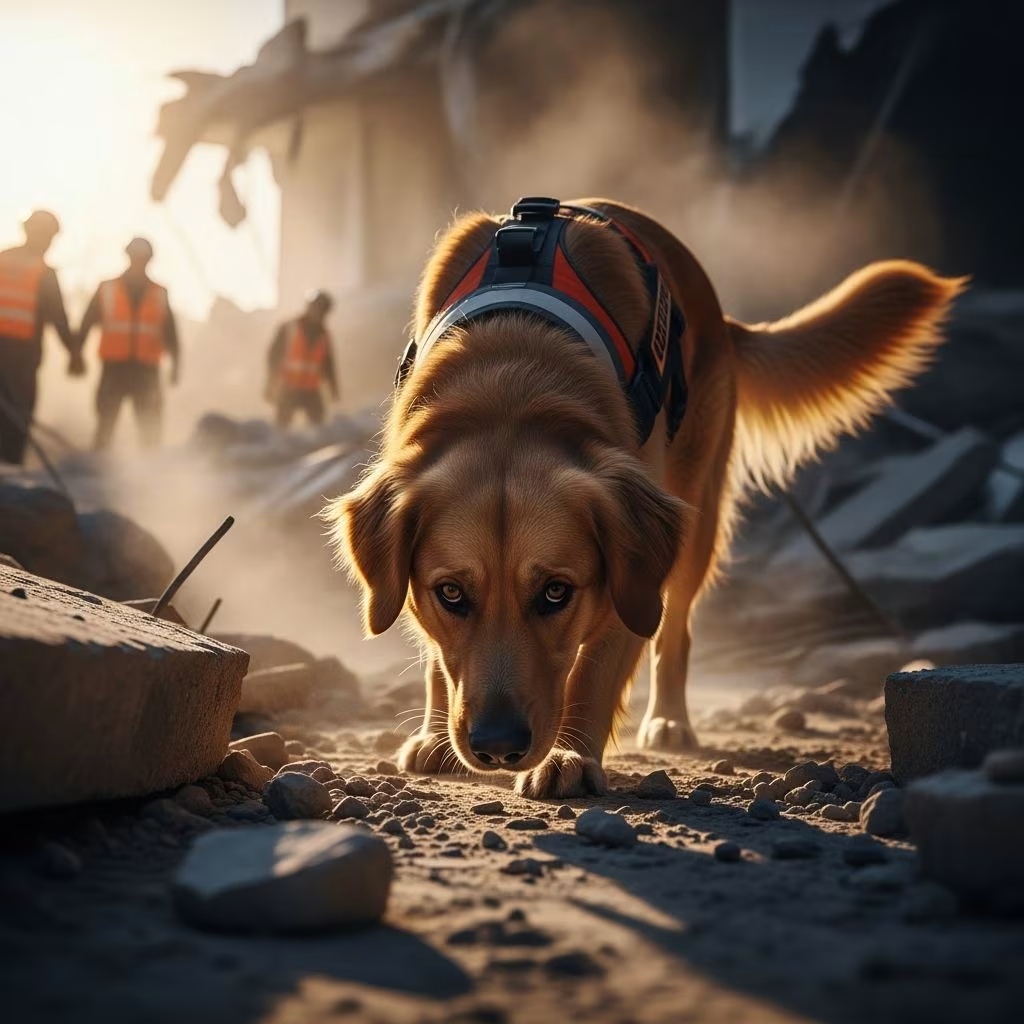
Search and rescue (SAR) dogs represent the pinnacle of canine capability, partnering with dedicated handlers to find lost individuals in the most challenging environments. These extraordinary animals detect human scent under rubble, through dense forests, or across vast urban landscapes, often turning desperate situations into stories of survival. Their training transforms high-energy pets into precision instruments of hope, requiring years of commitment from both dog and human.
Essential Qualities of Elite SAR Canines
Success in SAR work demands dogs with specific traits that go beyond basic obedience. High drive, athleticism, and environmental stability form the foundation. These dogs must thrive in chaos—working independently for hours amid noise, weather extremes, and unfamiliar terrain without losing focus.
- Physical Endurance: Capable of 8+ hours of intense activity, including running, jumping, and navigating rough woods.
- Mental Resilience: Comfortable operating solo, ignoring distractions, and persisting through false trails.
- Scent Discrimination: Expert at detecting and following human odor, even as wind, rain, or time alter its path.
- Sociability: Friendly yet focused, passing tests like AKC Canine Good Citizen for baseline reliability.
Breeds such as Labrador Retrievers, Golden Retrievers, Border Collies, and Belgian Malinois dominate SAR teams due to their energy, focus, and adaptability. Shelter rescues and mixes often excel when they possess these innate qualities.
Types of Search and Rescue Missions
SAR dogs specialize in distinct disciplines, each tailored to environmental demands and search objectives. Handlers select based on local needs, but versatility training allows crossover proficiency.
| Discipline | Description | Typical Environment | Key Challenges |
|---|---|---|---|
| Wilderness Tracking/Trailing | Dogs follow ground scent from a last-known point. | Forests, mountains, trails. | Weather, terrain, aging scent. |
| Air Scenting | Dogs detect airborne human odor over wide areas. | Open wilderness, large grids. | Wind shifts, multiple scents. |
| Urban Search | Navigating buildings and streets for live finds. | Cities, collapsed structures. | |
| Disaster/Cadaver | Finding survivors or remains in rubble/debris. | Earthquakes, floods, crashes. | Time pressure, hazards. |
Organizations like the National Disaster Search Dog Foundation prioritize disaster response, pairing dogs with firefighters for collapsed structure searches.
The Rigorous Path to Certification
Transforming a promising pup into a certified SAR dog spans 1-2 years of consistent, weekly training—often 600-1000 hours total. This owner-handler process demands patience, as no boarding schools exist for SAR specialization.
Training escalates progressively:
- Foundation (Puppy Stage): Build confidence via hide-and-seek games, basic obedience, and exposure to stimuli. Develop independent search drive.
- Skill Building: Teach scent work, alerts (bark/sit), physical conditioning, and recall. Introduce simulated scenarios.
- Advanced Drills: Full missions in varied weather/terrain, problem-solving odor changes, and handler-dog communication.
- Certification: Pass national tests from bodies like the International Police Work Dog Association or National Association for Search and Rescue. Recertify every 1-2 years.
Dogs retire around 8-9 years, prompting teams to pipeline replacements at 75% proficiency. Start no later than age 3 for optimal results.
Handler Preparation: A Demanding Commitment
The human half of the team invests equally, averaging 1000 hours to field readiness. Beyond dog training, handlers master survival skills essential for mission success.
- Medical: CPR, first aid, canine first aid.
- Navigation: Map/compass, GPS, land navigation.
- Operations: Incident Command System (ICS/NIMS), radio protocols, crime scene preservation.
- Technical: Lost person behavior, weather patterns, HAZMAT awareness.
Groups like PAWS require WSAR operational status, 70% training attendance, and team votes for certification. Mentorship is crucial; volunteers shadow experienced pairs before trialing their dog.
Real-World Impact and Famous Feats
SAR dogs have located thousands amid disasters like 9/11, hurricanes, and earthquakes. Their noses detect scents 50x more acutely than humans, penetrating barriers where tech fails. One dog can cover 100 acres faster than human teams, alerting precisely to save lives.
Post-mission, handlers debrief, maintaining bonds through play and conditioning. Retirement brings cherished home life, often with continued light demos.
Getting Started: Steps for Aspiring Teams
Enthusiasts shouldn’t rush purchasing pups. First, volunteer with local SAR groups sans dog to gauge fit.
- Join a SAR organization; complete searcher prerequisites (e.g., WSAR).
- Train your dog to CGC/obedience/tracking basics.
- Attend evaluations; secure a mentor.
- Commit to weekly trainings, progressing to certification.
- Maintain skills via recerts and continued education.
Programs like the School for Dog Trainers offer 6-12 week courses in SAR methods, odor dynamics, and behavior.
Challenges and Rewards of SAR Life
Teams face exhaustion, heartbreak from non-finds, and work-life balance strains. Yet, each success— a child’s reunion with family—fuels perseverance. Financially volunteer-based, rewards are intrinsic: purpose, adventure, unbreakable bonds.
Frequently Asked Questions (FAQs)
What breeds make the best SAR dogs?
High-drive breeds like Labs, Goldens, Border Collies, and Malinois excel, but any stable, athletic dog can succeed with proper traits.
How long does SAR training take?
Typically 1-2 years of weekly sessions, totaling 600-1000+ hours.
Can I send my dog away for SAR training?
No; SAR is owner-handler trained, requiring personal commitment.
What certifications do handlers need?
Medical, navigation, ICS/NIMS, and SAR-specific quals, plus dog team certs.
At what age do SAR dogs retire?
Usually 8-9 years, after 5-7 active years.
Conclusion: Unsung Heroes of Emergency Response
SAR dogs and handlers embody selfless service, bridging human limits with canine genius. Their preparation ensures rapid, effective responses, proving paws and partnership conquer the impossible.
References
- How to Get Your Dog Involved with Search & Rescue — Taste of the Wild Pet Food. Accessed 2026. https://www.tasteofthewildpetfood.com/articles/working-dogs/how-to-get-your-dog-involved-with-search-rescue/
- How To Become A Search And Rescue Dog Trainer — International Dog Trainer School. Accessed 2026. https://internationaldogtrainerschool.com/how-to-become-a-search-and-rescue-dog-trainer/
- Canine Training Program — National Disaster Search Dog Foundation. Accessed 2026. https://www.searchdogfoundation.org/canine-training-program/
- Requirements for SAR Dog Candidates — MESARD. Accessed 2026. https://mesard.org/requirements-for-sar-dog-candidates/
- FEMA SAR Team Credentials — HowStuffWorks. Accessed 2026. https://animals.howstuffworks.com/animal-facts/sar-dog3.htm
- Becoming a K9 Search Team — PAWS SRD. Accessed 2026. https://paws-srd.org/becoming-a-k9-search-team/
- First Steps for K9 SAR Team — SAR Dogs US. Accessed 2026. https://sardogsus.org/first-steps/



