

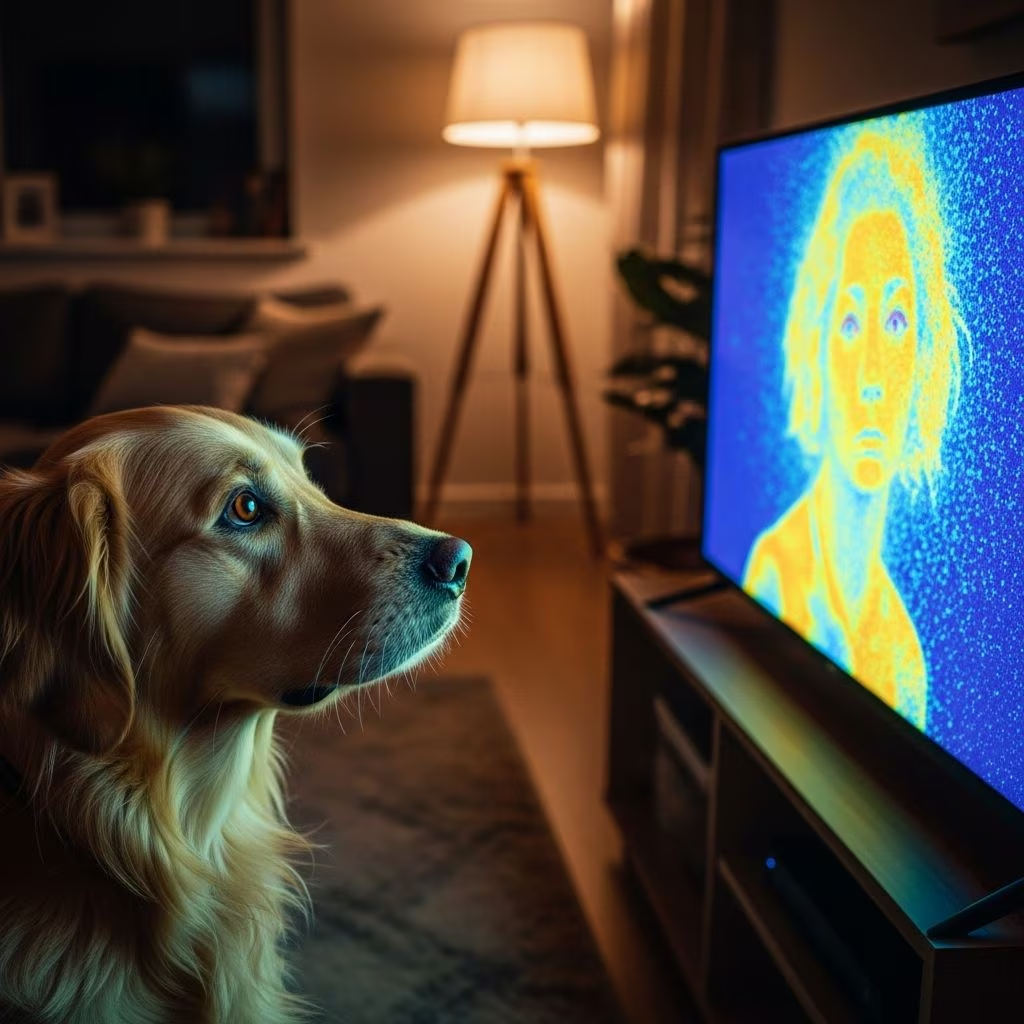
Dogs perceive television differently from humans due to their dichromatic vision, sensitivity to screen flicker, and preference for dynamic animal content, making modern high-frame-rate screens more engaging for them.
How Dogs’ Eyes Work Differently Than Ours
Dogs possess **dichromatic vision**, distinguishing primarily blues, greens, and yellows while struggling with reds, unlike human trichromatic vision that captures a full color spectrum. This limited palette means dogs interpret TV colors in muted tones, potentially missing vivid reds in shows.
Canine eyes feature a higher density of rods, enhancing low-light sensitivity and motion detection but reducing acuity—dogs see at about 20/75 vision compared to human 20/20. Their retinas include a **tapetum lucidum**, reflecting light for better night vision, which can cause screens to appear brighter or more intense.
Dogs process visuals faster, registering up to 70-80 frames per second versus humans’ 50-60, making older TVs with low refresh rates (around 24-30 fps) flicker like a strobe light to them. Modern LCD/LED TVs with 60+ fps and higher resolutions deliver smoother, lifelike motion that holds canine attention longer.
Why Dogs Can Now Watch TV (Thanks to Modern Screens)
Pre-2010s CRT TVs flickered excessively for dogs due to phosphor refresh delays, rendering content as disjointed stills. Today’s high-definition panels with rapid refresh rates (120-240Hz) eliminate this, allowing dogs to track on-screen action fluidly.
Specialized channels like **DOGTV** optimize for dogs: higher frame rates (up to 120 fps), dichromatic color schemes (emphasizing blues/greens), and tailored audio without startling high pitches. Studies confirm dogs spend more time fixated on such content, mistaking it for real-world stimuli.
- CRT TVs: High flicker, low engagement.
- Modern flatscreens: Smooth motion, prolonged interest.
- DOGTV: Custom visuals/audio boost interaction by 2-3x.
Do All Dogs Like Watching TV?
Not universally—about 86% of dogs show interest in screens, but 75-94% of owners report some as ‘non-watchers’ indifferent to content. Factors include age, personality, and prior exposure.
Younger dogs (puppies under 2 years) interact more, tracking objects vigorously, while seniors disengage possibly due to declining vision or motivation. Personality traits via DTVS scale reveal: excitable dogs ‘follow’ off-screen motion, fearful ones react to non-animal stimuli like doorbells.
| Factor | High Engagement | Low Engagement |
|---|---|---|
| Age | Puppies/Young adults | Seniors |
| Personality | Excitable, bold | Fearful, impulsive |
| Breed | Herders/Hounds (motion-driven) | Low-prey drive breeds |
What Do Dogs Like to Watch on TV?
Dogs fixate most on **animal content**, especially conspecifics (other dogs) and wildlife, with 78% approaching screens and vocalizing. Motion is key—static scenes bore them quickly.
- Top preference: Dogs, birds, panthers (tracking rates highest).
- Moderate: Vehicles, sports balls (non-animal motion).
- Least: Cartoons, humans alone (low realism).
DTVS dimensions confirm: ‘Animal’ stimuli elicit head turns/ear perks; ‘Follow’ behaviors suggest dogs perceive TV as a 3D window. Short bursts (under 5 minutes) typify sessions before habituation.
How Dogs React to TV
Common responses: 78% approach screen, head tilt/ear movement (perception check), barking/ whining (excitement). Excitable dogs chase shadows off-screen; reactive ones cower at thunder sounds.
No breed/sex differences noted, but prior TV exposure correlates with calmer viewing—no significant welfare stress reported.
- Visual: Track, paw at screen.
- Auditory: Respond to barks/doorbells over music.
- Behavioral: Vocalize (most common), play-bow.
Canine Vision Research: Using TV to Test Eyesight
Veterinarians like Freya Mowat (Univ. Wisconsin) leverage TV for nuanced vision tests beyond menace response—current methods equate to human ‘blind or not’.
Surveys (1,246 owners) link engagement to visual acuity: sustained tracking of moving animals indicates healthy function; disinterest flags issues. Videos hold attention for ‘dog eye charts’, aiding early cataract/glaucoma detection.
“Videos have potential for sustaining attention to assess visual function, but we need content dogs find engaging.” — Freya Mowat, BVSc, PhD.
DOGTV: Programming Made for Dogs
DOGTV streams 24/7 dog-optimized content: slow-motion animals, calming nature, exposure therapy for storms. Peer-reviewed efficacy shows reduced stress in alone dogs (cortisol drops 20-30%).
Formats suit vision: high FPS, no flicker, blue-green hues. Owners report less destructive behavior during playbacks.
Should You Leave the TV on for Your Dog?
Yes for enrichment—tailored content prevents boredom, eases separation anxiety without over-stimulation. Avoid news (sudden noises scare fearful dogs); opt for DOGTV or animal documentaries.
Benefits: Mental workout mimicking hunts; cons: Excessive viewing risks sedentary habits. Limit to 2-4 hours, combine with toys/walks.
Frequently Asked Questions
Can all dogs see TV clearly?
No—older dogs or those with vision impairments see less; modern screens help most.
What TV content do dogs prefer?
Moving animals, especially dogs/birds over humans or cartoons.
Is DOGTV worth it?
Yes, scientifically designed for canine senses, proven to calm and engage.
Does TV stress dogs?
Rarely—personality-dependent; excitable dogs thrive, fearful ones need gentle content.
Can TV test my dog’s eyesight?
Emerging research says yes—trackability reveals acuity issues early.
References
- How watching TV can help ophthalmologists assess canine visual stimulants — dvm360. 2023. https://www.dvm360.com/view/how-watching-tv-can-help-ophthalmologists-assess-canine-visual-stimulants
- TV time for dogs: A window into their personality — New Atlas. 2024. https://newatlas.com/science/companion-dogs-television-engagement-personality/
- The Surprising Science Behind Dog TV — Christopher Todd. 2023. https://www.christophertodd.com/do-dogs-watch-tv/
- Canine TV Preferences Could Lead To Answers in Protecting Dogs’ Eyesight — University of Wisconsin School of Veterinary Medicine. 2023. https://www.vetmed.wisc.edu/canine-tv-preferences-could-lead-to-answers-in-protecting-dogs-eyesight/
- What can TV viewing tell us about dogs’ vision? — Veterinary Record (BVA Journals). 2024-05-01. https://bvajournals.onlinelibrary.wiley.com/doi/10.1002/vetr.3915



