

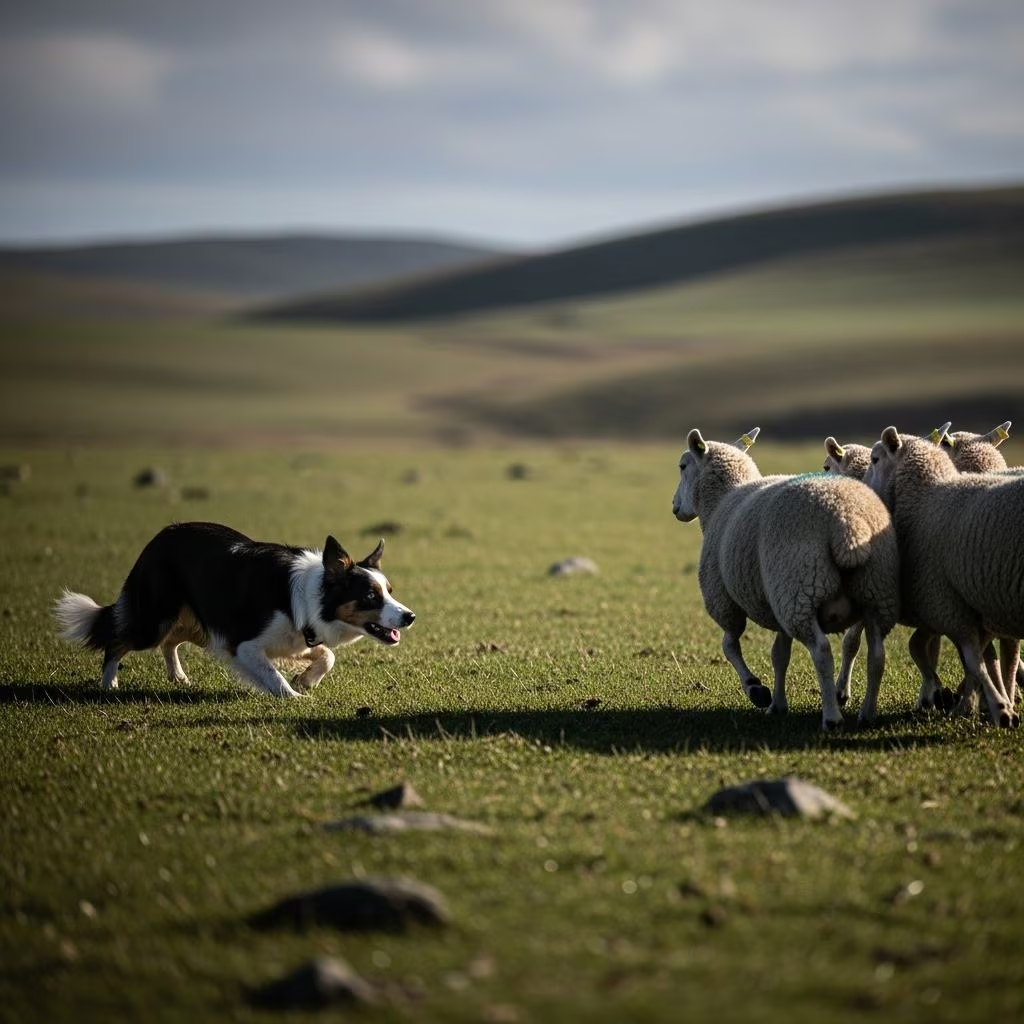
Herding trials represent a captivating blend of ancient pastoral traditions and modern canine athletics, where dogs demonstrate their innate ability to manage livestock through precise commands and strategic positioning. These competitions evaluate a dog’s capacity to control sheep, cattle, or other animals in simulated farm scenarios, fostering a deep bond between handler and canine partner.
The Essence of Herding as a Competitive Sport
At its core, herding involves dogs using body language, intense gaze, and calculated movements to direct livestock without physical contact in most cases. Handlers issue cues via whistles, voice, or gestures to guide the dog in gathering, driving, or penning animals. This sport preserves the working heritage of breeds developed over centuries for farm labor, transforming practical skills into judged performances.
Competitions vary in scale, from compact arena setups to expansive fields spanning hundreds of yards. A single run might last 10 to 45 minutes, handling groups from three to over 100 animals. Judges score based on efficiency, control, and harmony between dog and handler, penalizing issues like gripping or allowing breaks in the herd.
Core Skills Every Herding Dog Must Master
Success demands a repertoire of advanced abilities beyond basic obedience. Dogs learn to flank livestock—circling left or right—while maintaining optimal distance and pressure to induce movement. They must “eye” the stock with a hypnotic stare, balance their position to prevent escapes, and respond instantly to directional shifts.
- Flanking and Driving: Circling to apply pressure from behind or sides, propelling the herd forward.
- Balancing: Positioning opposite potential escape routes to contain the group.
- Pacing: Adjusting speed to match livestock tempo, avoiding overexertion or scattering.
- Outwork and Recall: Covering ground at distance before returning to handler cues.
- Penning and Sorting: Guiding animals into enclosures or separating individuals from flocks.
These skills require mental acuity and physical stamina, with dogs often working at distances up to 200 yards in higher levels.
Popular Livestock Types in Herding Events
Sheep dominate most trials due to their flocking behavior, but variety keeps competitions dynamic. Ducks offer a low-impact option for smaller venues, testing finesse on flighty prey. Cattle demand bolder approaches, rewarding dogs with grip tolerance in some formats. Less common choices like goats, geese, or turkeys add unpredictability.
| Livestock Type | Key Challenges | Ideal for Breeds |
|---|---|---|
| Sheep | Flocking instinct, potential stubbornness | Border Collie, Australian Shepherd |
| Ducks | Speed, flight risk in open areas | Shetland Sheepdog, smaller herders |
| Cattle | Size, aggression, need for pressure | Australian Cattle Dog |
| Goats | Independent, climbing tendencies | Versatile herders |
This diversity ensures trials suit different dog sizes and styles.
Major Organizations Governing Herding Trials
Several bodies standardize rules, offering titles from novice to championship. The American Kennel Club (AKC) emphasizes preservation of herding breeds’ utility, with tests for instinct and trials for advanced prowess. Courses include open fields (HTD), arena obstacles (HTAD), and ranch layouts (HRD).
Other key groups:
- Australian Shepherd Club of America (ASCA): Open to all breeds, features driving courses, lenient on contact.
- United States Border Collie Handlers Association (USBCHA): Focuses on traditional sheepdog trials with national finals.
- American Herding Breed Association (AHBA): Multiple stock types, non-competitive entry levels like HCT and JHD.
- Stock Dog Registry of the United States: Ranch-style events with sorting and penning.
Each has unique progression: typically two qualifying runs per title level, escalating in complexity and distance.
Training Pathways for Aspiring Herding Teams
Preparation starts with instinct testing on calm stock, building self-control via obedience foundations. Clinics and lessons at farms introduce commands like “come bye” (clockwise flank) and “away” (counterclockwise). Positive reinforcement—clickers, toys, or food—shapes behaviors in groundwork before live sessions.
Progressive steps:
- Instinct Assessment: Observe natural reactions to livestock.
- Basic Commands: Teach stop, flank, and walk-up on leads.
- Controlled Exposure: Short fetches and drives with handler nearby.
- Distance Work: Increase separation, introduce whistles.
- Mock Trials: Simulate courses with obstacles and multiple animals.
Handlers refine their signals for seamless partnership. Expect 6-12 months for trial readiness.
Top Breeds Dominating the Herding Arena
Herding breeds excel due to selective breeding for stockwork. Border Collies lead with hypnotic intensity and endurance. Australian Shepherds offer versatility across stock types. Others shine too:
- Border Collie: Precision eye, vast outrun capability.
- Australian Shepherd: Bold drive, family-friendly.
- Shetland Sheepdog: Agile for ducks, arenas.
- Australian Cattle Dog: Tough for cattle, grippy style.
- Collie (Rough/Smooth): Elegant tending.
While breed-restricted in some venues, open events welcome mixes and non-traditional herders.
Course Formats: From Fetch to Ranch Challenges
Trials feature distinct layouts testing adaptability.
- Fetching/Driving: Gather from set-out, navigate panels to pen.
- Ranch Dog: Large areas, select/sort specific animals.
- Tending: Patrol as living fence for grazing.
Higher levels add crosses, bridges, or trailers. Handlers may move freely or stay posted.
Judging Criteria and Scoring Nuances
Judges assess holistic performance: livestock control (no breaks), efficiency (minimal handler aid), style (smoothness). Points deduct for faults like barking, crossing, or poor pace. Top scores reflect partnership where dog anticipates needs.
Benefits Beyond the Ring: Health and Bonding
Herding channels high-drive energy, reducing behavioral issues. Mentally, it sharpens problem-solving; physically, it builds fitness. Handlers gain patience and communication skills. Alternatives like Fast CAT lure-chasing suit herders without livestock access.
Getting Involved: First Steps for Newcomers
Locate trials via club sites, attend as spectator. Seek trainers with clinic schedules. Start with non-competitive tests. Invest in whistle, stock stick, and sturdy boots. Join forums for tips.
Frequently Asked Questions (FAQs)
What breeds can participate in herding trials?
Primarily herding breeds like Border Collies, but many orgs allow all dogs with instinct.
Do I need my own livestock for training?
No—rent time at farms or join group lessons.
How much does it cost to compete?
Entry fees $50-150 per run; travel and lessons add up.
Are herding trials safe for dogs?
Yes, with fit dogs and calm stock; vets recommend conditioning.
Can puppies start herding?
From 6-12 months, after maturity checks.
References
- Canine Sports: Herding Competitions — Whole Dog Journal. 2019-02-07. https://www.whole-dog-journal.com/training/tricks_games_sports/canine-sports-herding-competitions/
- Herding Dog Sport Information and Guides — Showsight Magazine. N/A. https://showsightmagazine.com/dog-sports/herding/
- The Best Dog Sports and Training for Herding Breeds — American Kennel Club. N/A. https://www.akc.org/expert-advice/dog-breeds/dog-sports-for-herding-breeds/
- Getting Started in Herding — American Kennel Club. N/A. https://www.akc.org/sports/herding/getting-started/
- About Herding Trials — On The Lamb Herding. N/A. https://www.onthelambherding.com/trials
- Sheepdog trial — Wikipedia (informational, primary sources referenced). N/A. https://en.wikipedia.org/wiki/Sheepdog_trial



