

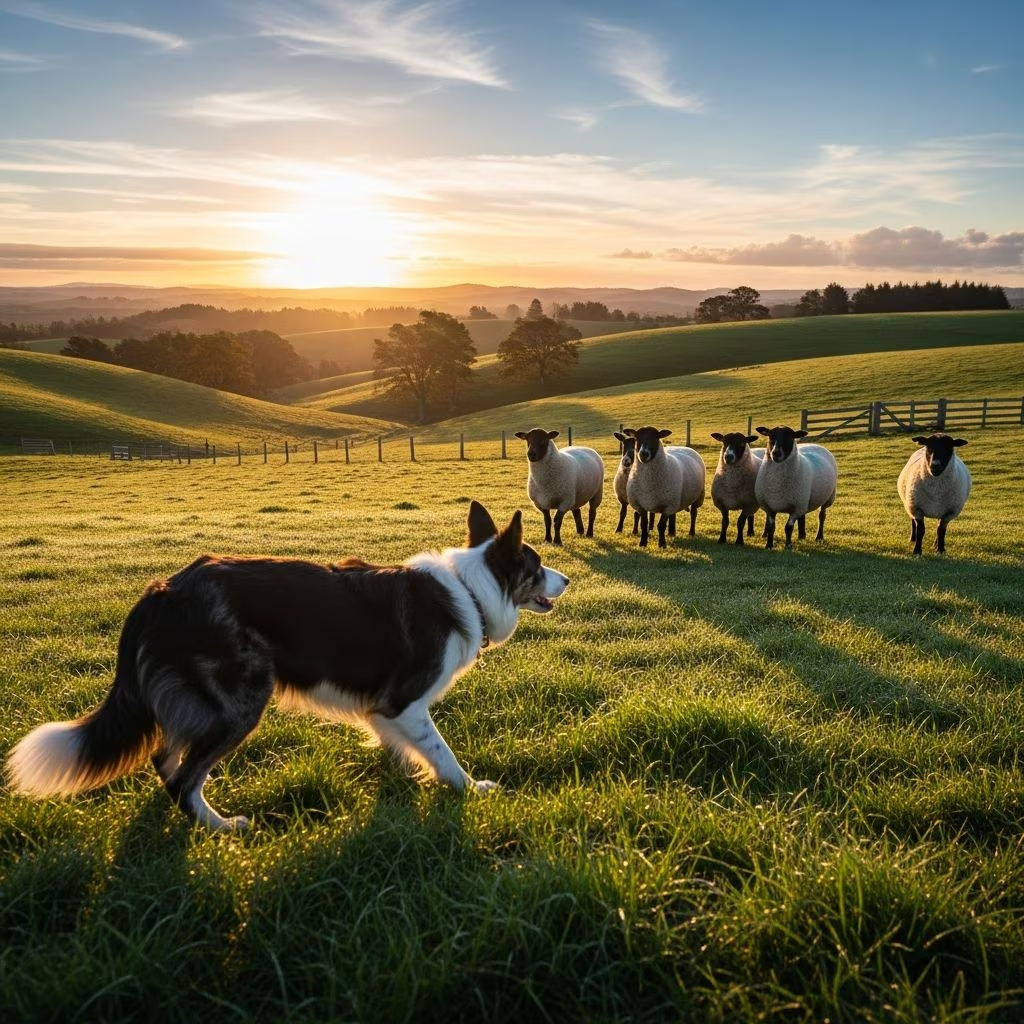
Herding dogs possess remarkable natural instincts and abilities that have been refined through generations of selective breeding. These athletic and intelligent animals excel at managing livestock, responding to subtle cues and adapting their behavior to changing situations. However, possessing natural herding ability alone is insufficient for effective working relationships. Owners must systematically train their dogs using a comprehensive vocabulary of commands that translate human intention into precise canine action. Whether you’re establishing a working farm partnership or teaching a companion dog appropriate behavior around animals, understanding the full spectrum of herding commands is essential.
Building a Foundation: Why Command Training Matters
Herding dogs demonstrate an innate drive to control movement through predatory behavior patterns modified by selective breeding. This biological predisposition creates both opportunity and responsibility for owners. Without proper training, even genetically superior herding dogs may develop problematic behaviors, chase inappropriate targets, or fail to respond reliably when livestock safety depends on instantaneous obedience. The investment in systematic command training transforms raw instinct into reliable, controlled performance that protects both animals and handlers.
The foundation of all herding work rests on two non-negotiable commands that must achieve 100% reliability before advancing to more specialized techniques. These foundational elements establish the communication framework upon which all subsequent training builds. Once a dog consistently responds to basic directions under any circumstance, introducing directional and livestock-specific commands becomes significantly more manageable.
The Fundamental Trinity: Starting Your Training Journey
Professional herding trainers overwhelmingly recommend beginning with three core commands that establish a common language between handler and dog. This simplified approach prevents confusion while building confidence in both animal and trainer. The deliberate limitation to three commands creates clear communication patterns that dogs internalize more readily than extensive command vocabularies.
- Recall Command (“Here”) – The absolute foundation requiring 100% reliability in all contexts and distractions. This command must supersede every instinct and distraction the dog encounters. Consistent execution builds the safety net that allows everything else to function properly.
- Down/Lie-Down Command – Stops all forward motion and allows the handler to maintain control during critical moments. This command transitions the dog from active work to a controlled pause state, essential for preventing uncontrolled livestock interaction.
- Directional Foundation – Basic left and right directional cues that precede more specialized herding directions. These elementary positional commands train the dog to respond to handler intent rather than relying exclusively on instinct.
Directional Movement Commands: Guiding Livestock Positioning
Once foundational commands achieve reliability, directional commands teach dogs to position themselves relative to livestock in specific ways. These commands create the vocabulary for choreographing livestock movement with precision and purpose.
| Command | Direction | Primary Application | Dog Position Relative to Handler |
|---|---|---|---|
| Come Bye | Clockwise | Moving livestock in circular patterns; gathering from specific directions | Handler’s left side, moving left of livestock |
| Away to Me | Counterclockwise | Approaching livestock from opposite direction; alternative pressure application | Handler’s right side, moving right of livestock |
| Way (Left) | Left directional | Basic directional movement; foundational to advanced commands | Moving leftward from handler perspective |
| Bye (Right) | Right directional | Basic directional movement; foundational to advanced commands | Moving rightward from handler perspective |
These directional commands represent the bridge between basic obedience and sophisticated livestock management. They establish the dog’s ability to respond to handler intention rather than purely instinctive behavior patterns.
Pressure and Pace Management Commands
Professional herding requires sophisticated control over the intensity of pressure applied to livestock. Commands in this category allow handlers to calibrate how aggressively or gently the dog engages with animals, preventing stress-induced panic or escape behaviors that compromise herd safety.
Bark or Speak – This command instructs the dog to vocalize, applying additional pressure to stubborn or unresponsive livestock. Cattle and sheep sometimes require auditory stimulus combined with physical presence to overcome resistance. The bark command transforms silent physical pressure into multi-sensory impact that motivates faster movement when necessary.
Steady or Take Time – These commands signal the dog to decelerate, creating greater distance from livestock and reducing pressure intensity. Excessive pressure causes animal stress, panic responses, and potential injuries. Teaching dogs to voluntarily reduce intensity ensures humane livestock handling and prevents counterproductive reactions from panicked animals.
Get Back or Get Out – This command maintains appropriate distance when dogs position themselves too close to livestock, risking stress or injury to animals or confrontational situations. Proper spacing protects herd welfare while preserving the dog’s safety from defensive animals or unexpected movements.
Gathering and Grouping Commands
Herding operations frequently require collecting dispersed animals into consolidated groups. Commands in this category teach dogs the circular, encompassing movements that gather livestock effectively without causing panic-driven scatter.
Cast or Flank – This command prompts the dog to circle the herd at controlled distance, gradually moving all animals toward a central collection point. The circular motion prevents animals from perceiving the dog as a direct threat while the encompassing pattern naturally consolidates the group. Proper execution requires the dog to maintain consistent distance and adjust movement speed based on livestock response.
Outrun – This advanced command sends the dog on a wide, ground-covering pattern to reach livestock from the far side and establish control. The outrun command represents sophisticated understanding of terrain navigation and stock positioning. Dogs must calculate distances and maintain momentum while responding to handler cues and livestock movement.
Separation and Selection Commands
Modern herding operations frequently require isolating specific animals from larger groups for veterinary treatment, breeding decisions, or market selection. Commands in this category enable dogs to separate and contain individual animals or small groups within larger herds.
In Here – This command instructs the dog to move into the gap between separated animals, holding them apart from the main group. Once a target animal or small group has been divided, “in here” creates the barrier that prevents the separated animals from rejoining the main herd. This command combines positioning, movement control, and sustained focus on specific animals.
Find – This command directs the dog to locate specific missing animals within pastures or complex terrain. Well-trained herding dogs communicate their discovery through barking or other signals, alerting handlers to animal locations. This command transforms general herding ability into targeted search capability.
Movement Approach and Pace Commands
The manner in which dogs approach livestock significantly impacts animal stress levels and handling effectiveness. Commands controlling approach strategy and movement pace prevent panicked reactions while ensuring animals move in desired directions.
Walk, Walk Up, or Walk On – These commands direct the dog to move closer to livestock while maintaining calm, steady pace and controlled behavior. Moving closer without alarming animals requires the dog to suppress herding instincts partially while maintaining engagement. Proper execution prevents spooking while establishing the proximity necessary for effective pressure application.
Fetch – This command instructs the dog to move livestock directly toward the handler. Unlike gathering commands that consolidate scattered animals, fetch specifically directs concentrated movement in the handler’s direction. This command combines approach control with directional purpose.
Control and Positioning Commands
Herding situations frequently require absolute cessation of movement or specific positional holds while the handler manages other aspects of livestock or evaluates situations. Commands in this category establish reliable pause states and positional control.
Wait or Sit or Down – These commands halt all dog movement and establish static positioning. While seemingly basic, their application in high-stimulation herding environments represents significant obedience achievement. Dogs must suppress powerful instincts to remain still while livestock moves nearby or handler attends other tasks.
There – This command indicates task completion, signaling the dog to stop flanking and face the herd squarely. While less frequently employed than other commands, “there” provides clear communication that the current maneuver has concluded and the dog should transition to a different task or holding position.
Training Methodology: Body Language and Communication
Early herding training relies overwhelmingly on body language rather than verbal cues alone. Approximately 95% of initial commands are communicated through handler positioning, movement, and physical gesture. Dogs develop their understanding by observing handler behavior and learning which body language patterns precede specific outcomes. Clear, consistent body language eliminates confusion and accelerates learning, while confusing signals produce inconsistent canine responses.
Handlers must develop acute awareness of their own physical communication, as dogs respond to subtle postural shifts, directional focus, and movement patterns. A handler’s body language essentially previews the desired outcome before verbal cues reinforce the instruction. As training progresses, verbal commands gradually assume greater importance, but many professional herding dogs maintain responsiveness to body language cues even when verbal commands are inaudible.
Progressive Training Stages: Building Complexity Systematically
Effective herding training follows a progression that gradually increases environmental complexity and distraction levels. Initial training occurs with minimal livestock and complete handler control. Subsequent stages introduce additional animals, increased movement, and higher-stress situations that test the dog’s ability to maintain focus and obedience despite powerful instinctual drives.
Handlers begin by establishing command reliability in controlled environments, then gradually increase stock numbers and movement intensity. Dogs must progress from maintaining position with stationary livestock to performing complex maneuvers while animals move unpredictably. Advanced training includes scenarios where dogs work independently while handlers position livestock or prepare handling equipment, requiring the dog to maintain focus and appropriate positioning without constant supervision.
Frequently Asked Questions About Herding Commands
At what age should herding training begin?
Basic obedience commands should begin during puppyhood, typically around 8-12 weeks of age. Foundational commands like “come,” “sit,” and “down” establish the communication framework necessary for later herding-specific instruction. Introduction to livestock typically occurs between 4-6 months, depending on the individual dog’s development and prior obedience achievement.
How long does it take to train a herding dog?
Training duration varies significantly based on the dog’s age, prior experience, individual drive level, and training time investment. Puppies may require 12-24 months to achieve advanced herding proficiency, while older dogs with prior training might progress more rapidly. Consistent daily training accelerates progress compared to sporadic practice sessions.
Can herding commands be taught to non-herding breeds?
While non-herding breeds may learn commands and basic gathering behaviors, their success will be limited by genetic predisposition. Herding breeds possess specific behavioral patterns, physical capabilities, and instinctive responses that make them substantially more effective and reliable for actual livestock management.
What role does pressure application play in herding training?
Pressure and its release form the fundamental learning mechanism in herding training. When a dog yields to pressure by adjusting position or behavior, immediate pressure release combined with verbal praise reinforces the correct response. This pressure-release cycle gradually builds the dog’s understanding of command meanings and appropriate behavioral responses.
How should handlers manage dogs with excessive prey drive during training?
Dogs exhibiting extreme prey drive that manifests as uncontrolled lunging or grabbing require focused training on impulse control before progressing to livestock interaction. These dogs must learn to maintain loose-leash control even when livestock moves nearby. Intensive focus training and controlled exposure to animal movement help redirect predatory impulses into manageable herding responses.
Conclusion: Building Reliable Working Partnerships
Mastering a comprehensive vocabulary of herding commands transforms raw instinct into reliable, controlled performance. From foundational recall and positioning commands through advanced livestock separation and selection techniques, each command serves a specific purpose in the complex choreography of herding work. Systematic training that emphasizes consistency, clear communication through body language and verbal cues, and progressive environmental complexity builds the communication framework that allows humans and dogs to work as coordinated teams. Whether managing large herds professionally or teaching companion dogs appropriate behavior around animals, understanding and implementing these commands establishes the foundation for safe, effective, and humane livestock management.
References
- 15 Vet-Verified Herding Dog Commands: Facts & Guide — Dogster. Retrieved from https://www.dogster.com/dog-training/herding-dog-commands
- Beginning Herding — Herding Training Info. Retrieved from http://www.herdingtraining.info/beginning-herding.html
- Getting Started With Herding — Eukanuba. Retrieved from https://www.eukanuba.com/articles/training/getting-started-with-herding
- Traditional Sheepdog Commands for Training and Working — Sheepdog Training. Retrieved from https://sheepdog-training.com/traditional-sheepdog-commands-for-farmer-and-shepherd/
- A Beginner’s Guide to Herding Dogs — English Shepherd Club. Retrieved from https://englishshepherd.org/a-beginners-guide-to-herding-dogs/



