

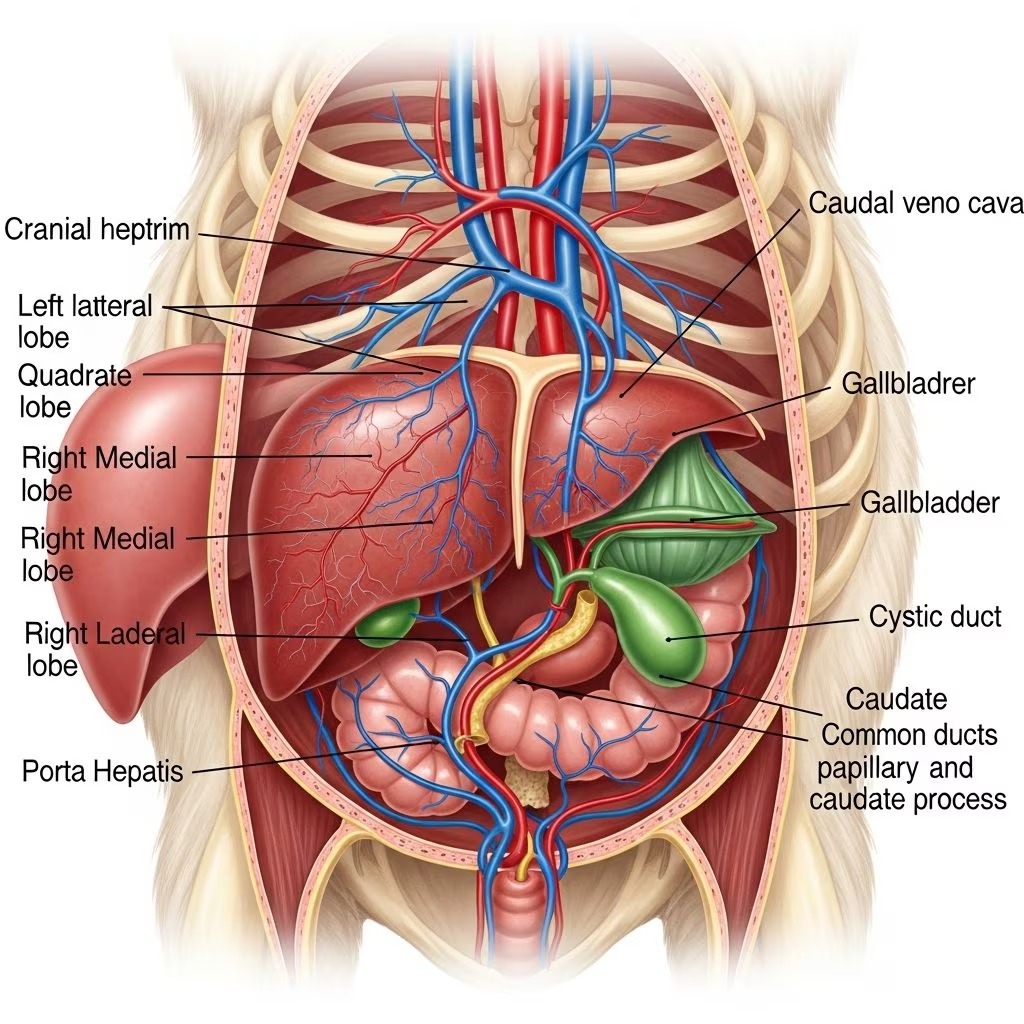
The hepatobiliary system forms a cornerstone of digestive and metabolic health in small animals like dogs and cats. Comprising the liver, gallbladder, and intricate network of bile ducts, this system handles critical tasks such as nutrient processing, toxin filtration, and fat digestion. Understanding its layout and operations is essential for diagnosing conditions ranging from hepatitis to bile duct obstructions.
Position and Protective Features of the Liver
Situated in the cranial abdomen, the liver benefits from the rib cage’s natural shielding against physical injuries. In dogs, most of its bulk positions to the right of the midline, following a roughly 3:2 right-to-left ratio. This strategic placement ensures stability while maximizing exposure to incoming blood supplies for efficient processing.
The organ’s dual surfaces—the diaphragmatic facing the diaphragm and the visceral interfacing with abdominal viscera—facilitate its multifaceted roles. Fresh liver tissue appears deep red, firm yet delicate, reflecting its high vascularity and metabolic demands. In a typical 30-pound dog, dimensions approximate 14 cm dorsoventral, 12 cm wide, and 6 cm thick.
Detailed Breakdown of Liver Lobes and Divisions
The liver divides into distinct lobes and sublobes via deep fissures, optimizing functional independence and surgical accessibility. Key components include:
- Left lobe: Largest overall, split into lateral and medial segments by a prominent cleft for easier surgical manipulation.
- Right lobe: Comprises medial and lateral parts; the medial attaches firmly to the quadrate lobe, complicating separations.
- Quadrate lobe: Nestled between left and right medial lobes.
- Caudate lobe: Features caudate and papillary processes; the caudate extends caudally to the twelfth intercostal space, while the papillary crosses midline under the lesser omentum.
These divisions, totaling four main lobes, four sublobes, and two processes, vary slightly in size but ensure comprehensive coverage of hepatic functions.
Advanced Vascular Network: Dual Blood Supply
The liver’s survival hinges on its unique dual perfusion. The hepatic artery delivers oxygenated blood, contributing about 25-30% of inflow but half the oxygen needs. The portal vein, carrying nutrient-laden blood from the gastrointestinal tract, spleen, pancreas, and stomach, provides the remaining 70-75% volume.
| Vessel | Contribution to Blood Flow | Primary Role |
|---|---|---|
| Hepatic Artery | 20-25% | Oxygen and nutrients |
| Portal Vein | 75-80% | Nutrient-rich deoxygenated blood |
| Hepatic Veins | Drainage | Return to caudal vena cava |
Portal vein branches differ by species: dogs typically split into right and left mains, with the left further dividing into central, lateral, medial, and quadrate supplies. Cats often show three primary branches—right, central, left. Hepatic veins, numbering six to eight in dogs, empty into the caudal vena cava, with cranial ones near the diaphragm.
Microscopic Liver Architecture: Cells and Sinusoids
At the cellular level, hepatocytes dominate, forming plates separated by sinusoids—wide, permeable channels for blood-hepatocyte exchange. Specialized cells enhance functionality:
- Kupffer cells: Macrophages scavenging debris and pathogens.
- Ito (stellate) cells: Store vitamin A, activate in fibrosis.
- Pit cells: Natural killer cells for immune surveillance.
Sinusoidal endothelial cells feature fenestrations for efficient material transfer. Hepatocyte cytoplasm, rich in organelles like mitochondria and endoplasmic reticulum, imparts eosinophilic staining under microscopy.
Bile Production, Pathway, and Gallbladder Role
Hepatocytes synthesize bile, essential for emulsifying fats. Composed of bile salts, bilirubin, cholesterol, and electrolytes, bile flows via canaliculi into interlobular and lobar ducts, forming hepatic ducts (2-8 in dogs). These merge into the common bile duct.
The gallbladder, embedded between right medial and quadrate lobes, concentrates and stores bile. Its cystic duct joins the common bile duct, which delivers bile to the duodenum’s major papilla. Cholecystokinin triggers gallbladder contraction post-meal, relaxing the sphincter of Oddi for bile release.
Species-Specific Biliary Variations
Dogs and cats exhibit notable differences:
| Feature | Dogs | Cats |
|---|---|---|
| Pancreatic Duct Union | Separate at papilla | Conjoin before entry |
| Gallbladder Disease | Common (e.g., mucocele) | Less frequent |
| Bile Acid Conjugation | Taurine or glycine | Primarily taurine |
In cats, the merged ducts simplify entry but alter obstruction dynamics.
Functional Integration: Metabolism and Detoxification
Beyond anatomy, the hepatobiliary system excels in metabolism. Hepatocytes conjugate bilirubin with taurine (cats) or glycine/taurine (dogs) for excretion. Bile acids, recycled via enterohepatic circulation, aid lipid absorption. The liver also biotransforms drugs, synthesizes proteins and lipids, and regulates glucose.
Portal tracts house triads: bile ductule, hepatic arteriole, portal venule. Blood flows toward central veins, bile oppositely to ducts, lymph drains via portal lymphatics.
Clinical Relevance: Imaging and Common Disorders
Diagnostic imaging reveals hepatobiliary issues. Ultrasound visualizes lobes, gallbladder (anechoic reservoir), and ducts. Dual supply explains ischemia resistance, but portal hypertension or shunts disrupt flow.
Congenital anomalies like portosystemic shunts or biliary atresia impair function, mirroring human conditions. Cholestasis elevates conjugated bilirubin, signaling obstruction.
Comparative Insights Across Small Animals
While focused on dogs and cats, ferrets, rabbits, and exotic pets share hepatobiliary traits but vary in lobe counts or gallbladder presence. Veterinary imaging adapts for zoo medicine.
Frequently Asked Questions (FAQs)
What is the liver’s primary blood supply in dogs?
The portal vein supplies 75-80% of blood volume, nutrient-rich from GI organs, complemented by hepatic artery oxygenation.
How does the feline biliary system differ from canines?
Cats have conjoined bile and pancreatic ducts entering the duodenum together; dogs keep them separate.
Why is the gallbladder important?
It stores and concentrates bile, releasing it via hormonal signals for digestion.
What cells line liver sinusoids?
Fenestrated endothelial cells, plus Kupffer, Ito, and pit cells for support functions.
Can liver lobes be surgically separated?
Yes, left lobe clefts ease access; right medial-quadrate fusion poses challenges.
References
- Liver and Biliary System — Veterian Key. 2016. https://veteriankey.com/liver-and-biliary-system/
- Hepatobiliary Anatomy Review & Diagnostic Imaging — Cape Cod Veterinary Specialists (Nedra Wilson, BVetMed, DACVR). 2025-03. https://capecodvetspecialists.com/wp-content/uploads/2025/03/Liver-CE_N-Wilson.pdf
- Canine hepatobiliary anatomy, physiology and congenital disorders — PubMed (Peer-reviewed). 2021-08-23. https://pubmed.ncbi.nlm.nih.gov/34409602/
- Chapter 9: Hepatobiliary System – Veterinary Histology — Ohio State University Pressbooks (.edu). Accessed 2026. https://ohiostate.pressbooks.pub/vethisto/chapter/9-hepatobiliary-system-intro/
- Hepatobiliary – Feline Medicine for Veterinary Technicians — Wiley Online Library. 2024. https://onlinelibrary.wiley.com/doi/abs/10.1002/9781394239078.ch22



