
Hepatic Physiology: Core Functions in Animal Health
Understanding the liver's critical role in maintaining homeostasis and supporting vital biological processes
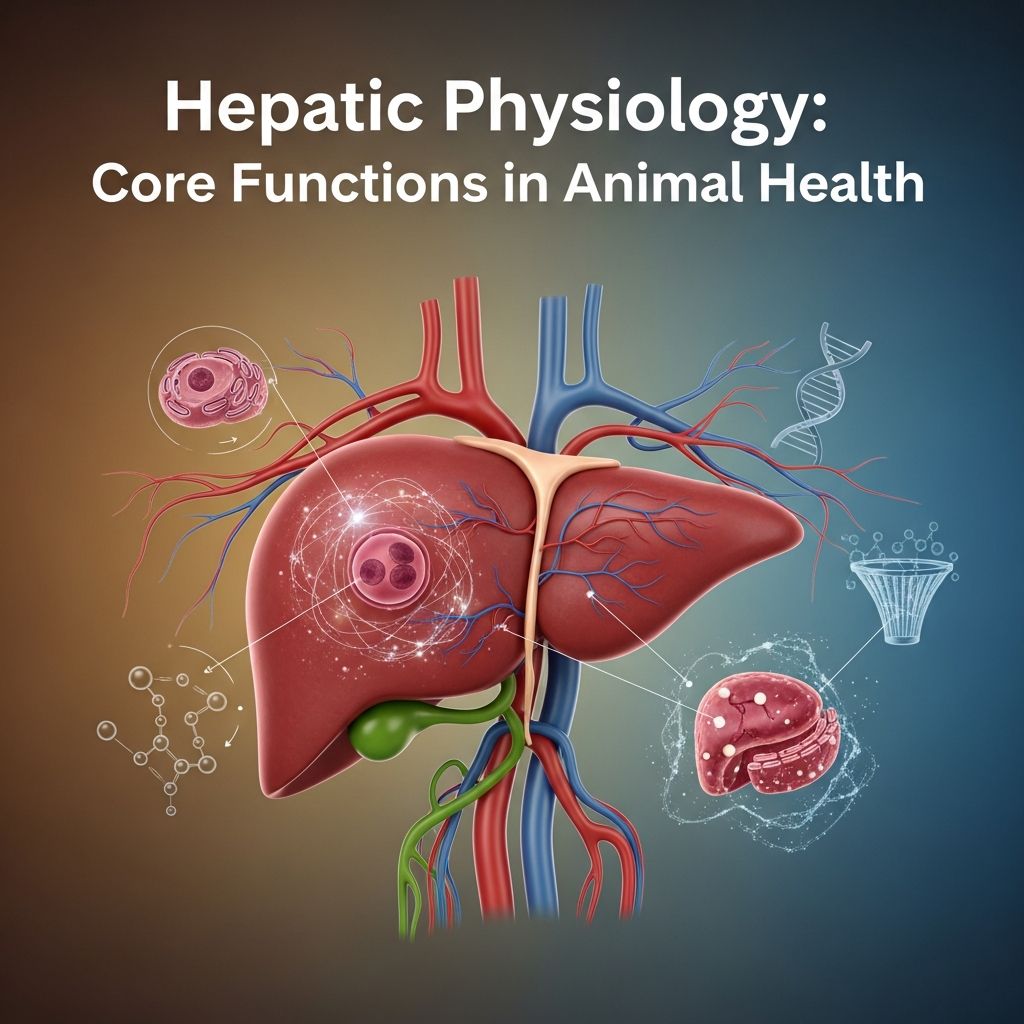
Introduction to the Liver’s Vital Role
The liver stands as one of the most metabolically active and functionally diverse organs in the animal body. Its significance extends far beyond a single purpose—it orchestrates dozens of interconnected processes that maintain internal stability and support survival. Often described as the body’s biochemical factory, the liver processes nutrients from digestion, synthesizes essential compounds, neutralizes harmful substances, and regulates numerous metabolic pathways simultaneously. Without hepatic function, the coordinated chemical balance that defines health would collapse rapidly.
Understanding hepatic physiology requires examining both the structural architecture that enables function and the intricate biochemical processes occurring within hepatic tissues. This dual perspective reveals why liver disease can manifest with such diverse and serious consequences across animal species.
Architectural Foundation: Structural Organization
The liver achieves its remarkable functional capacity through a highly organized microscopic architecture. At the cellular level, hepatocytes—the primary functional liver cells—comprise approximately 80% of liver volume and perform the majority of metabolic work. These epithelial cells arrange themselves into structural units that optimize blood exposure and nutrient exchange.
The fundamental organizational pattern centers on the hepatic lobule, a polyhedral structure bounded by connective tissue septa. Within each lobule, hepatocytes arrange in radiating plates that create the sinusoid network—specialized, porous capillaries where blood from two sources mingles and percolates through the tissue. This anatomical design maximizes contact between circulating blood and hepatocytes, facilitating rapid exchange of substances.
Blood Supply Architecture
The liver receives blood from two distinct vascular sources, each carrying different cargo:
- Portal vein circulation: Carries nutrient-rich blood directly from the gastrointestinal tract, delivering absorbed glucose, amino acids, lipids, and various xenobiotics. This blood comprises approximately 75% of hepatic blood flow.
- Hepatic artery: Provides oxygen-rich blood from systemic circulation, supplying the metabolic energy required for intensive synthetic and metabolic work.
This dual blood supply arrangement ensures hepatocytes receive both the raw materials for processing and the oxygen required to transform them. Blood flowing through sinusoids encounters the permeable sinusoidal endothelium and comes into direct contact with hepatocyte microvilli, maximizing substance exchange before draining into the central vein.
Supporting Cell Populations
Beyond hepatocytes, non-parenchymal cells populate the sinusoidal walls and perform specialized defensive and regulatory functions. Kupffer cells, specialized macrophages embedded within the sinusoid lining, provide the first line of defense by phagocytosing bacteria, viruses, cellular debris, and damaged blood cells that enter from the intestine. Hepatic stellate cells (Ito cells) inhabit the space between the sinusoid and hepatocytes, storing vitamin A and contributing to tissue architecture and repair processes.
Nutrient Processing and Storage Functions
The liver’s role as a nutrient processing center involves receiving dietary breakdown products and either utilizing them immediately, transforming them into usable forms, or storing them for future needs. This intermediary function connects digestion directly to whole-body metabolism.
Carbohydrate Homeostasis
Glucose management represents a fundamental hepatic responsibility. When carbohydrate intake exceeds immediate energy demands, hepatocytes synthesize glycogen—a branched polymer that serves as the primary glucose reserve. When blood glucose concentrations decline between meals or during fasting, hepatic glycogenolysis rapidly converts stored glycogen back to glucose, which enters circulation and prevents hypoglycemia. Additionally, the liver performs gluconeogenesis, synthesizing new glucose molecules from non-carbohydrate precursors including lactate, amino acids, and glycerol. This capacity allows sustained blood glucose even during prolonged fasting.
Lipid Metabolism and Transport
The liver orchestrates comprehensive lipid processing including synthesis, mobilization, and transport. Hepatocytes synthesize fatty acids from carbohydrate sources and package them into triglycerides for storage or export. More significantly, the liver produces lipoproteins—specialized protein-lipid complexes that solubilize hydrophobic lipids in aqueous blood. These carriers transport dietary fat-soluble vitamins, cholesterol, and triglycerides throughout circulation. In some species, particularly birds, hepatic lipogenesis exceeds adipose tissue synthesis, making the liver the dominant fat-producing organ.
Protein Synthesis and Processing
Hepatocytes synthesize an extensive array of plasma proteins essential to physiology. These include albumin (the primary determinant of plasma colloid osmotic pressure), transport proteins carrying vitamins and minerals, and components of the coagulation cascade. The liver also receives dietary amino acids from the portal blood and deamination of excess amino acids produces ammonia. Through the urea cycle, the liver converts this potentially neurotoxic ammonia into non-toxic urea, which is excreted in urine.
Digestive Support Through Bile Synthesis
While often considered only digestive, bile production represents a crucial elimination mechanism intertwined with fat absorption. Hepatocytes continuously synthesize bile from cholesterol and bile acids, releasing it into canaliculi that merge into progressively larger ducts. This watery secretion contains bile salts, cholesterol, bilirubin, phospholipids, and immunoglobulins.
During feeding, bile concentrates and stores in the gallbladder (where present) before releasing into the small intestine to emulsify lipids and facilitate absorption. Beyond digestive function, bile serves as an excretory route for cholesterol metabolites and conjugated bilirubin. The enterohepatic circulation mechanism allows reabsorption of bile acids in the terminal ileum, conserving these expensive molecules by returning them to the liver for reuse.
Detoxification and Xenobiotic Processing
The liver functions as the body’s primary defense against harmful chemical compounds through a coordinated detoxification system. Xenobiotics—foreign chemical substances including drugs, pesticides, food additives, and environmental toxins—undergo hepatic biotransformation into more readily excreted forms.
The Three-Phase Detoxification Process
Hepatic detoxification occurs through sequential phases:
| Phase | Process Type | Function |
|---|---|---|
| Phase I | Oxidation, reduction, hydrolysis | Cytochrome P450 enzymes modify xenobiotic structure, often making compounds more susceptible to further processing |
| Phase II | Conjugation | Water-soluble molecules attach to xenobiotics, increasing hydrophilicity for urinary or biliary excretion |
| Phase III | Transport | Hepatocytes actively pump modified compounds into bile or blood for elimination |
This system efficiently neutralizes most exogenous compounds, though individual genetic variation influences efficiency. Some animals metabolize certain drugs rapidly while others process them slowly, affecting drug response and toxicity risk.
Synthetic Functions Supporting Hemostasis
Blood coagulation and anticoagulation depend almost entirely on hepatic protein synthesis. The liver produces coagulation factors including fibrinogen and prothrombin, anticoagulants such as protein C and heparin-like substances, and inhibitors that prevent inappropriate clot formation. Additionally, the liver synthesizes fibrinolytic proteins that dissolve clots after wound healing completes. This balanced production maintains the hemostatic equilibrium preventing both excessive bleeding and pathological thrombosis.
Mineral and Vitamin Homeostasis
The liver serves as a storage depot and metabolic hub for micronutrients critical to enzymatic and structural functions. Iron absorption from the intestine delivers iron to the liver, where it binds transferrin for systemic distribution or stores as ferritin within hepatocytes. Copper, zinc, and selenium accumulate in hepatic tissue and become incorporated into metalloenzymes. Fat-soluble vitamins—particularly vitamins A, D, E, and K—accumulate in hepatic cells, with hepatic stellate cells serving as primary vitamin A repositories.
Beyond storage, the liver activates vitamin D through hydroxylation and conjugates fat-soluble vitamins for optimal bioavailability. This regulatory role prevents both deficiency and toxicity through controlled storage and mobilization.
Immunological Contributions
The liver functions as an immunologically active organ despite receiving portal blood containing abundant intestinal microorganisms and antigens. Kupffer cells provide local innate immunity through phagocytic destruction of pathogens and senescent cells. The liver synthesizes complement components essential to innate immune cascades and produces acute phase proteins that surge in response to inflammation or infection.
Additionally, hepatic production of immunoglobulin A (IgA) secreted into bile provides mucosal immunity within the intestine. This strategic positioning allows the liver to contribute to systemic immune responses while protecting the gastrointestinal barrier against pathogenic invasion.
Metabolic Flexibility and Energy Provision
The liver exhibits remarkable metabolic flexibility, shifting between anabolic processes (building complex molecules) and catabolic processes (breaking molecules for energy) based on feeding state. During the fed state, the liver absorbs excess nutrients and stores them as glycogen and triglycerides. During fasting, the liver shifts to mobilization mode, releasing glucose through glycogenolysis and gluconeogenesis while accelerating fatty acid oxidation and ketogenesis.
Ketone bodies produced during intensive fatty acid catabolism provide alternative fuel for extrahepatic tissues, supporting survival during prolonged nutrient restriction. This metabolic flexibility allows animals to maintain homeostasis across varied feeding patterns.
Species Variations in Hepatic Function
While fundamental hepatic principles apply across vertebrate species, anatomical and metabolic variations reflect different evolutionary pressures and ecological niches. Avian livers, for example, show enhanced capacity for lipogenesis and more limited adipose tissue development, requiring hepatic tissue to serve as the primary fat-producing organ. Ruminant livers handle unique metabolic demands from microbial fermentation products absorbed via portal blood. Aquatic species often display specialized detoxification systems addressing pollutants specific to their environments.
Clinical Significance of Hepatic Understanding
Comprehensive understanding of hepatic physiology provides essential foundation for recognizing disease manifestations. Hepatic dysfunction creates cascade effects affecting coagulation, glucose regulation, protein synthesis, toxin elimination, and immune function simultaneously. This explains why liver disease produces such diverse clinical signs ranging from bleeding tendencies to encephalopathy to metabolic derangements.
Recognition that the liver performs synthetic, metabolic, bioactivating, conjugating, and elimination functions simultaneously means that assessing hepatic health requires evaluating multiple parameters rather than single markers. Complete hepatic assessment must consider not only synthetic capacity (reflected in albumin and clotting factors) but also functional capacity (reflected in enzyme activity and bilirubin metabolism).
Summary: The Liver as Central Metabolic Coordinator
The liver emerges as the body’s central metabolic coordinator, orchestrating nutrient processing, synthesis of essential compounds, elimination of toxic substances, and immune function through intricately organized cellular architecture and sophisticated biochemical pathways. Its position receiving portal blood connects it directly to digestive processes while its systemic circulation connections allow systemic distribution of synthesized products. The remarkable diversity of hepatic functions within a single organ reflects the evolutionary development of a metabolic hub capable of managing the complex chemical environments necessary for multicellular life.
Frequently Asked Questions
What percentage of the liver comprises hepatocytes?
Hepatocytes comprise approximately 80% of the total liver cell volume, making them the dominant functional cell type responsible for most metabolic work.
Why does the liver receive blood from two sources?
The dual blood supply provides both nutrient-rich blood from the intestine (portal vein) and oxygen-rich blood from systemic circulation (hepatic artery), ensuring hepatocytes receive both raw materials and metabolic energy.
How does the liver prevent ammonia toxicity?
Through the urea cycle, hepatocytes convert ammonia generated from amino acid deamination into non-toxic urea, which is excreted in urine.
What role do Kupffer cells play?
Kupffer cells are specialized macrophages that phagocytose bacteria, viruses, cellular debris, and damaged blood cells entering via portal blood, providing the liver’s primary defense mechanism.
How does the liver maintain blood glucose during fasting?
During fasting, the liver mobilizes stored glycogen through glycogenolysis and synthesizes new glucose through gluconeogenesis using lactate, amino acids, and glycerol as precursors.
References
- Structure and Function of the Liver in Dogs — PetPlace.com. Accessed February 24, 2026. https://www.petplace.com/article/dogs/pet-health/structure-and-function-of-the-liver-in-dogs
- Overview of Liver Structure and Function in Animals — Merck Veterinary Manual. Accessed February 24, 2026. https://www.merckvetmanual.com/digestive-system/liver-structure-and-function/overview-of-liver-structure-and-function-in-animals
- Liver Structure and Function — eClinpath, University of Wisconsin-Madison School of Veterinary Medicine. Accessed February 24, 2026. https://eclinpath.com/chemistry/liver/liver-structure-and-function/
- Avian Liver: The Forgotten Organ — PMC/NIH. 2019. https://pmc.ncbi.nlm.nih.gov/articles/PMC6406855/
- The Liver: Role in Health and Disease in Small Animals — Vet Times. Accessed February 24, 2026. https://www.vettimes.co.uk
- The Anatomy of the Liver and How It Functions — VetFolio. Accessed February 24, 2026. https://www.vetfolio.com/learn/article/the-anatomy-of-the-liver-and-how-it-functions
- Liver Lobule: Structure, Function, Animation — Animal Physiology Resources. Accessed February 24, 2026. https://www.youtube.com/watch?v=xilPDLVjQaE
Similar Articles








Read full bio of medha deb


