

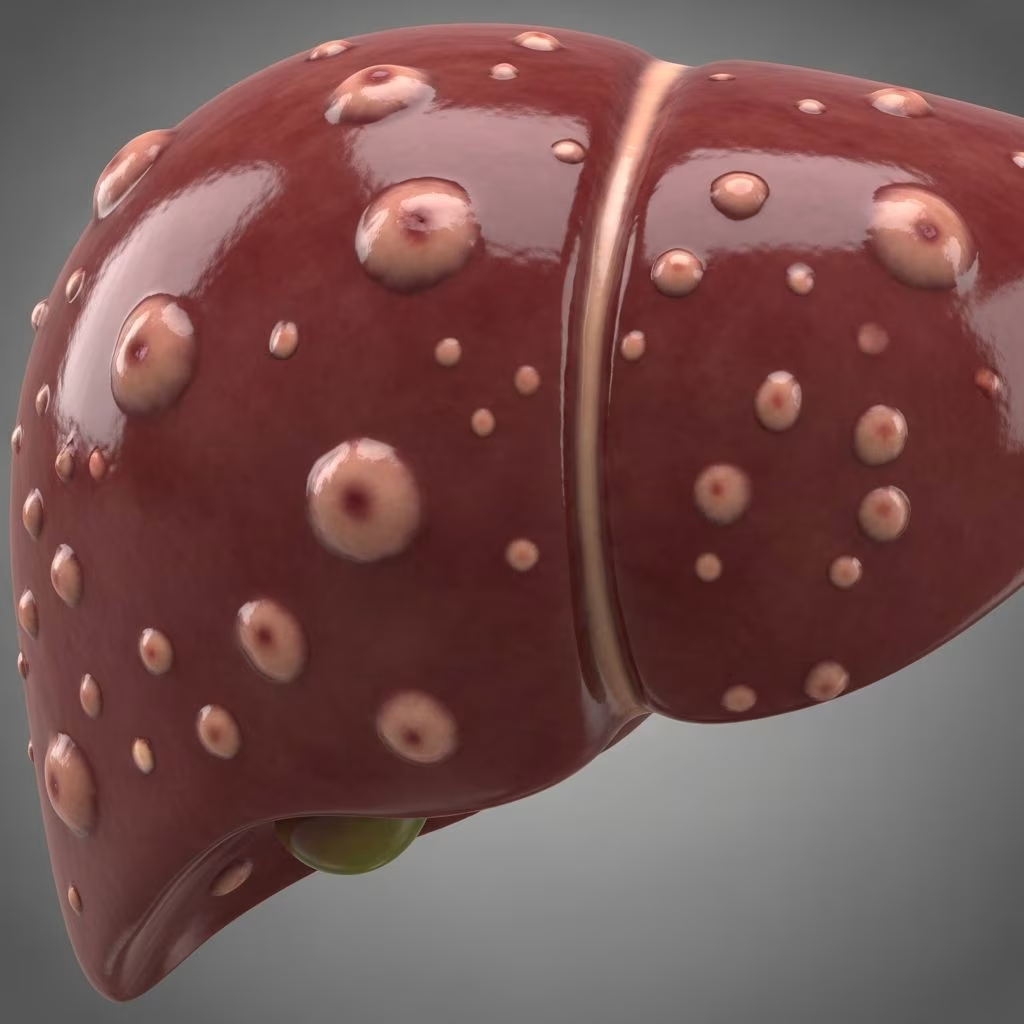
Understanding the Fundamentals of Hepatic Nodular Hyperplasia
Hepatic nodular hyperplasia represents one of the most frequently encountered benign liver conditions in aging companion animals, particularly dogs. This non-neoplastic proliferation of hepatocytes creates multiple nodular formations throughout the liver tissue, distinguishing it from true neoplastic growths. The condition emerges as a spontaneous lesion whose exact pathogenic mechanism remains incompletely understood, yet it does not appear to function as a precursor to malignant transformation.
The classification of nodular hyperplasia as a benign condition carries significant clinical implications. Unlike dysplastic or neoplastic lesions, hyperplastic nodules maintain normal hepatocellular architecture and function, meaning affected animals often demonstrate preserved liver performance despite the presence of multiple growths. This fundamental distinction shapes diagnostic interpretation and influences clinical decision-making regarding treatment necessity.
Age-Related Prevalence and Epidemiological Patterns
The development of hepatic nodular hyperplasia demonstrates a striking age-dependent pattern in dogs. Clinical observations reveal that the condition typically becomes evident in dogs approaching 6 to 8 years of age, with prevalence escalating dramatically as animals age. By the time dogs reach 14 years of age, the incidence climbs to between 70 and 100 percent, indicating that nodular hyperplasia becomes nearly universal in geriatric canine populations.
This age-related progression suggests that hepatic nodular hyperplasia may represent a natural consequence of aging in the canine liver rather than a pathological aberration requiring intervention. The consistent appearance across diverse dog populations and breeds indicates that breed predisposition, if present, remains minimal compared to age as a risk factor. Cats develop this condition less frequently than their canine counterparts, though prevalence data in feline populations remains more limited.
Gross and Microscopic Characteristics
The pathological appearance of nodular hyperplasia provides important diagnostic clues during physical examination and imaging evaluation. Affected livers demonstrate visible structural changes with multiple nodules of varying dimensions, typically ranging from 0.2 to several centimeters in diameter. The nodules present with distinct coloration and texture compared to normal hepatic parenchyma, facilitating recognition during surgical exploration or necropsy examination.
At the microscopic level, immunohistochemical analysis reveals specific staining patterns that aid in distinguishing hyperplastic lesions from neoplastic alternatives. Hepatocytes within hyperplastic nodules demonstrate cytoplasmic positivity for HepPar-1, a hepatocyte-specific marker. Additionally, canalicular staining patterns differ between species: canine hyperplastic tissue shows CD10 positivity, while feline tissue displays MRP2 and pCEA staining. Notably, these lesions remain negative for K19, a marker typically associated with biliary epithelial elements.
Clinical Manifestations and Patient Presentation
One of the defining characteristics of hepatic nodular hyperplasia involves its typically silent clinical course. Many affected animals remain asymptomatic throughout their lives, with nodular formations discovered incidentally during imaging performed for unrelated health concerns or during necropsy examination. The benign nature of these lesions explains the absence of overt clinical signs in most cases.
When clinical signs do manifest, they reflect either the mass effect of enlarging nodules or concurrent hepatic dysfunction rather than direct pathological consequences of the hyperplasia itself. Potential clinical presentations may include:
- Abdominal enlargement from hepatomegaly
- Lethargy or decreased exercise tolerance
- Changes in appetite or weight
- Subtle alterations in laboratory parameters
- Symptoms related to concurrent hepatic disease
The distinction between asymptomatic nodular hyperplasia and clinically significant hepatic disease becomes crucial during patient evaluation, as many incidental findings require no intervention beyond monitoring.
Diagnostic Approaches and Imaging Considerations
Identifying hepatic nodular hyperplasia requires a systematic diagnostic strategy that differentiates benign hyperplastic lesions from concerning neoplastic or inflammatory processes. Imaging modalities serve as the primary diagnostic tools, with ultrasound and computed tomography providing complementary information about nodular characteristics and distribution patterns.
Ultrasound examination typically reveals multiple hypoechoic or mixed-echogenicity nodules throughout the hepatic parenchyma, often with a background of normal hepatic tissue. The pattern of nodular distribution across liver lobes helps confirm the multifocal nature characteristic of hyperplasia. Advanced imaging with computed tomography offers superior sensitivity for detecting smaller nodules and determining precise anatomical relationships, particularly when surgical planning becomes necessary.
Laboratory evaluation including hepatic enzymes and markers of synthetic function provides supportive diagnostic information. Many animals with nodular hyperplasia maintain normal or only mildly elevated hepatic parameters, reflecting preservation of functional hepatic mass. Significantly elevated enzymes or evidence of hepatic synthetic dysfunction should prompt consideration of concurrent hepatic disease requiring specific intervention.
When imaging findings remain equivocal or clinical circumstances warrant definitive diagnosis, fine-needle aspiration cytology or biopsy procedures may clarify the lesion nature. Cytological examination demonstrating benign hepatocytes without atypia supports the diagnosis of hyperplasia, while histopathological analysis definitively excludes malignant transformation.
Differential Diagnosis and Distinction from Other Conditions
The diagnostic challenge of nodular hyperplasia intensifies when multiple hyperplastic foci enlarge to form masses several centimeters in diameter, potentially creating diagnostic confusion with hepatic neoplasia. Hepatocellular adenomas and carcinomas must be systematically excluded through careful evaluation of imaging characteristics, cytological findings, and histopathological examination when biopsy is performed.
Several features assist in distinguishing benign hyperplasia from neoplastic lesions. Hyperplastic nodules typically demonstrate gradual, slow growth patterns compared to the more aggressive expansion characteristic of many hepatic tumors. Distribution patterns also differ, with hyperplasia affecting multiple liver lobes in a diffuse manner rather than creating focal mass lesions. Furthermore, the absence of associated systemic signs or progressive clinical deterioration generally favors hyperplastic rather than neoplastic diagnoses.
Nodular regenerative hyperplasia, a distinct condition sometimes associated with noncirrhotic portal hypertension, must also be considered in the differential diagnosis. This condition differs fundamentally from simple nodular hyperplasia through its association with portal hemodynamic alterations and progressive liver dysfunction.
Management Strategies and Treatment Considerations
The management approach to hepatic nodular hyperplasia fundamentally rests upon the principle that asymptomatic lesions require monitoring rather than intervention. Since the condition demonstrates no tendency toward malignant transformation and most affected animals remain clinically stable, prophylactic treatment typically lacks justification.
The decision to pursue treatment becomes relevant only when nodular hyperplasia creates clinical problems or when definitive histopathological confirmation becomes necessary to exclude malignant disease. Circumstances warranting intervention include:
- Imaging findings highly suggestive of malignant transformation
- Progressive hepatic dysfunction attributable to hyperplasia
- Clinical signs referable to hepatomegaly or mass effect
- Owner preference for definitive diagnosis when uncertainty exists
- Nodules demonstrating unusual growth patterns or characteristics
When intervention becomes necessary, surgical approaches typically involve selective nodulectomy or hepatic resection of affected tissue. The benign nature of hyperplasia generally permits successful surgical management without the extensive hepatic resection required for malignant lesions. Modern surgical techniques and perioperative management have improved outcomes significantly, though anesthetic risks in geriatric animals remain a consideration.
Monitoring and Long-Term Prognosis
Dogs and cats with incidentally discovered hepatic nodular hyperplasia generally require periodic reevaluation rather than aggressive intervention. Recommended monitoring protocols typically include repeat imaging at 6 to 12-month intervals, particularly when initial findings warrant close surveillance to exclude malignant transformation.
Clinical examination should focus on identifying progression of hepatomegaly, development of abdominal distention, or emergence of systemic signs suggestive of hepatic dysfunction. Laboratory reassessment at regular intervals provides objective evidence of maintained hepatic synthetic and metabolic function. Most animals with benign nodular hyperplasia maintain stable clinical and laboratory parameters throughout their remaining lifespan.
The prognosis for animals with nodular hyperplasia without concurrent hepatic disease remains excellent, with life expectancy determined primarily by other age-related conditions rather than the liver lesion itself. Serial monitoring documents stable lesion size and unchanged imaging characteristics in the vast majority of cases, providing reassurance regarding the benign course of the condition.
Special Considerations in Geriatric Patients
The predominance of hepatic nodular hyperplasia in aging companion animals necessitates thoughtful consideration of management strategies appropriate for geriatric patients. Older dogs and cats frequently demonstrate concurrent medical conditions affecting anesthetic risk and surgical tolerance, making conservative management increasingly attractive as animals advance in age.
Comprehensive geriatric assessment before any interventional procedure becomes essential, evaluating cardiac, renal, and metabolic status to stratify anesthetic risk appropriately. Many elderly animals with incidental nodular hyperplasia can avoid unnecessary procedures through establishment of confident diagnosis via non-invasive imaging and cytological analysis.
Quality-of-life considerations should guide decision-making in geriatric patients, ensuring that proposed interventions genuinely benefit the animal rather than imposing unnecessary risk from anesthesia or surgery. Regular monitoring combined with owner education regarding expected clinical course typically provides optimal care for these elderly companions.
Frequently Asked Questions
Does hepatic nodular hyperplasia always require treatment?
No. Asymptomatic nodular hyperplasia discovered incidentally requires monitoring rather than treatment, as the benign nature of these lesions and their lack of malignant potential support conservative management in most cases.
Can nodular hyperplasia transform into liver cancer?
Hepatic nodular hyperplasia does not appear to be a preneoplastic lesion and shows no tendency toward malignant transformation. It represents a benign condition distinct from dysplastic or neoplastic processes.
What is the typical age at which nodular hyperplasia develops?
Nodular hyperplasia typically becomes evident in dogs between 6 and 8 years of age, with prevalence increasing substantially in older animals. By age 14, most dogs exhibit some degree of nodular hyperplasia.
How should incidentally discovered nodular hyperplasia be managed?
Incidental findings warrant periodic imaging surveillance at 6 to 12-month intervals combined with clinical assessment and laboratory monitoring to document stability and maintain confidence in the benign diagnosis.
References
- Efficient Topical Treatment of Canine Nodular Sebaceous Gland Hyperplasia — PubMed Central/National Center for Biotechnology Information. 2024. https://pmc.ncbi.nlm.nih.gov/articles/PMC10885944/
- Nodular Hyperplasia of Lymphoglandular Complexes in Dogs — University of Edinburgh. 2023. https://www.pure.ed.ac.uk/ws/files/370688939/VET_23_CR_0021.R2_Proof_hi.pdf
- Tumors of the Liver and Gallbladder — Veterinary Information Network. https://veteriankey.com/tumors-of-the-liver-and-gallbladder/
- Morphological Classification of Neoplastic Disorders of the Canine Liver — Comparative Hepatology. https://comparativehepatology.org/wp-content/uploads/2021/09/chapter_9.pdf



