

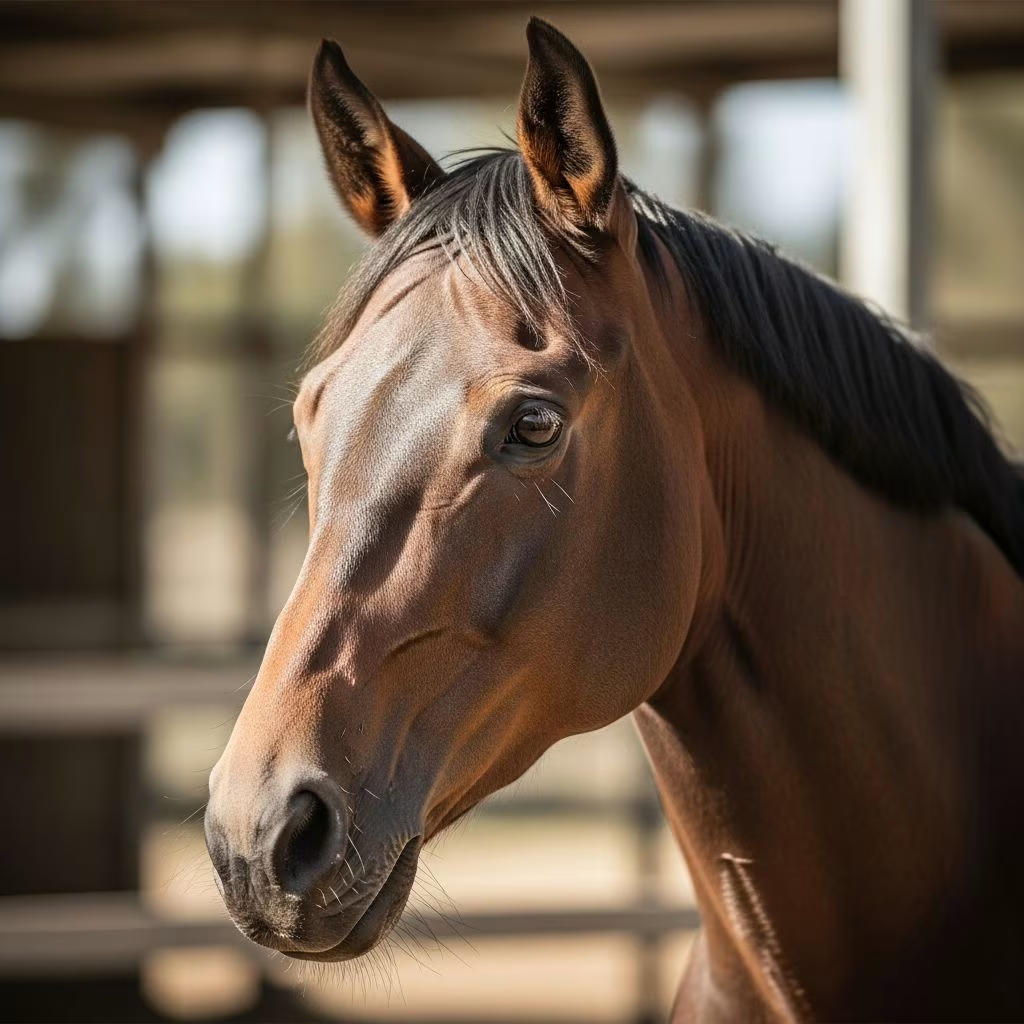
The Hendra virus represents one of the most serious threats to equine health, particularly in regions where horses and fruit bats coexist. This zoonotic pathogen, originating from flying foxes, can lead to rapid and often fatal illness in horses, with potential spillover to humans. Understanding its biology, spread, and management is crucial for horse owners, veterinarians, and agricultural authorities.
Origins and Natural Reservoir of the Virus
Hendra virus, a member of the Henipavirus genus, naturally resides in pteropid fruit bats, commonly known as flying foxes. These bats, found predominantly in Australia, serve as the primary reservoir without showing clinical signs of disease. The virus persists in bat populations through subclinical infections, with viral shedding occurring in urine, saliva, feces, and birthing materials.
Geographically, cases in horses have been confined to Queensland and New South Wales, areas with high flying fox densities. However, any region where these bats and horses overlap carries risk. Studies indicate horses within 7 kilometers of bat roosts face significantly elevated infection chances, highlighting proximity as a key factor.
How Hendra Virus Reaches Horses
Transmission from bats to horses occurs indirectly through environmental contamination. Infected bat secretions, especially urine, drop onto pastures, feed, or water sources. Horses ingest or inhale the virus during grazing, particularly on favored bat forage like fig trees. The precise mechanism remains under study, but evidence points to oral or nasal exposure as primary routes.
Once in a horse, the virus targets endothelial cells, leading to widespread vascular damage. Incubation lasts 4-20 days, averaging 5-16 days in natural cases, allowing silent spread before symptoms emerge.
Recognizing Early Warning Signs
Hendra infection begins subtly, mimicking common ailments. Initial indicators include sudden fever, rapid heart rate, depression, and loss of appetite. Horses may show mild colic or lethargy, progressing to more severe manifestations within hours.
- Fever: Often the first detectable sign, spiking acutely.
- Tachycardia: Elevated heart rate, even at rest.
- Respiratory distress: Labored breathing and frothy nasal discharge from lung involvement.
As the disease advances, neurological symptoms dominate: ataxia (uncoordinated gait), muscle twitching, head tilting, circling, and recumbency. Facial edema, oral congestion, and urinary issues may appear. Notably, 75% of cases prove fatal within 48 hours of symptom onset, though 25% recover with antibodies.
Progression to Severe Stages
The virus’s affinity for blood vessels causes multi-organ failure. Respiratory forms feature copious, frothy nasal foam indicative of pulmonary edema. Neurological variants include myoclonic spasms and torticollis. Terminal signs encompass collapse, weakness, and stranguria. Proximity to bat sites should heighten suspicion for any acute fever with rapid decline.
| Phase | Symptoms |
|---|---|
| Early | Fever, depression, inappetence, tachycardia |
| Progressive | Ataxia, nasal discharge, muscle tremors, facial swelling |
| Terminal | Recumbency, collapse, respiratory failure |
Horse-to-Horse and Zoonotic Transmission Risks
Horse-to-horse spread is uncommon in open pastures but occurs in stables via contaminated fluids, fomites, or human vectors. Infected horses shed virus in nasal secretions, urine, blood, and saliva, even pre-symptomatically. Close contact facilitates outbreaks, with multiple infections reported in confined settings.
Humans face grave risk, especially veterinarians, farriers, and handlers contacting infected fluids. All documented human cases stemmed from sick horses, causing severe flu-like illness, pneumonia, or encephalitis, with over 50% fatality. No person-to-person transmission is known.
Diagnostic Approaches for Confirmation
Suspected cases demand immediate isolation and notification to authorities. Diagnosis combines clinical history, PCR on nasal swabs, blood, or tissues for viral RNA, and serology for antibodies. Necropsy reveals endothelial damage, vasculitis, and inclusions in lungs, brain, and vessels. Early testing is vital, as many jurisdictions mandate euthanasia to curb spread.
No Cure: Focus on Supportive Care
No specific antiviral exists; treatment is palliative. Most infected horses succumb rapidly, prompting euthanasia recommendations. Survivors develop immunity, informing vaccine design. Human cases receive intensive support, with monoclonal antibodies trialed experimentally.
Vaccination: The Cornerstone of Prevention
The HeV-A vaccine, available since 2015, protects horses against clinical disease and shedding, reducing zoonotic risk. Administer two initial doses 3-6 weeks apart, with boosters annually or every 6 months in high-risk areas. Vaccination prevents infection, not just symptoms, and is safe for pregnant mares.
Non-vaccine measures include:
- Avoiding feed/water near bat roosts.
- Covering spills of bat urine.
- Using barriers on fig trees.
- Personal protective equipment (PPE) for handlers of sick horses.
Management During Suspected Outbreaks
Report sudden deaths or illness to vets or hotlines (e.g., Australia’s 1800 675 888). Quarantine premises, restrict movement, and don full PPE before approaching. Biosecure disposal of carcasses and decontamination are essential. Surveillance near bat colonies aids early detection.
Frequently Asked Questions (FAQs)
What is the incubation period for Hendra in horses?
Typically 4-16 days, up to 20 days.
Can vaccinated horses still spread the virus?
No, the vaccine prevents infection and shedding.
Is Hendra only in Australia?
Horse cases yes, but bats range wider; surveillance continues.
How do I protect my horse from flying fox exposure?
Vaccinate, manage feed away from roosts, cover water troughs.
What should I do if my horse shows fever and nasal discharge?
Isolate immediately, call vet, use PPE—suspect Hendra if near bats.
Global Surveillance and Research Directions
Ongoing studies by CSIRO, WHO, and CDC track bat shedding, horse susceptibility, and cross-species jumps. Experimental data confirm upper respiratory replication precedes viremia. Future goals include broader vaccines and bat management strategies.
Horse owners must stay vigilant, prioritizing vaccination and biosecurity. Hendra’s rarity belies its lethality; proactive measures safeguard equine and human health.
References
- Hendra Virus (Equine Morbillivirus) in Horses: Transmission, Risk … — Mad Barn. 2023. https://madbarn.com/hendra-virus-equine-morbillivirus-in-horses/
- Hendra Virus Infection in Horses – Respiratory System — Merck Veterinary Manual. 2023-10-17. https://www.merckvetmanual.com/respiratory-system/respiratory-diseases-of-horses/hendra-virus-infection-in-horses
- Hendra virus – PMC – NIH — National Center for Biotechnology Information. 2014-10-15. https://pmc.ncbi.nlm.nih.gov/articles/PMC4252762/
- About Hendra Disease | Hendra Virus Disease – CDC — Centers for Disease Control and Prevention. 2023. https://www.cdc.gov/hendra-virus/about/index.html
- Hendra virus | Horse diseases – Agriculture Victoria — Department of Energy, Environment and Climate Action. 2024. https://agriculture.vic.gov.au/biosecurity/animal-diseases/horse-diseases/hendra-virus
- Hendra Virus Infection — Center for Food Security and Public Health, Iowa State University. 2016. https://www.cfsph.iastate.edu/Factsheets/pdfs/hendra.pdf
- Hendra virus infection – World Health Organization (WHO) — World Health Organization. 2023. https://www.who.int/health-topics/hendra-virus-infection



