
Hemodialysis For Dogs: 5-Step Clinic Guide For Owners
Discover how hemodialysis saves canine lives by filtering toxins, managing kidney crises, and offering hope in critical conditions.
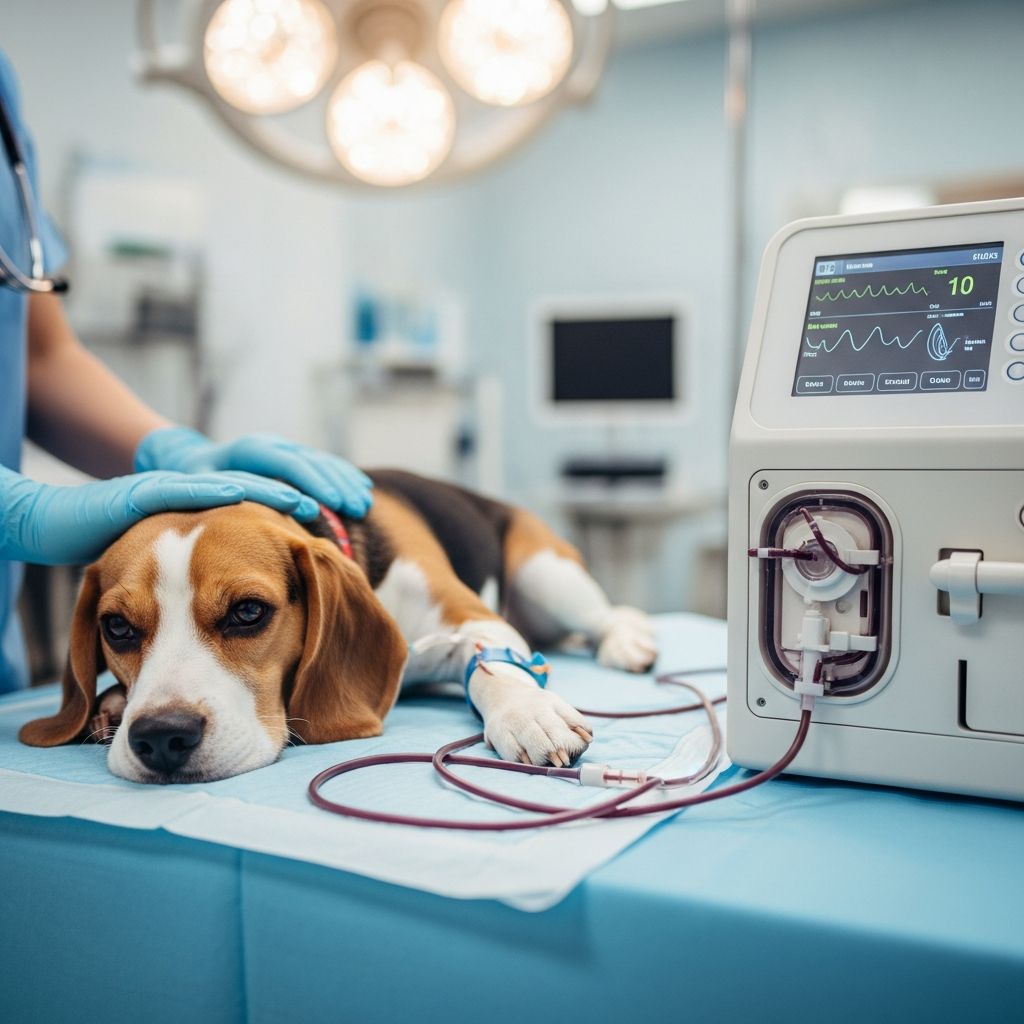
Hemodialysis serves as a critical intervention for dogs facing severe kidney dysfunction, effectively cleansing their blood of harmful toxins and excess fluids when natural kidney function falters. This extracorporeal therapy circulates blood through an artificial kidney machine, mimicking renal processes to stabilize patients during acute crises.
Understanding the Fundamentals of Canine Hemodialysis
At its core, hemodialysis involves diverting a dog’s blood outside the body, passing it through a semipermeable membrane in a dialyzer, where diffusion and ultrafiltration remove waste products, electrolytes in excess, and fluids. Small molecules like urea, creatinine, and potassium cross into a dialysate solution, while larger components such as proteins and blood cells remain in the bloodstream for return to the patient.
This process restores acid-base balance and corrects electrolyte imbalances rapidly, providing immediate relief in hyperkalemia cases where high potassium threatens cardiac stability. Unlike medications alone, dialysis achieves near-instantaneous reductions in serum potassium, offering cardioprotection within minutes and sustaining effects for up to 48 hours.
Primary Applications in Canine Patients
Hemodialysis finds its most frequent use in managing acute kidney injury (AKI), where sudden renal shutdown leads to toxin buildup, oliguria, and fluid overload. By precisely controlling fluid removal, it prevents pulmonary edema and supports nutritional therapy without risking overhydration, thereby boosting survival rates.
Toxin exposures represent another key indication, particularly for substances like ethylene glycol from antifreeze, which rapidly progresses to anuric renal failure if untreated. Initiating dialysis within 5-6 hours of ingestion clears both the parent toxin and its metabolites, surpassing traditional antidotes in efficacy.
- Ethylene glycol intoxication: Optimal within 8 hours; prevents irreversible kidney damage.
- Hyperkalemia: Rapid potassium reduction safeguards heart function.
- Fluid overload: Manages volume in oliguric states.
- Ureteral obstructions: Stabilizes prior to surgical correction.
Less commonly, it aids end-stage chronic kidney disease or intoxications unresponsive to standard hemodialysis, such as those requiring hemoperfusion.
Advanced Techniques Complementing Standard Hemodialysis
Hemoperfusion enhances dialysis by incorporating a charcoal adsorbent cartridge, binding toxins like THC or ibuprofen that evade standard filters. This hybrid approach has rescued dogs from seizure-inducing overdoses, accelerating recovery.
Therapeutic plasma exchange, another extracorporeal method, employs centrifugation or specialized filters to separate and replace diseased plasma. In immune-mediated conditions like hemolytic anemia or thrombocytopenia, it removes pathogenic antibodies and proteins, restoring normal blood components.
Continuous renal replacement therapy (CRRT) provides gentler, prolonged filtration over 24-48 hours, ideal for hemodynamically unstable patients under sedation.
Step-by-Step Guide to a Hemodialysis Session
Each session unfolds methodically in a specialized veterinary facility, prioritizing patient comfort and monitoring.
- Pre-treatment evaluation: Comprehensive physical exam and blood analysis establish baselines.
- Catheter preparation: Sterile cleaning of the vascular access catheter, typically jugular-placed for large-bore flow.
- Connection and initiation: Lines link to the machine; blood pumps through the dialyzer at controlled rates, processing up to one cup at a time.
- Ongoing monitoring: Vital signs, anticoagulation, and dialysate adjustments ensure stability; dogs rest on padded surfaces, eat, drink, and receive attention.
- Completion and recovery: Post-session bloodwork verifies efficacy; patients stabilize before discharge.
Sessions last 3-5 hours, with dogs tolerating them well without routine sedation, often enjoying interaction and mobility.
| Aspect | Details |
|---|---|
| Duration | 3-5 hours per session |
| Sedation | Rarely needed; comfort-focused |
| Patient Activity | Eat, drink, move as desired |
| Monitoring | Continuous vitals and labs |
Preparation and Catheter Care Essentials
Success hinges on a dedicated vascular access catheter, surgically placed under ultrasound guidance into a large vein. Owners must protect it rigorously: daily cleaning, secure bandaging, and avoiding baths or rough play prevent infections or dislodgement.
Pre-dialysis protocols include fasting if anesthesia is planned, though most sessions proceed without. Post-care involves restricted activity for 12-24 hours and watching for swelling or fever signaling complications.
Expected Treatment Duration and Outcomes
Regimens vary: acute cases may require 2-5 sessions over 1-3 weeks, guided by serial lab trends and urine output. Prognosis ties to AKI cause, comorbidities, and treatment timing—early intervention markedly improves odds.
While not curative, hemodialysis buys vital time for kidney regeneration, often bridging to recovery or palliative management. Survival hinges on individualized assessment.
Potential Risks and Management Strategies
Complications, though infrequent, demand vigilance: hypotension from rapid shifts, clotting in circuits mitigated by heparin, or dialysis disequilibrium syndrome from swift urea drops. Infections at catheter sites occur in under 5% with meticulous care.
- Hypotension: Managed via fluid boluses and rate adjustments.
- Coagulopathy: Anticoagulants and circuit priming.
- Infection: Strict asepsis and antibiotics if needed.
Veterinary teams mitigate these through real-time monitoring and protocol adherence.
Financial and Logistical Realities
Costs accumulate from equipment, specialized staffing, and inpatient stays—averaging thousands per course. Pet insurance or payment plans ease burdens; consultations clarify estimates based on case severity.
Facilities cluster in academic or referral hospitals, necessitating travel for many owners. Virtual follow-ups aid remote monitoring.
Post-Treatment Recovery Roadmap
Discharge protocols emphasize renal diets low in phosphorus and protein, hydration encouragement, and phosphate binders. Regular checkups track creatinine and BUN, adjusting meds like ACE inhibitors.
Owners monitor for relapse signs: lethargy, vomiting, or reduced appetite, prompting prompt re-evaluation. Many dogs regain quality life post-therapy.
Frequently Asked Questions
Is hemodialysis painful for my dog?
No, dogs generally tolerate it comfortably on soft bedding with freedom to move, eat, and rest, receiving attentive care throughout.
How many treatments does a dog typically need?
This varies by condition severity; acute cases often span 2-5 sessions over weeks, determined by progress markers.
Can hemodialysis cure kidney failure?
It supports recovery by toxin removal but doesn’t repair kidneys; it stabilizes for potential healing or long-term management.
What toxins does it effectively remove?
Excels at ethylene glycol, certain drugs like ibuprofen, and others via hemoperfusion add-ons.
Does my dog need to be anesthetized?
Rarely for intermittent HD; CRRT may require sedation for prolonged runs.
Choosing the Right Veterinary Specialist
Seek board-certified criticalists or nephrologists at centers offering extracorporeal therapies. Initial consults review diagnostics, prognosis, and alternatives like peritoneal dialysis.
Owner involvement, including visit permissions during sessions, fosters trust and reduces anxiety.
References
- Dialysis and Renal Replacement Therapy in Dogs — WagWalking. Accessed 2026. https://wagwalking.com/treatment/dialysis-and-renal-replacement-therapy
- Hemodialysis for Cats and Dogs — BluePearl Pet Hospital. Accessed 2026. https://bluepearlvet.com/medical-articles-for-pet-owners/hemodialysis-for-pets/
- Hemodialysis and Blood Purification Unit — UC Davis School of Veterinary Medicine. Accessed 2026. https://www.vetmed.ucdavis.edu/hospital/small-animal/hemo
- Hemodialysis — Red Bank Veterinary Hospital. Accessed 2026. https://www.redbankvet.com/services/hemodialysis-therapy
- Hemodialysis in Dogs: What You Need to Know — Animal Medical Center. 2021-03-03. https://www.amcny.org/blog/2021/03/03/hemodialysis-in-dogs-what-you-need-to-know/
- Hemodialysis — Purdue University College of Veterinary Medicine. Accessed 2026. https://vet.purdue.edu/hospital/small-animal/services/hemodialysis.php
Similar Articles








Read full bio of Sneha Tete




