

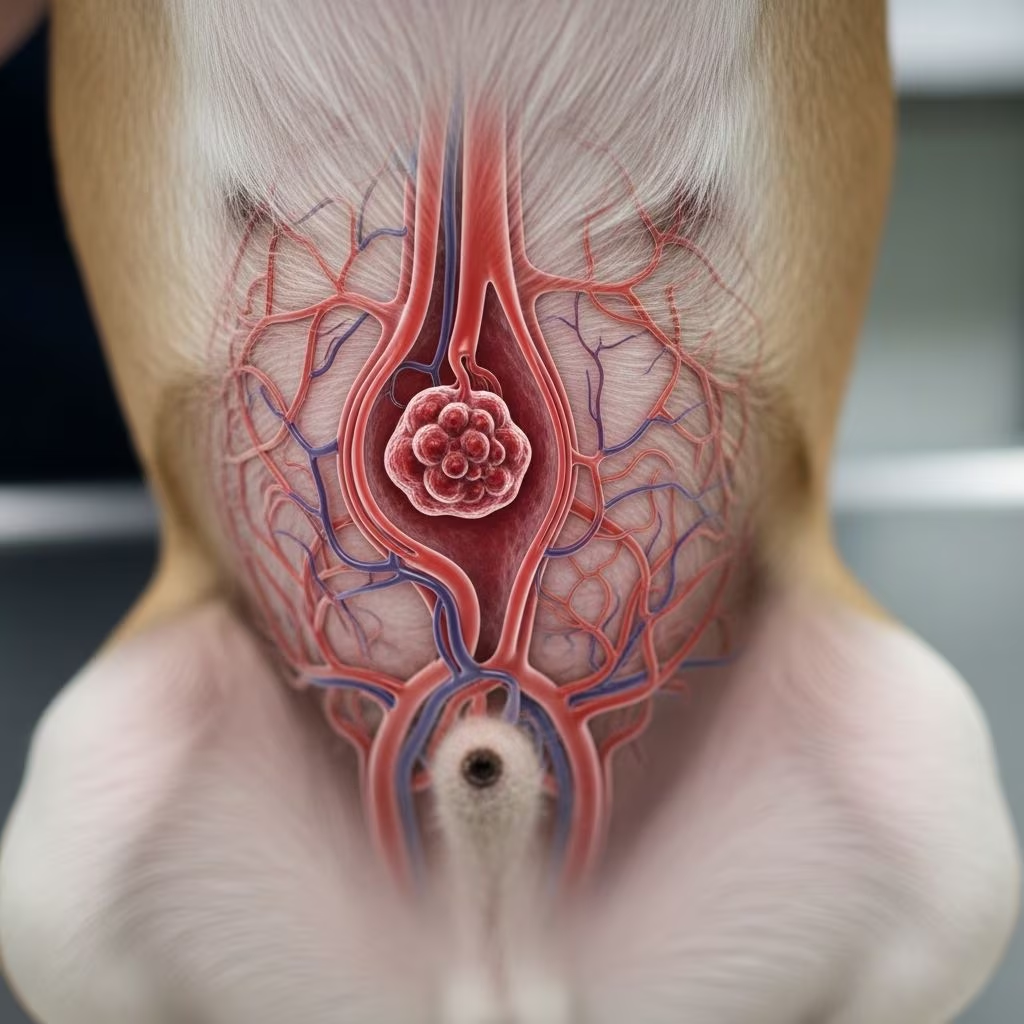
What Exactly Is Hemangiosarcoma?
Hemangiosarcoma (HSA) is a malignant tumor that develops from the endothelial cells lining blood vessels throughout the body. These specialized cells normally function to maintain the integrity and function of the circulatory system. When they become cancerous, they lose their normal growth controls and begin multiplying uncontrollably, forming tumors that can rupture and cause life-threatening internal bleeding. The disease is also referred to as angiosarcoma or malignant hemangioendothelioma in veterinary literature.
This form of cancer is particularly insidious because it develops silently within the body before clinical signs become apparent. Dogs may appear healthy and exhibit normal behavior while the tumor grows aggressively internally. Unlike some cancers that remain localized, hemangiosarcoma demonstrates a strong tendency to spread to distant organs, making early detection challenging.
How Common Is This Disease in Dogs?
Hemangiosarcoma ranks among the more frequently diagnosed cancers in veterinary medicine. Research indicates that this malignancy accounts for approximately 5-7% of all tumors observed in canine patients. Given that veterinarians estimate one in four dogs will develop some form of cancer during their lifetime, hemangiosarcoma represents a significant health concern for pet owners.
The disease shows a marked preference for certain breeds. Golden Retrievers, German Shepherds, and Labrador Retrievers appear overrepresented in case studies, suggesting possible genetic predisposition. Middle-aged to older dogs face substantially higher risk, with the disease most commonly diagnosed in animals past their prime years.
Where Does Hemangiosarcoma Develop?
Hemangiosarcoma presents in two distinct classifications based on its anatomical origin: non-visceral and visceral forms.
Non-visceral hemangiosarcomas affect external or superficial tissues including the skin, subcutaneous layers beneath the skin, and muscle tissue. These tumors may appear as reddish or violaceous lesions on the skin surface, though subcutaneous variants can be more difficult to identify visually.
Visceral hemangiosarcomas develop in internal organs and represent the more common presentation in dogs. The spleen stands as the most frequent primary site, affected in the majority of diagnosed cases. The liver represents the second most common location, followed by the right atrium of the heart. Less frequently, tumors develop in the lungs, kidneys, oral cavity, bones, bladder, uterus, and other internal structures.
The spleen’s vulnerability relates to its extensive network of blood vessels and its critical role in the immune system. Approximately 43% of splenic masses ultimately receive an HSA diagnosis, according to the “double two thirds rule” observed in veterinary practice—roughly two-thirds of splenic masses are malignant, and approximately two-thirds of those malignancies are hemangiosarcoma.
What Causes Hemangiosarcoma?
The precise etiology of hemangiosarcoma remains largely unknown, presenting one of the most frustrating aspects of the disease for veterinary researchers and practitioners. However, emerging evidence suggests multiple contributing factors may work individually or in combination to trigger malignant transformation.
Ultraviolet light exposure appears linked to cutaneous hemangiosarcoma development, particularly in dogs with minimal pigmentation and thin hair coats. Dogs with light-colored skin and sparse coat coverage show higher incidence rates when exposed to chronic sunlight, especially in areas with thinly haired regions including the belly, inner thighs, and eyelids.
Ionizing radiation has been documented as a risk factor in certain populations. Beagles exposed to ionizing radiation demonstrate significantly increased hemangiosarcoma development rates compared to unexposed counterparts.
Molecular dysregulation represents an emerging area of research. Scientific evidence increasingly implicates dysfunction in molecular pathways governing angiogenesis—the formation of new blood vessels—as a potential mechanism underlying hemangiosarcoma development. This suggests that abnormal signals controlling blood vessel growth may initiate malignant transformation of endothelial cells.
Recognizing the Symptoms
One of hemangiosarcoma’s most challenging characteristics is its ability to progress without obvious clinical indicators. Many dogs show no symptoms until the disease reaches advanced stages. However, observant owners may notice subtle changes that warrant veterinary investigation:
- Unexplained episodes of bleeding or hemorrhage
- Progressive weakness or lethargy that develops gradually
- Fluctuations in appetite or decreased food intake
- Weight loss despite normal eating patterns
- Difficulty breathing or rapid, labored respiration
- Pale mucous membranes, particularly the gums
- Abdominal distension or swelling
- Visible skin lesions or subcutaneous growths
- Collapse or sudden loss of consciousness
Critically, the first sign of hemangiosarcoma may be acute, catastrophic internal bleeding when a tumor ruptures. This represents a medical emergency requiring immediate veterinary intervention. Dogs previously appearing healthy can deteriorate rapidly, entering shock and requiring emergency care within hours.
How Veterinarians Diagnose Hemangiosarcoma
Definitive diagnosis requires tissue examination, though veterinarians utilize multiple diagnostic approaches to identify suspicious lesions and confirm hemangiosarcoma.
Medical History and Physical Examination
The diagnostic process begins with a thorough history examining changes in appetite, weight fluctuations, unexplained bleeding episodes, weakness, and breathing difficulty. Physical examination may reveal subtle anatomical changes from swellings or pale mucous membranes suggesting compromised circulation.
Advanced Imaging Techniques
Abdominal ultrasound effectively identifies masses within the spleen or other abdominal organs, though imaging alone cannot definitively confirm hemangiosarcoma. Cardiac ultrasound (echocardiography) is required to make presumptive diagnosis of heart-based hemangiosarcoma, typically arising in the right atrium or atrial appendage.
Biopsy and Histopathology
Definitive diagnosis requires biopsy and microscopic examination of tissue samples. For skin lesions, surgical removal and histological analysis are necessary. For splenic tumors, surgical removal of the spleen itself provides tissue for pathological examination. Cardiac hemangiosarcoma requires surgical biopsy to confirm diagnosis definitively.
Immunohistochemical Evaluation
Because hemangiosarcoma presents as a heterogeneous neoplasm containing both well-differentiated and highly anaplastic cells, distinguishing it from other sarcomas can prove challenging. Immunohistochemical markers including Willebrand factor (FVIII), VEGF, bFGF, and claudin-5 help confirm hemangiosarcoma diagnosis in ambiguous cases.
Treatment Approaches for Hemangiosarcoma
Surgical Intervention
Surgery remains the primary and most effective treatment modality for hemangiosarcoma across all presentations and locations. The specific surgical approach depends on tumor location:
Cutaneous and Subcutaneous HSA: Aggressive surgical resection aims to remove all localized tumor tissue with wide margins to minimize recurrence risk.
Splenic HSA: Splenectomy (complete spleen removal) combined with careful evaluation of the entire abdominal cavity at the time of surgery helps identify any additional tumors or metastatic disease.
Cardiac HSA: Surgical removal of the tumor combined with concurrent pericardectomy (removal of the membrane surrounding the heart) is recommended to address potential disease involvement.
Early surgical intervention provides the best chance for meaningful outcomes. Dogs that undergo surgery before rupture or massive hemorrhage occurs experience better survival times compared to those presenting with acute bleeding episodes.
Chemotherapy Considerations
While surgery forms the cornerstone of treatment, chemotherapy may be recommended as adjunctive therapy to address microscopic metastatic disease and potentially extend survival. Veterinary oncologists determine chemotherapy protocols based on individual patient factors, tumor grade, and overall health status.
Understanding Prognosis and Survival Rates
Hemangiosarcoma carries a grave prognosis due to its aggressive behavior and strong metastatic potential. The disease typically follows a pattern involving infiltration into surrounding normal tissues and distant spread to lungs, liver, intestines, and mesentery. By the time hemangiosarcoma receives diagnosis, microscopic or macroscopic metastatic spread has usually already occurred.
Without treatment, median survival times range from weeks to a few months following diagnosis. Dogs often succumb to acute hemorrhage when tumors rupture, resulting in severe bleeding, shock, and rapid death. With aggressive surgical intervention combined with chemotherapy, some dogs achieve extended survival periods, though long-term remission remains rare.
The unpredictability of hemangiosarcoma’s progression makes prognostication challenging. Some dogs survive considerably longer than average, while others experience rapid deterioration despite appropriate treatment.
Comparing Hemangiosarcoma Between Dogs and Cats
| Characteristic | Dogs | Cats |
|---|---|---|
| Disease Frequency | Common (5-7% of canine tumors) | Rare |
| Common Sites | Spleen, liver, heart, skin | Cutaneous and abdominal locations |
| Aggressiveness | Highly aggressive with rapid metastasis | Less aggressive course |
| Affected Breeds | Golden Retrievers, German Shepherds, Labs | No breed predisposition noted |
Frequently Asked Questions About Canine Hemangiosarcoma
Can hemangiosarcoma be prevented?
Currently, no proven prevention strategies exist for hemangiosarcoma. However, minimizing ultraviolet light exposure in thin-haired, light-pigmented dogs may reduce cutaneous hemangiosarcoma risk. Avoiding unnecessary radiation exposure and maintaining overall health through appropriate diet and exercise cannot prevent hemangiosarcoma but support general wellness.
How quickly does hemangiosarcoma progress?
Hemangiosarcoma progression varies among individual dogs. Some tumors grow slowly over months, while others develop rapidly. The aggressive nature of the disease means that even slowly progressing tumors are spreading microscopically to distant organs, making the actual disease burden much greater than external appearances suggest.
What is the survival time after diagnosis?
Without treatment, most dogs survive days to weeks. With surgery alone, median survival extends to several months. Combined surgery and chemotherapy may extend survival to 6-12 months or occasionally longer in individual cases, though cure remains exceptionally rare.
Should I pursue aggressive treatment or palliative care?
This deeply personal decision depends on your dog’s overall health status, quality of life, treatment tolerance, and your personal values. Discussions with your veterinary oncologist regarding realistic expectations, treatment side effects, and your dog’s likely response help guide this critical choice.
Living With a Dog Diagnosed With Hemangiosarcoma
A hemangiosarcoma diagnosis fundamentally changes the relationship between owner and pet. The knowledge that your beloved companion faces a life-limiting disease while appearing outwardly normal creates emotional complexity. Focus on maximizing quality time together, ensuring comfort, and monitoring for signs of deterioration. Regular veterinary communication helps manage expectations and allows timely adjustments to care plans as the disease progresses.
Many owners report that despite the grim prognosis, the time following diagnosis becomes precious, allowing them to cherish moments and create lasting memories with their pets during this difficult period.
References
- Hemangiosarcoma — Animal Cancer and Imaging Center. Accessed from veterinarycancer.com. https://www.veterinarycancer.com/hemangiosarcoma
- Canine Hemangiosarcoma: A Guide for Pet Owners — MPA Highland Animal Hospital. https://mpahvets.com/blog/canine-hemangiosarcoma/
- Diagnosis, Prognosis, and Treatment of Canine Hemangiosarcoma — PMC National Center for Biotechnology Information. 2023. https://pmc.ncbi.nlm.nih.gov/articles/PMC10093745/
- Hemangiosarcoma — Portuguese Water Dog Foundation. https://www.pwdfoundation.org/health/cancer/hemangiosarcoma/
- Medical Oncology: Hemangiosarcoma — NC State University College of Veterinary Medicine. https://hospital.cvm.ncsu.edu/services/small-animals/cancer-oncology/oncology/hemangiosarcoma/
- Canine Hemangiosarcoma: The Road from Despair to Hope — American Kennel Club Canine Health Foundation. https://www.akcchf.org/research-progress/canine-hemangiosarcoma/



