

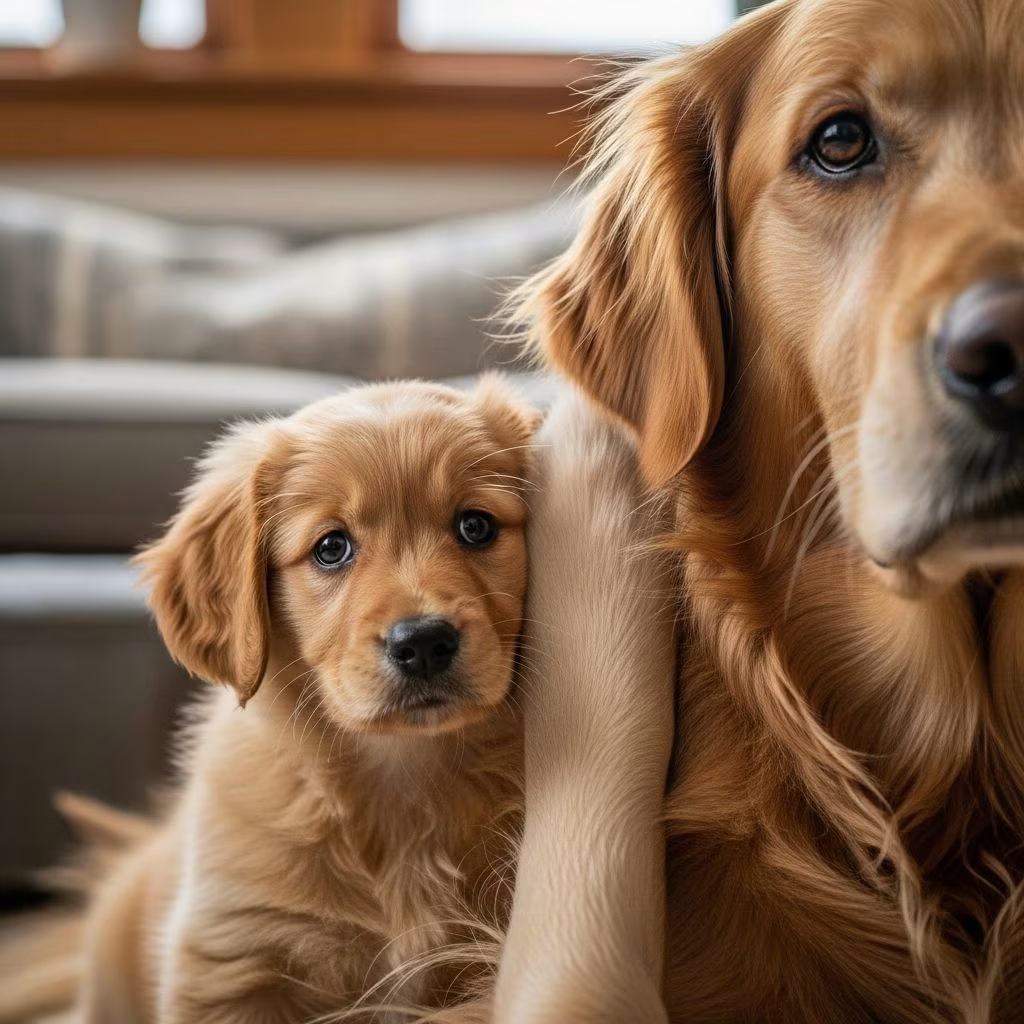
Fearful puppies often tremble at new sights, sounds, or people, but with patient, positive approaches, they can develop resilience and joy. This guide draws on expert strategies to address anxiety at its roots, fostering a secure bond between you and your pup.
Spotting the First Signs of Puppy Fear
Understanding your puppy’s fear starts with observing subtle cues in their body language. Early detection prevents escalation into full-blown panic, allowing you to intervene calmly.
- Tail tucking or clamping: A low or hidden tail signals discomfort, unlike the upright wag of happiness.
- Ears pinned back: Flat against the head indicates unease, contrasting with perked ears during play.
- Avoidance behaviors: Yawning excessively, lip licking, or turning away shows stress buildup.
- Whale eye: Whites of the eyes visible as they avert gaze from a perceived threat.
- Freezing or trembling: Sudden stillness or shaking reveals overwhelm.
Track these in a journal alongside contexts like strangers or loud noises to pinpoint triggers.
Establishing a Predictable Daily Routine
A consistent schedule acts as an anchor for anxious pups, reducing uncertainty that fuels fear. Reliable patterns help them anticipate events, building a sense of security.
Key elements include fixed mealtimes, potty breaks, play sessions, and bedtime. For instance, feed at 7 AM, 12 PM, and 6 PM daily, followed by short walks. This predictability lowers baseline stress, making new experiences less daunting.
| Time | Activity | Benefit for Fearful Pups |
|---|---|---|
| 7:00 AM | Breakfast & Potty | Starts day with routine nourishment |
| 9:00 AM | Short Training Session | Builds obedience confidence |
| 12:00 PM | Lunch & Play | Balances energy with fun |
| 6:00 PM | Dinner & Evening Walk | Winds down predictably |
| 9:00 PM | Quiet Time in Crate | Promotes restful sleep |
Adapt based on your puppy’s age and energy, but maintain consistency to reinforce control over their world.
Mastering Positive Reinforcement Basics
Positive methods reward desired actions, sidestepping punishment that worsens fear. Use treats, praise, or toys to associate good feelings with behaviors.
Begin with simple cues like “sit” or “look at me.” Reward immediately to link the action to the prize. Clicker training excels here, marking exact moments precisely without physical handling.
- Charge the clicker: Click and treat repeatedly until the sound predicts rewards.
- Pair with behaviors: Click for voluntary sits, then add a cue.
- Build duration: Extend “stay” gradually with jackpot rewards.
Avoid corrections; they erode trust. Instead, redirect to alternatives like hand targeting, where the pup touches your palm with their nose for treats, aiding movement without force.
Gradual Exposure: Desensitization Essentials
Desensitization introduces triggers at sub-threshold levels—intensities where fear doesn’t spike—paired with rewards to rewire associations.
Steps for success:
- Identify threshold: Note distance or volume where reaction starts (e.g., 20 feet from a stranger).
- Stay below it: Expose at safe levels, feeding high-value treats.
- Increment slowly: Reduce distance by inches weekly, only advancing on relaxation.
- Countercondition: Pair with play or food until the trigger predicts positivity.
For vacuum fear, start with it off across the room. Progress to on but distant, always rewarding calm. Patience yields results over weeks.
Fun Games to Boost Puppy Courage
Games transfer confidence from safe skills to scary scenarios. Focus on its-b games (quick, exciting) and calm ones for balance.
- It’s-Ya-Turn game: Toss treats randomly, rewarding engagement to build focus amid distractions.
- Hand targeting relay: Pup noses hands in sequence, navigating spaces confidently.
- Calm settle game: Reward lying down in new spots, associating rest with relief.
- Compound chains: Link sits, downs, and spins for mastery sense.
Play in low-distraction “training dens” first, expanding outward. Use reinforcement hierarchies: everyday treats for basics, jackpots for breakthroughs.
Socialization Strategies for Timid Pups
Safe socialization prevents fear generalization. Controlled meets build positive people/dog views.
Tactics include:
- Kneel sideways, avoiding direct stares to seem non-threatening.
- Let pup approach at their pace; lure with treats from distance.
- Use leashed walks for constant mild distractions, promoting relaxation via movement.
- Practice “settle and leave” at parks: Reward calm, then exit promptly.
Avoid overwhelming groups; opt for one-on-one with calm dogs.
Advanced Techniques: Counterconditioning Mastery
Counterconditioning flips emotional responses, turning triggers into reward cues. Stare down a stranger from afar, feeding continuously until anticipation replaces fear.
Build to tolerance: 1-second exposures to 5, rewarding throughout. Combine with obedience for control.
Daily Walks as Confidence Builders
Walks provide forward momentum and novel stimuli at manageable paces. Heel training with gentle pops (not pulls) teaches ignoring passersby.
Use prong collars sparingly for even pressure around neck muscles, but prioritize positive cues like “heel” and “sit” near triggers.
Nutrition, Exercise, and Rest for Resilience
Balanced diet fuels brain health; omega-3s support anxiety reduction. Daily exercise shakes off stress, followed by quiet crate time mimicking den safety.
Professional Help: When to Call Experts
If progress stalls, consult veterinary behaviorists for meds or tailored plans. Force-free trainers versed in fear ensure ethical support.
Frequently Asked Questions
Is punishment ever okay for fearful puppies?
No; it heightens anxiety. Stick to rewards.
How long does desensitization take?
Weeks to months; rush and risk setbacks.
What if my puppy freezes outdoors?
Sit calmly, reward any relaxation, retreat slowly.
Can older rescues benefit too?
Yes; same principles apply across ages.
Are clickers necessary?
Not essential but highly effective for precision.
References
- Training a Dog With Anxiety: How to Train a Fearful Dog — American Kennel Club. 2023-05-15. https://www.akc.org/expert-advice/training/how-to-train-fearful-dog/
- Ask a Trainer – First Steps for Fearful Dogs — One Tail at a Time. 2022-08-10. https://www.onetail.org/portfolio/fearful-dogs/
- Helping a Pup with Her Fear and Anxiety — Dog Gone Problems. 2024-03-22. https://www.doggoneproblems.com/luna-helping-a-pup-with-her-fear-and-anxiety/
- Episode 237: A Plan For Your Fearful Dog (Part 2) — Dogs That. 2023-11-07. https://dogsthat.com/podcast/237/
- Master Socialization Techniques for Fearful Dogs — YouTube (Sit Stay Learn). 2024-01-12. https://www.youtube.com/watch?v=2M34xr2gxQA
- THE BEST WAY TO TRAIN A FEARFUL/NERVOUS DOG! — YouTube. 2023-09-18. https://www.youtube.com/watch?v=syVPBy5EPSc
- Help your anxious or fearful dog gain confidence — Animal Humane Society. 2024-02-05. https://www.animalhumanesociety.org/resource/help-your-anxious-or-fearful-dog-gain-confidence



