

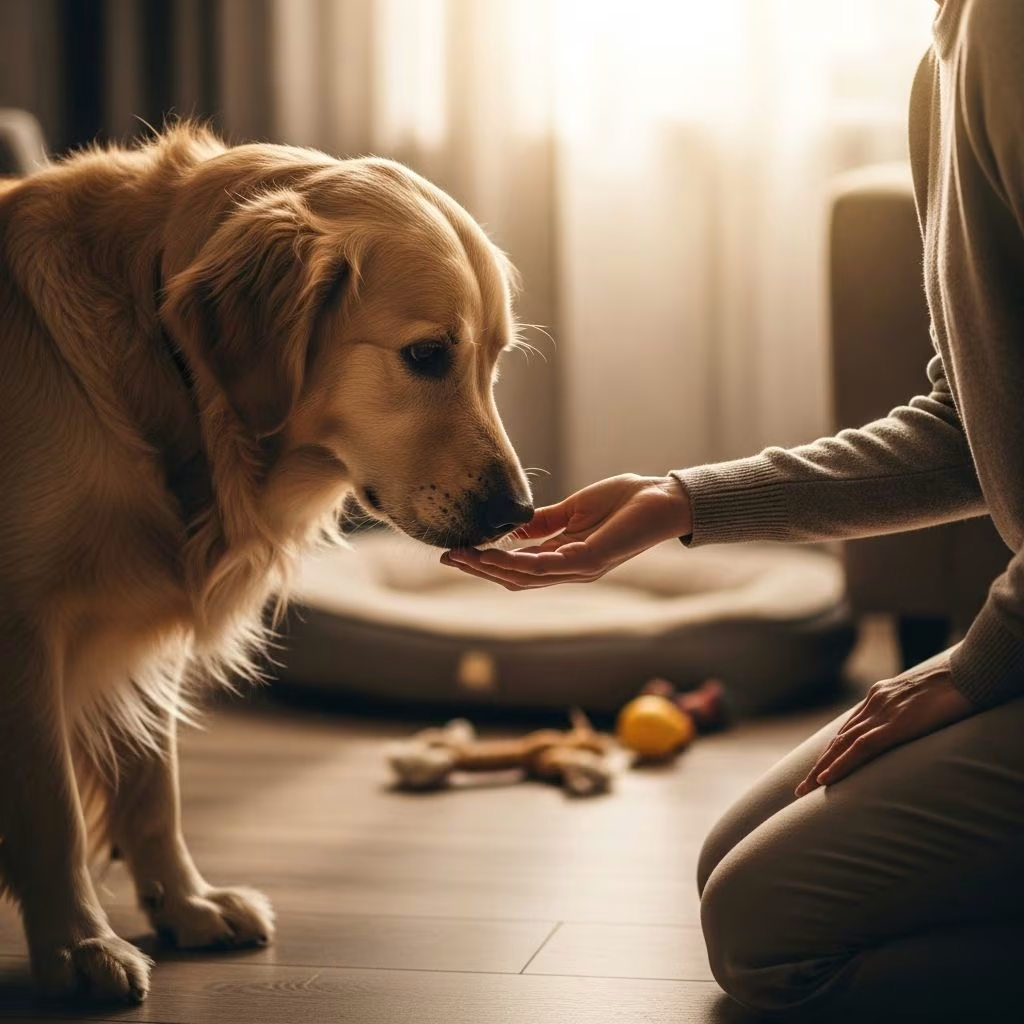
Some dogs adore everyone they meet, while others seem wary, stressed, or downright terrified when a new person appears. If your dog reacts badly to guests, strangers on walks, or unfamiliar people at the vet, you are not alone. Research shows that fear-related behaviors, including fear of people, are common in pet dogs and can affect both their welfare and family life.
This guide explains why **”stranger danger”** happens, how to read your dog’s body language, and what you can do to help them feel safer and more confident around new people, using humane, evidence-based techniques.
What Does “Stranger Danger” Look Like in Dogs?
Dogs who are uncomfortable with unfamiliar people can show a wide range of behaviors, from obvious aggression to very subtle signs of distress. Recognizing these early signals is critical so you can step in before your dog feels forced to escalate.
Common Behavioral Signs
- Barking at strangers at the door, out the window, or on walks.
- Growling, snarling, lunging, or snapping when someone approaches.
- Hiding or retreating behind furniture or behind you.
- Freezing in place with a stiff body when a stranger is near.
- Refusing treats or toys when people are present, even favorite ones.
- Clinginess to the owner, shadowing you and avoiding everyone else.
Subtle Stress Signals You Shouldn’t Ignore
Many dogs never bite or growl but still feel profoundly unsafe around strangers. Look for quieter stress signals such as:
- Whale eye (showing the whites of the eyes).
- Lip licking or tongue flicks when people look at or reach toward them.
- Yawning in a context where they are not tired.
- Turning the head or body away when a person leans in.
- Low, tucked tail and crouched posture.
- Shaking off as if wet after an interaction ends.
Why Some Dogs Fear Strangers
Fear of new people rarely has a single cause. It is usually a mix of genetics, early experiences, health, and current environment. Studies on canine behavior show that factors like temperament, prior socialization, and owner interactions all shape how dogs respond to unfamiliar humans.
| Factor | How It Can Contribute to Stranger Fear |
|---|---|
| Genetics & temperament | Some dogs are naturally more anxious, cautious, or reactive; they may startle easily or struggle with new situations. |
| Lack of early socialization | Puppies who see too few people, or only one type of person, may later find other people unfamiliar and frightening. |
| Negative experiences | Rough handling, frightening medical procedures, or past abuse can cause lasting associations between people and fear. |
| Household dynamics | In multi-dog homes, dogs may compete for access to the owner, shaping how they behave toward strangers near their person. |
| Health & pain | Dogs in pain or discomfort may have a lower threshold for stress and react more intensely to unfamiliar people. |
The Role of Socialization Windows
Puppies have a sensitive period, roughly between 3–14 weeks of age, when positive exposure to a wide variety of people helps build long-term comfort and resilience. Missing this window, or having scary experiences during it, can make it harder for adult dogs to feel safe around new people later in life.
Owner as a “Safe Base”
In many dogs, the owner acts as a secure base: when their person is nearby, they feel more able to cope with unfamiliar environments or people. Research on dog–owner attachment has shown that:
- Dogs often show fewer stress behaviors when their owner is present in a mildly stressful “strange situation.”
- In unfamiliar settings, dogs may struggle to show relaxed, friendly behavior toward strangers if their owner is absent, especially when they are already anxious.
This means your presence and behavior can significantly influence how your dog experiences new people.
Management: Keeping Everyone Safe Right Now
Before you start formal training, you must keep your dog and other people safe and reduce the chances your dog will rehearse fearful or aggressive behavior. Management is not a failure; it is the foundation that makes training possible.
Home Management for Dogs Nervous About Guests
- Use physical barriers: baby gates, closed doors, or crates can give your dog space away from the entryway, hallway, or busy living room.
- Create a safe room: stock it with a comfy bed, water, and long-lasting chews so your dog can relax away from visitors.
- Avoid surprise entries: have guests text first so you can put your dog away before the doorbell rings.
- Stop forcing greetings: do not ask guests to pet or approach your dog; your dog should always have the option to avoid contact.
Management in Public Spaces
- Choose quieter routes for walks, avoiding crowded sidewalks and busy parks at peak times.
- Maintain distance: cross the street, step off the path, or circle around to keep your dog at a distance where they can stay relatively calm.
- Use clear gear: consider harnesses or leashes with wording like “Do Not Pet” to discourage well-meaning strangers from reaching out.
- Keep sessions short and end on a calmer note rather than pushing your dog until they are overwhelmed.
When a Muzzle Is Appropriate
For dogs who have bitten, snapped, or come close to biting, a well-fitted basket muzzle can be an important safety tool. Many behavior professionals use muzzles routinely with fearful or aggressive dogs so training can proceed without risk to people. A muzzle should always be introduced gradually with positive reinforcement, never forced onto the dog.
Training: Changing How Your Dog Feels About Strangers
Once management is in place, you can begin systematic training to help your dog form new, positive associations with people. The goal is not to make your dog love everyone but to help them feel safer and more in control.
Finding Your Dog’s “Threshold”
Your dog’s **threshold** is the point at which they go from noticing a person to reacting with barking, lunging, or shutting down. For behavior change to work, you must stay below this threshold.
- At or above threshold: dog is barking, growling, or too tense to eat.
- Below threshold: dog can notice the person but still eat, play, and respond to you.
Counterconditioning: Turning “Scary” Into “Good”
Counterconditioning means pairing the presence of a previously scary trigger with something your dog truly loves, like high-value treats.
- Start at a distance where your dog can see the person but remain relatively relaxed.
- Each time your dog notices the person, calmly feed tiny pieces of something delicious.
- When the person disappears, the treats stop.
- Over many sessions, your dog begins to associate strangers with good things.
For safety, the stranger should usually ignore your dog, not try to interact or offer treats directly at first. This helps reduce social pressure and gives your dog the freedom to watch from a distance.
Desensitization: Very Gradual Exposure
Desensitization adds structure to your training by changing one factor at a time (distance, duration, movement, or number of people). If your dog stays relaxed, you can make things slightly harder; if they react, you have gone too fast.
- Begin with a still person at a long distance.
- Gradually reduce distance over multiple sessions as your dog stays comfortable.
- Then add gentle movement (standing, walking slowly), new outfits, or different people.
Studies of dogs’ responses to unfamiliar humans suggest that fear and anxiety can strongly inhibit prosocial behavior toward strangers. Moving slowly and keeping stress low improves your dog’s chance of forming more neutral or positive associations.
Helping Your Dog With Guests at Home
Strangers entering your dog’s safe space—the home—can be especially hard. Careful planning can make these visits less scary and more predictable.
Step-by-Step Example for a Visitor
- Before arrival: Set your dog up in their safe room with a chew or food puzzle. Turn on white noise or music if doorbells and voices trigger them.
- Guest instructions: Ask your guest to come in calmly, avoid eye contact with the dog, and follow your lead.
- First phase: Let your dog stay separated while your guest settles in.
- Optional brief introduction: If your dog has shown they can handle low-level exposure, bring them out on leash or behind a gate at a distance where they can observe.
- Pair with treats: You deliver treats when your dog looks at or notices the guest, then looks away to you. The guest does nothing.
- Breaks: After a few minutes, return your dog to their safe space for a rest, especially early in training.
Some dogs may eventually enjoy gentle interaction with familiar guests, while others will always prefer to observe from afar. Respecting your dog’s individual limits is crucial for long-term safety and trust.
How Guests Should and Should Not Interact
- Do ignore the dog at first—no staring, calling, or reaching out.
- Do sit down and remain calm, keeping movements slow and predictable.
- Do let the dog choose if and when to approach.
- Do not lean over, hug, or corner the dog.
- Do not offer a hand for sniffing directly over the dog’s head; if appropriate, hands can rest by the guest’s side and the dog may approach on their own.
When to Seek Professional Help
Fear of strangers is not just an inconvenience; it can be a significant welfare concern. Professional guidance is especially important if:
- Your dog has already bitten or attempted to bite someone.
- The behavior is getting worse over time, not better.
- Your dog cannot relax in everyday situations where people are present.
- You feel anxious or unsafe managing your dog around visitors.
A credentialed behavior professional—such as a veterinary behaviorist or certified behavior consultant—can design a plan tailored to your dog and help you implement it safely. Studies on canine fear and anxiety emphasize that addressing stress early can prevent escalation and improve quality of life for both dogs and their families.
Frequently Asked Questions (FAQs)
Q: Why is my dog suddenly afraid of people?
A: Sudden fear can stem from a recent scary event (like rough handling or a loud incident), a painful medical issue, or cumulative stress. A vet check is the first step to rule out pain or illness before addressing behavior.
Q: Can a fearful dog ever learn to like strangers?
A: Many fearful dogs can learn to feel safer and more neutral around strangers with careful management and reward-based training. Some may never become social butterflies, but most can improve enough to cope calmly at comfortable distances.
Q: Is my dog being “protective” or just scared?
A: Dogs who growl or lunge when people approach often look “protective,” but in many cases they are actually afraid and trying to make the scary person go away. Observing body language—especially tucked tails, lip licking, or backing away—can reveal that fear is the driving emotion.
Q: Should I let people give my fearful dog treats?
A: Direct hand-feeding from strangers can be too much pressure for some dogs and may provoke a bite if the dog darts in nervously. It is often safer for you to give the treats while the stranger simply exists at a distance, and only later consider carefully managed treat tosses.
Q: Does comforting my scared dog “reinforce” their fear?
A: No. Fear is an emotion, not a behavior you can create by offering comfort. Calmly supporting a frightened dog—by giving distance, speaking softly, or leaving the situation—can help them recover and does not cause more fear.
References
- Hierarchy-Dependent Behaviour of Dogs in the Strange Situation Test — Tóth et al., Animals (MDPI). 2024-08-17. https://pmc.ncbi.nlm.nih.gov/articles/PMC12248520/
- Beware of Strangers: Dogs’ Empathetic Response to Unknown Humans in Distress — Sanford et al., Animals (MDPI). 2024-02-22. https://pmc.ncbi.nlm.nih.gov/articles/PMC11274014/
- Danger at the Door — IAABC Foundation Journal, Eileen Koval. 2019-06-10. https://journal.iaabcfoundation.org/danger-at-the-door/
- A New Study Says 99% of Dogs Have Behavior Issues—These Are the Most Common Ones — Kinship. 2020-10-01. https://www.kinship.com/news/dogs-behavior-issues-study



