

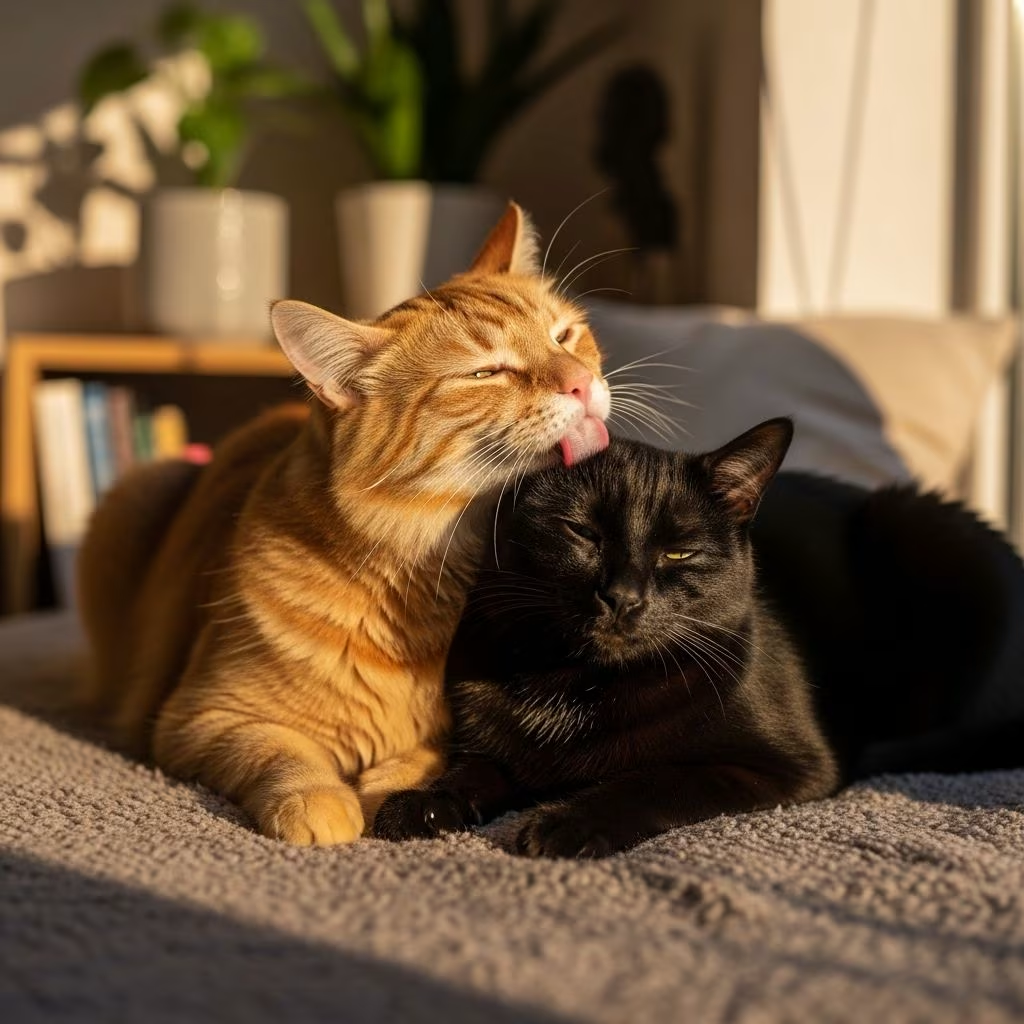
Bringing multiple cats into one home can enrich lives with playfulness and companionship, but it often starts with tension or outright conflict. Success lies in understanding feline instincts and applying patient, structured approaches to build mutual comfort and affection. This guide draws on behavioral science to outline practical steps for turning wary newcomers into playful pals.
Understanding Feline Social Dynamics
Cats are inherently territorial creatures, wired by evolution to guard resources like food, litter, and resting spots. Unlike pack-oriented dogs, they form loose colonies in the wild, preferring predictable interactions over constant socializing. When introducing cats, recognize signs of stress—flattened ears, dilated pupils, hissing, or swiping—to intervene early and prevent escalation.
Socialized cats show relaxed behaviors like raised tails, purring, rubbing, and playful approaches, indicating comfort with others. Unsociable ones hide, tense up, or lash out, signaling a need for gradual acclimation. Positive associations through food, play, and gentle contact are key to shifting these dynamics.
Preparing Your Home for Multiple Cats
Before any face-to-face meetings, optimize your space to minimize competition. Vertical territory expands options: install multi-level cat trees, wall shelves, and window perches so each cat claims distinct zones.
- Provide ample resources: Aim for one litter box per cat plus one extra, multiple feeding stations, and separate water bowls.
- Use pheromone diffusers like Feliway to promote calm; these synthetic scents mimic comforting facial markings.
- Create ‘base camps’—safe rooms with beds, toys, scratchers, and hiding spots—for each cat to retreat.
Stock up on interactive toys such as wand teasers and puzzle feeders to redirect energy positively. A well-resourced environment reduces resource guarding and fosters independent security.
Step-by-Step Introduction Process
Rush introductions lead to lifelong feuds; instead, follow a phased protocol emphasizing scent, sight, and supervised contact.
Phase 1: Scent Exchange
Start invisibly by swapping bedding or rubbing soft cloths on each cat’s cheeks, then placing them in the other’s space. This familiarizes scents without pressure, allowing cats to associate the ‘new’ smell with safety and meals. Repeat daily for a week or until sniffing turns neutral or curious.
Phase 2: Visual Barriers
Use baby gates or cracked doors for sightlines. Feed meals on opposite sides to link the other’s presence with positivity. Watch body language: slow blinks and perked ears signal progress; growling means extend this phase.
Phase 3: Supervised Meetings
Short, 5-10 minute sessions in neutral territory with toys ready. Stay low, use calm voices, and separate at first tension signs. Reward calm behavior with treats immediately. Gradually lengthen time as tolerance builds.
Phase 4: Full Integration
Allow unsupervised access once play chases replace stares or swats. Monitor for regressions like blocking litter boxes, and revert phases if needed. Full harmony may take weeks to months.
Tools and Techniques for Building Trust
Beyond basics, leverage play and reinforcement to accelerate bonding.
| Technique | How It Helps | Best Practices |
|---|---|---|
| Interactive Play | Mimics hunting, burns stress, creates shared fun | Use wand toys passed across vision; end with ‘kill’ (treat on toy) |
| Treat Conditioning | Links presence to rewards | Hand-feed high-value treats like churus; pair with petting |
| Slow Blinks & Voice | Signals non-threat | Sit at cat level, read softly, blink slowly |
| Puzzle Feeders | Encourages natural foraging | Rotate types for mental stimulation |
For shy cats, start with wand-touch before hands; progress to cheek strokes mimicking cat grooming. Playpens confine safely for observation in early stages.
Recognizing and Resolving Conflicts
Not all tension spells doom—distinguish play (loose body, ears forward, no vocalizing) from aggression (puffed fur, yowls, pinned ears). Redirect fights with distractions like toys or claps, never physical punishment.
Persistent issues? Signs include urine spraying, excessive grooming, or appetite loss. Consult vets to rule out health triggers, then behaviorists for tailored plans. Spaying/neutering reduces hormone-fueled aggression.
- Separate during meals initially.
- Enrich environment with tunnels and condos.
- Track progress in a journal: note positive interactions daily.
Special Scenarios in Multi-Cat Homes
Adult Cat Meets Kitten
Kittens’ energy can annoy adults; limit sessions to 15 minutes, always supervised. Let the elder set boundaries—hissing teaches manners.
Rescue or Feral Integrations
These need extended scent phases; use gloves for initial handling if fearful. Patience yields devoted companions.
Reintroducing After Separation
Treat as new: restart scents to reset associations.
Long-Term Strategies for Harmony
Once bonded, maintain peace with routine health checks, rotated toys, and equal attention. Rotate sleeping spots weekly to prevent territory fixation. Annual vet visits ensure no underlying issues fuel irritability.
Monitor weights and litter use; imbalances signal bullying. Celebrate milestones like mutual grooming or tandem sleeping—these affirm success.
Frequently Asked Questions
How long does it take for cats to get along?
Typically 2-8 weeks, but up to months for cautious pairs. Consistency speeds it up.
What if my cats fight despite introductions?
Revert to prior phase, add pheromones, seek pro help. Never force proximity.
Can older cats learn to like kittens?
Yes, with boundaries respected. Short play bursts help.
Should I intervene in play fights?
Only if escalating; otherwise, let them communicate.
Do fixed cats get along better?
Absolutely—reduces aggression dramatically.
Success Metrics and Tracking
Chart progress:
- Week 1: Neutral scent response.
- Week 2: Calm visual tolerance.
- Week 4: Play initiation.
- Ongoing: Shared spaces comfortably.
Adjust based on individuals—some bond swiftly, others deliberate.
References
- The Cat Socialization Continuum: A Guide to Interactions Between… — Alley Cat Allies. 2023. https://www.alleycat.org/resources/cat-socialization-continuum-guide/
- CAT SOCIALIZATION 101 — Philly PAWS. 2019-03. https://phillypaws.org/wp-content/uploads/Cat_Socialization_Volunteer_Handbook_03_2019.pdf
- Finding The Right Approach To Socializing Cats — Texas A&M University. 2023-02-23. https://stories.tamu.edu/news/2023/02/23/finding-the-right-approach-to-socializing-cats/
- Socializing Feral Cats — Animal Behaviorist. Accessed 2026. https://animalbehaviorist.us/socializingferals.html
- Kitten Socialization Checklist — San Diego Humane Society. Accessed 2026. https://sdhumane.org/resources/kitten-socialization-checklist/
- Theory – Socialization Saves Lives — Socialization Saves Lives. Accessed 2026. https://www.socializationsaveslives.com/theory
- How to Introduce and Socialize Cats and Kittens — ASPCA Pet Insurance. Accessed 2026. https://www.aspcapetinsurance.com/resources/how-to-socialize-your-cat/



