

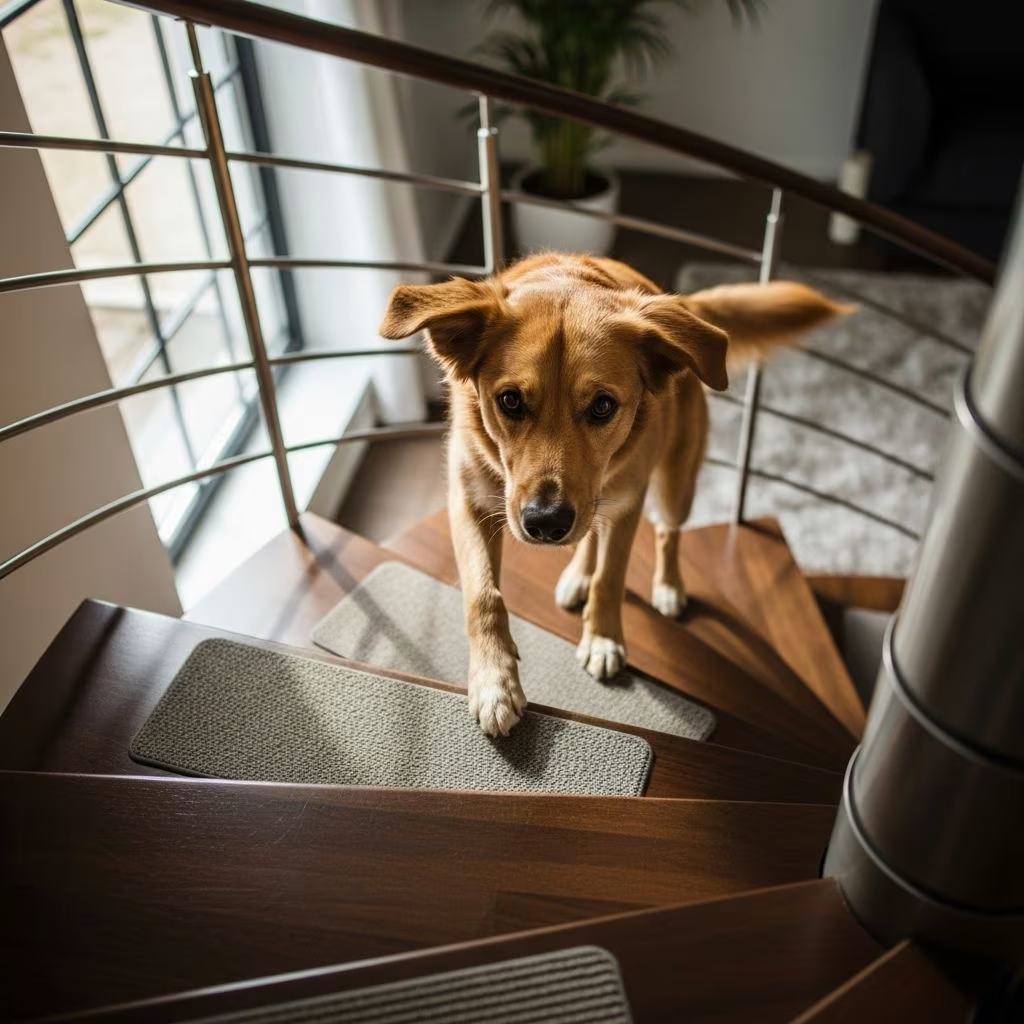
Spiral staircases can look stylish in a home, but for many dogs they are confusing, disorienting, and downright scary. If your dog plants their feet, trembles, or refuses to budge at the base of a spiral staircase, you are not alone. With a bit of understanding and patient training, most dogs can learn to move up and down these stairs more comfortably and safely.
Why Spiral Staircases Confuse and Scare Dogs
To a dog, a spiral staircase is very different from the straight, solid steps they may be used to. The unusual shape, the open gaps between steps, and the tight turns can all contribute to fear and hesitation.
How Dogs Perceive Stairs
Dogs rely heavily on a combination of vision, smell, and body awareness to move through the world. Vision helps them judge depth and distance, while proprioception (their sense of where their body and limbs are in space) lets them place their feet accurately on each step. When the staircase looks strange or unstable to them, their normal movement patterns can break down.
- Visual challenges: Unusual angles and repeating patterns can make it harder for dogs to judge depth and where each step begins and ends.
- Body awareness demands: Narrow, curved steps require more precise paw placement than broad, straight stairs.
- Surface differences: Slippery materials like polished wood or metal can increase fear of slipping.
What Makes Spiral Stairs Especially Difficult?
Spiral staircases pose a few unique challenges for dogs that straight stairs typically do not.
- Narrow steps: The inner part of each step is often very short and may not comfortably fit a dog’s full paw.
- Central pole: The column in the middle forces a tight turning radius, which can be physically awkward.
- Open risers: Gaps between steps allow dogs to see the drop below, which can trigger fear of heights and insecurity about footing.
- Unstable perception: The spiral pattern itself can resemble a moving or shifting surface to some dogs, increasing anxiety.
Common Signs Your Dog Is Afraid of the Spiral Staircase
Dogs rarely hide their discomfort around a staircase. Watch for these behaviors at the bottom or top of a spiral stair:
- Backing away or refusing to move forward
- Freezing in place, tail tucked, ears back
- Trembling, panting, or pacing near the stairs
- Whining, barking, or pawing at you for help
- Trying to jump off mid-way or scramble past the steps as fast as possible
If your dog is showing any of these signs, it is important to slow down and help them feel safe rather than pulling or forcing them.
Safety First: When to Avoid Spiral Stairs With Your Dog
In some cases, it may be safer not to ask your dog to use a spiral staircase regularly, or at least not without close supervision.
Dogs at Higher Risk of Injury on Spiral Stairs
| Dog Type | Why Spiral Stairs Are Riskier |
|---|---|
| Very young puppies | Still developing coordination, easily overwhelmed and unsteady on narrow steps. |
| Senior dogs | May have arthritis, muscle weakness, or slower reflexes that increase fall risk. |
| Dogs with joint disease | Conditions like hip dysplasia or cruciate ligament problems make twisting and tight turns painful. |
| Vision-impaired dogs | Reduced ability to judge step edges and gaps. |
| Very large or long-backed dogs | More difficult to fit their body safely on narrow, curved steps. |
Basic Stair Safety Guidelines
Before you begin any training, consider these safety steps:
- Add traction: Non-slip treads or carpet runners can greatly reduce slipping risk on smooth or metal stairs.
- Provide good lighting: Make sure your dog can clearly see each step edge.
- Use barriers: Baby gates or pet gates can block access when you are not supervising.
- Ask your vet: If your dog has existing orthopedic or neurological problems, consult your veterinarian before training on stairs.
Building Positive Associations With Being Picked Up
In many homes with spiral staircases, people simply carry their dog up or down. That can be a safe option if your dog is small enough and comfortable being carried. If your dog stiffens, squirms, or panics when you pick them up near the stairs, it is worth spending time helping them feel better about being handled.
Why Some Dogs Hate Being Picked Up
Even friendly dogs may dislike being carried, especially near a drop or an unfamiliar staircase. Sudden lifting can feel like a loss of control and may trigger fear or motion sensitivity.
- Past negative experiences, such as being dropped or grabbed roughly
- Pain when lifted due to back or joint problems
- Sensitivity to movement, especially going down or around curves
Step-by-Step: Making Pick-Ups Predictable and Positive
Teach your dog that being picked up is safe and leads to good things. Move slowly and at their pace:
- Introduce a cue word: Use a consistent phrase like “Up” or “Lift” just before you begin to scoop your dog.
- Pair the cue with treats: Say the cue, gently lift your dog only an inch or two, then place them down and give a treat.
- Gradually increase the lift: Over multiple sessions, slowly lift your dog higher and hold for a second before returning them to the floor and rewarding.
- Practice away from the stairs first: Work in a quiet, flat area where your dog feels relaxed.
- Only then move near the staircase: Once your dog is comfortable with being picked up in general, repeat the same process near the bottom of the spiral stairs.
If at any point they struggle or show fear, go back to an easier step or take a break. The goal is for your dog to anticipate a gentle, predictable lift followed by something they enjoy.
Teaching Your Dog to Use the Spiral Staircase Safely
Many dogs can learn to climb and descend a spiral staircase with careful, reward-based training. The key is to split the process into very small, manageable steps and avoid pushing your dog past their comfort level.
Preparation: Setting Your Dog Up for Success
- Choose low-distraction times: Train when the house is quiet and you can focus.
- Use high-value rewards: Small pieces of soft treats or favorite toys help keep your dog motivated.
- Start well-rested: A tired or sore dog may be less willing to try something new.
Introducing the First Steps
Begin at the bottom of the staircase, with your dog on leash if needed, but avoid pulling.
- Stand on the first or second step and encourage your dog to place just one paw on the bottom step.
- Mark that effort with praise or a marker word like “Yes!” and immediately reward.
- At first, reward any small interaction: sniffing the step, touching it, putting even one paw on it.
Once your dog is comfortable with the first step, ask for two paws, then three, then all four. Go slowly, repeating each stage until your dog’s body language looks loose and confident.
Going Up the Spiral Staircase
After your dog is relaxed on the first few steps, begin to move higher.
- Guide your dog up one step at a time, rewarding on each step.
- Stay just ahead of your dog so they are following you rather than being pulled.
- If they hesitate, allow them to step back down to where they feel safe, then reward that decision to maintain trust.
- Keep early sessions short; stopping after a small success helps build confidence.
Teaching Your Dog to Go Down Safely
Going down spiral stairs is often harder than going up because dogs see the drop ahead of them and need to control their weight downhill.
- Start near the top, with your dog only a few steps away from the landing.
- Use treats just below their nose level to encourage slow, controlled steps.
- Reward each step down rather than waiting until the bottom.
- If your dog starts rushing, stop and reset at a higher step, then go more slowly.
In some homes, it may be safest to continue carrying a small dog down even if they can climb up on their own, especially if the steps are very narrow or slippery.
Reading Your Dog’s Body Language and Adjusting Training
Effective training on spiral staircases depends on recognizing early signs of stress and adjusting before your dog becomes overwhelmed.
Signs You’re Asking for Too Much
- Your dog suddenly refuses a step they managed comfortably earlier in the session.
- They turn away, yawn repeatedly, or begin sniffing the ground instead of engaging.
- Panting, wide eyes, tucked tail, or pinned ears appear or intensify.
When you see these signs, lower your criteria. For example, if they are worried at the fourth step, go back to rewarding them for stepping on the first or second step and end the session on that easier success.
Why Pushing a Fearful Dog Can Backfire
Forcing a dog onto a surface they fear can increase their anxiety and make the object even scarier next time. Dogs learn not just from success, but also from how situations feel in the moment. If a training session ends with panic, struggling, or slipping, your dog may associate the entire staircase with that negative experience and resist future attempts.
In contrast, gradual progress with plenty of chances to step away helps your dog stay under their “stress threshold,” where they can still think, learn, and form positive memories.
When Spiral Staircases May Never Be a Good Fit
Even with thoughtful training, some dogs may never feel fully safe or comfortable on spiral stairs. In those cases, management—adjusting the environment and your routine—is often the kindest and safest solution.
Management Options If Training Is Not Enough
- Permanent gates: Block access to the staircase and keep your dog on one level of the home.
- Alternative routes: Use a different, safer staircase when available.
- Ramps: In rare setups, a ramp alongside or instead of stairs may be possible for small height differences.
- Scheduled carrying: For small dogs, plan regular, calm pick-ups to move them between levels instead of expecting them to use the stairs independently.
Frequently Asked Questions (FAQs)
Q: Why is my dog afraid of our spiral staircase but not other stairs?
A: Spiral staircases look and feel very different from straight staircases. The curved shape, narrow steps, and open gaps can be disorienting and make it harder for your dog to judge depth and place their paws securely, which can trigger fear even if they are confident on ordinary stairs.
Q: Is it safe to carry my dog up and down spiral stairs?
A: It can be safe for small, healthy dogs if you move slowly, use both arms to support their chest and hindquarters, and your dog is comfortable with being picked up. If your dog squirms, panics, or has back or joint problems, talk to your veterinarian about safer alternatives.
Q: How long will it take to train my dog to use the spiral staircase?
A: The timeline varies widely. Some confident dogs adapt in a few short sessions, while more fearful or physically limited dogs may need weeks of gradual training. Focus on short, successful sessions rather than a specific deadline, and adjust your pace based on your dog’s body language.
Q: Should I ever force my dog onto the stairs?
A: Forcing a dog onto a staircase can increase fear, erode trust, and raise the risk of falling. Most behavior and training experts recommend using gradual, reward-based methods instead of force, especially when working with fear.
Q: My senior dog suddenly struggles with stairs—what should I do?
A: New or worsening difficulty with stairs can signal pain, weakness, or other medical problems. Schedule a veterinary exam to check for arthritis, heart or neurologic disease, or vision changes before continuing stair use or starting new training.
References
- Senior Dog Health Care — American Veterinary Medical Association (AVMA). 2021-06-01. https://www.avma.org/resources/pet-owners/petcare/senior-pet-care-faqs
- Dog Stair Safety and Fall Prevention — The Kennel Club (UK). 2022-03-15. https://www.thekennelclub.org.uk/dog-health/health-and-care/dog-home-hazards/
- Arthritis in Pets — American College of Veterinary Surgeons (ACVS). 2020-11-10. https://www.acvs.org/small-animal/arthritis-in-dogs-and-cats
- Treatment of Anxiety and Fear-Based Problems in Dogs — American College of Veterinary Behaviorists (in: Decoding Your Dog). 2014-01-07. https://doi.org/10.1007/978-1-61088-595-4
- Puppy Development and Socialization — American Veterinary Society of Animal Behavior (AVSAB). 2018-05-01. https://avsab.org/resources/position-statements/



