

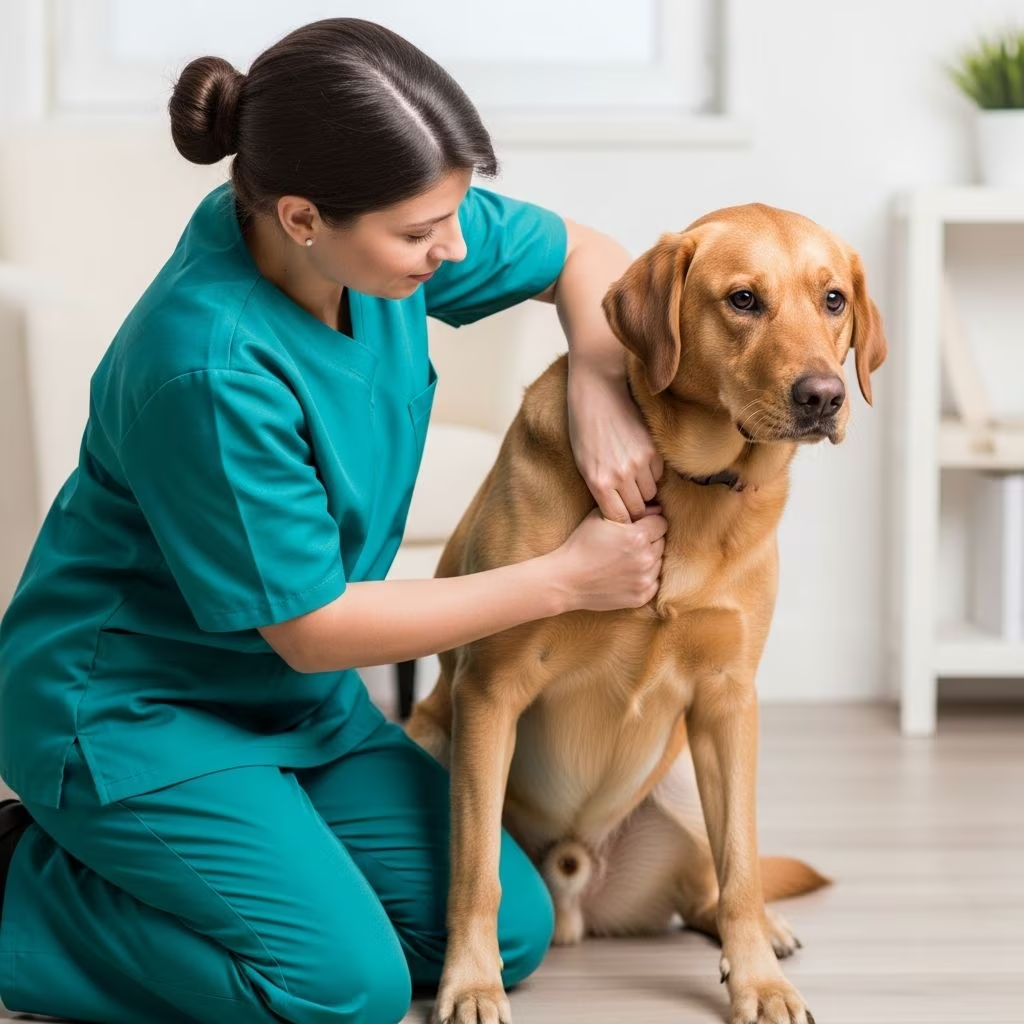
Heimlich Maneuver for Dogs: A Life-Saving Emergency Technique
Choking is one of the most frightening emergencies a dog owner can face, with only seconds to act before serious harm occurs. Dogs love chewing on toys, treats, and various objects they find around the house, but sometimes they accidentally ingest items that can obstruct their airway. Knowing how to recognize the signs of choking and perform the Heimlich maneuver on your dog could mean the difference between life and death for your beloved pet.
The Heimlich maneuver uses abdominal thrusts to force air from the lungs and dislodge objects blocking the airway. This emergency technique can be performed by any pet owner, but understanding when and how to use it correctly is essential for your dog’s safety. Whether your dog is small, large, or barrel-chested, there are specific techniques tailored to their size and body structure.
Recognizing the Signs of a Choking Dog
Before attempting any emergency procedure, it’s crucial to identify whether your dog is actually choking. A choking dog will display distinct behavioral and physical signs that indicate airway obstruction. These signs include:
- Pawing at the mouth repeatedly
- Excessive drooling or gagging
- Difficulty breathing or gasping for air
- Panicked or frantic behavior
- Weakness or loss of consciousness
- Bluish discoloration of the tongue or gums
- Inability to bark or make normal sounds
If your dog displays any of these symptoms, approach them carefully. An anxious and choking dog may accidentally bite you as they panic, so exercise caution while attempting to help.
Initial Assessment: Can You Remove the Object?
Your first step when you suspect your dog is choking is to attempt manual removal of the obstruction if possible. Carefully restrain your dog and gently open their mouth by pressing on the sides of their upper lips while tilting the head slightly upward. Never blindly probe the throat, as this could push the object deeper into the airway.
If you can see the object and it’s easily accessible, use your fingers to sweep it out of the throat. Be very careful not to push it further down. However, if your dog won’t let you open their mouth or if you cannot remove the item with your fingers, you must proceed to the Heimlich maneuver immediately. If the object still cannot be dislodged, contact an emergency veterinarian immediately to determine next steps.
How to Perform the Heimlich Maneuver
The Heimlich maneuver involves applying abdominal thrusts to force air from your dog’s lungs and dislodge the obstruction. The basic principle is the same for all dogs, but positioning and technique vary based on your dog’s size. Always adjust the force of your thrusts according to your dog’s size to avoid causing harm.
General Heimlich Technique
The standard Heimlich maneuver for most dogs follows these steps:
- Stand behind your dog or position yourself so your dog’s spine is against your chest
- Wrap your arms around the dog under the ribs
- Make a fist with one hand and cup your other hand around your fist
- Perform five rapid thrusts into the belly, just under the ribs, by thrusting your fist into the belly and up toward the ribs
- If this does not dislodge the object, give five sharp blows to your dog’s back between the shoulder blades
- Repeat this process until the object is dislodged
After each set of thrusts, periodically check to see if the object has been dislodged enough to be removed with your fingers. Look for improved breathing or coughing that might indicate partial clearing of the airway. If there’s no improvement after 2-3 attempts, proceed immediately to emergency veterinary care.
Size-Specific Techniques
Different dog sizes require modified approaches to ensure effectiveness while preventing injury. Understanding these variations is essential for proper emergency response.
Heimlich Maneuver for Large Dogs
For large dogs that are standing, perform the Heimlich maneuver as described above. You can also try lifting their hind legs in the air like a wheelbarrow to encourage the object to slide forward. This position mimics gravity’s role in helping dislodge the obstruction.
For large dogs that are lying down on their side or that cannot be lifted up against your chest, place a hand on the dog’s back while using the other hand to squeeze the abdomen in and upward. Another effective technique involves straddling your dog and placing both hands just behind the last rib, then pressing down quickly and firmly. Regulate the force you use depending on your dog’s size. Perform several quick thrusts and check the mouth frequently to see if the object is dislodged enough to grab with your fingers.
Heimlich Maneuver for Small Dogs
Small dogs require a gentler touch but equally effective technique. Hold your small dog with their back against your chest and locate the soft area just below their ribcage. Make a fist with one hand and place it in this area, then use your other hand to apply quick, upward thrusts.
In addition to the standard Heimlich maneuver, you can also suspend your small dog by the hips and thighs and carefully swing your dog from side to side. This swinging motion can help leverage gravity to dislodge smaller objects. Check the mouth between each set of thrusts to see if the object is dislodged enough to grab with your fingers.
Heimlich Maneuver for Barrel-Chested Dogs
Barrel-chested dog breeds present a unique challenge due to their body structure. For these dogs, it’s better to lay them on their side on a hard surface such as the floor or a table. Place both hands just behind the last rib and press down quickly and firmly. Direct the force of your hands slightly forward to help push the foreign object out of your dog’s throat. Release immediately and repeat rapidly several times, adjusting pressure based on your dog’s size.
Preventing Dog Choking Hazards
While knowing emergency techniques is essential, prevention is always preferable to treatment. There are numerous steps you can take to minimize choking risks in your home.
Toy Safety Guidelines
Dog toys can be choking hazards, especially if they are too small for your dog’s size or have pieces that can break off. Choose toys that are size-appropriate, sturdy, and do not easily break into pieces. Look for toys designed specifically for your dog’s size category, and avoid toys with small parts that could be swallowed.
Baby or child toys should not be accessible to dogs. Always supervise dogs and children so a dog doesn’t accidentally ingest a kid’s toy. Toys meant for children are often designed differently and may pose greater choking risks for dogs.
Treat and Food Precautions
Monitor kibble size and ensure it’s appropriate for your dog’s mouth size and eating habits. Some dogs are aggressive chewers and may benefit from larger kibble pieces.
Dog treats like rawhide can become a choking hazard once your dog has chewed them to a smaller size. Toss rawhides that have been chewed down to prevent accidental ingestion of small pieces. Never give edible chew treats to your dog unsupervised, as they can pose risks even during regular chewing.
General Supervision
Regular supervision of your dog’s activities is one of the best prevention strategies. Keep your dog from accessing small objects, bones with splinters, or any items that could be swallowed. Store toys, treats, and household items safely away from your dog’s reach.
Post-Emergency Care
Even if you successfully dislodge the object at home, veterinary evaluation is strongly recommended. X-rays may be performed to check the lungs for fluid accumulation or to check the abdomen for ingested foreign objects that may not have been fully removed. Your veterinarian can also assess whether any internal damage occurred during the choking episode or your rescue attempt.
When to Contact Emergency Veterinary Services
If your dog is choking, contact an emergency veterinarian immediately to determine next steps. Do not waste time attempting multiple Heimlich maneuvers if the first or second attempt is unsuccessful. Emergency veterinary professionals have specialized equipment and expertise to handle severe airway obstructions that cannot be resolved through home first aid. If your dog won’t let you open their mouth and/or extract the item, seek emergency vet care immediately.
Frequently Asked Questions
Q: How do I know if my dog is truly choking versus coughing?
A: Choking involves an inability to breathe or vocalize, panicked behavior, and potential loss of consciousness. Coughing involves sound production and the ability to breathe between coughs. If you’re uncertain, contact your veterinarian immediately.
Q: Can I perform the Heimlich maneuver on my unconscious dog?
A: Pet parents can perform an extraction technique on their dog if they are unconscious, with a complete airway obstruction caused by a smooth object such as a ball. A veterinarian may instruct you on technique if there is a concern of waiting until arrival at the veterinary hospital.
Q: What if the Heimlich maneuver doesn’t work immediately?
A: If there’s no improvement after 2-3 attempts, proceed immediately to emergency veterinary care. Time is critical in choking emergencies, and professional intervention may be necessary.
Q: Can the Heimlich maneuver cause injury to my dog?
A: Applied correctly with appropriate force for your dog’s size, the Heimlich maneuver should not cause serious injury. However, always adjust your technique and pressure based on your dog’s size to minimize risk.
Q: Should I practice the Heimlich maneuver before an emergency occurs?
A: While you shouldn’t practice the actual thrusts on your healthy dog, familiarizing yourself with the positioning and steps beforehand can help you act faster and more confidently during an actual emergency.
Q: What objects are most commonly choking hazards for dogs?
A: Common choking hazards include small toys, toy parts, rawhide chews, bones, plastic items, coins, and small household objects. Keep these items secured and away from your dog’s reach.
References
- How to Perform the Heimlich Maneuver if Your Dog Is Choking — PetMD. Accessed 2025-11-28. https://www.petmd.com/dog/emergency/common-emergencies/e_dg_choking
- Dog Heimlich: Step-by-Step Instructions for Emergencies — Golden State Veterinary Society. Accessed 2025-11-28. https://gsvs.org/blog/dog-heimlich-step-by-step/
- How To Perform The Heimlich On Your Pet — Green Dog Dental. Accessed 2025-11-28. https://www.greendogdental.com/services/cats/blog/how-perform-heimlich-your-pet



