

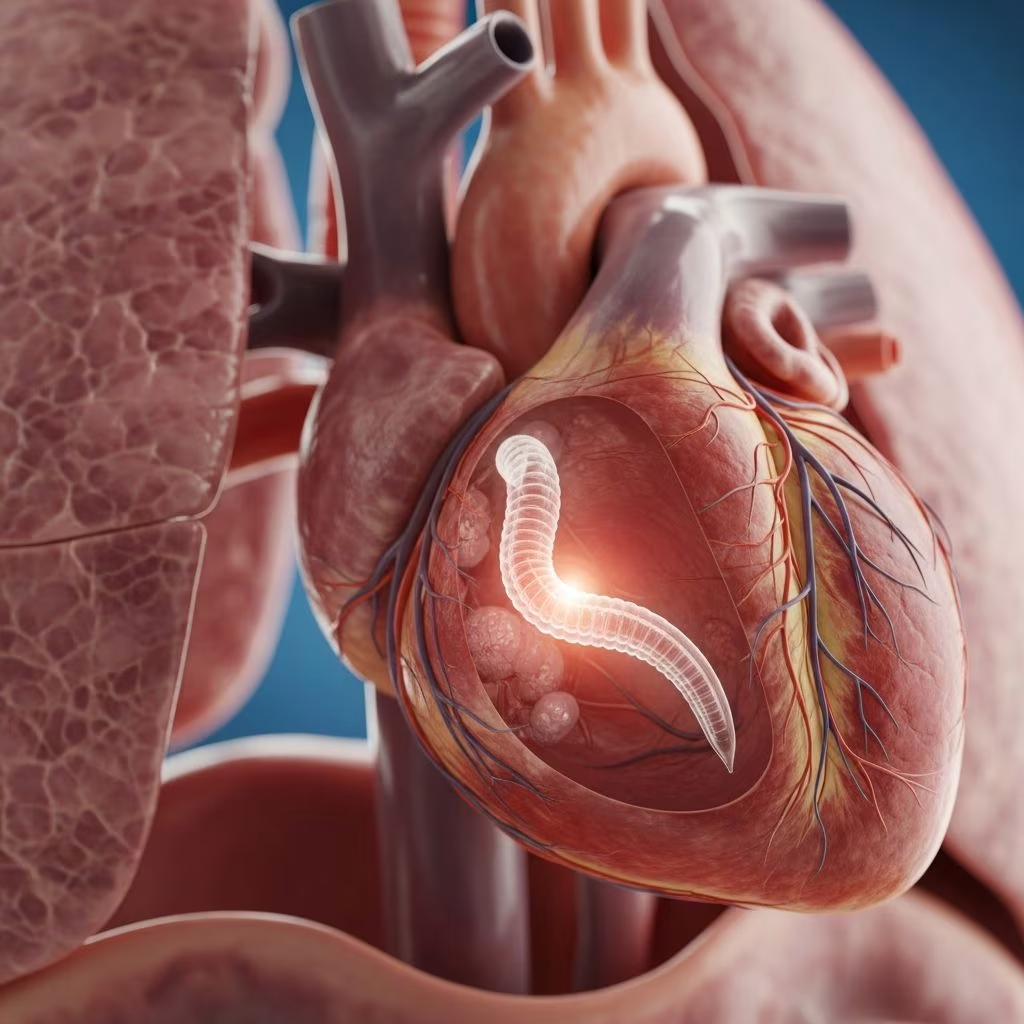
Heartworm disease poses a serious yet often overlooked threat to cats, caused by the parasitic worm Dirofilaria immitis and transmitted exclusively through mosquito bites. Unlike in dogs, where adult worms heavily infest the heart and lungs, cats typically harbor only 1-6 immature or adult worms, leading to unique pathology known as heartworm-associated respiratory disease (HARD).
Cats are poor hosts for heartworms, meaning infections rarely progress to heavy adult burdens, but even a single worm can trigger severe inflammation as larvae die in pulmonary arteries and airways. This results in asthma-like symptoms including coughing, wheezing, and dyspnea, often misdiagnosed initially. Indoor cats remain at risk since mosquitoes enter homes, emphasizing year-round prevention in endemic regions.
What Is Heartworm Disease in Cats?
Heartworm disease in cats arises when infective third-stage larvae (L3) from an infected mosquito enter via a bite wound. These larvae molt through L4 and L5 stages in tissues, migrating to pulmonary arteries within 3-4 months. Immature L5 worms arriving in the lungs provoke acute inflammation, defining HARD—the most common presentation, even without adults.
Adult worms, if developing, live only 2-4 years in cats (versus 5-7 in dogs) and produce few microfilariae due to feline resistance. Stage 1 involves dying immature worms causing vascular and airway inflammation; Stage 2 follows adult worm death, potentially triggering fatal anaphylaxis from thromboemboli. Prevalence varies geographically but affects all cats, indoor or outdoor.
Heartworm Life Cycle in Cats
The life cycle begins when a mosquito ingests microfilariae from an infected dog or wild host (rarely cats). Larvae develop within the mosquito over 10-14 days into infective L3, deposited during subsequent bites.
- Days 1-4: L3 penetrates skin, molts to L4 in subcutaneous tissues.
- Months 2-3: L4 migrates to fat/muscle, molts to L5.
- Month 4-6: Immature adults reach pulmonary arteries/lungs, maturing amid immune suppression.
- Post-maturity: Females produce microfilariae briefly (1 month), but few circulate.
This 6-month prepatent period complicates early detection.
Symptoms of Heartworm in Cats
Many cats are asymptomatic, discovered incidentally via testing. Symptomatic cases mimic respiratory or gastrointestinal issues:
- Respiratory: Coughing, wheezing, dyspnea, open-mouth breathing, exercise intolerance.
- Gastrointestinal: Vomiting, anorexia, weight loss.
- Neurologic: Ataxia, seizures, blindness from aberrant migration.
- Severe: Acute respiratory distress, caval syndrome (vomiting, collapse from right heart worms), sudden death.
HARD predominates, with inflammation scarring airways long-term even after worm clearance.
How Do Cats Get Heartworms?
Mosquitoes are the sole vector—no direct cat-to-cat transmission. An infected mosquito bites, injecting L3 larvae. All cats risk exposure; outdoor cats face higher odds, but screens fail against determined mosquitoes.
Endemic areas (warm, humid climates) heighten risk, but travel or mosquito migration spreads it. Wild reservoirs like coyotes amplify local threats.
Diagnosis of Heartworm Disease in Cats
Diagnosis relies on dual serology due to low worm burdens:
| Test | Detects | Pros/Cons |
|---|---|---|
| Antigen (heat-treated serum) | Adult female worm proteins | Specific for adults; misses immatures/males. Heat enhances sensitivity. |
| Antibody | Immature/adult exposure | Sensitive for HARD; positives persist post-clearance. |
Annual testing recommended for all cats pre-preventive and in risk areas. Supportive: echocardiography (worms in arteries), radiographs (enlarged arteries, lung patterns), CBC (eosinophilia).
Treatment for Heartworm in Cats
No FDA-approved adulticidal therapy exists; canine melarsomine is unsafe, risking fatal thromboembolism.
Management strategies:
- Supportive care: Oxygen, corticosteroids (prednisolone) for inflammation, diuretics for effusion during crises.
- Monitoring: Serial antigen/antibody tests, radiographs q6-12 months until negative.
- Expectant: Cats often clear worms naturally (median survival 1.5-4 years); stabilize and outlive parasites.
- Surgical: Rare thoracotomy for accessible worms.
Prednisolone reduces HARD scarring even in subclinical cases.
Heartworm Prevention for Cats
Prevention is safe, effective, and critical—monthly from 8 weeks in endemic areas.
| Product | Type | Notes |
|---|---|---|
| Ivermectin/Milbemycin oxime | Oral | Highly effective; kitten-safe. |
| Moxidectin/Selamectin | Topical | Monthly; broad parasite coverage. |
Missed doses? Resume immediately, retest in 6 months. Year-round dosing safeguards against gaps.
Heartworm in Indoor Cats
Indoor cats contract heartworm via mosquitoes entering homes—doors, screens, vents. No direct contact needed; one bite suffices. Preventives essential regardless of lifestyle.
Frequently Asked Questions (FAQs)
Can indoor cats get heartworm?
Yes, mosquitoes enter homes easily, infecting indoor cats. All felines need prevention.
Is there a cure for heartworm in cats?
No safe cure; management stabilizes while cats naturally clear worms over 2-4 years.
How often should cats be tested for heartworm?
Annually, using antigen and antibody tests, especially pre-preventive.
What if I miss heartworm prevention doses?
Restart immediately; retest 6 months later as larvae need 7 months to detect.
Do all cats with heartworm show symptoms?
No, many are asymptomatic; HARD from immatures causes most signs.
Prognosis and Long-Term Care
With monitoring, many cats recover fully, though residual lung damage persists. Regular vet checkups, imaging, and preventives ensure success. Discuss risks openly—early intervention saves lives.
References
- Heartworm Disease in Cats — VCA Animal Hospitals. 2023. https://vcahospitals.com/know-your-pet/heartworm-disease-in-cats
- Heartworm Disease in Cats: Symptoms, Treatment, and Prevention — PetMD. 2024. https://www.petmd.com/cat/conditions/infectious-parasitic/c_ct_heartworm_disease
- Updated Feline Heartworm Guidelines: What You Need To Know — The Vetiverse. 2024. https://www.thevetiverse.com/en/latest/updated-feline-heartworm-guidelines-what-you-need-to-know/
- Heartworm in Cats — American Heartworm Society. 2024. https://www.heartwormsociety.org/heartworms-in-cats
- Feline Guidelines Summary — American Heartworm Society. 2019-05-01. https://d3ft8sckhnqim2.cloudfront.net/images/pdf/Feline-Guidelines-Summary.pdf?1393457997
- A Veterinarian’s Breakdown of Cat Heartworm — Allied Animal Emergency. 2023. https://www.alliedervet.com/blog/a-veterinarians-breakdown-of-cat-heartworm/



