

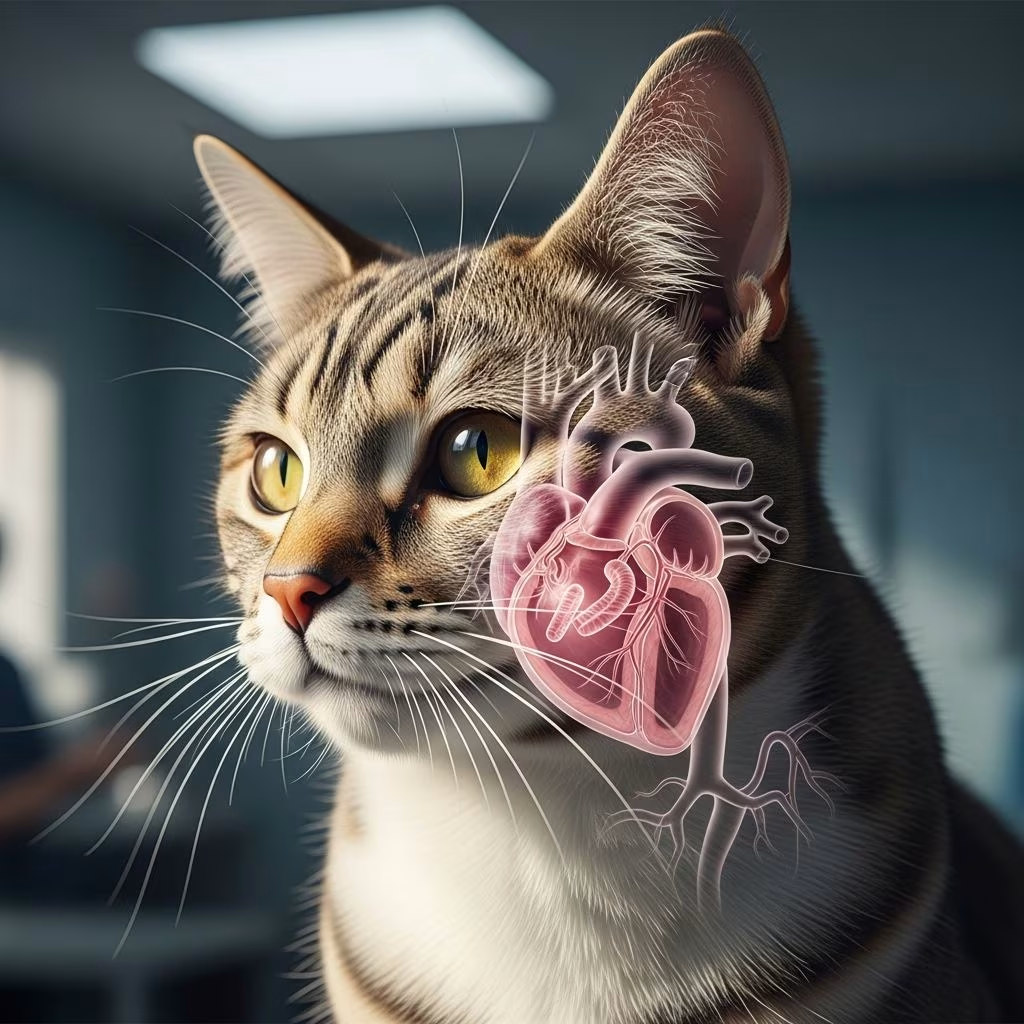
Heartworm Disease in Cats: Everything You Need to Know
Heartworm disease is a serious and potentially fatal parasitic infection that affects cats of all ages and lifestyles. While many cat owners believe their indoor felines are protected from heartworms, the reality is that mosquitoes—the primary vector for heartworm transmission—can easily enter homes and transmit the parasite to unsuspecting cats. Understanding heartworm disease, recognizing its symptoms, and implementing preventive measures are essential components of responsible cat ownership and feline health management.
What Is Heartworm Disease?
Heartworm disease is caused by a parasitic worm called Dirofilaria immitis. Unlike in dogs, where adult heartworms can grow up to a foot in length and live for five to seven years, heartworms in cats are typically shorter and have a considerably shorter lifespan of two to four years. However, this difference does not diminish the severity of the disease in felines. Because cats have smaller blood vessels and hearts compared to dogs, the damage inflicted by heartworms is proportionally more severe, making heartworm disease potentially more dangerous for cats than for dogs.
A single infected mosquito bite can transmit heartworm larvae to your cat. Cats infected with heartworms typically harbor only a handful of adult worms, whereas dogs can have hundreds. Despite the lower worm burden, even a few heartworms can cause significant and life-threatening health complications in felines due to their smaller body size and heightened immune response to the parasites.
How Is Heartworm Transmitted?
Heartworm transmission occurs exclusively through mosquito bites. The process begins when a mosquito ingests microfilariae (heartworm larvae) from an infected animal’s bloodstream. Inside the mosquito, the larvae develop into infective L3 larvae over approximately 10-14 days. When the infected mosquito bites a cat, it transfers the infective L3 larvae through its saliva into the bite wound.
Once inside the cat’s tissues, the L3 larva remains for three to four days before undergoing its third molt to become L4. The L4 stage persists in the tissues for approximately two months while the larva continues to develop. Eventually, the larvae migrate to the pulmonary arteries and heart, where they mature into adults capable of reproducing. This entire developmental process typically takes four to six months from the initial mosquito bite to the presence of adult worms in the heart.
It is crucial to understand that cats do not need to be exposed to other infected cats or dogs to contract heartworm disease. Exposure to a single infected mosquito is sufficient for transmission. Indoor cats are not immune to heartworm simply because they live indoors—infected mosquitoes can easily enter homes through open doors, windows, or other small openings.
Stages of Heartworm Disease in Cats
The American Heartworm Society divides heartworm disease in cats into two distinct stages, each with different clinical implications and risks.
Stage 1: Acute Inflammatory Response
Stage 1 occurs when immature L5 worms arrive in the pulmonary arteries, with many of them dying shortly after arrival. This stage triggers a severe, acute inflammatory reaction as the cat’s blood vessels and heart respond to the parasite and dying worms. Veterinarians and researchers refer to this acute inflammatory process as heartworm-associated respiratory disease (HARD). During this phase, many cats experience respiratory distress that is often misdiagnosed as feline asthma or other respiratory conditions.
As the living worms mature, the inflammatory response gradually lessens, partially because the adult worms actively suppress the cat’s immune system. However, this suppression does not eliminate the threat posed by the infection.
Stage 2: Adult Worm Death and Complications
Stage 2 occurs when adult heartworms die, invoking a highly inflammatory and often anaphylactic response that can be fatal. Dead worms trigger a strong pulmonary inflammatory cascade. Because cats have small and narrow blood vessels, this inflammatory response can cause severe complications including pulmonary thromboembolism (blood clots in the lungs), respiratory distress, and shock. The death of heartworms represents the most dangerous period for an infected cat, and many cats do not survive this stage without immediate veterinary intervention.
Symptoms of Heartworm Disease in Cats
Clinical signs of heartworm disease vary greatly in severity, and many infected cats may display no obvious symptoms at all. Most noticeable symptoms result from adult heartworms dying or from abnormal worm migration causing tissue damage. When cats do show signs of illness, veterinarians commonly observe the following:
- Exercise intolerance
- Difficulty breathing or rapid breathing
- Open-mouth breathing
- Coughing or wheezing
- Vomiting or decreased appetite
- Weight loss
- Lethargy or lack of energy
- Neurologic abnormalities, including difficulty walking (ataxia) and possible seizures
- Sudden death
The nonspecific nature of these symptoms makes heartworm disease challenging to diagnose based on clinical signs alone. Many cat owners mistake heartworm symptoms for feline asthma, allergies, or other common respiratory conditions. Sudden death may be the first indication that a previously asymptomatic cat had contracted heartworm disease, particularly if death occurs during the stage when adult worms die and trigger a severe inflammatory response.
Diagnosis of Heartworm Disease in Cats
Diagnosing heartworm disease in cats is more complicated than in dogs because cats typically have low numbers of circulating microfilariae, and no single test is completely reliable. Veterinarians typically employ a combination of tests to gather comprehensive diagnostic information.
Heartworm Antibody Test
The heartworm antibody test determines if the cat’s immune system has been exposed to heartworms. A positive test may indicate that an active infection is present. However, cats who have had heartworms but whose heartworms have died will also have antibodies for an unknown duration. Additionally, cats with mature larvae that are not yet adults and cats with adult heartworms in locations other than the heart may also test positive with the antibody test. This test is relatively sensitive and is typically used first in the diagnostic process.
Heartworm Antigen Test
If the antibody test is positive, an antigen test is typically performed. The antigen test detects proteins specific to adult female heartworms. A positive antigen test combined with a positive antibody test strongly suggests active heartworm infection. Ideally, veterinarians perform both antibody and antigen tests to gather the most complete information about a cat’s heartworm status.
Additional Diagnostic Tools
Chest radiographs (X-rays) and echocardiograms provide visual confirmation of heartworm disease and help assess the extent of damage to the lungs and heart. These imaging studies can reveal characteristic changes consistent with heartworm infection and help guide treatment decisions.
Treatment Options for Heartworm Disease in Cats
Unlike dogs, for which FDA-approved heartworm treatments exist, there are no medications—FDA-approved or otherwise—that effectively treat adult heartworms in cats. This fundamental difference makes heartworm management in cats significantly more challenging than in dogs. Without medication therapy or surgery, there is no cure for heartworm disease in cats. Instead, treatment focuses on managing clinical signs and providing supportive care while hoping the cat outlives the worms.
Symptomatic Treatment Approach
When cats are experiencing respiratory distress or other clinical signs related to heartworm disease, they are typically treated with oxygen therapy and corticosteroids such as prednisolone or dexamethasone to relieve inflammation occurring in the pulmonary arteries and lungs. If pulmonary edema (fluid in the lungs) develops, diuretics may be administered to remove excess fluid. Once the cat’s condition stabilizes, continuous or periodic corticosteroid treatment may continue to manage inflammation and prevent complications.
Ivermectin Therapy
Ivermectin is a medication that can reduce worm loads when given over an extended period of two years or more. However, this medication carries potential side effects in cats, including allergic shock or inflammatory reactions. Because of these risks and the extended treatment timeline required, ivermectin is not universally recommended for all heartworm-positive cats.
Surgical Intervention
In rare cases where adult heartworms are identified in accessible locations, surgical removal may be attempted. However, this approach is uncommon and carries significant surgical risks.
Recovery and Long-Term Management
The prognosis for heartworm-positive cats varies considerably depending on factors such as the number of worms present, the cat’s immune response, and when the infection is detected. The median survival time for cats with heartworm disease is approximately one and a half to four years. Veterinarians will cautiously declare a cat “recovered” from heartworm disease once blood tests are negative and clinical and radiological signs have resolved.
All heartworm-positive cats should have serologic testing, echocardiograms, and chest radiographs performed every six to 12 months to monitor their heartworm status, regardless of whether they received treatment or were initially asymptomatic. This ongoing monitoring allows veterinarians to assess disease progression and adjust treatment protocols as needed.
Managing heartworm-positive cats for success involves close monitoring, in-depth discussions with veterinarians about treatment options and prognosis, and a thorough understanding of the risks posed by heartworm disease. Pet owners must maintain realistic expectations regarding their cat’s long-term health and quality of life.
Prevention of Heartworm Disease in Cats
Heartworm is a scary but preventable disease. Fortunately, several heartworm medications for cats are available on the market, and prevention is safe and highly effective. Many preventative medications also help prevent intestinal worms, fleas, and tick infestations, providing comprehensive parasite protection.
Available Prevention Medications
According to the American Heartworm Society, heartworm prevention in cats can be achieved through monthly doses of either ivermectin or milbemycin oxime administered orally, or topical applications of moxidectin or selamectin. These medications work by preventing heartworm larvae from developing into adult worms. Cats given heartworm prevention drugs have not shown signs of toxicity, and there is a wide margin of safety, even in kittens as young as six to eight weeks of age.
When to Start Prevention
Kittens can start preventative medications around eight weeks of age and should continue receiving prevention throughout their entire lives. This lifelong approach is essential because heartworm can infect cats at any age, and a lapse in prevention could leave your cat vulnerable to infection.
Indoor Cats and Prevention
A common misconception among cat owners is that indoor cats do not need heartworm prevention because they remain indoors. This belief is dangerously inaccurate. Exposure to mosquitoes is the only requirement for heartworm transmission, and infected mosquitoes can easily enter homes through open doors, windows, screens, and other small openings. An infected mosquito can find its way inside your house and bite your cat just as easily as it would bite an outdoor cat. Therefore, all cats in heartworm-endemic areas should receive year-round heartworm prevention, regardless of their indoor or outdoor status.
Frequently Asked Questions
Q: Can indoor cats get heartworm disease?
A: Yes, indoor cats can contract heartworm disease. Mosquitoes can enter homes through doors, windows, and small openings, allowing them to bite indoor cats and transmit heartworm larvae.
Q: Is there a cure for heartworm disease in cats?
A: No cure exists for heartworm disease in cats. Treatment focuses on managing symptoms and hoping the cat outlives the worms. Adult worms typically live two to four years in cats.
Q: How is heartworm transmitted to cats?
A: Heartworm is transmitted exclusively through mosquito bites. An infected mosquito transfers heartworm larvae into a cat’s bloodstream when it bites, initiating the infection cycle.
Q: What is the most dangerous stage of heartworm disease in cats?
A: The most dangerous stage occurs when adult heartworms die, triggering a severe inflammatory response that can be fatal. This stage requires immediate veterinary intervention.
Q: Can heartworm prevention medications harm my cat?
A: Heartworm prevention medications are safe for cats when used as directed. There is a wide margin of safety, and even kittens as young as six weeks can safely receive prevention.
Q: How often should I give my cat heartworm prevention?
A: Most heartworm prevention medications for cats are administered monthly. Your veterinarian will recommend the appropriate prevention schedule based on your location and lifestyle.
Q: Are some cats more susceptible to heartworm than others?
A: While heartworm can infect any cat, those living in warm, humid climates with high mosquito populations face greater risk. Geographic location and outdoor exposure increase susceptibility.
References
- Heartworm Disease in Cats: Symptoms, Treatment, and Prevention — PetMD. Accessed November 28, 2025. https://www.petmd.com/cat/conditions/infectious-parasitic/c_ct_heartworm_disease
- Heartworm Disease in Cats — VCA Animal Hospitals. Accessed November 28, 2025. https://vcahospitals.com/know-your-pet/heartworm-disease-in-cats
- Heartworm Disease in Cats – Cat Owners – Merck Veterinary Manual — Merck & Co. Accessed November 28, 2025. https://www.merckvetmanual.com/cat-owners/heart-and-blood-vessel-disorders-of-cats/heartworm-disease-in-cats
- Heartworm Disease in Cats: Signs, Treatment, and Prevention — Just Cats Clinic. Accessed November 28, 2025. https://justcatsclinic.com/heartworm-disease-in-cats-signs-treatment-and-prevention/
- Feline Guidelines Summary — American Heartworm Society. Accessed November 28, 2025. https://d3ft8sckhnqim2.cloudfront.net/images/pdf/Feline-Guidelines-Summary.pdf



