
Heartworm Disease in Dogs: Symptoms, Diagnosis, Treatment
Complete guide to heartworm disease in dogs: recognize symptoms, understand diagnosis methods, and explore treatment options.
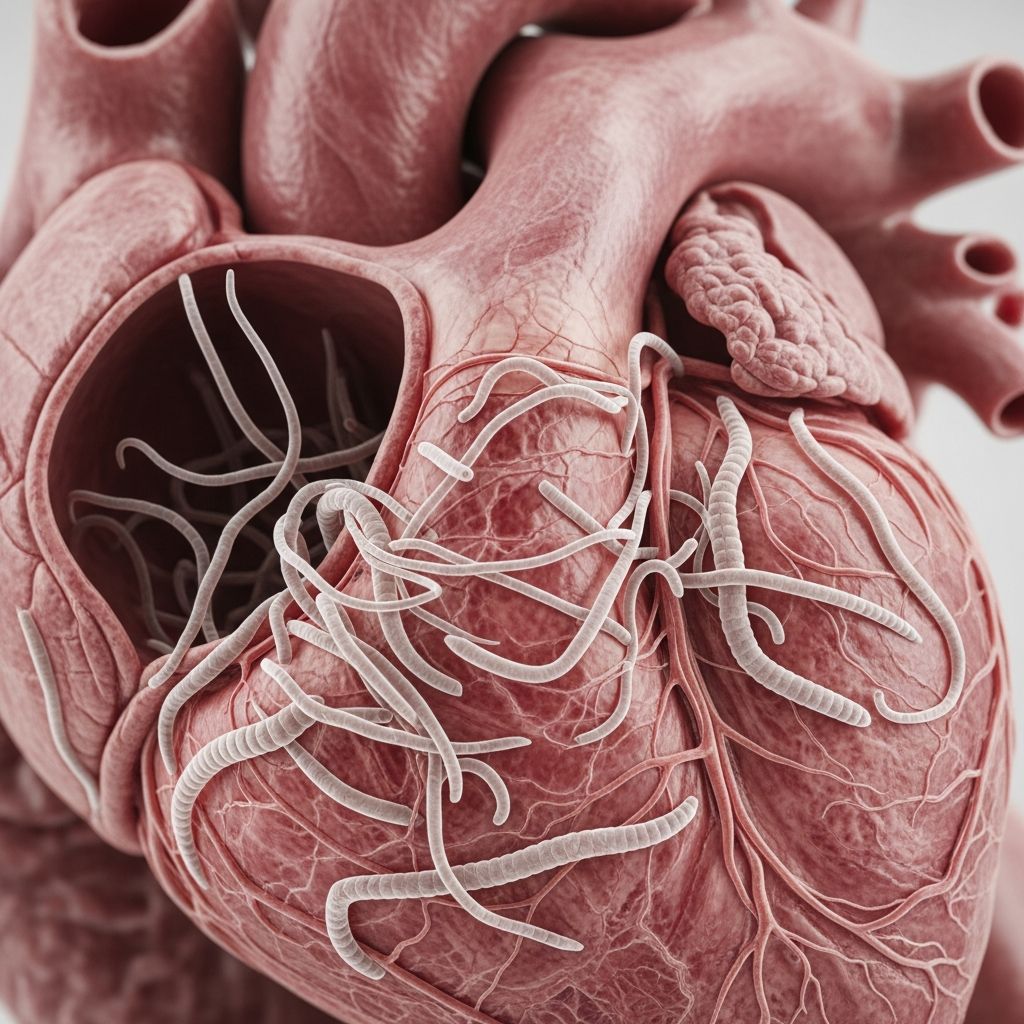
Understanding Heartworm Disease in Dogs
Heartworm disease is a serious and potentially life-threatening parasitic condition that affects dogs throughout North America and beyond. Caused by the parasitic nematode Dirofilaria immitis, this disease is transmitted through mosquito bites and can have devastating consequences if left untreated. The infection occurs when infected mosquitoes transmit heartworm larvae to dogs, where these parasites develop and eventually establish themselves in the heart, lungs, and associated blood vessels. Understanding the nature of this disease, its symptoms, and available treatments is crucial for any dog owner committed to their pet’s health and longevity.
The prevalence of heartworm disease has been increasing despite advances in diagnostic capabilities and preventive options. A 2016 American Heartworm Society survey reported a 21.7% increase in the average number of dogs diagnosed with heartworm between 2013 and 2016. This upward trend underscores the importance of awareness, prevention, and early detection. Heartworm disease has been documented in dogs across all 50 states in the United States and throughout Canada, including regions where mosquitoes are less prevalent, making it a nationwide concern for dog owners.
How Heartworm Disease Develops
The progression of heartworm disease follows a specific timeline. After a dog is bitten by an infected mosquito, the heartworm larvae begin their journey through the dog’s body. Importantly, at the earliest, heartworm antigenemia (the presence of heartworm antigens in the blood) does not appear until approximately 5 months after infection, while microfilaremia (the presence of heartworm microfilariae) does not appear until approximately 6.5 months after infection. This extended incubation period means that dogs can carry infections for months before they become detectable through standard blood tests.
The larvae mature and migrate through the dog’s tissues over several months, eventually reaching the pulmonary arteries and the heart. Even low worm burdens can produce life-threatening vascular pathology, particularly in smaller breed dogs. The severity of the disease and pathological changes is determined by several factors including the number and viability of heartworms, the host’s immune response, the duration of infection, and the dog’s activity level. Active dogs tend to develop pulmonary hypertension more frequently than inactive dogs for any given heartworm burden, as frequent exertion increases pulmonary arterial pathological changes.
Recognizing Symptoms of Heartworm Disease
Most infected dogs are subclinically affected, meaning they show no obvious symptoms initially. When clinical signs do develop, they vary depending on the disease severity and progression. The presentation of heartworm disease can range from asymptomatic to severely symptomatic.
Common symptoms include:
- Chronic cough, particularly when excited or during exercise
- Exercise intolerance and reluctance to participate in normal activities
- Labored or difficult breathing
- Lethargy and general fatigue
- Weight loss and poor body condition
- Abdominal distention resulting from right-sided heart failure
- Syncope (fainting episodes)
- Cachexia (severe weight loss)
In many cases, dogs have no or only mild clinical signs, and heartworm infection is discovered incidentally during routine blood screening. When clinical signs are present, a cough due to pneumonitis (inflammation of lung tissue) is the most common complaint. Dogs without overt clinical signs usually do not have abnormal physical examination findings, which is why regular screening tests are essential.
More advanced heartworm infections may result in clinical signs related to pneumonitis, pulmonary thrombosis or embolism, pulmonary hypertension, or elevated systemic venous pressures leading to right-sided congestive heart failure (R-CHF). In severe cases, a condition called caval syndrome may develop, which is a consequence of severe pulmonary hypertension and decreased right ventricular function or massive simultaneous maturation of worms. Caval syndrome causes clinical signs of both “backward” (R-CHF) and “forward” (prolonged capillary refill time, poor pulse quality) heart failure and can lead to intravascular hemolysis.
Diagnostic Procedures for Heartworm Detection
In dogs, heartworm infection is ideally identified by serological testing before the onset of clinical signs. However, the timing of testing is critical due to the extended incubation period. Several diagnostic methods are available to veterinarians for detecting heartworm disease.
Blood Tests and Antigen Detection: Serological testing detects heartworm antigens in the blood. These tests are most effective after the 5-month mark post-infection when antigenemia develops. Modern antigen tests are highly sensitive and specific, making them reliable for diagnosis. Veterinarians typically recommend annual screening for all dogs, with more frequent testing for dogs in high-risk areas or those not on consistent preventive medication.
Microfilariae Testing: Another blood test method involves detecting microfilariae (immature heartworms) in the bloodstream. These become detectable approximately 6.5 months after infection. However, microfilariae testing is less reliable than antigen detection because some infected dogs may have low or undetectable microfilariae levels.
Imaging Studies: In dogs with clinical signs, thoracic radiography provides the most information on disease severity and is particularly important for patient assessment. Radiographs can reveal characteristic changes including a large main pulmonary artery segment, dilated and tortuous caudal lobar pulmonary arteries, and right ventricular enlargement, all indicative of pulmonary hypertension. With pulmonary thrombosis or embolism and pneumonitis, ill-defined parenchymal infiltrates typically surround the caudal lobar arteries.
Echocardiography: Findings on echocardiography are usually normal in infected dogs; however, right ventricular hypertrophy patterns may be observed in severe, chronic pulmonary hypertension cases. This imaging technique is valuable for assessing cardiac function and identifying structural changes associated with advanced disease.
Treatment Options for Heartworm Disease
Treatment of heartworm disease is a complex and potentially risky process that requires careful veterinary management. Standard treatment involves administering a series of injections with medications that kill the adult heartworms. The most commonly used medication is melarsomine, an organic arsenic compound. Additionally, chronic use of certain macrocyclic lactones combined with doxycycline has proven effective in treating heartworm infections.
Doxycycline Administration: Doxycycline is indicated when treating dogs with heartworm infection regardless of disease severity classification. This antibiotic is effective at killing migrating tissue-phase heartworms during the L3/L3-L4 molt and L4 stages of development. Importantly, microfilariae picked up from dogs that have received the recommended course of doxycycline will mature to L3 within the mosquito, yet the resulting L3 will not be capable of establishing a successful infection in the next dog, effectively breaking the transmission cycle.
Treatment Challenges and Complications: Treatment for heartworm disease is unpleasant and carries significant risks for dogs. Many dogs experience severe flu-like symptoms for several days after each injection and may be ill enough to require hospitalization. The adult heartworms in the vascular system trigger a significant immune response as they die and break down to be absorbed by the body, a process which takes several months. Anything that elevates the dog’s heart rate, including exercise, increases the risk that dead and dying worms get pushed into small blood vessels, where they can cause potentially life-threatening complications.
Exercise Restriction During Recovery: An important step for reducing treatment-associated risk is exercise restriction for several months. This means limiting the dog to only short walks on a leash—a requirement that many owners find very difficult to maintain, especially since their dog may not be acting sick. Despite successful adulticidal therapy in a primary care setting, dogs previously diagnosed with heartworm disease still face increased risk of cardiac pathology over time compared with dogs never diagnosed with heartworm disease.
Long-term Prognosis: While heartworm disease is treatable, if the heart has been severely damaged, some of the damage may not be reversible. The long-term cardiac outcomes depend on the disease’s severity at the time of diagnosis, the dog’s age and overall health, and the success of treatment. This reality emphasizes the critical importance of prevention rather than treatment.
Prevention Strategies
Prevention is far superior to treatment when it comes to heartworm disease. FDA-approved heartworm prevention products are the only proven way to prevent heartworms in dogs. The best way to protect dogs against heartworm disease is by using heartworm prevention as directed by a veterinarian. It is safer and more cost-effective to use year-round heartworm prevention rather than risk heartworm infection.
Research demonstrates the effectiveness of preventive approaches: dogs receiving no heartworm preventive were 2.7 times more likely to be positive compared to dogs receiving monthly heartworm preventives and 6.7 times more likely to be positive compared to dogs previously prescribed an injectable heartworm preventive. Consistency in preventive use is crucial. Dogs even with a history of lapses in heartworm preventive purchases had a reduced risk of positive heartworm tests compared to dogs having no history of a heartworm preventive purchase within six to 24 months prior to testing. These findings highlight that any heartworm medication is better than no preventive approach, though the goal should be to maintain year-round prevention as recommended by the American Heartworm Society.
Preventive medications typically contain macrocyclic lactones, which are effective at preventing heartworm development when administered consistently. Available preventive options include monthly oral or topical applications and injectable preventives. Injectable options offer a convenient alternative for owners who struggle with monthly compliance, providing extended protection with a single injection.
Common Myths About Heartworm Disease
Several misconceptions persist about heartworm disease that can lead to inadequate protection for dogs. One prevalent myth is that heartworm prevention isn’t necessary year-round. In reality, heartworm disease has been diagnosed in dogs in all 50 US states and across Canada, even in colder climates where mosquitoes are less common. Another common misconception is that heartworm disease is not a serious condition. This couldn’t be further from the truth. Heartworm infection is a serious disease that can be fatal if left untreated.
Frequently Asked Questions
Q: How long does it take to show symptoms of heartworm disease?
A: Heartworm antigenemia does not appear until approximately 5 months after infection, and microfilaremia does not appear until approximately 6.5 months after infection. Many dogs may not show clinical symptoms for months or even years, depending on disease progression and individual factors.
Q: Can heartworm disease be cured?
A: Heartworm disease is treatable with appropriate veterinary care using medications like melarsomine combined with doxycycline. However, if the heart has been severely damaged, some of the damage may not be reversible. Prevention is always preferable to treatment.
Q: Is heartworm prevention safe?
A: Yes, FDA-approved heartworm prevention products have excellent safety profiles when administered as directed by a veterinarian. They are much safer than the risks associated with actual heartworm infection and its treatment.
Q: What regions are most affected by heartworm disease?
A: Heartworm disease has been diagnosed in dogs in all 50 US states and across Canada. While warmer regions with higher mosquito populations have higher prevalence rates, no region is completely free of the risk.
Q: How often should my dog be tested for heartworm?
A: Most veterinarians recommend annual heartworm screening for all dogs. Dogs not on consistent preventive medication or living in high-risk areas may benefit from more frequent testing.
Q: How much does heartworm treatment cost?
A: Treatment for heartworm disease can be expensive and often takes several months to more than a year to complete. The cost far exceeds the expense of year-round preventive medication, making prevention the more economical choice.
References
- Heartworm Disease in Dogs, Cats, and Ferrets – Circulatory System — MSD Veterinary Manual. Accessed 2025. https://www.msdvetmanual.com/circulatory-system/heartworm-disease/heartworm-disease-in-dogs-cats-and-ferrets
- Prevention and Long-Term Outcomes of Naturally Occurring Canine Heartworm Disease — National Center for Biotechnology Information (NCBI). 2024. https://pmc.ncbi.nlm.nih.gov/articles/PMC10825951/
- Retrospective Analyses of Heartworm (Dirofilaria immitis) Disease — National Center for Biotechnology Information (NCBI). 2023. https://pmc.ncbi.nlm.nih.gov/articles/PMC10142219/
- Is Heartworm Prevention in Dogs Necessary? — Vetster. Accessed 2025. https://vetster.com/en/wellness/is-heartworm-prevention-in-dogs-necessary
- Heartworm Disease in Dogs — Vetstreet. Accessed 2025. https://www.vetstreet.com/care/heartworm-disease-in-dogs
- Facts to Know About Heartworm Disease in Dogs and Cats — Vetstreet. Accessed 2025. https://www.vetstreet.com/our-pet-experts/facts-to-know-about-heartworm-disease
- What Pet Owners Need to Know About Heartworm — Virginia Tech College of Veterinary Medicine. 2023. https://vetmed.vt.edu/news/2023/heartworm-information.html


Read full bio of Sneha Tete




