

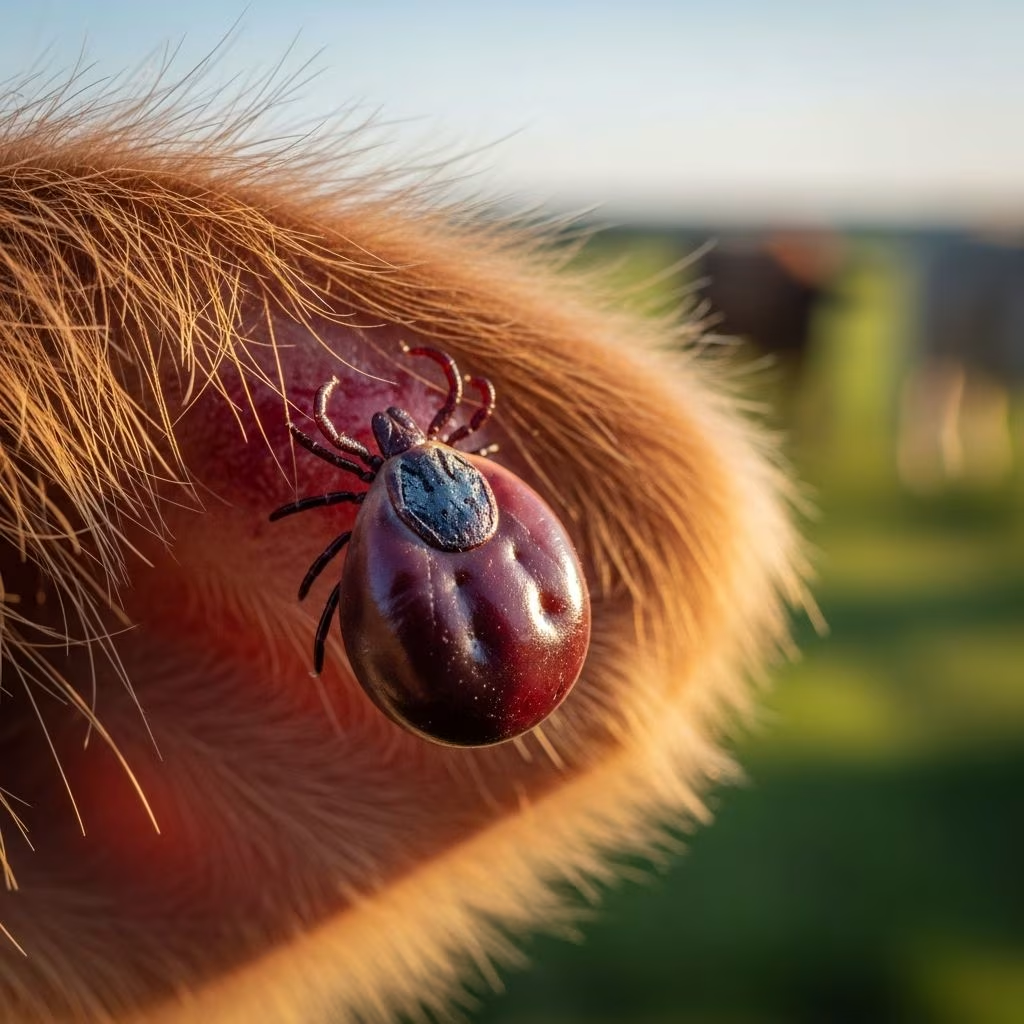
Heartwater, also known as cowdriosis, stands as one of the most severe tick-transmitted bacterial infections impacting ruminant animals across tropical and subtropical areas. Caused by the intracellular bacterium Ehrlichia ruminantium, this disease leads to high fever, neurological disturbances, and often fatal outcomes if not addressed promptly. Primarily affecting cattle, sheep, goats, and certain wild ruminants, heartwater inflicts substantial economic losses through mortality rates that can reach 90% in susceptible populations.
The Pathogen Behind the Disease
The causative agent, Ehrlichia ruminantium (previously classified as Cowdria ruminantium), is an obligate intracellular bacterium that targets the endothelial cells lining blood vessels. This pathogen thrives within the vascular system, particularly in vessels of the brain, heart, and major veins like the jugular and vena cava. Its presence triggers vasculitis, fluid accumulation, and organ failure, explaining the disease’s name derived from hydropericardium observed in autopsies.
Strains of the bacterium vary in virulence, with some causing peracute forms leading to sudden death, while others result in subacute or chronic infections. Indigenous breeds in endemic regions often develop partial immunity, reducing mortality to under 10%, whereas introduced exotic breeds face devastating losses.
Transmission Dynamics and Vector Biology
Heartwater spreads exclusively through the bite of infected Amblyomma ticks, commonly called bont ticks. These three-host ticks—Amblyomma hebraeum in southern Africa and Amblyomma variegatum in West Africa—are the primary vectors. Transmission is transtadial, meaning the bacteria pass from larva to nymph to adult stages within the tick without needing a blood meal for each stage.
Intravascular transmission can occur rapidly; nymphs can infect hosts within hours of attachment. Adult ticks pose a greater risk due to their longer feeding periods. The disease is not directly contagious between animals, but vertical transmission via colostrum or in utero has been documented, necessitating removal of calves from infected dams.
- Key vectors: Amblyomma hebraeum, Amblyomma variegatum, Gulf Coast tick (Amblyomma maculatum) in potential outbreak zones.
- Geographic hotspots: Sub-Saharan Africa, Caribbean islands (via infected ticks on wildlife).
- Seasonal peaks: Rainy seasons when tick populations surge.
Clinical Manifestations Across Disease Forms
Heartwater presents in peracute, acute, subacute, and subclinical forms, with incubation periods ranging from 7-35 days in sheep and 9-29 days in cattle. Early detection hinges on recognizing fever as the first sign, often exceeding 40-41°C.
Peracute Form
This rapid-onset variant, rare but lethal, strikes non-native sheep breeds hardest. Animals show brief fever, severe respiratory distress, hypersensitivity, tearing, explosive diarrhea, and sudden collapse without prior neurological signs.
Acute Form
The most common presentation begins with high persistent fever (4-5 weeks), anorexia, listlessness, and pulmonary edema causing labored breathing. Neurological progression includes high-stepping gait, circling, head pressing, paddling limbs, convulsions, and opisthotonus (head pulled back). Frothy saliva at mouth and nostrils signals terminal stages.
Subacute and Subclinical Forms
In endemic areas, recovered animals or indigenous breeds may exhibit mild fever, transient diarrhea (notable in cattle), or no symptoms, conferring carrier status and lifelong immunity.
| Form | Key Signs | Affected Species | Mortality Risk |
|---|---|---|---|
| Peracute | Sudden death, respiratory distress, diarrhea | Exotic sheep | Near 100% |
| Acute | Fever, neuro signs, edema | Cattle, sheep, goats | 30-90% |
| Subacute | Mild fever, diarrhea | Indigenous breeds | <10% |
Pathological Changes at Necropsy
Postmortem examinations reveal hallmark hydropericardium (fluid around the heart), hydrothorax, and hydroperitoneum. The spleen is enlarged and edematous, with petechial hemorrhages on endocardium, mucosa of stomach/intestines, trachea, and lymph nodes. Brain vessels show congestion, and lungs exhibit edema.
Blood appears thin and watery, with endothelial smears from brain or jugular veins containing morulae (bacterial clusters).
Diagnostic Approaches
Diagnosis combines clinical observation, tick presence, and lab confirmation. Essential steps include:
- Temperature checks: Fever >40°C prompts action.
- Blood/brain smears: Giemsa-stained endothelial cells reveal colonial masses of bacteria.
- PCR assays: Detect E. ruminantium DNA in blood or tissues (gold standard for research).
- Postmortem: Fluid accumulations and hemorrhages differentiate from tetanus, rabies, or babesiosis.
Differential diagnoses encompass anaplasmosis (jaundice prominent), theileriosis, pneumonia, and nervous system disorders like listeriosis.
Treatment Protocols and Success Factors
Early intervention is critical—tetracyclines like oxytetracycline (10 mg/kg) or doxycycline (2 mg/kg) must be given by day 2 post-fever onset for efficacy. Single doses often suffice if timely. Supportive care includes fluids, anti-inflammatories, and stress reduction.
- Primary drugs: Oxytetracycline LA (long-acting), imidocarb (though less common for heartwater), sulfadimidine.
- Dosage example: Tetracycline 10-20 mg/kg IM/IV daily for 3 days.
- Prognosis: Excellent if treated early; poor once neuro signs appear.
Outbreaks demand isolation, herd treatment, and vet consultation.
Prevention and Control Strategies
Integrated management focuses on vector control, strategic treatments, and immunity building.
Tick Management
Regular acaricide dipping (every 14-21 days), pour-ons, and pasture spelling reduce tick burdens. Rotate chemicals to prevent resistance.
Vaccination
Attenuated live vaccines (e.g., Ball 3 strain) induce sterile immunity in calves/sheep over 3 months. Inactivated vaccines offer limited cross-protection. Endemic stability—exposing young stock to low virulent strains—protects herds naturally.
Herd Management
Quarantine new animals, use tick-free zones, and monitor daily for fever. Cease breeding during outbreaks; opt for AI with clean semen.
| Strategy | Benefits | Challenges |
|---|---|---|
| Acaricide dips | Reduces transmission | Resistance, environmental impact |
| Vaccination | Long-term immunity | Strain-specific, cold chain |
| Endemic stability | Low-cost, natural | Requires tick presence |
Economic and Global Impact
In Africa, heartwater causes millions in losses annually, curtailing livestock trade and intensification. Eradication efforts in the Caribbean have succeeded via tick control and culling. Potential U.S. incursion via Gulf Coast ticks necessitates vigilant surveillance.
FAQs on Heartwater Disease
What animals are most at risk from heartwater?
Cattle, sheep, and goats, especially exotic breeds; young calves under 4 weeks are resistant.
Can heartwater be transmitted without ticks?
No direct animal-to-animal spread, but possible via colostrum or needles.
How do I know if my herd has heartwater?
Look for fever, listlessness, neuro signs; confirm with smears or PCR.
Is there a vaccine available?
Yes, live attenuated vaccines in endemic areas; consult local vets.
What if I spot ticks on my livestock?
Dip immediately and monitor for fever; contact a veterinarian.
Future Directions in Research and Management
Ongoing studies focus on broad-spectrum vaccines covering multiple strains, recombinant subunit vaccines, and tick genome editing for control. Climate change may expand vector ranges, urging global preparedness. Farmers should prioritize biosecurity and collaborate with extension services for sustainable practices.
References
- Heartwater (Cowdriosis) Disease in Cattle — Bivatec. 2023. https://www.bivatec.com/blog/bovine-trichomoniasis-anaplasmosis-and-heartwater-diseases-in-cattle
- Heartwater Disease in Livestock — Virbac South Africa. 2024. https://za.virbac.com/home/every-health-care/pagecontent/every-advices/tick-borne-disease-related-articles/heartwater-disease-in-livestock.html
- Heartwater Standard Operating Procedures — USDA APHIS. 2022-10-01. https://www.aphis.usda.gov/sites/default/files/sop_heartwater_e-e.pdf
- Prevention Practices for Heartwater — CFSPH, Iowa State University. 2023. https://www.cfsph.iastate.edu/Infection_Control/FADs/Heartwater_PrevPrac.pdf
- Early and Effective Treatment of Heartwater — YouTube (Vet Channel). 2024. https://www.youtube.com/watch?v=hgRrY2mdvzo
- Heartwater Datasheet — CABI Compendium. 2024-01-15. https://www.cabidigitallibrary.org/doi/full/10.1079/cabicompendium.87241
- Heartwater Disease Profile — WOAH (World Organisation for Animal Health). 2025. https://www.woah.org/en/disease/heartwater/



