

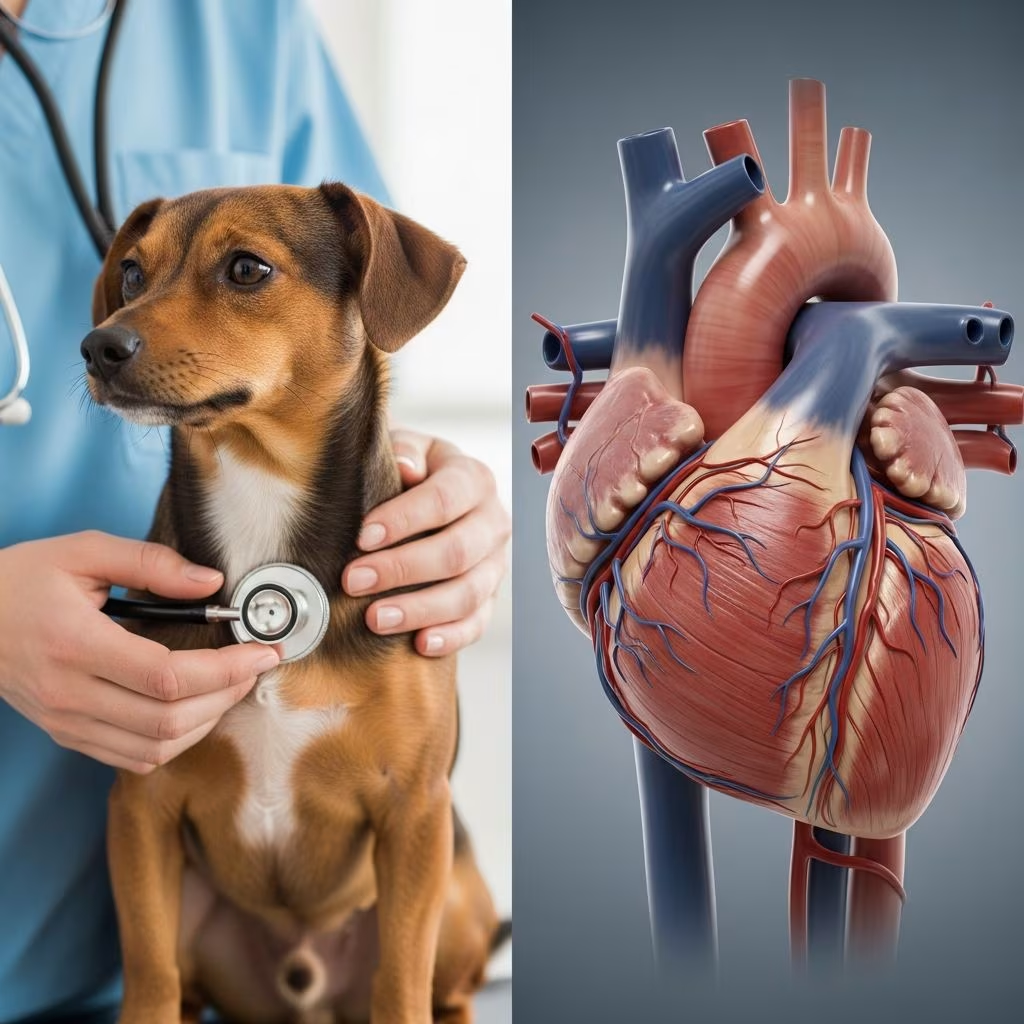
Cardiomyopathies represent a group of serious conditions where the heart muscle weakens or changes structure, impairing its ability to pump blood effectively. These diseases primarily affect dogs and cats, leading to potential heart failure, arrhythmias, or sudden complications like blood clots. Understanding these disorders is crucial for pet owners to recognize early signs and seek timely veterinary care.
Understanding the Basics of Pet Cardiomyopathies
The heart’s myocardium, or muscle layer, is essential for contracting and relaxing to circulate blood. In cardiomyopathies, this muscle becomes diseased, often without an identifiable external cause, making them primary myocardial disorders. While some cases link to genetic mutations, many remain idiopathic. Pets may show no symptoms initially, complicating early detection.
These conditions differ from secondary heart issues caused by infections, toxins, or metabolic diseases. For instance, nutrient deficiencies like taurine can mimic dilated forms but resolve with supplementation. Accurate classification relies on imaging and clinical evaluation to distinguish primary from secondary types.
Primary Types of Cardiomyopathies in Companion Animals
Veterinary medicine classifies cardiomyopathies based on structural and functional changes observed via echocardiography. Key phenotypes include:
- Dilated Cardiomyopathy (DCM): The heart chambers enlarge and walls thin, reducing pumping efficiency. Common in large dog breeds.
- Hypertrophic Cardiomyopathy (HCM): Walls thicken, particularly the left ventricle, stiffening the heart and hindering filling. Predominant in cats.
- Arrhythmogenic Right Ventricular Cardiomyopathy (ARVC): Fatty or fibrous tissue replaces right ventricle muscle, causing irregular rhythms.
- Restrictive Cardiomyopathy (RCM): Rigid ventricles impair filling, leading to backup of blood.
- Nonspecific Phenotype: When features don’t fit neatly into other categories, especially in cats.
| Type | Primary Species Affected | Main Features |
|---|---|---|
| DCM | Dogs (large breeds) | Enlarged chambers, thin walls, systolic dysfunction |
| HCM | Cats | Thickened walls, diastolic dysfunction |
| ARVC | Dogs, some cats | Right ventricle infiltration, arrhythmias |
| RCM | Cats | Stiff ventricles, atrial enlargement |
This table summarizes structural hallmarks, aiding in differentiation during diagnosis.
Breed Predispositions and Genetic Factors
Certain breeds face higher risks due to inherited traits. In dogs, DCM frequently strikes Dobermans, Great Danes, Boxers, and Irish Wolfhounds, with genetic mutations identified in some lines. Smaller breeds like Cavalier King Charles Spaniels may develop related valve issues, but DCM is rarer.
Cats with HCM include Maine Coons, where a specific genetic mutation affects up to 33% of individuals, causing early-onset disease. Ragdolls and American Shorthairs also show predispositions. Siamese cats may experience dilated forms or congenital defects like patent ductus arteriosus.
Mixed breeds can develop these conditions, emphasizing the need for routine screenings regardless of pedigree. Genetic testing is advancing, allowing breeders to reduce prevalence through selective practices.
Clinical Signs and Symptom Progression
Early stages often lack obvious signs, with pets appearing healthy. Subtle indicators include lethargy, reduced appetite, or faint heart murmurs detected during exams. As disease advances, symptoms escalate:
- Coughing or rapid breathing from fluid in lungs (pulmonary edema).
- Abdominal swelling (ascites) due to right-sided failure.
- Exercise intolerance and fainting episodes.
- Irregular heartbeats causing weakness or collapse.
- In cats, sudden hindlimb paralysis from aortic thromboembolism (ATE), a clot blocking blood flow.
Hypothermia from poor circulation is common in advanced feline cases. Owners should monitor for these red flags and consult vets promptly.
Diagnostic Approaches for Accurate Assessment
Diagnosis begins with a thorough physical exam, auscultation for murmurs or gallops, and history review. Essential tools include:
- Echocardiography: Gold standard for visualizing wall thickness, chamber size, and function.
- Chest Radiographs: Detect enlargement or fluid buildup.
- Electrocardiography (ECG): Identifies arrhythmias.
- Blood Tests: Rule out secondary causes like hyperthyroidism or taurine deficiency.
- NT-proBNP: Biomarker for heart stress, useful in screening.
Conditions like hypertension or hyperthyroidism must be excluded, as they cause similar thickening. Advanced imaging differentiates nonspecific cases.
Staging Systems for Prognosis and Management
The ACVIM provides a structured staging for cardiomyopathies in cats and myxomatous valve disease in dogs, guiding therapy:
- Stage A: At-risk pets with no structural changes (e.g., predisposed breeds).
- Stage B: Structural disease without symptoms; subdivided into B1 (low risk) and B2 (higher risk with severe changes).
- Stage C: Current or past heart failure signs; treatable with good quality of life possible.
- Stage D: Refractory failure, requiring aggressive intervention; poor prognosis.
Staging informs tailored plans, improving outcomes by intervening early.
Treatment Strategies and Supportive Care
No cure exists, but management controls symptoms and slows progression. Common therapies include:
- Diuretics: Furosemide reduces fluid overload.
- ACE Inhibitors: Improve blood flow and reduce workload.
- Beta-Blockers or Calcium Channel Blockers: Control heart rate in HCM.
- Antiarrhythmics: Stabilize rhythms.
- Anticoagulants: Prevent clots in cats.
Diet plays a role: low-sodium formulas maintain intake, omega-3s support heart function, and potassium monitoring prevents imbalances. Taurine supplementation aids suspected deficiencies.
Preventive Measures and Long-Term Monitoring
Prevention focuses on breed screening, genetic testing, and annual exams with echoes for at-risk pets. Maintain ideal weight, avoid toxins like xylitol, and ensure balanced nutrition. Early detection via biomarkers like NT-proBNP can identify subclinical disease.
Regular follow-ups adjust treatments as stages progress. Owners should track weight, respiration, and activity, reporting changes immediately.
Frequently Asked Questions (FAQs)
What is the most common cardiomyopathy in cats?
Hypertrophic cardiomyopathy (HCM), characterized by thickened heart walls, affects about 15% of cats.
Can dogs recover from dilated cardiomyopathy?
Some cases, especially taurine-responsive ones, improve with diet changes, but most require lifelong management.[10]
Is sudden death a risk with these diseases?
Yes, particularly in HCM cats due to arrhythmias or clots, though rare.
How do I know if my pet has heart disease?
Look for lethargy, coughing, or rapid breathing; confirm with vet diagnostics like echoes.
Are there home remedies for pet cardiomyopathies?
No; professional veterinary care is essential. Support with vet-recommended diets and meds.
References
- ACVIM consensus statement guidelines for the classification… — Journal of Veterinary Internal Medicine. 2021-10-29. https://onlinelibrary.wiley.com/doi/10.1111/jvim.15745
- The Feline Cardiomyopathies: 1. General concepts — PMC (NCBI). 2021-12-01. https://pmc.ncbi.nlm.nih.gov/articles/PMC8723176/
- Cardiac Conditions — Purina Institute. 2023. https://www.purinainstitute.com/science-of-nutrition/transforming-heart-health/cardiac-conditions
- Overview of Cardiomyopathy in Dogs and Cats — Merck Veterinary Manual. 2023. https://www.merckvetmanual.com/circulatory-system/cardiomyopathy-in-dogs-and-cats/overview-of-cardiomyopathy-in-dogs-and-cats
- Heart Disease in Cats — VCA Animal Hospitals. 2024. https://vcahospitals.com/know-your-pet/heart-disease-cardiomyopathy-in-cats



