

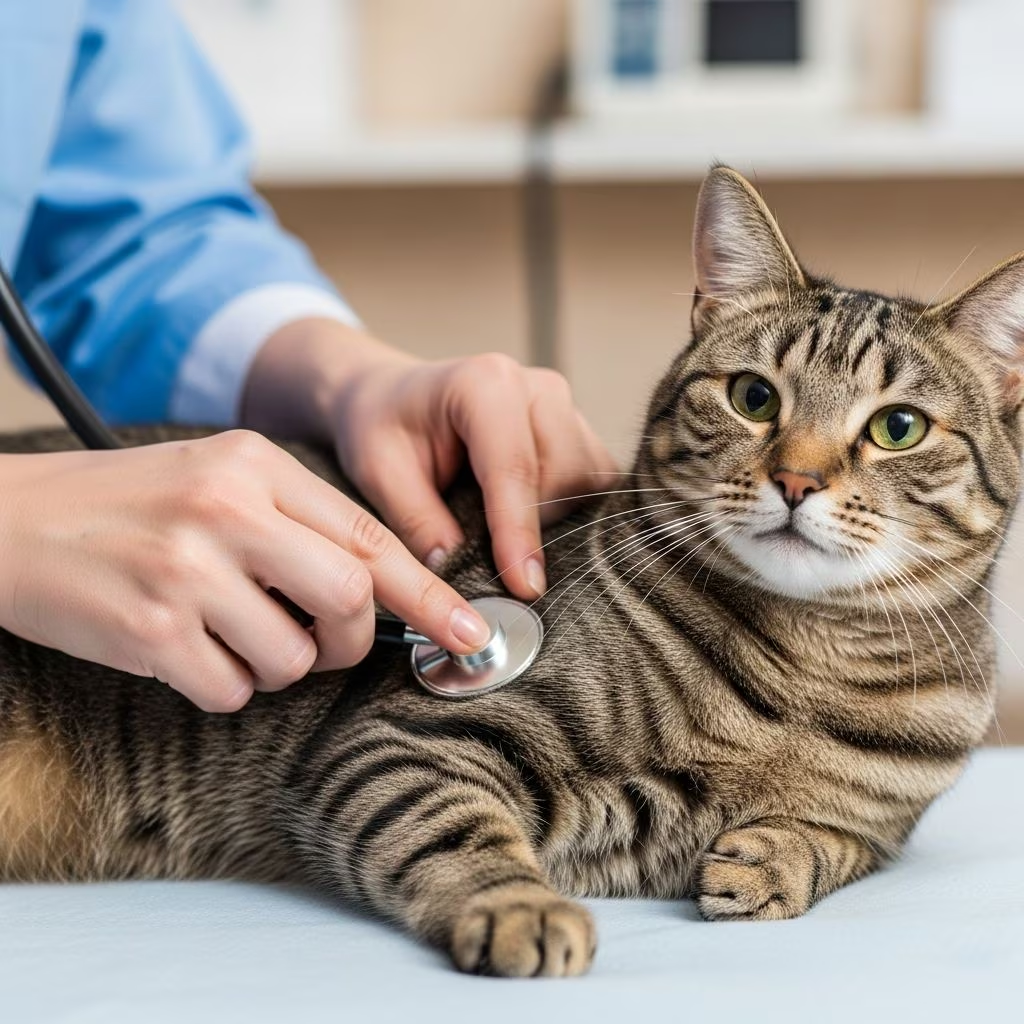
Heart murmurs in cats represent an abnormal sound during the heartbeat cycle, often detected as a whooshing noise via stethoscope. These can range from harmless physiological occurrences to signals of underlying cardiac issues, necessitating prompt veterinary evaluation.
Defining Heart Murmurs: The Basics
A heart murmur occurs when blood flow through the heart becomes turbulent, producing a distinctive sound distinct from the normal lub-dub rhythm. In felines, this turbulence might stem from high flow rates in healthy hearts or structural defects in diseased ones. Unlike dogs, cats often develop murmurs silently, without overt signs until advanced stages.
Physiological murmurs, also called innocent or functional, appear in stressed, excited, or anemic cats and typically resolve without intervention. Pathological murmurs, however, link to conditions like hypertrophic cardiomyopathy (HCM), the leading heart disease in cats, where heart muscle thickens abnormally.
Grading the Intensity: From Whisper to Roar
Veterinarians classify murmurs on a scale of 1 to 6 based on loudness and detectability:
- Grade 1: Barely audible, requiring a quiet environment and skilled ear.
- Grade 2: Soft, heard with careful listening over the heart area.
- Grade 3: Moderately loud, easily detected directly over the heart.
- Grade 4: Prominent, radiating to both chest sides.
- Grade 5: Intense with palpable vibrations (thrill) on the chest wall.
- Grade 6: Extremely loud, audible without direct stethoscope contact.
Higher grades often correlate with severe pathology, though echocardiography confirms true significance.
Common Culprits Behind Feline Heart Murmurs
Several factors provoke murmurs in cats:
- Hypertrophic Cardiomyopathy (HCM): Thickened ventricles impair pumping efficiency, prevalent in breeds like Maine Coons and Ragdolls.
- Hyperthyroidism: Excess thyroid hormone accelerates heart rate, mimicking or exacerbating murmurs.
- Anemia: Reduced red blood cells increase cardiac workload, causing flow turbulence.
- Congenital Defects: Valve malformations or septal holes present from birth.
- Other Causes: Fever, infections, or hypertension.
| Cause | Prevalence | Typical Grade |
|---|---|---|
| HCM | High in adults | 3-6 |
| Hyperthyroidism | Common in seniors | 1-4 |
| Anemia | Variable | 1-3 |
| Congenital | Kittens | 2-5 |
This table summarizes key associations, highlighting HCM’s dominance in symptomatic cases.
Spotting the Warning Signs Early
Many cats with murmurs remain asymptomatic, but clinical ones exhibit:
- Progressive weight loss despite normal eating.
- Lethargy or reluctance to play.
- Labored or rapid breathing, even at rest.
- Pale or bluish gums indicating poor oxygenation.
- Reduced appetite and muscle wasting.
- Weak pulses or irregular rhythms signaling advanced disease.
In congestive heart failure (CHF), fluid accumulates in lungs or abdomen, causing coughing, fainting, or hind-limb paralysis from thromboembolism. Kittens may show stunted growth.
Diagnostic Journey: Confirming the Murmur’s Source
Initial detection happens during routine auscultation. Further steps include:
- Physical Exam: Checks for tachycardia, arrhythmias, or secondary signs like goiter.
- Chest X-rays: Reveal heart enlargement, lung fluid, or vessel changes.
- Blood Tests: Assess thyroid levels, anemia, or biomarkers like NT-proBNP for strain.
- Electrocardiogram (ECG): Detects arrhythmias.
- Echocardiogram (Echo): Gold standard; visualizes structure, measures flow via Doppler to locate turbulence.
Cardiologist referral is advised for grades 3+, persistent murmurs, or symptoms.
Treatment Approaches: Tailored to the Cause
Management varies:
- Innocent Murmurs: Monitoring suffices; recheck in 3-6 months.
- HCM/Structural Disease: Beta-blockers or calcium channel blockers slow heart rate; ACE inhibitors or diuretics combat failure.
- Hyperthyroidism: Medication, diet, or surgery resolves secondary murmurs.
- Anemia/Infection: Treat root cause.
Anticoagulants prevent clots in high-risk cases. Lifestyle adjustments include low-sodium diets, stress reduction, and weight control. Prognosis improves with early intervention; untreated HCM can lead to sudden death.
Prevention and Proactive Monitoring
Annual vet exams catch murmurs early, especially in seniors or at-risk breeds. Home monitoring involves tracking weight, appetite, breathing rate (normal <30/min rest), and gum color. Genetic screening aids breeders for congenital risks.
Maintain ideal body weight, provide heart-healthy diets, and minimize stress. Avoid overexertion in symptomatic cats.
When to Rush to the Vet
Seek immediate care for sudden weakness, collapse, open-mouth breathing, or limb paralysis. Routine checks for discovered murmurs prevent escalation.
Frequently Asked Questions (FAQs)
Can all heart murmurs in cats be cured?
No, but many are manageable. Innocent ones resolve; pathological rely on controlling underlying issues.
Do kittens outgrow heart murmurs?
Some innocent ones do by 4-6 months; persistent or loud ones warrant echo evaluation.
Is HCM hereditary in cats?
Yes, particularly in breeds like Maine Coons; genetic tests exist.
How much does an echocardiogram cost for cats?
Varies by location; typically $300-$800, often including consult.
Can diet help cats with heart murmurs?
Low-sodium, taurine-rich formulas support cardiac health, especially in CHF.
References
- What to Know About Heart Murmur in Cats — WebMD. 2023. https://www.webmd.com/pets/cats/what-to-know-about-heart-murmur-in-cats
- Heart Murmur in Cats: What It Is, Symptoms and Treatment — Willow Glen Pet Hospital. 2023. https://willowglenpethospital.com/heart-murmur-in-cats/
- Heart Murmur in Cats: Symptoms and Best Treatment — Veteris. 2023. https://veteris.co.uk/petcare-advice/heart-murmur-in-cats
- My pet was diagnosed with a heart murmur! What does that mean? — Metro-Vet. 2023. https://metro-vet.com/my-pet-was-diagnosed-with-a-heart-murmur-what-does-that-mean/
- Heart Murmurs in Cats — VCA Animal Hospitals. 2023. https://vcahospitals.com/know-your-pet/heart-murmurs-in-cats
- Heart Murmur in Cats: What It Is and How to Manage — PetMD. 2023. https://www.petmd.com/cat/conditions/cardiovascular/c_ct_heart_murmur



