

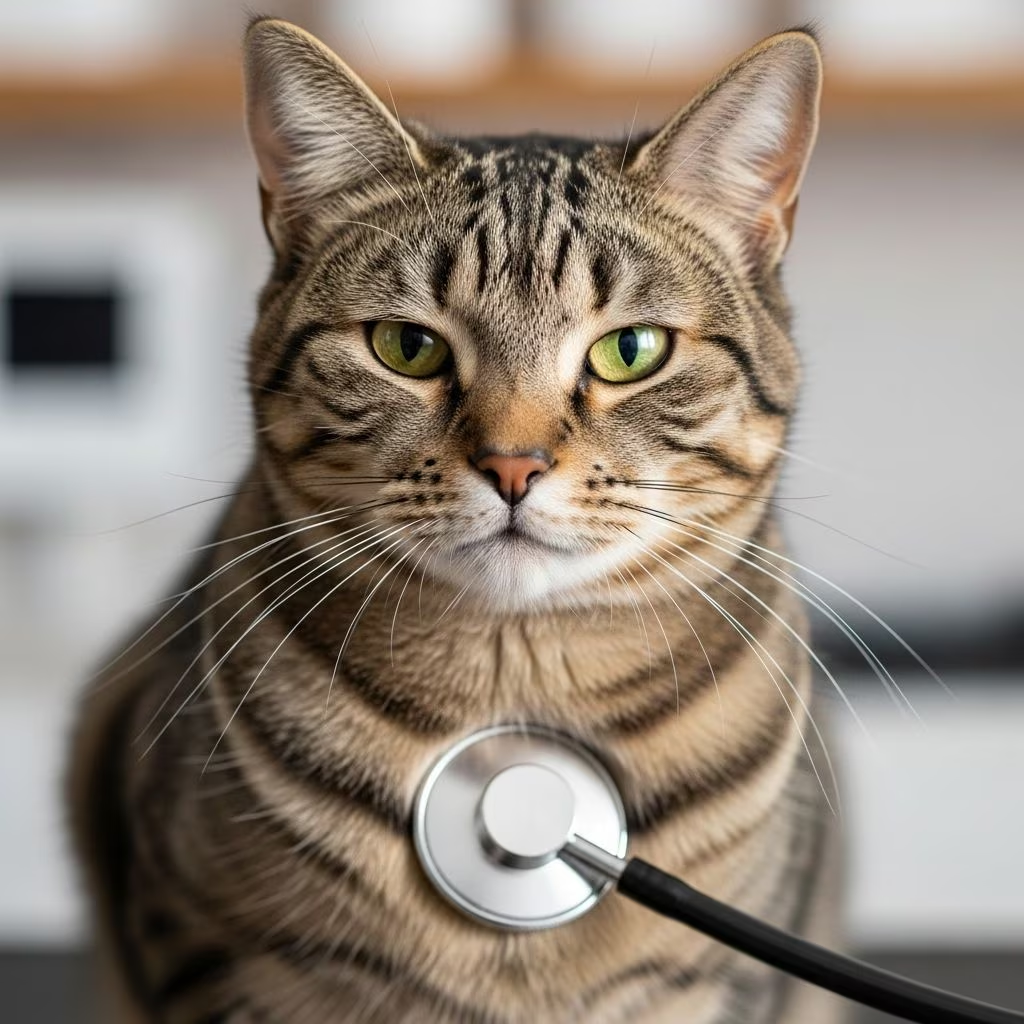
A **heart murmur in cats** is an abnormal sound heard during a veterinary exam when listening to the heart with a stethoscope. It sounds like a whooshing or swishing noise caused by turbulent blood flow through the heart valves, chambers, or blood vessels. While some murmurs are benign and require no action, others signal underlying heart disease that needs prompt attention.
Cat owners often discover heart murmurs during routine check-ups, as cats hide illness well. Early detection via auscultation—the process of listening to the heart—can be lifesaving. Murmurs are graded from 1 to 6 based on intensity, with higher grades often linked to more severe issues. This guide covers everything from causes and symptoms to diagnosis and management.
What Is a Heart Murmur?
A heart murmur occurs when blood flow becomes turbulent, producing audible vibrations. In a healthy cat heart, blood moves smoothly through four chambers and valves. Disruptions like valve leaks, narrowed openings (stenosis), or holes create murmurs.
Unlike dogs, where murmurs often stem from valve degeneration, cats commonly develop murmurs from **hypertrophic cardiomyopathy (HCM)**, where heart muscle thickens abnormally, or **hyperthyroidism**, which stresses the heart. Benign or “innocent” murmurs, especially in kittens, may resolve as they grow.
Heart Murmur Grades in Cats
Veterinarians grade murmurs on a scale of 1 to 6 to assess severity:
- Grade 1: Faint, barely audible with a quiet stethoscope.
- Grade 2: Soft, heard easily but quiet.
- Grade 3: Moderate, clearly audible over the heart area.
- Grade 4: Loud, heard on both sides of the chest.
- Grade 5: Very loud with vibrations (thrill) felt on the chest wall.
- Grade 6: Loudest, thrill felt without stethoscope; often indicates severe disease.
Grade alone doesn’t confirm disease severity—further tests are essential. Low-grade murmurs (1-2) are often innocent, while 3+ warrant investigation.
Causes of Heart Murmurs in Cats
Causes range from harmless to life-threatening:
- Benign/Innocent: Common in young cats or during fever/anemia; resolves without intervention.
- Hyperthyroidism: Overactive thyroid speeds heart rate, causing murmurs; treatable with meds or diet.
- Hypertrophic Cardiomyopathy (HCM): Thickened heart walls impair pumping; genetic in breeds like Maine Coons.
- Dilated Cardiomyopathy: Rare now due to taurine-rich diets; chambers enlarge.
- Congenital Defects: Valve issues, holes (septal defects), or stenosis present from birth.
- Anemia or Infections: Thin blood or fever alters flow.
Most murmurs indicate cardiac disease, varying in severity. Cats mask symptoms until advanced stages.
Symptoms of Heart Murmur in Cats
Many cats with murmurs appear normal, but watch for:
- Lethargy or weakness.
- Poor appetite and weight loss.
- Rapid, difficult, or open-mouth breathing.
- Coughing or fluid in lungs (crackles on exam).
- Pale gums or weak pulses.
- Abdominal bloating or fainting.
Severe cases lead to congestive heart failure (CHF) or clots (saddle thrombus), causing sudden paralysis—emergencies. Regular exams catch issues early, as cats hide pain instinctively.
How Is a Heart Murmur Diagnosed?
Diagnosis starts with physical exam: auscultation for murmur grade, rhythm, lung sounds, pulse check, and signs like thyroid swelling or weight loss. Further tests pinpoint causes:
- Echocardiogram (Cardiac Ultrasound): Gold standard; visualizes structure, function, valve issues, wall thickness, and blood flow. Non-invasive, done conscious.
- Chest X-rays: Assess heart size, lung fluid, vessels; sedated if needed.
- Electrocardiogram (ECG/EKG): Detects arrhythmias.
- Holter Monitor: 24-hour heart rhythm recording via vest.
- Blood Tests: NT-proBNP/Troponin for heart damage; thyroid, anemia checks.
- Blood Pressure: Hypertension common in older cats.
Board-certified cardiologists excel in echoes for precise diagnosis. Repeat tests monitor progression.
Treatment for Heart Murmurs in Cats
Treatment targets the cause, not the murmur:
- Monitoring: Benign or early low-grade; recheck every 3-6 months.
- Medications: ACE inhibitors, beta-blockers, diuretics for HCM/CHF; methimazole for hyperthyroidism.
- Diet: Low-sodium cardiac diets; taurine-rich for DCM.
- Surgery: Rare; for congenital defects.
- Emergency Care: Oxygen, fluids, pain meds for CHF/clots.
Most conditions manage long-term with meds; prognosis varies by cause/stage.
Heart Murmur Prevention and Home Care
Prevent via:
- Annual vet exams for early detection.
- Balanced diet with taurine.
- Weight control, low-stress environment.
- Breed screening for HCM-prone cats.
Home care: Monitor breathing/appetite; restrict activity if symptomatic; administer meds promptly. Clopidogrel prevents clots in HCM.
Prognosis and Life Expectancy
Benign murmurs: Normal lifespan. HCM: Varies; mild cases years with treatment, advanced CHF months. Hyperthyroidism: Excellent post-treatment. Early intervention via cardiologist improves outcomes dramatically.
Frequently Asked Questions (FAQs)
What does a heart murmur mean for my cat?
Most indicate underlying disease, but severity varies. Get an echocardiogram for definitive assessment.
Can heart murmurs in cats be cured?
Benign ones resolve; others managed, not cured. Treatment controls symptoms.
Is a grade 3 heart murmur serious in cats?
Often needs investigation, but not always severe. Echo required.
How much does an echocardiogram for cats cost?
Varies; consult your vet. Essential for accurate diagnosis.
Can cats live long with heart murmurs?
Yes, with monitoring/treatment. Many thrive for years.
When to See a Vet
Any murmur detection warrants follow-up. Urgent if symptoms like breathing issues appear. Refer to cardiologist for best care.
References
- How heart murmurs in cats are treated — Vetster. 2023. https://vetster.com/en/wellness/how-heart-murmurs-in-cats-are-treated
- Heart Murmur in Cats: Symptoms and Best Treatment — Veteris. 2024. https://veteris.co.uk/petcare-advice/heart-murmur-in-cats
- Heart Murmur in Cats — CVCA Cardiac Care for Pets. 2023. https://www.cvcavets.com/patient-resources/cardiac-conditions/heart-murmur-in-cats
- Heart Murmurs in Cats and Dogs, Next Steps — Alicia Pet Care Center. 2023. https://www.mypetsdr.com/post/heart-murmur-next-steps
- Heart Murmur in Cats: What It Is and How to Manage — PetMD. 2024-01-14. https://www.petmd.com/cat/conditions/cardiovascular/c_ct_heart_murmur
- Heart Murmur in Cats: Symptoms, Treatment, & Life Expectancy — Legacy Animal Medical Center. 2023-01-30. https://www.legacyamc.com/site/blog/2023/01/30/heart-murmur-cats



