

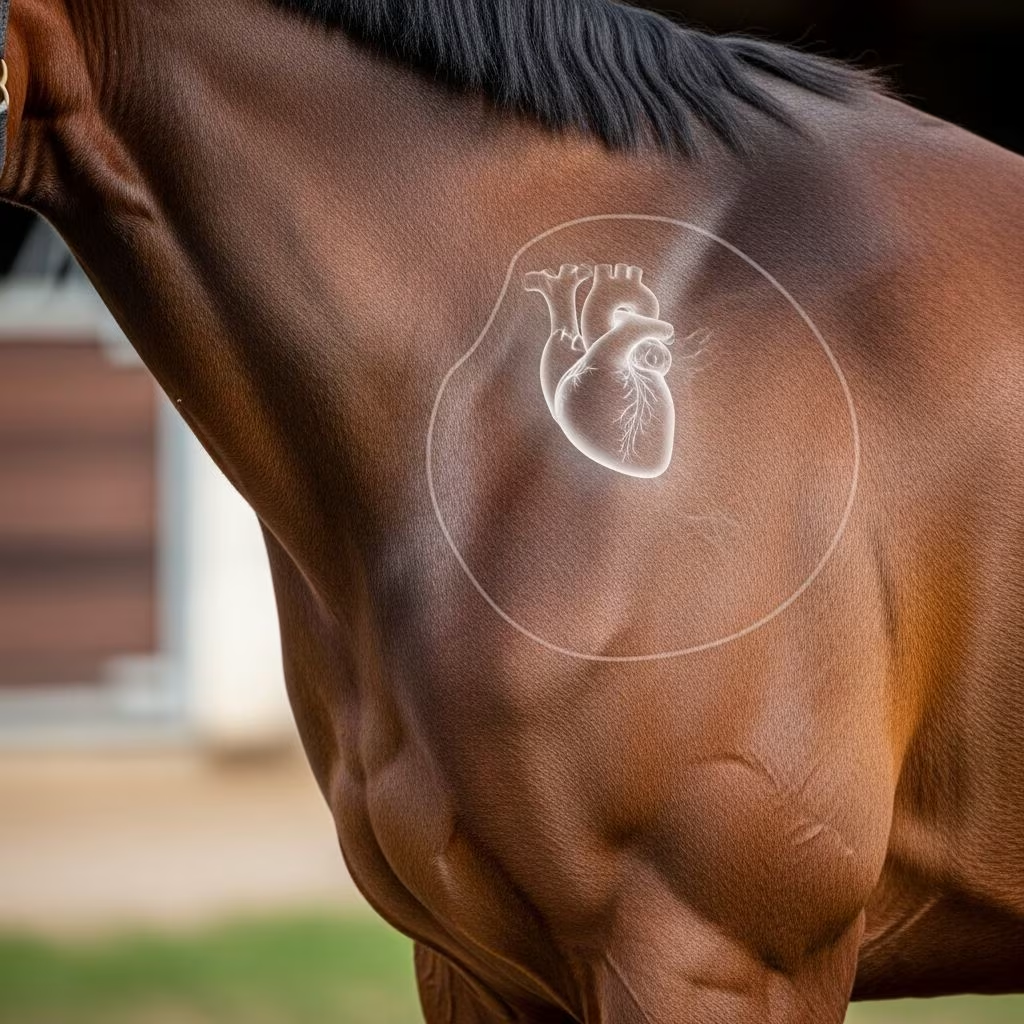
Heart failure represents a critical condition in horses where the heart cannot pump blood effectively to meet the body’s demands. This leads to a buildup of fluid and reduced oxygen delivery, severely impacting performance and overall health. Understanding this disease is vital for timely intervention and improved welfare.
Understanding the Pathophysiology of Equine Cardiac Failure
The equine heart functions as a robust pump, but when compromised, it fails to maintain circulation. **Congestive heart failure (CHF)** occurs when the heart’s pumping efficiency declines, causing fluid accumulation in lungs or body cavities. Left-sided failure backs up blood into the lungs, resulting in pulmonary edema, while right-sided failure leads to systemic congestion with swelling in limbs and abdomen.
Primary causes include valvular insufficiencies, such as mitral regurgitation, where the valve leaks, allowing blood to flow backward. Other contributors are congenital defects, pericarditis, myocardial diseases, and pulmonary hypertension. Aging horses and those with chronic conditions like heaves are particularly susceptible.
Recognizing Early Warning Signs
Horse owners must watch for subtle indicators that escalate to overt failure. Common initial signs include exercise intolerance and poor performance, where horses tire unusually fast or show reluctance to work.
- Tachycardia: Persistently elevated heart rate, present in all documented cases.
- Heart murmurs: Loud systolic or diastolic sounds detected during auscultation.
- Respiratory distress: Rapid breathing (tachypnea), coughing, or crackles in lungs.
- Jugular vein abnormalities: Distension, pulsation, or visible throbbing.
- Edema: Swelling along the ventral abdomen, lower limbs, or chest.
In advanced stages, horses may exhibit weakness, collapse, lethargy, or loss of appetite. Fluid in the abdomen (ascites) signals right-sided involvement. These signs often persist beyond six days in confirmed cases.
Diagnostic Approaches in Equine Cardiology
Accurate diagnosis relies on a combination of clinical exams and advanced imaging. Veterinary assessment begins with physical examination, noting murmurs, irregular rhythms, and pulse quality.
| Method | Purpose | Key Findings |
|---|---|---|
| Auscultation | Detect murmurs and arrhythmias | Loud murmurs, tachycardia |
| Echocardiography | Visualize chamber enlargement and valve function | Enlarged heart chambers in 86% of cases |
| Electrocardiography (ECG) | Assess rhythm disturbances | Atrial fibrillation, ventricular tachycardia |
| Radiography/Ultrasound | Evaluate fluid buildup | Pulmonary edema, ascites |
Echocardiography proves invaluable, revealing structural changes like mitral valve leaks or chamber dilation, which confirm heart failure. Blood tests may identify underlying infections or toxins.
Common Underlying Cardiac Conditions Leading to Failure
Heart failure rarely stands alone; it stems from diverse pathologies.
- Valvular Diseases: Mitral and aortic regurgitation dominate, causing volume overload and eventual dilation.
- Arrhythmias: Atrial fibrillation, common in performance horses, disrupts efficient pumping if prolonged.
- Myocarditis/Pericarditis: Inflammation from infections or toxins weakens myocardium.
- Congenital Defects: Septal defects or valve dysplasia present from birth.
- Pulmonary Issues: Heaves-induced hypertension strains the right heart.
These conditions progressively impair cardiac output, culminating in failure.
Treatment Strategies and Management
Treatment targets symptom relief, underlying causes, and cardiac support. No cure exists for most cases, but interventions can stabilize horses.
- Diuretics: Furosemide reduces fluid overload in lungs and tissues.
- Vasodilators/Inotropes: Enhance contractility and lower blood pressure.
- Anti-arrhythmics: Quinidine for atrial fibrillation, monitored closely to avoid complications.
- Supportive Care: Rest, low-sodium diet, antibiotics for infections.
Surgical options are limited; electrical cardioversion may restore rhythm in arrhythmias. Severe cases often require euthanasia due to poor quality of life.
Prognosis and Long-Term Outlook
The prognosis for equine CHF is **grave**. In a study of 14 cases, all followed horses died or were euthanized within a year. Mild valvular issues may allow normal activity, but failure indicates end-stage disease with risks of rupture, arrhythmia, or collapse.
Owners should monitor moderate cases annually, restricting exercise if intolerance develops. Early detection of precursors improves outcomes.
Prevention and Heart Health Maintenance
Preventive measures focus on risk reduction.
- Regular veterinary cardiac exams, especially for aging or performance horses.
- Balanced diet avoiding excesses that strain the heart.
- Prompt treatment of infections, parasites, and respiratory diseases.
- Avoidance of cardiotoxic substances.
- Gradual fitness programs to prevent overload.
Routine auscultation during check-ups catches murmurs early.
Frequently Asked Questions (FAQs)
What causes heart failure in horses?
Common causes include valve regurgitation, arrhythmias, congenital defects, infections, and pulmonary hypertension.
Can horses with heart murmurs develop failure?
Yes, loud murmurs often signal progressive disease leading to CHF if untreated.
Is treatment effective for equine heart failure?
Treatments manage symptoms but rarely reverse the condition; prognosis remains poor.
How do I know if my horse has heart problems?
Look for exercise intolerance, coughing, swelling, or rapid breathing; consult a vet for exams.
Can horses recover from congestive heart failure?
Recovery is unlikely; most cases are terminal within a year.
Monitoring Your Horse’s Cardiac Health
Daily observation complements professional care. Track resting heart rate (28-44 bpm normal), recovery post-exercise, and attitude. Sudden changes warrant immediate veterinary attention.
For performance horses, pre-purchase exams include echocardiography. Nutritional support with omega-3s may bolster heart function, though evidence is emerging.
References
- Understanding Congestive Heart Failure — The Horse. 2019-10-01. https://thehorse.com/151948/understanding-congestive-heart-failure/
- Congestive heart failure in horses: 14 cases (1984-2001) — PubMed (J Am Vet Med Assoc). 2002-05-15. https://pubmed.ncbi.nlm.nih.gov/12018380/
- Heart Failure in Horses — MSD Veterinary Manual. 2023-01-01. https://www.msdvetmanual.com/horse-owners/heart-and-blood-vessel-disorders-of-horses/heart-failure-in-horses
- Heart disease in horses: Treatment and prevention — Vetster. 2024-01-01. https://vetster.com/en/wellness/heart-disease-in-horses-treatment-and-prevention
- Understanding heart disease in the horse — BVNA (Gayle D Hallowell). 2022-01-01. https://bvna.org.uk/blog/understanding-heart-disease-in-the-horse-by-gayle-d-hallowell/
- Mitral Valve Regurgitation — UC Davis Center for Equine Health (.edu). 2023-01-01. https://ceh.vetmed.ucdavis.edu/health-topics/mitral-valve-regurgitation
- Cardiology: Medical Conditions — Cornell University College of Veterinary Medicine (.edu). 2024-01-01. https://www.vet.cornell.edu/hospitals/services/cardiology-0/cardiology-medical-conditions



