

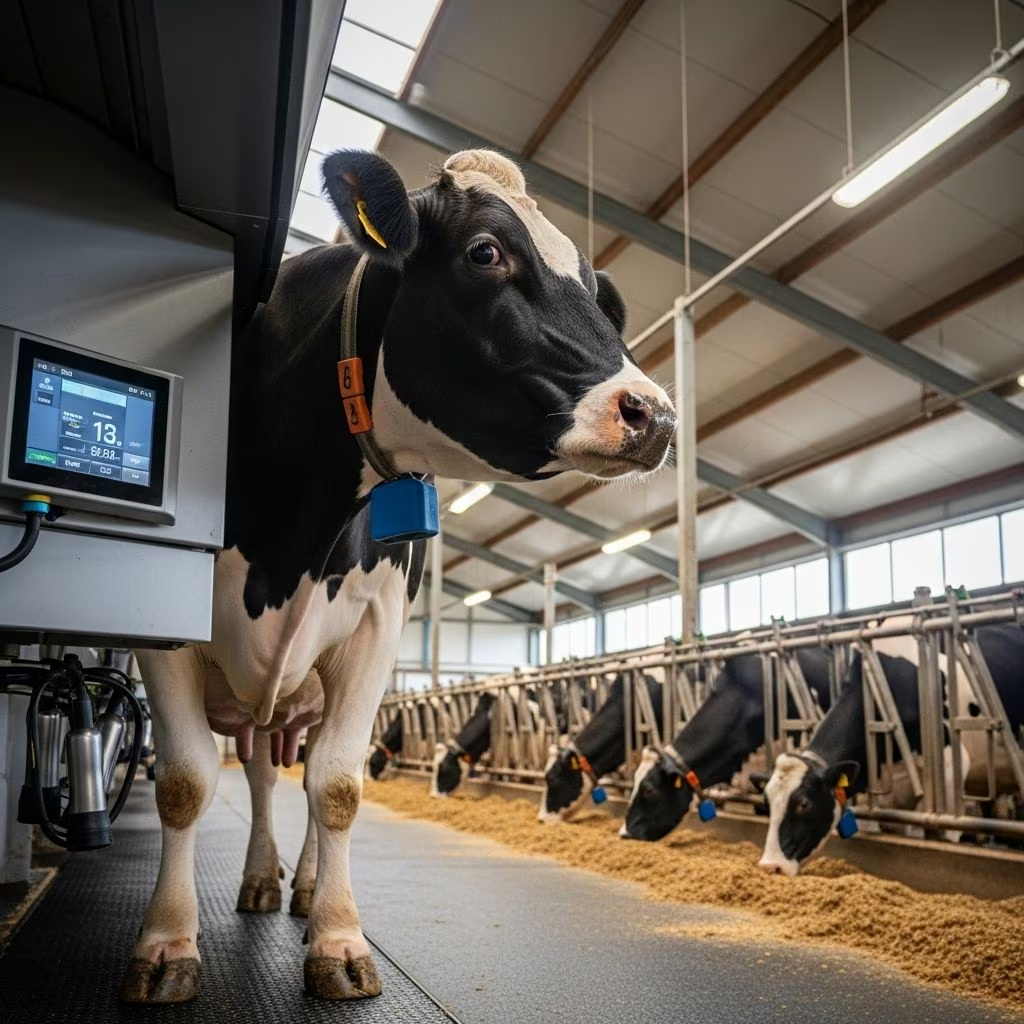
Dairy cattle health directly shapes milk output and long-term herd viability. Metabolic demands during peak lactation often trigger disorders that reduce yields and fertility, but targeted interventions can mitigate these risks.
Core Drivers of Health-Production Links
The relationship between cow health and productivity stems from intense physiological demands. High-yielding breeds face energy deficits post-calving, leading to body fat breakdown and potential disorders like ketosis. These issues not only cut milk production but also impair reproduction and immunity.
Early lactation imposes severe metabolic stress, with glucose and amino acid shortages fueling competition between mammary glands and immune functions. Despite rising global milk yields, many cows adapt resiliently, showing that high performance does not always equate to poor health.
Metabolic Challenges in Early Lactation
The transition from dry to lactating phases marks a vulnerability window. Cows enter negative energy balance (NEB), mobilizing fat reserves that overwhelm liver processing capacity. This results in elevated non-esterified fatty acids (NEFA) and beta-hydroxybutyrate (BHB), hallmarks of subclinical ketosis affecting most high-producers.
- NEB Effects: Lipolysis spikes at calving, heightening disease susceptibility.
- Ketosis Prevalence: BHB levels over 1.2 mmol/L multiply risks for metabolic and infectious issues.
- Liver Limits: Carnitine shortages hinder NEFA oxidation, promoting fatty liver.
Resilience varies; insulin-like growth factor 1 (IGF-1) levels signal adaptation success, with robust cows maintaining health despite demands.
Common Disorders Impacting Output
Several conditions cluster around calving, each eroding productivity through direct losses or secondary effects on fertility and immunity.
| Disorder | Incidence Range (%) | Production Impact |
|---|---|---|
| Milk Fever (Hypocalcemia) | 5–10 | Reduces intake, delays lactation peak |
| Retained Placenta | 5–10 | Triggers metritis, impairs breeding |
| Ketosis | 5–10 (clinical) | Drops milk by 0.5–1 kg/day |
| Metritis | 8–40 | Extends uterine recovery, cuts fertility |
| Displaced Abomasum | Variable | Requires surgery, halts production |
Data adapted from transition period studies; dystocia doubles metritis odds, linking calving ease to reproductive health.
Nutritional Strategies for Balance
Feeding programs must counter NEB by boosting dry matter intake (DMI) and supplying key nutrients. Rumen-protected amino acids like lysine and methionine allow lower crude protein diets without yield drops, as they address common limitations.
- Prepartum: Avoid overconditioning to curb excessive lipolysis.
- Postpartum: Prioritize energy-dense feeds; rumen-protected choline aids lipid export, potentially curbing mastitis.
- Colostrum: Calves getting 4L versus 2L show lifelong milk gains, underscoring early nutrition.
Veterinary oversight ensures diets match observed body condition, especially in fresh cows.
Reproductive Health Intersections
Nutrition profoundly affects breeding. NEB delays ovarian resumption, while disorders like metritis stem from weakened immunity, evidenced by poor neutrophil function and low IL-8 in at-risk cows.
Omega-6 adjustments may bolster prepartum immunity, and niacin curbs lipolysis but trades milk volume. Balancing metabolizable protein sustains fertility without excess nitrogen.
Environmental and Management Factors
Heat stress slashes DMI, milk, and conception rates via hormonal shifts. Mitigation includes cooling, fat-supplemented feeds, or heat-tolerant breeds like Jerseys.
Handling practices influence stress and injury risks during milking and care. Positive human-cow interactions enhance welfare and output. Milking hygiene, including quarterly teat scoring and California Mastitis Tests, prevents mastitis—a top welfare concern.
Building Robust Health Programs
Comprehensive herd plans integrate surveillance across life stages. Veterinarians monitor periparturient cows, calf colostrum delivery, and heifer growth during visits.
- Quarterly milking audits.
- Pathogen screening at dry-off and freshening.
- Environmental checks for housing impacts.
Preventive dry cow protocols target hypocalcemia and overconditioning.
Future Directions in Dairy Management
Breeding for metabolic robustness alongside yield promises sustainable gains. As climates warm, heat resilience will rise in priority. Farmers maximizing intake while curbing excesses foster herds where high production aligns with vitality.
Frequently Asked Questions (FAQs)
What causes negative energy balance in dairy cows?
NEB arises when milk energy demands exceed feed intake post-calving, prompting fat mobilization.
How does ketosis affect milk production?
It reduces yields by 0.5–1 kg/day and heightens other disease risks.
Can nutrition improve reproductive success?
Yes, balanced amino acids and energy prevent delays in ovulation and support uterine health.
What role does colostrum play in future productivity?
Higher volumes boost immunity and lead to greater adult milk output.
How to prevent heat stress in herds?
Use cooling systems, adjust diets, and select tolerant genetics.
References
- The Health Management Program in Dairy Cattle — MSD Veterinary Manual. 2023. https://www.msdvetmanual.com/management-and-nutrition/health-management-interaction-dairy-cattle/the-health-management-program-in-dairy-cattle
- Dairy cow physiology and production limits — PMC (NIH). 2023-06-01. https://pmc.ncbi.nlm.nih.gov/articles/PMC10289513/
- Interaction of Nutrition and Reproduction in the Dairy Cow — Veterian Key. 2023. https://veteriankey.com/interaction-of-nutrition-and-reproduction-in-the-dairy-cow/
- Nutrition and feeding of dairy cattle — PMC (NIH). 2020-04-01. https://pmc.ncbi.nlm.nih.gov/articles/PMC7153313/
- Animal welfare and dairy cattle production systems — World Organisation for Animal Health (WOAH). 2018. https://www.woah.org/fileadmin/Home/eng/Health_standards/tahc/2018/en_chapitre_aw_dairy_cattle.htm



