

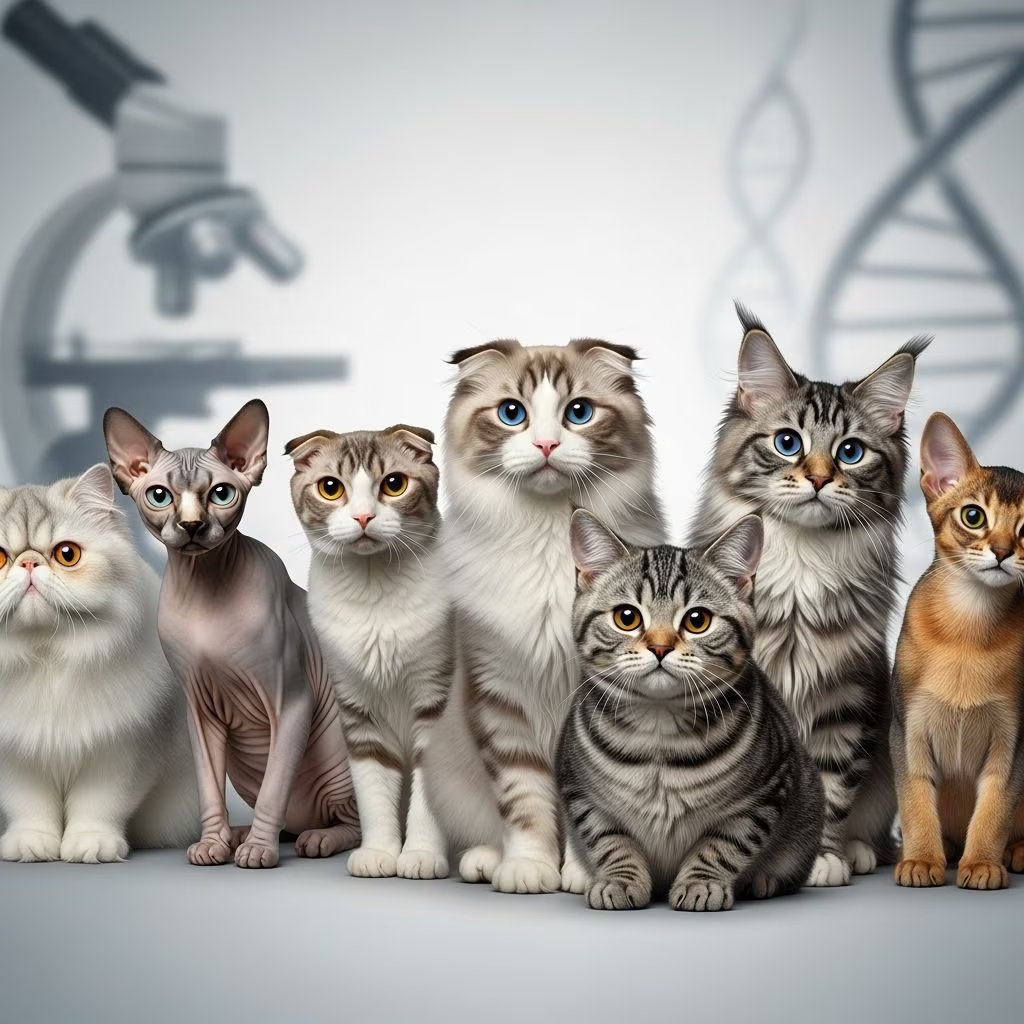
Purebred cats, while admired for their distinctive appearances and temperaments, often face significant health challenges due to selective breeding practices that prioritize aesthetics over well-being. Inbreeding to fix specific traits leads to a domino effect of genetic disorders, including lethargy, breathing difficulties, and heightened risks of heart failure. This article examines seven breeds particularly prone to these issues, drawing on veterinary insights and research to highlight symptoms, causes, and prevention strategies.
Which cat breeds have the most health problems?
The core issue stems from treating purebred cats as commodities, resulting in inbreeding that amplifies genetic vulnerabilities. Early cat show breeds remain popular alongside ‘designer’ varieties, even as shelters overflow with healthy mixed-breed cats seeking homes. Veterinary surgeon Dr. Cat Henstridge notes, “All purebred animals are by definition inbred and therefore prone to health problems, varying by breed.” Some conditions are probable but not guaranteed, like heart disease in Maine Coons, while others are nearly inevitable.
Genetic studies confirm this: in one analysis of over 11,000 cats, 22.5% carried at least one disease-associated variant, with 4.1% at risk for clinical conditions based on inheritance modes. Maine Coons showed the highest variant count (up to 9 per cat), underscoring breed-specific risks. Responsible breeding and genetic testing are crucial, yet many breeders overlook these, perpetuating cycles of poor health.
Persians and Exotics
Persians and their shorthaired counterparts, Exotic Shorthairs, epitomize brachycephalic extremes with flat faces, bulging eyes, and tiny noses. These traits cause brachycephalic airway syndrome (BAS), featuring an elongated soft palate, pinched nostrils, narrow windpipe, and obstructed airways. Affected cats struggle to eat, breathe, and exercise, leading to chronic respiratory distress, heat intolerance, and secondary issues like obesity.
- Symptoms: Snorting, gagging, excessive panting, blue gums during exertion.
- Complications: Arthritis from conformational stress, dental malocclusion, tear staining, and eye ulcers due to shallow sockets.
- Veterinary Insight: Dr. Evan Antin described a brachycephalic rescue: “It’s really hard to live your best life when you can hardly breathe your entire life.”
Management involves weight control, surgical corrections like nostril widening, and avoiding stressors. Prevention requires outcrossing to lengthen muzzles, though show standards resist change.
Ragdolls
Ragdolls, known for their docile nature and striking blue eyes, are susceptible to hypertrophic cardiomyopathy (HCM), polycystic kidney disease (PKD), obesity, blood clots, and cryptococcosis—a fungal infection prevalent along the Pacific coast, Europe, and Australia. Cryptococcosis manifests as nasal discharge, sneezing, breathing issues, and in severe cases, neurological symptoms like blindness or seizures.
HCM, a thickening of the heart muscle, is genetically linked in Ragdolls. Early screening via echocardiograms is vital, as medications can slow progression. Owner reports in genetic studies describe PKD cases with cysts confirmed by ultrasound, emphasizing screening relevance.
| Condition | Symptoms | Prevention |
|---|---|---|
| HCM | Lethargy, rapid breathing, murmurs | Genetic testing, annual echoes |
| PKD | Kidney failure signs, cysts | PKD1 variant screening |
| Cryptococcosis | Sneezing, nasal issues | Avoid endemic areas, antifungals |
Siamese
Iconic Siamese cats, with their vocal personalities and color-point coats, face elevated cancer risks, including mediastinal lymphoma in young FeLV-positive cats and intestinal adenocarcinomas. Siamese are nearly twice as likely to develop intestinal cancer, with adenocarcinoma incidence up to eight times higher than other breeds.
Additional woes include progressive retinal atrophy (PRA) causing blindness, asthma, hip dysplasia, arthritis, and pica (eating non-food items). Heavy selection has increased PRA prevalence, contrasting with healthier Thai ancestors free of such hereditary diseases.
- Cancer Risks: Lymphoma, adenocarcinomas—early spaying/neutering and FeLV vaccination help.
- Behavioral: Pica linked to nutritional or stress factors; provide enrichment.
- Management: Regular eye exams, joint supplements, monitored diet.
Scottish Fold
The endearing folded ears of Scottish Folds result from a dominant mutation causing osteochondrodysplasia (Scottish Fold Disease), a painful cartilage defect affecting all Fold cats. It leads to joint fusion in tails, ankles, and knees, producing short, misshapen limbs, lameness, and reluctance to jump or walk.
This degenerative condition worsens over time, often rendering cats immobile. Breeding ethics are questioned, as the trait cannot be avoided without eliminating the fold. Straight-eared kittens from Fold parents are healthier alternatives.
Manx
Manx cats’ tailless or stumpy tails stem from Manx Syndrome, impacting the spinal cord and causing spina bifida, urinary/fecal incontinence, abnormal gait, and hind limb paralysis. Severe cases in kittens may be fatal, necessitating euthanasia.
Degrees vary: ‘rumpies’ (no tail) are highest risk, ‘stumpies’ moderate, ‘longies’ (full tail) unaffected. Genetic testing identifies carriers; responsible breeding favors longer tails.
Additional cat breeds with health problems
Beyond the primary seven, many purebreds suffer genetic woes:
- Sphynx: Hairlessness causes temperature dysregulation, sunburn, skin infections, cancers; amplified in ‘Bully’ hybrids with Munchkin legs, doubling respiratory, skin, joint issues.
- Maine Coon: HCM, PKD (cysts from birth), hip dysplasia; highest disease variants.
- Norwegian Forest Cat, Cornish/Devon Rex, British Shorthair, Himalayans, Burmese: HCM, PKD, PRA, breathing issues.
Brachycephalic Persians/Himalayans/Burmese echo Exotic problems. Overall, purebreds’ inbreeding heightens risks versus diverse mixed breeds.
Frequently Asked Questions (FAQs)
Q: Are all purebred cats unhealthy?
A: Not all, but inbreeding increases risks. Genetic testing and outcrossing help; mixed breeds often healthier.
Q: How can I prevent these issues in purebreds?
A: Choose breeders using health screenings (HCM echoes, PKD DNA tests). Regular vet check-ups essential.
Q: Is Scottish Fold disease always fatal?
A: No, but causes chronic pain and mobility loss; many advocate against breeding Folds.
Q: What’s brachycephalic airway syndrome?
A: Breathing/eating difficulties from flat faces; surgery and lifestyle management aid.
Q: Should I avoid purebred cats?
A: Prioritize health-tested ones from ethical breeders or adopt mixes for lower risks.
References
- 7 “Purebred” Cat Breeds Likely to Suffer from Genetic Disorders — Kinship.com. 2023. https://www.kinship.com/cat-health/health-issues-of-some-purebred-cat-breeds
- Genetic epidemiology of blood type, disease and trait variants — PLOS Genetics. 2021-06-10. https://journals.plos.org/plosgenetics/article?id=10.1371/journal.pgen.1009804
- Statistical analysis in support of maintaining a healthy traditional Siamese cat population — PMC. 2020-12-29. https://pmc.ncbi.nlm.nih.gov/articles/PMC7789816/
- ‘XL Bully’ Cat Breeding Trend Sparks Outrage — Kinship.com UK. 2024. https://www.kinship.com/uk/cat-health/bullycat-breeding-trend-warning
- Hypertrophic Cardiomyopathy in Cats — Kinship.com UK. 2024. https://www.kinship.com/uk/cat-health/hypertrophic-cardiomyopathy-in-cats



