

Healing the Fastest Animal on Earth
When a peregrine falcon was discovered grounded near a local restaurant just a few miles from Best Friends Animal Sanctuary in Kanab, Utah, the scene presented a stark contrast to its natural habitat. This remarkable bird—engineered by nature for speed and built to dominate the skies—found itself confined to asphalt and exhaust fumes instead of soaring above high cliffs and open landscapes. The injured raptor bore visible signs of trauma: a broken wing and a chipped beak that told the story of a devastating impact. Even the most formidable hunters in the animal kingdom cannot easily recover from such injuries. What followed was an urgent race against time to save this extraordinary creature and give it a second chance at life.
The World’s Fastest Animal
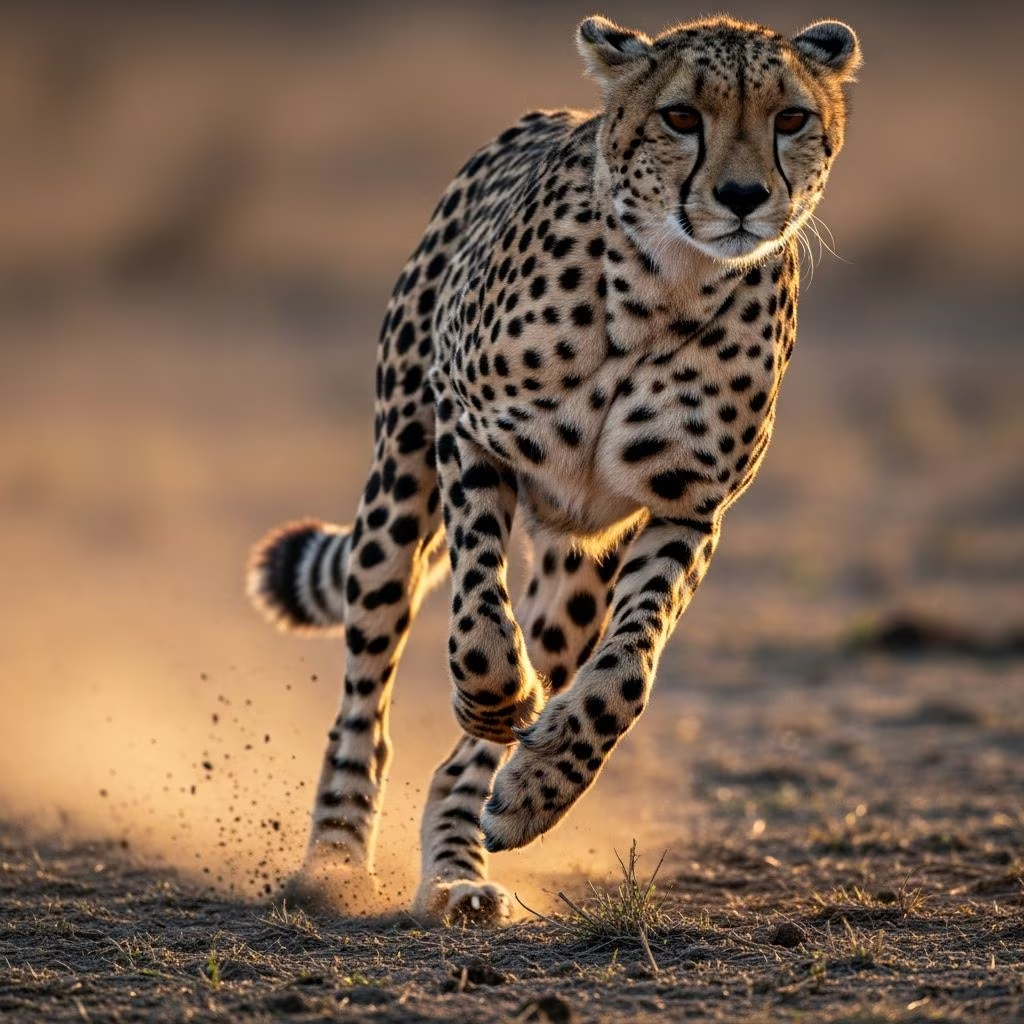
Peregrine falcons hold an unparalleled distinction in the animal kingdom as the fastest creatures on Earth. These magnificent birds are renowned for their astonishing hunting dives, during which they swoop from the sky at velocities exceeding 200 miles per hour. To put this remarkable speed into perspective, the fastest land animal, the cheetah, can reach speeds of only around 75 miles per hour. The peregrine falcon’s hunting technique is a carefully choreographed aerial display of precision and power, with the bird entering a near-vertical dive called a stoop to capture unsuspecting prey mid-flight.
However, this breathtaking velocity leaves virtually no margin for error. A single miscalculation during flight or hunting can have catastrophic consequences, grounding even the most skilled and experienced flyer. The peregrine falcon’s physiology is perfectly adapted for speed but equally vulnerable to the consequences of impact. The broken wing and chipped beak of this particular bird served as stark reminders of how unforgiving the risks of high-speed flight can be.
Emergency Care and Initial Assessment
Recognizing the severity of the injured falcon’s condition, restaurant staff members quickly took action and transported the raptor to Wild Friends, Best Friends Animal Sanctuary’s state- and federally licensed wildlife rehabilitation center. Time was of the essence, and the expertise available at Wild Friends represented the falcon’s best chance for survival and recovery.
Upon arrival at the rehabilitation facility, the bird exhibited typical wild animal behavior. Unable to comprehend that the humans surrounding it were attempting to provide assistance, the falcon remained restless and hyperactive. This constant agitation, fueled by stress and natural instinct, presented a significant challenge to the healing process. The Wild Friends team initially attempted to immobilize the damaged wing using a wrap to keep it still and protected during the critical early stages of healing. However, the injured falcon’s relentless energy and resistance proved too strong, and despite their careful efforts, the bird managed to work free from the wrap and remove it entirely.
A Strategic Approach to Healing
After careful consultation and examination, the Best Friends veterinary team made an important clinical decision. Rather than continuing to battle the falcon’s instinctive resistance with additional wrapping techniques that could cause further stress or injury, they opted for a more conservative therapeutic approach. Fortunately, the falcon’s natural physiology worked in its favor. Birds like peregrine falcons possess high metabolisms and uniquely structured hollow bones—simultaneously as light as reeds yet tough as steel. These biological advantages, combined with the falcon’s inherent healing capacity, suggested that with adequate time and proper care, the wing would likely set itself without aggressive intervention.
Similarly, the damage to the falcon’s beak would heal naturally as the injured portion gradually grew out over time. Rather than risk additional complications, the Wild Friends team utilized the small enclosure as a therapeutic tool. This gentle confinement strategy naturally limited the bird’s movement while allowing its body the stillness and peace necessary for proper healing.
Progress and Recovery
The falcon responded remarkably well to this conservative treatment protocol. Supported by pain medications and anti-inflammatory drugs that managed discomfort and reduced swelling, the healing process began almost immediately. Follow-up X-rays provided encouraging evidence of progress—calluses were forming around the break, a promising clinical sign that the wing was responding exactly as it should. These calluses indicated that the bone was actively repairing itself and beginning to restore its structural integrity and strength.
Even as the falcon maintained its characteristic restless energy throughout recovery, the mending progressed steadily. The combination of proper veterinary care, appropriate medication, and the bird’s own powerful healing mechanisms worked in concert to restore the damaged tissue.
Progressive Rehabilitation and Strength Training
Once the initial healing phase was well underway, Wild Friends staff introduced the next critical stage of rehabilitation. The falcon was moved to an outdoor aviary environment where it could begin the gradual process of rebuilding strength and restoring flight capacity. This progressive approach started conservatively with a modest outdoor space, allowing the bird to experience fresh air and natural light while remaining safely contained.
As confidence grew and physical condition improved, the falcon advanced to a larger flight enclosure designed specifically for aerial exercise and muscle development. Within just a few months of arriving at Wild Friends in its injured and grounded state, the transformation was remarkable. The falcon began to dive, bank, and soar with increasing confidence and precision. Each movement represented a carefully choreographed ballet of balance, muscle coordination, and returning strength. The bird was progressively reclaiming its identity as a creature of the skies.
Return to the Wild
Finally, the moment arrived when staff determined the falcon was ready for ultimate freedom. All physical indicators suggested complete recovery: the wing was strong, the beak had healed, and the bird’s flying skills had returned to their natural excellence. With cautious optimism, Wild Friends staff opened the aviary doors.
What happened next embodied the true spirit of wildlife rehabilitation. The falcon did not pause to contemplate its newfound freedom. There was no dramatic hesitation, no backward glance toward the humans who had cared for it during its recovery. Instead, a blur of feathers simply soared with the wind, immediately claiming the vast sky that had always been its rightful domain. The bird’s instinctive knowledge of flight, its understanding of the wind, and its purpose as a creature born for speed all returned in that singular moment of release.
The Journey’s Lesson
The falcon’s recovery journey was neither easy nor calm. The process required patience, expertise, and an understanding of what wild animals truly need to heal. It demanded that caregivers recognize when human intervention should step back and allow nature’s own healing mechanisms to work. Most importantly, this story demonstrates that true rehabilitation success means returning wild animals to their natural habitat where they can live freely according to their nature and instincts.
The recovery wasn’t just about medical care or physical rehabilitation. It was fundamentally about respecting the wild spirit of the creature and honoring its purpose in the natural world. Every element of the treatment plan—from the conservative approach to injury management to the progressive rehabilitation enclosures—was designed with one ultimate goal: enabling this remarkable animal to return to its life in the wild, soaring at 200 miles per hour through open skies, exactly as nature intended.
Wild Friends Wildlife Rehabilitation Center
Wild Friends operates as Best Friends Animal Sanctuary’s state- and federally licensed wildlife rehabilitation facility. The center provides comprehensive medical care, recovery services, and rehabilitation support for injured, orphaned, and sick wildlife. The facility handles diverse species ranging from raptors like peregrine falcons and great horned owls to small mammals and native reptiles, including wild rabbits, chipmunks, squirrels, snakes, and lizards.
The mission of Wild Friends extends beyond individual animal recovery. By successfully rehabilitating and releasing hundreds of injured or orphaned wild creatures annually, the center plays a vital role in maintaining healthy wildlife populations and preserving biodiversity in the region. The work represents a commitment to helping native creatures thrive in their natural habitats and teaching the broader community about wildlife conservation and coexistence with the animals with whom we share the land.
Frequently Asked Questions
Q: How fast can peregrine falcons actually fly?
A: Peregrine falcons are the fastest animals on Earth, reaching speeds exceeding 200 miles per hour during their characteristic hunting dives called stoops. This far exceeds the speed of the fastest land animal, the cheetah, which reaches approximately 75 miles per hour.
Q: Why couldn’t the injured falcon’s wing be wrapped immediately?
A: While wrapping is sometimes necessary, the Wild Friends team discovered that this particular falcon’s restless energy and stress response made the wrap counterproductive. The bird continually removed the wrap, which posed additional injury risk. The team instead used gentle enclosure confinement to limit movement while allowing natural healing.
Q: What makes peregrine falcon bones special for healing?
A: Peregrine falcons possess hollow bones—structures that are simultaneously light as reeds yet tough as steel. Combined with their high metabolism, these biological features enable efficient and rapid bone healing, allowing the falcon’s broken wing to set successfully with proper care.
Q: How long did the falcon’s complete recovery take?
A: The falcon progressed from initial injury to full recovery and release within just a few months. This timeline demonstrates both the bird’s remarkable healing capacity and the effectiveness of the conservative rehabilitation approach employed by Wild Friends staff.
Q: What is Wild Friends and what services does it provide?
A: Wild Friends is Best Friends Animal Sanctuary’s state- and federally licensed wildlife rehabilitation center. It provides medical care, recovery services, and rehabilitation support for injured, orphaned, and sick wildlife including raptors, small mammals, reptiles, and native birds, with the goal of returning them to their natural habitats.
Best Friends Animal Sanctuary’s Broader Mission
The peregrine falcon’s recovery story represents just one example of Best Friends Animal Sanctuary’s comprehensive commitment to animal welfare and rehabilitation. Located in the majestic canyons of southern Utah, Best Friends operates as the largest animal sanctuary of its kind in the United States. On any given day, the sanctuary provides care for up to 1,600 animals including dogs, cats, birds, bunnies, horses, pigs, and rehabilitating wildlife.
Beyond individual animal care, Best Friends has become the heart of a collaborative no-kill movement across the nation. The organization’s broader goal extends to supporting all animal shelters throughout the United States in achieving no-kill status by 2025. This ambitious vision recognizes that saving animals in shelters is everyone’s responsibility and requires support and active participation from communities nationwide. Through thoughtful, honest, and collaborative work, no-kill sheltering remains achievable, ensuring that every dog and cat in a shelter who can be saved receives that opportunity while maintaining community safety and ensuring good quality of life for all pets.
References
- Healing the fastest animal on Earth — Best Friends Animal Society. 2024. https://bestfriends.org/stories/features/healing-fastest-animal-earth
- Welcome to Best Friends Animal Sanctuary — Best Friends Animal Society. https://bestfriends.org/sanctuary
- Looking back: How Best Friends’ Wild Friends began — Best Friends Animal Society. March/April 2024. https://bestfriends.org/stories/best-friends-magazine/looking-back-how-best-friends-wild-friends-began



