

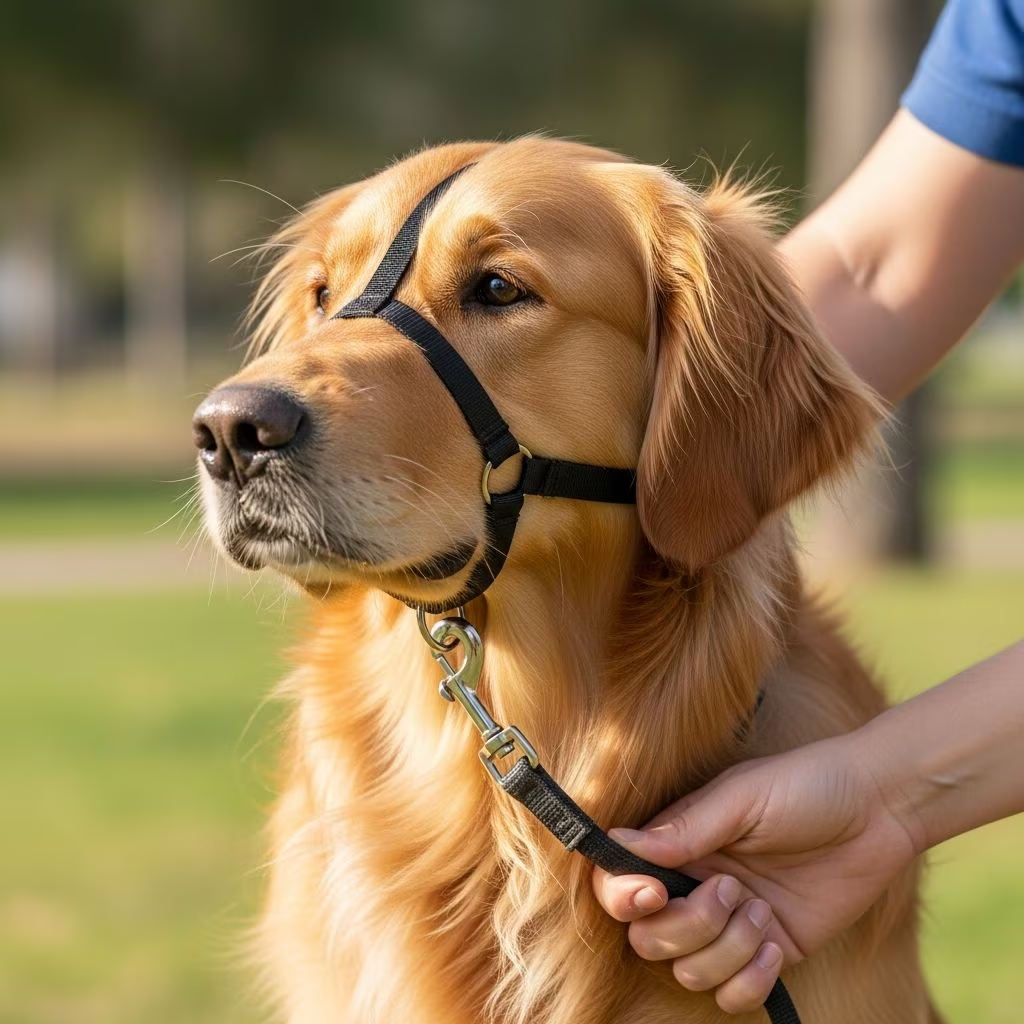
Head halters, such as the popular Gentle Leader, offer a humane alternative to traditional collars for managing strong pullers and reactive dogs during leash training. These tools work by gently directing a dog’s head, leveraging their natural tendency to follow their nose, making walks more enjoyable and safer for both pet and owner.
What Is a Head Halter?
A head halter is a training device designed specifically for dogs that resembles a horse halter. It consists of a strap that fits snugly around the dog’s muzzle (noseloop) and another behind the ears (neckstrap), connected to a leash attachment under the chin. Unlike collars or harnesses, it applies gentle pressure to the muzzle and neck to redirect the dog’s attention without choking or causing pain when used correctly.
The concept mimics equine training tools, where controlling the head influences the entire body. For dogs, this means turning the head toward the handler naturally redirects pulling or lunging behavior, promoting calm loose-leash walking. Brands like Gentle Leader emphasize that it transfers pressure to the back of the neck and noseloop, encouraging the dog to relax and follow rather than pull.
Benefits of Using a Head Halter
Head halters excel in scenarios where traditional collars fail, particularly for powerful breeds or dogs with behavioral challenges. Key advantages include:
- Immediate Control: Provides instant leverage by turning the dog’s head, reducing pulling without physical strength from the handler.
- Reactivity Management: Ideal for dog-aggressive or fear-reactive dogs; gently turns the head away from triggers, allowing positive reinforcement.
- Calming Effect: Many dogs relax quickly once fitted, as it limits visual fixation on distractions and reassures through handler proximity.
- Safety for Owners: Prevents being dragged by strong pullers, reducing injury risk during walks.
- Training Bridge: Facilitates loose-leash walking rehearsals, transitioning dogs to collar use with established good habits.
Studies and trainer experiences show head halters speed up polite walking training by denying environmental reinforcement while rewarding focus on the owner. For instance, backing away with the halter controls access to distractions, creating ‘It’s Yer Choice’ moments for reinforcement.
How Does a Head Halter Work?
The mechanics rely on canine anatomy and psychology. When a dog pulls, the noseloop applies mild pressure behind the ears and muzzle, mimicking a natural head turn. This activates the opposition reflex inversely: instead of forging ahead, the dog yields and follows.
Unlike flat collars that engage the dog’s full body weight or harnesses that allow forward staring, head halters position the leash under the chin for precise redirection. Trainers note it eliminates leverage; holding the leash by the dog’s face neutralizes reactions without pulling. Pressure points avoid sensitive areas like the throat, focusing on the firm skull.
In practice, a sudden lunge results in the head turning sideways toward the handler, naturally slowing momentum. Paired with treats for loose leash, it conditions dogs to associate compliance with rewards.
Types of Head Halters
Several brands dominate the market, each with slight variations:
| Type | Key Features | Best For |
|---|---|---|
| Gentle Leader | Noseloop with padding, quick-release buckle, multiple sizes | General training, reactive dogs |
| Haltie | Adjustable straps, lightweight, color options | Everyday walks, strong pullers |
| Sense-ation Harness (Hybrid) | Combines head halter with chest strap | Dogs uncomfortable with face gear |
Choose based on fit and dog comfort; padded models reduce rubbing.
Proper Fitting of a Head Halter
Correct fit is crucial to avoid slippage or discomfort. Steps include:
- Measure muzzle circumference and neck size for the right model.
- Place neckstrap high behind ears, snug but allowing one finger underneath.
- Adjust noseloop to sit behind ears, not touching nose tip when slack.
- Leash clip under chin; test by feeding treats through the loop to build acceptance.
- Walk in low-distraction areas first, rewarding calm behavior.
Ill-fitting halters can cause chafing or panic; condition over days with positive associations. Whole Dog Journal stresses gradual introduction to prevent fighting the tool.
Training with a Head Halter
Integrate into a positive reinforcement protocol:
- Desensitization Phase: Let dog wear halter at home with treats/toys for 5-10 minutes daily.
- Leash Sessions: Practice ‘watch me’ cues; back away from distractions, reward focus.
- Real-World Walks: Use for short outings, fading reliance as loose-leash behavior solidifies.
- Counter-Conditioning: For reactivity, turn head from trigger, then reward calm.
Susan Garrett advocates using it to build drive control, transitioning to flat collars once habits form. Avoid constant tension; reward slack leash frequently.
Pros and Cons of Head Halters
| Pros | Cons |
|---|---|
| – Excellent for strong/reactive dogs – Promotes focus on handler – Low injury risk when proper – Speeds training progress | – Some dogs resist/panic – Misuse risks neck injury – Not for long-term dependency – Requires conditioning |
While effective short-term, prioritize teaching without equipment for sustainability.
Safety Concerns and Risks
Misuse—jerking or allowing full-speed hits—can snap the neck sideways, risking spinal damage similar to choke chain tracheal harm. Experts warn against abrupt corrections; steady guidance prevents this.
Allergic reactions or poor fit may cause skin issues. Monitor for signs of stress like pawing or depression; discontinue if aversive. Not suitable for flat-faced breeds like Pugs due to anatomy. Technique determines safety: gentle pressure yields positive results.
Alternatives to Head Halters
- Front-Clip Harnesses: Redirects via chest, good for pullers without face pressure.
- Freedom Harnesses: Dual-clip for versatility.
- Positive Reinforcement Training: Clicker-based heeling eliminates need for gear.
- Prong/Pinch Collars: Controversial; avoid in force-free methods.
Many transition successfully from halters to harnesses or collars via consistent training.
Frequently Asked Questions (FAQs)
Are head halters safe for dogs?
Yes, when fitted properly and used with gentle technique, avoiding jerks. Risks arise from misuse, like spinal strain.
Can all dogs use head halters?
Most can be conditioned, but some resist strongly. Try alternatives if aversion persists.
How long should my dog wear a head halter?
Use as a training tool, not permanently. Fade out once loose-leash walking is reliable.
Will a head halter stop pulling forever?
No; it manages pulling during training. Pair with rewards for lasting behavior change.
What if my dog hates the head halter?
Desensitize slowly with high-value treats. If unsuccessful, opt for harnesses or pro training.
References
- Proper Use of Head Halters for Leash Training — Whole Dog Journal. 2023-05-15. https://www.whole-dog-journal.com/care/proper-use-of-head-halters-for-leash-training/
- Head Halters VS A Flat Buckle Collar — Susan Garrett Dog Agility. 2010-09-22. https://susangarrettdogagility.com/2010/09/head-halters-vs-a-flat-buckle-collar/
- The Head Halter – Gentle Leader vs Prong Collar — Nitro Canine. 2022-08-10. https://nitrocanine.com/the-head-halter-torture-pain-and-nonsense-explained/
- Why Head Halters are an Essential Element of Force-Free Training — Whole Dog Camp. 2021-08-23. https://wholedogcamp.org/2021/08/23/why-head-halters-are-an-essential-element-of-force-free-training/
- Why I Don’t Recommend Head Halters for Dogs — High Five Animal Training. 2023-11-05. https://www.highfiveanimaltraining.com/blog/why-i-dont-recommend-head-halters-for-dogs
- Are Head Collars on Dogs Dangerous or Safe? It’s All About Technique — CattleDog Publishing. 2024-02-14. https://cattledogpublishing.com/blog/are-head-collars-on-dogs-dangerous-or-safe-its-all-about-technique/



