

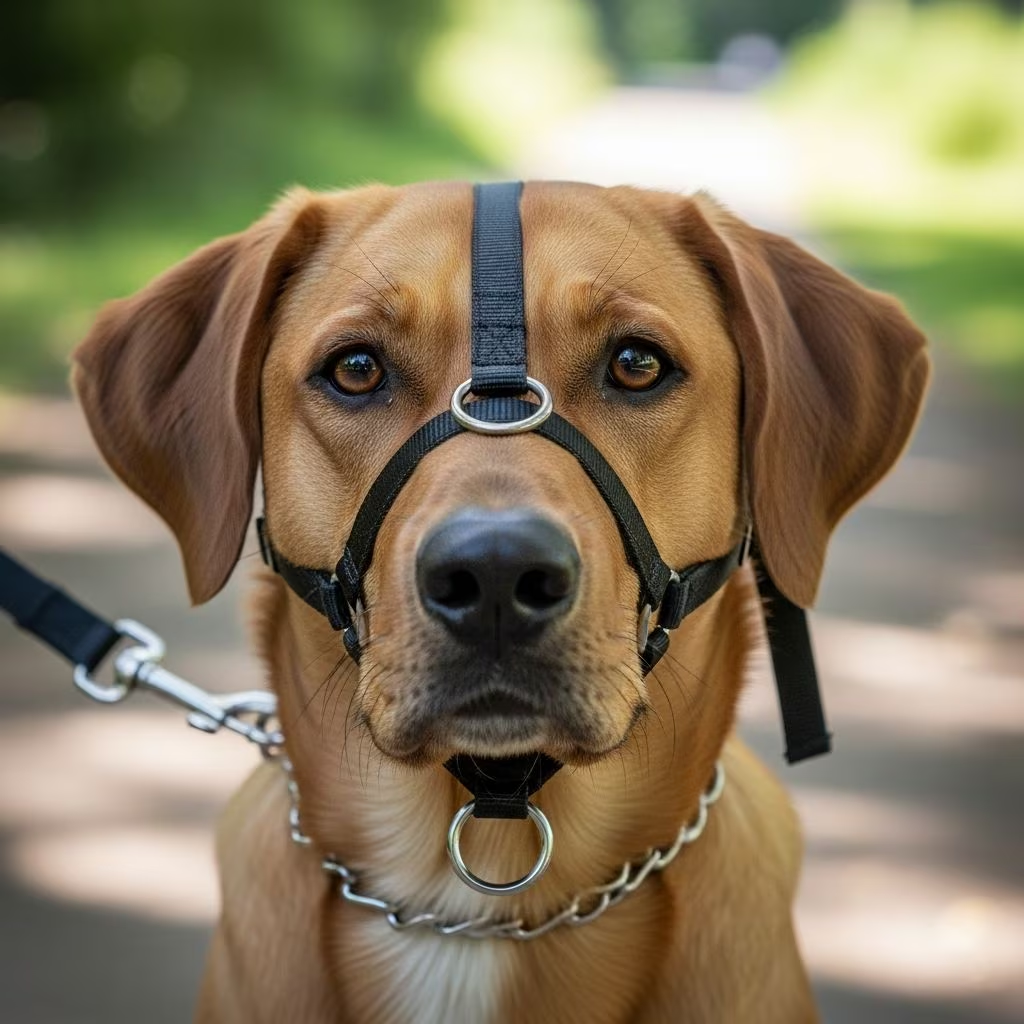
Head Halters for Dogs: A Complete Training Guide
Head halters (often sold under names like Gentle Leader or Halti) can be powerful tools for improving leash manners and keeping both dogs and humans safe, especially in busy or high-distraction environments. Used thoughtfully, they offer gentle control of the head, which can help redirect pulling, lunging, and reactivity without resorting to pain-based equipment. This guide explains how head halters work, when they are helpful, how to introduce them kindly, and how to use them as part of a broader positive training plan.
What Is a Head Halter for Dogs?
A head halter is a piece of walking equipment that fits around your dog’s muzzle and neck, somewhat like a horse’s halter. It does not function like a muzzle, because the dog can still open their mouth to pant, drink, and take treats when properly fitted. Instead of tightening around the throat, it gently guides the dog’s head so that when you move or apply light pressure, the dog’s body follows.
- Usually has a strap around the back of the neck and another around the muzzle or nose.
- Leash attaches under the chin, at the point where the straps meet.
- Designed to provide directional control, not to cause pain or cut off airflow.
Because dogs naturally follow where their head and nose go, a small movement on the leash can turn the head and shift the dog’s attention back to the handler.
Why Some Trainers Recommend Head Halters
When used as part of reward-based training, head halters can speed up loose-leash walking and give handlers extra safety and control with large, strong, or excitable dogs.
- Improved focus on the handler: Turning the dog’s head away from distractions and toward the owner makes it easier to reward eye contact and calm behavior.
- Reduced pulling: Because strong pulling makes the head turn toward the handler instead of forward, pulling is less reinforcing.
- Support in behavior modification: Head halters offer non-punitive physical control during training plans for reactive or aggressive dogs, allowing you to create distance and reward appropriate responses.
- Small input, big effect: Light pressure on the leash can redirect the dog, so people with less physical strength often find head halters easier to manage than body harnesses or flat collars.
Several veterinary behaviorists note that head collars can be a useful tool for teaching polite behavior and improving safety when they are carefully fitted and paired with positive reinforcement.
Head Halter vs. Collar vs. Harness
No single piece of equipment is right for every dog. Understanding the differences helps you decide whether a head halter belongs in your toolbox.
| Equipment | Main Control Point | Pros | Cons | Best For |
|---|---|---|---|---|
| Flat Collar | Neck | Lightweight; easy to wear all day; holds ID tags; familiar to most dogs. | Offers limited control for strong pullers; pressure concentrates around the neck; can contribute to neck strain with heavy pulling. | Dogs with good leash skills; short, low-distraction walks. |
| Body Harness | Chest and shoulders | Spreads pressure over a larger area; reduces neck strain; front-clip designs can help manage pulling. | Some designs may encourage pulling by giving the dog something to lean into; offers less fine control of head and focus. | Everyday walks; dogs with neck or tracheal issues; dogs uncomfortable in head halters. |
| Head Halter | Head and muzzle | Excellent directional control; can quickly reduce pulling and lunging; helpful in behavior modification when paired with rewards. | Many dogs find the sensation unusual at first; requires careful conditioning and fitting; misuse (jerking) can risk neck strain. | Strong or reactive dogs; handlers needing extra safety; structured training sessions. |
Benefits of Head Halters When Used Correctly
Head halters are not a stand‑alone solution; they are most effective when combined with clear training and generous reinforcement.
- Faster loose‑leash training: Because pulling physically turns the dog back toward the handler, it becomes easier to reward the dog for walking near you with a slack leash.
- Calming effect for some dogs: Some dogs appear to relax and become less aroused shortly after a halter is fitted, making it easier to practice calm behaviors.
- Non-punitive control in difficult situations: With reactive or excitable dogs, gently turning the head away from triggers can prevent rehearsing lunging and barking while you reinforce more appropriate responses.
- Increased safety for the handler: Small, controlled movements at the dog’s head reduce the chance of being pulled off balance or dragged, particularly for children, older adults, or smaller handlers.
Research and clinical experience from veterinary behavior practices emphasize that head halters are most helpful when they allow owners to consistently reinforce desired behaviors instead of battling constant pulling.
Risks and Limitations of Head Halters
Head halters are not risk-free, and they are not appropriate for every dog. Many concerns center on misuse and insufficient conditioning.
- Risk of neck or spine injury if jerked: Sudden, forceful corrections or allowing a dog to hit the end of the leash at full speed can twist the neck and potentially injure the cervical spine. This is avoidable with proper handling and a short, slack leash.
- Discomfort or distress if poorly introduced: Some dogs paw at the halter, freeze, or shut down if it is put on abruptly without gradual training, making the equipment aversive rather than helpful.
- Not a quick fix for behavior issues: Serious aggression, fear, or reactivity still require a structured behavior plan; equipment alone cannot resolve underlying emotional problems.
- Owner over‑reliance: If you rely solely on the halter and never practice leash skills without it, your dog may pull again as soon as you switch to a collar or harness.
Many modern trainers prefer to start with positive reinforcement on a harness, using head halters in specific situations rather than as a permanent solution.
How to Fit a Head Halter Safely
Proper fit is crucial for both comfort and safety. Always follow the manufacturer’s specific instructions, and adjust slowly while observing your dog’s reactions.
- Neck strap: Should sit high on the neck, behind the ears, snug enough that it does not rotate but loose enough to slide a finger underneath.
- Nose loop: Rests on the bony part of the muzzle, not close to the eyes and not sliding off the nose; your dog should still be able to open their mouth to pant and take treats.
- Leash attachment: Clips to the ring under the chin; many trainers recommend using a lightweight leash and keeping it short but loose.
- Check movement: When you gently lift the leash, the head should turn, not jerk; if you see sharp twisting, adjust the fit or your handling technique.
Veterinary behaviorist resources highlight that most health concerns come from abrupt forces on the neck, not from a correctly fitted halter used with gentle, steady pressure.
Conditioning Your Dog to a Head Halter
Introducing a head halter gradually with treats and praise is essential so that your dog associates it with good things instead of restraint or discomfort.
- Start with exploration: Let your dog sniff the halter and reward any calm interest with high‑value treats.
- Teach nose‑in behavior: Hold the nose loop open and reward your dog for placing their nose inside voluntarily, removing it after each treat.
- Increase duration: Slowly lengthen the time the loop stays around the nose before removing it, feeding treats continuously while it is on.
- Add the neck strap: Once your dog is comfortable with the nose loop, gently fasten the neck strap while feeding treats, then remove after a few seconds.
- Build up wear time: Gradually increase how long your dog wears the halter indoors, pairing it with meals, games, or cuddles so it predicts enjoyable activities.
- Attach the leash: Practice brief sessions walking indoors or in the yard, focusing on frequent rewards for walking beside you with a loose leash.
If your dog shows persistent distress or tries frantically to remove the halter despite slow conditioning, it may not be the right tool for them, and a positive reinforcement trainer or veterinary behaviorist can help explore other options.
Using a Head Halter for Loose-Leash Training
The goal of training with a head halter is to build habits that eventually transfer to a collar or harness, not to keep the halter on forever.
- Keep the leash short but relaxed: Hold the leash so it has a gentle curve and does not dangle to the ground, but avoid constant tension.
- Reward generously for position: Every time your dog walks beside you on a loose leash, mark (with a word or click) and deliver a treat at your side.
- Redirect, don’t correct: If your dog forges ahead, gently guide their head back toward you and encourage them to turn with you, then reward when they are back in position.
- Practice around mild distractions first: Gradually work closer to other dogs, people, or tempting smells so your dog can succeed while still staying focused on you.
- Fade the halter over time: As your dog learns good habits, you can attach the leash to both the halter and a collar or harness, then slowly transition to using only the collar or harness.
Experienced trainers often emphasize that the head halter’s main advantage is creating many successful rehearsals of good walking behavior that can later be maintained with simpler equipment.
Are Head Halters Humane?
Opinions vary among trainers about head halters. Many reward-based trainers and veterinary behaviorists consider them humane when introduced with positive reinforcement and used without force. Others prefer to avoid them entirely, focusing instead on harness‑based training because some dogs find face straps especially uncomfortable or stressful.
Key humane‑use principles include:
- Never using sharp leash jerks, yanks, or punishment with a head halter.
- Always conditioning the dog slowly with food, play, and patience.
- Watching for subtle signs of stress (lip licking, yawning, freezing) and adjusting your approach if needed.
- Using the halter as a temporary training aid, not a substitute for teaching skills.
Professional organizations and veterinary behavior resources generally agree that equipment is only one part of a humane training plan; how it is used, and whether it reduces or increases fear and pain, matters most.
When to Avoid or Stop Using a Head Halter
Head halters are not right for every dog or situation. Consider alternative options if:
- Your dog has existing neck, spinal, or severe orthopedic issues; consult your veterinarian before using any head-based equipment.
- Your dog shows ongoing panic, shutdown behavior, or repeated attempts to escape the halter despite slow, reward‑based introduction.
- Multiple family members struggle to use the halter gently and consistently, increasing the risk of neck strain from jerking or dragging.
- Your walks are primarily off‑leash or in environments where sudden high‑speed lunges are common and hard to anticipate.
In these cases, a well‑fitted front‑clip harness combined with positive reinforcement training is often a safer long‑term choice.
Frequently Asked Questions (FAQs)
Q: Is a head halter the same as a muzzle?
A: No. A head halter does not prevent a dog from opening their mouth to pant, drink, or take treats when fitted correctly. Its purpose is to guide the head, not to stop biting. If you need bite prevention, ask your veterinarian or behavior professional about a properly fitted basket muzzle.
Q: Can a head halter hurt my dog’s neck?
A: Improper use, such as sharp leash jerks or allowing a dog to hit the end of the leash at full speed, can strain the neck or spine. With gentle handling, gradual training, and a snug, correct fit, the risk is greatly reduced.
Q: How long does it take for a dog to get used to a head halter?
A: Many dogs adjust in several short sessions over a few days if the halter is paired with high‑value treats and positive experiences. Sensitive dogs may need more time and smaller steps; forcing the halter on quickly usually makes adaptation slower, not faster.
Q: Should puppies use head halters?
A: Some trainers use head halters with large, strong puppies to give handlers extra control during early training, but only with careful conditioning and gentle handling. Many experts prefer starting with a harness and reward‑based leash training first, especially for very young or sensitive puppies.
Q: Do I have to use a head halter forever once I start?
A: No. The long‑term goal is that your dog learns good leash habits so you can switch to a collar or harness while maintaining polite walking. As your dog improves, you can gradually reduce reliance on the halter and practice in parallel on other equipment.
References
- Proper Use of Head Halters for Leash Training — Whole Dog Journal. 2019-03-15. https://www.whole-dog-journal.com/care/proper-use-of-head-halters-for-leash-training/
- Head Halters VS A Flat Buckle Collar — Susan Garrett Dog Agility Blog. 2010-09-20. https://susangarrettdogagility.com/2010/09/head-halters-vs-a-flat-buckle-collar/
- The Head Halter – Gentle Leader vs Prong Collar — Nitro K9. 2016-07-01. https://nitrocanine.com/the-head-halter-torture-pain-and-nonsense-explained/
- Why Head Halters Are an Essential Element of Force Free Training — Whole Dog Camp. 2021-08-23. https://wholedogcamp.org/2021/08/23/why-head-halters-are-an-essential-element-of-force-free-training/
- Why I Don’t Recommend Head Halters for Dogs — High Five Animal Training. 2022-04-10. https://www.highfiveanimaltraining.com/blog/why-i-dont-recommend-head-halters-for-dogs
- Are Head Collars on Dogs Dangerous or Safe? It’s All About Technique — CattleDog Publishing / Dr. Sophia Yin. 2011-05-12. https://cattledogpublishing.com/blog/are-head-collars-on-dogs-dangerous-or-safe-its-all-about-technique/



