

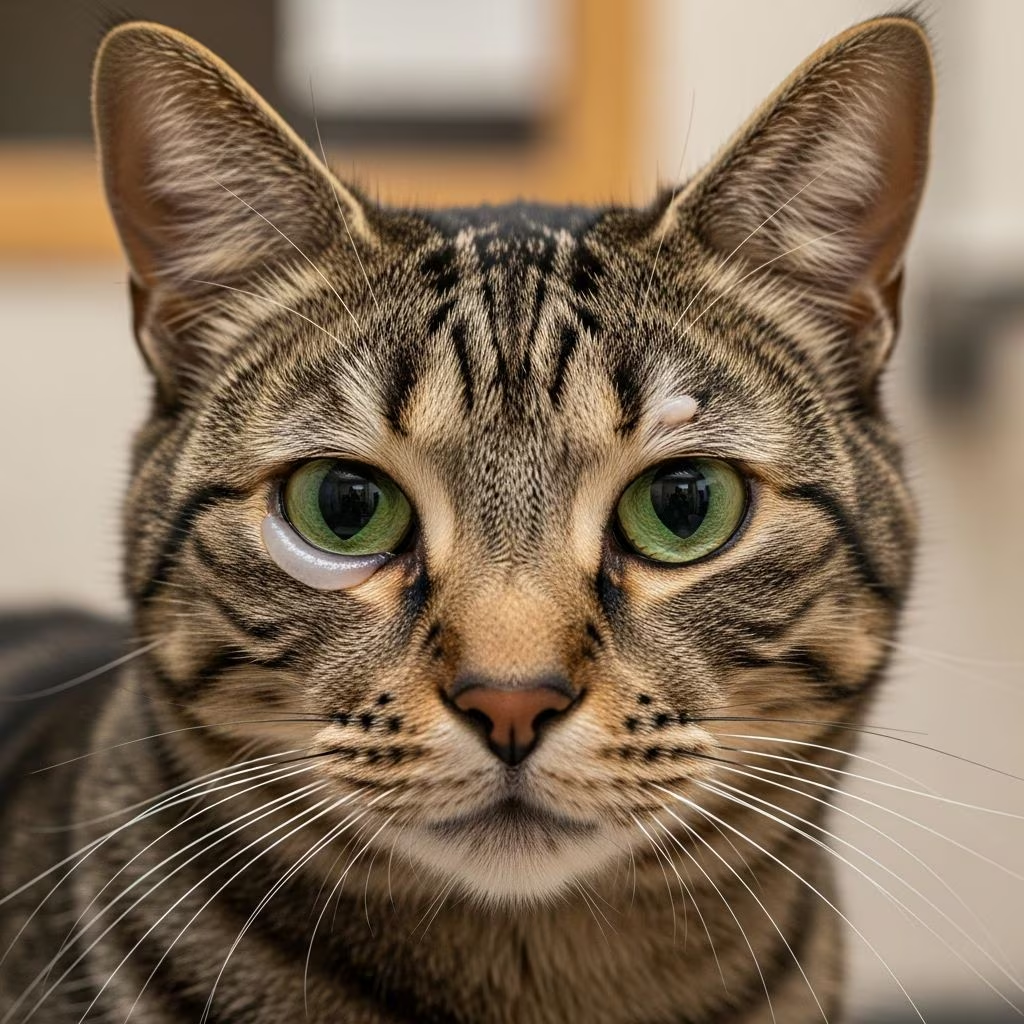
Haws syndrome in cats is a benign condition characterized by the bilateral protrusion of the third eyelid, often linked to gastrointestinal disturbances like diarrhea. It is typically self-limiting, resolving without specific treatment within weeks, though supportive care for concurrent symptoms is recommended.
What Is Haws Syndrome in Cats?
The **third eyelid**, also known as the nictitating membrane, is a protective structure located in the inner corner of a cat’s eye. Normally retracted and invisible, it provides lubrication, protection, and immune defense. In **Haws syndrome**, this membrane protrudes bilaterally across both eyes due to sympathetic denervation, disrupting normal retraction mechanisms.
This condition primarily affects young adult cats but can occur at any age. Unlike painful eye issues, Haws syndrome does not cause discomfort, and cats maintain normal vision unless severe protrusion physically obstructs the globe. It is often associated with gastrointestinal (GI) symptoms, suggesting a possible gut-brain axis involvement via microbiota dysbiosis.
Key features include:
- Bilateral third eyelid elevation (unilateral cases suggest other issues)
- No ocular pain or discharge
- Frequently concurrent diarrhea or recent GI upset
- Self-resolving nature, with full recovery in 4-6 weeks typically
Causes of Haws Syndrome in Cats
The exact cause remains idiopathic, but strong associations point to GI tract disturbances. Common triggers include:
- Diarrhea and intestinal parasites: Especially tapeworms or Giardia, detected in many cases. Fecal analysis often reveals parasites.
- Dietary changes: Abrupt food switches leading to loose stools and temporary syndrome onset.
- GI dysbiosis: Imbalance in gut microbiota disrupting the gut-brain axis, affecting ocular sympathetic nerves.
- Other factors: Viral infections, stress, or probiotics-responsive enteropathies. No direct viral or neurological primaries confirmed.
Research indicates a sympathetic neuropathy, confirmed by transient resolution with phenylephrine drops, implicating autonomic nervous system imbalance rather than local eye pathology.
Signs of Haws Syndrome in Cats
The hallmark sign is **visible third eyelids protruding horizontally across both eyes**, creating a ‘half-closed’ appearance. Cats appear otherwise bright and alert, with no squinting, pawing, or discharge indicative of infection.
Associated symptoms:
- Concurrent or recent **diarrhea** (milky, soft stools in young cats)
- Mild lethargy or reduced appetite during GI phase
- Normal pupillary light reflexes and menace response (vision intact)
- Rarely, ptosis (drooping upper eyelid)
| Symptom | Description | Frequency |
|———-|————-|———–|
| Third eyelid protrusion | Bilateral, covers 20-50% of cornea | Always |
| Diarrhea | Loose stools, 1-2 weeks duration | 60-80% of cases |
| Vision obstruction | Only if severe coverage | Rare |
| Pain | None reported | Never |
Owners often notice this after a dietary indiscretion or parasite exposure, mistaking it for a serious eye problem.
Diagnosing Haws Syndrome in Cats
Diagnosis relies on clinical examination excluding other causes like Horner’s syndrome, dehydration, or trauma. Key steps:
- Physical and ophthalmic exam: Confirm bilateral protrusion, normal intraocular pressure, no corneal ulcers.
- Phenylephrine test: 1% drops in each eye; retraction within 20 minutes confirms sympathetic deficit (positive in Haws).
- GI workup if diarrhea present: Fecal flotation/parasite screen (Giardia, worms), bloodwork, viral PCR.
Differential diagnoses include dehydration (unilateral often), systemic illness, or neoplasia—ruled out via tests if persistent >6 weeks.
Treatment of Haws Syndrome in Cats
Haws syndrome requires **no specific treatment** as it is self-limiting, resolving in 11-39 days. Focus on supportive GI care:
- Diarrhea management: Probiotics, metronidazole (vet-prescribed), dewormers (e.g., praziquantel for tapeworms), or fluids if severe.
- Dietary intervention: Switch to GI biome diet (e.g., Hill’s Prescription Diet Gastrointestinal Biome) for 3 months; resolves symptoms in most via prebiotics targeting dysbiosis.
- Phenylephrine drops: Rarely for vision-obscuring cases; temporary retraction only.
Recent study: In 5 cats, GI diet led to ocular resolution (11-39 days) and GI improvement (4-14 days in 2/3).
Caring for a Cat With Haws Syndrome
Provide a low-stress environment during recovery:
- Hydration: Fresh water; encourage drinking to counter diarrhea dehydration.
- Diet: Bland (boiled chicken/rice short-term) or vet GI food; gradual changes over 7-10 days.
- Environment: Indoor, quiet space; monitor vision if severe.
- Prevention: Regular deworming, vaccinations, quality diet, slow transitions.
- Monitoring: Re-check if no improvement in 6 weeks.
Avoid over-the-counter meds; consult vet for probiotics/wormers.
Conclusion
Haws syndrome alarms owners but poses no pain or vision threat long-term. Linked to transient GI issues, it resolves with minimal intervention—often just diarrhea support and monitoring. Early vet visit ensures differentials are excluded, yielding excellent prognosis.
Frequently Asked Questions (FAQs)
Q: Is Haws syndrome painful for cats?
A: No, cats show no discomfort; it affects appearance only.
Q: How long does Haws syndrome last in cats?
A: Typically 4-6 weeks; up to 39 days in studies.
Q: Does Haws syndrome affect vision?
A: Rarely; only severe cases block light temporarily.
Q: Can Haws syndrome be prevented?
A: Yes, via regular worming, stable diet, parasite control.
Q: When to see a vet for third eyelid protrusion?
A: Always; if unilateral, persistent >6 weeks, or with other symptoms.
References
- What to Know About Haws Syndrome in Cats — Petcube. 2023. https://petcube.com/blog/haws-syndrome-in-cats/
- Haw’s Syndrome in Cats: Causes, Symptoms & Treatment — Cats.com. 2024. https://cats.com/haws-syndrome-in-cats
- Management of Haws Syndrome in Cats With Gastrointestinal Diet — PubMed/NCBI. 2024-10-15. https://pubmed.ncbi.nlm.nih.gov/41152147/
- Haws Syndrome in Cats: Causes, Signs & Treatments (Vet Answer) — Catster. 2024. https://www.catster.com/ask-the-vet/haws-syndrome-in-cats/
- What to Do About Your Cat’s Elevated Third Eyelid — GeniusVets. 2023. https://www.geniusvets.com/pet-care/learn/cats/medical-resources/diseases-and-conditions-what-do-about-your-cats-elevated
- Why is my cat’s third eyelid showing? — Vetster. 2024. https://vetster.com/en/wellness/why-is-my-cat-s-third-eyelid-showing



